



News
Procurement Engineering volunteers build bonds through highway cleanup
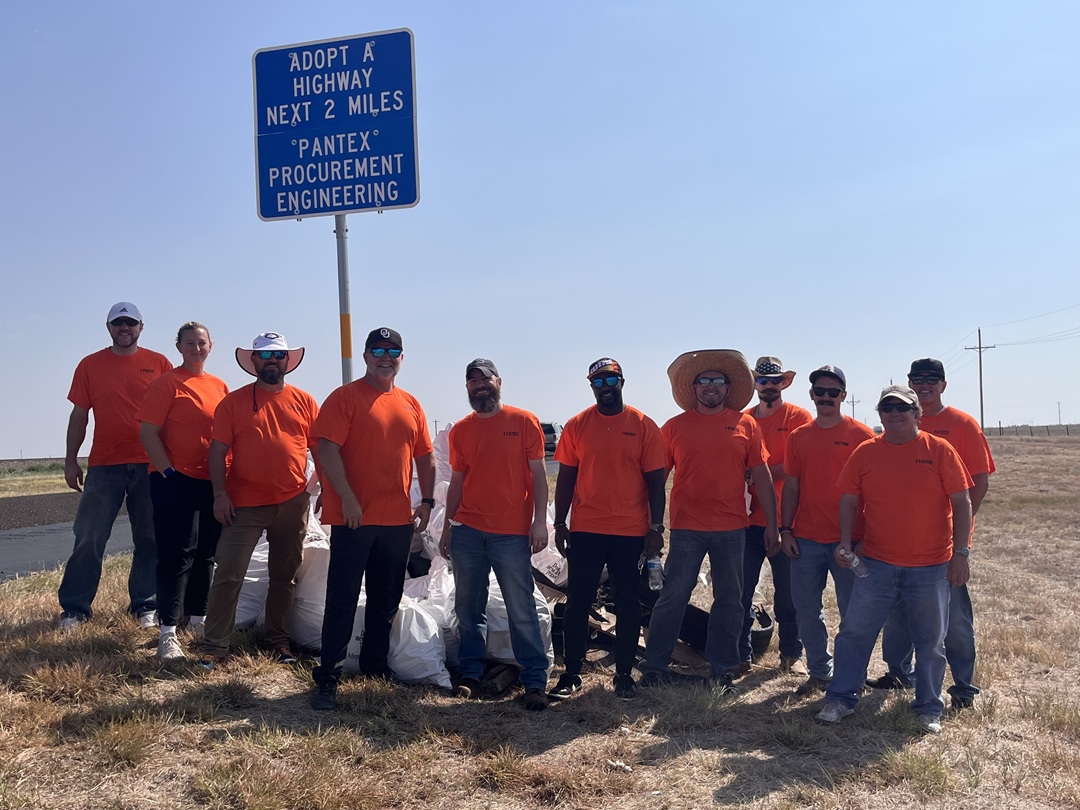
Members of the Procurement Engineering Group (left to right) James Hyde, Carissa Goulbourne, Thomas Hunt, K.J. Trosper, Wes Townsend, Chris Jamison, Antonio Jimenez, Andrew Zielinski, Sam Nazworth, David Kraman, and Kevin Henry recently volunteered to clean up a two-mile stretch of highway, where they collected nearly 40 large bags of trash. Also volunteering but not pictured were Alex Tow, Cynthia Tivis, and Johan Gonzales.
A two-mile stretch of U.S. Highway 60 is a little cleaner today thanks to the Procurement Engineering Group. The tight-knit organization’s recent volunteer activity put Pantexans on a pollution-prevention mission.
“We had been brainstorming for a volunteer effort that we could do as a group since we enjoy hanging out outside of work,” said Procurement Engineering Group Manager K.J. Trosper. “This was something my entire team came up with as a teambuilding and volunteer opportunity.”
Procurement Engineer Wes Townsend said the team split into groups of three or four and sectioned off responsibility for their designated two miles of Highway 60, east of Farm-to-Market 2373 near the grain elevators.
“We collected nearly 40 large trash bags as well as larger items like tires and lumber,” Townsend said.
Of course, the day was not without its share of surprises.
“We also came across several rattlesnakes while we were cleaning up,” Trosper said. “We pulled together and decided to steer clear of thick brush for safety’s sake.”
Texas Department of Transportation Maintenance Support Technician Christy Plagge shared her appreciation for the Pantexans’ efforts.
“Driving by and seeing the results was amazing,” she said. “We are so grateful for the effort and dedication that went into making this happen.”
Procurement Engineer Antonio Jimenez noted the day’s impact.
“We all have something to contribute, and sometimes even a small effort can mean a lot to someone else,” he said.
Trosper echoed the sentiment.
“We have fostered a culture within the group that I am extremely proud of,” he said. The fact that we had the opportunity to go out and have some fun together and provide a service that was impactful to others was a win-win in my book. I can’t wait until next time!”
Nuclear Family: Spence/Thomas
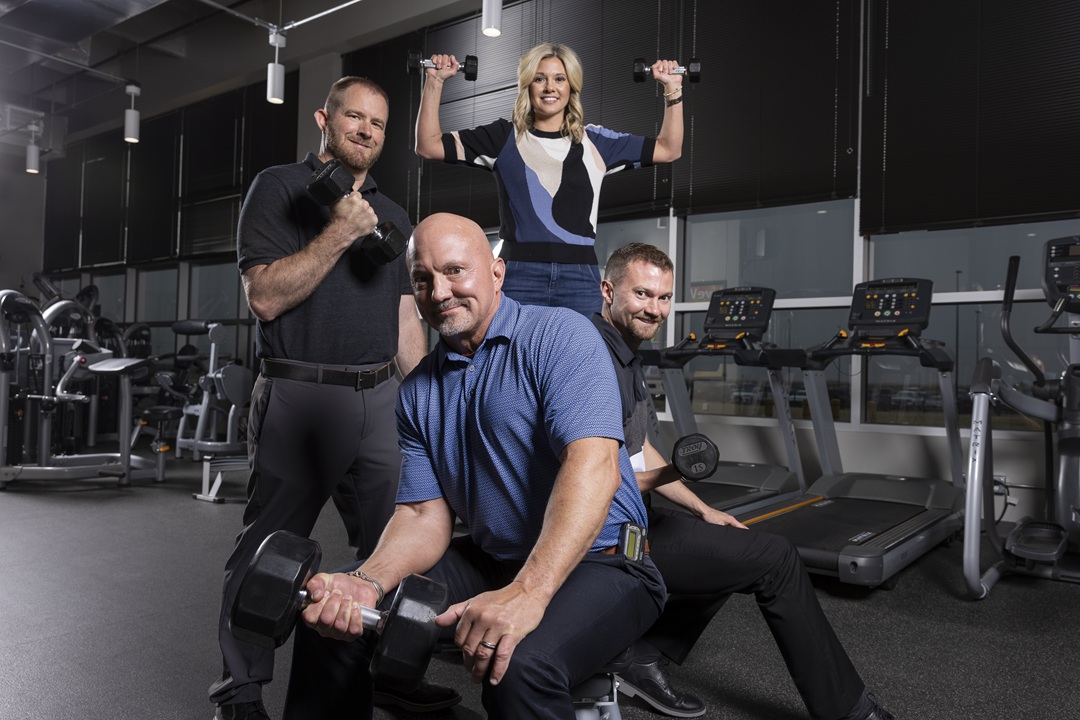
Robert Spence has worked at Pantex for 34 years. His son, daughter, and son-in-law are continuing his legacy. Photo by Adam Baker.
The Spence family operates on a simple philosophy: True strength is built from the inside out. They understand that while physical endurance keeps them moving, it is their shared values and emotional resilience that anchor their commitment to one another — and to their work.
“We are very close and do just about anything together,” Robert Spence said. “My kids are hardworking, dependable, loyal, and great people all around. We all like to stay fit through exercise and eating right, so we can bump into each other at the gym, cook out at each other’s homes, or I go to watch the grandkids’ sporting activities.”
Strength and endurance go hand in hand. Robert has been at Pantex since 1992, paving the way for his family’s legacy with resilience and fortitude as the senior manager over production stores. His son Jared is a manager for Safety Analysis Engineering and his daughter Kasie Thomas is a health physics supervisor.
“Our family spans three generations of supporting national security initiatives,” Jared Spence said. “My dad and grandparents worked for the Kansas City plant many years ago and now having most of my family working at Pantex has a special meaning.”
Kasie’s husband, Devin Thomas, is an issues and records manager for the Project Performance Analytics group. While Devin married into this nuclear family, he has resilient roots of his own.
“What brought me out to Pantex was my mother, uncle, and grandfather,” Devin said. “Brenda Thomas, my mother, worked out here 40 years and has already retired. Robert Digby, my grandfather, retired from Pantex and was a pipe fitter supervisor. Dale Stapp is my uncle. All encouraged me to seek out a career at Pantex due to the opportunities and the chance to make a difference with the work we do out at the plant.”
Devin says it’s been great to actively see his biological and chosen family flourish at Pantex.
“It is always a joy to see each other succeed in various ways, whether it is a promotion, a raise, a successful project, or by seeing each other’s faces on TheZone.”
Some know Jared is his father’s son because of physical resemblance and shared last name; however, people may not know Kasie’s relation since she carries her married name — but she’s still proud to claim them as family.
“I have always been very proud of my father and brother for the career paths that they had chosen,” Kasie said. “After being in healthcare for five years, I decided to make a career change in 2020. I knew the work that my father, brother, and husband did out here was important. Coming to Pantex was the best decision I could have made.”
While Kasie celebrates her dad, brother, and husband, they all recognize that she is a powerhouse.
“Kasie hands down outworks all of us!” Devin said. “She is a very hard worker and a quick learner.”
In the end, strength is just the decision to keep going, even when it’s hard. The Spence and Thomas families continue by lifting each other up, figuratively, through the ups and downs.
“I always like to see my family succeed and ultimately be happy,” Jared said. “Working at Pantex provides the opportunity to have both happiness and success.”
From Emerald to Diamond: A new era of leadership development
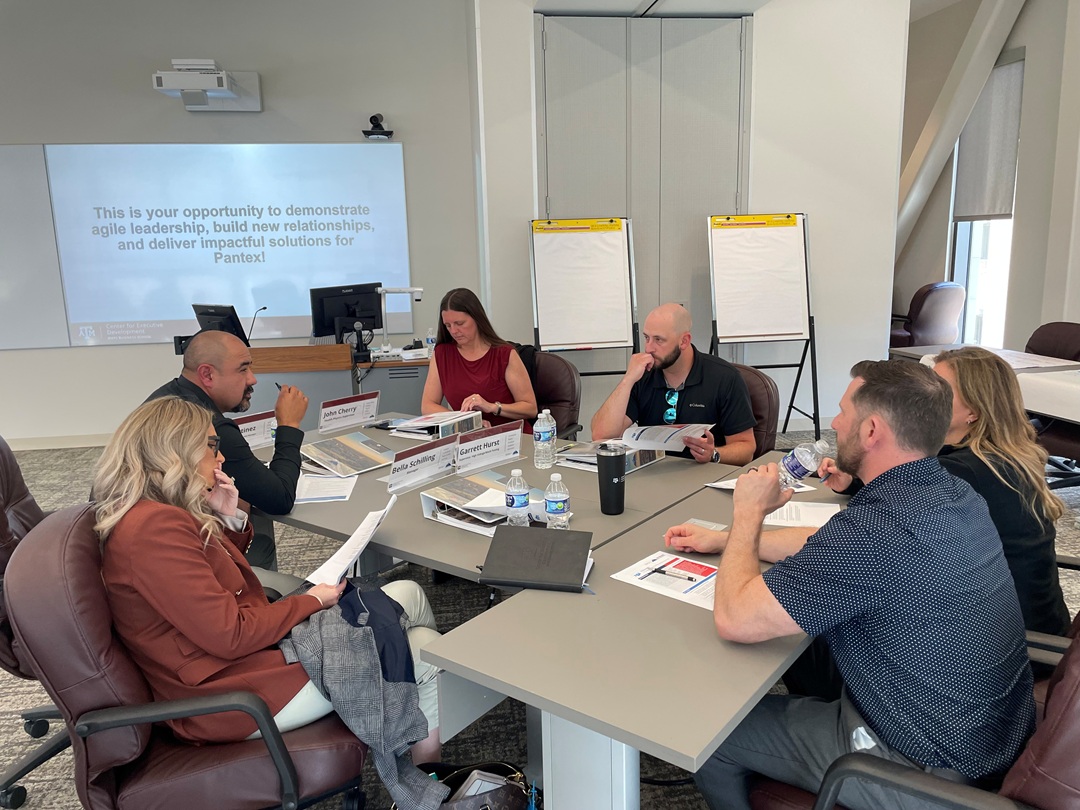
Sapphire Pantex Leadership Academy traveled to Texas A&M University to participate in leadership development.
Just like Rome, leadership isn’t built in a day. But at Pantex, you can feel it building — in the classrooms, in cohort conversations, and in the stories shared across TheZone — there’s a quiet but unmistakable momentum. People are growing, teams are strengthening, and the Pantex Leadership Academy (PLA) is becoming one of the most energizing parts of that journey.
Having just passed the one-year anniversary of the first PLA cohort, what began as a single successful leadership program has grown into a multi tier academy designed to shape leaders at every stage of their career. The PLA helps employees step forward with confidence, curiosity, and a clearer understanding of what leadership looks like, feels like, and demands across the Pantex mission.
The strength of the PLA is in the design. Instead of a single unit, the academy offers three paths, each crafted for a different stage of responsibility, readiness, and aspiration. The Emerald, Sapphire, and Diamond tiers form a progressive continuum of leadership excellence, with each tier building on the last to cultivate a unified, mission ready leadership ecosystem.
"Building the PLA has been a collaborative effort that reflects the commitment of senior leadership, the dedication of our facilitators, and the enthusiasm of participants across each cohort,” Leadership Training Director Amy Moran said. “By coordinating with external partners and stakeholders across the site, we’re able to create an experience that strengthens each participant’s leadership skills and elevates the success, alignment, and confidence of the teams around them."
This fall marks a major milestone as the first Sapphire cohort wraps up and PLA gears up to push out the first Diamond cohort. This turning point is a reason to pause and appreciate a homegrown leadership pipeline built for Pantexans by Pantexans.
“Watching these programs grow and seeing Pantexans step boldly into their leadership potential has been incredibly rewarding,” Moran said. “We’re excited to continue expanding the PLA and investing in the people who make our mission possible.”
Emerald is the spark where leadership begins. This tier is built for individual contributors and aspiring leaders who want to grow their influence and confidence. The primary focus is on foundational skills, team dynamics, and practical management.
Sapphire is where things deepen. Built for first-line leaders and managers stepping into broader leadership responsibilities, the program expands their capabilities in coaching and mentoring, developing team autonomy, managing through influence, and applying adaptive leadership. It also strengthens operational oversight through project management fundamentals, talent management, and resource prioritization, while advancing cross functional collaboration and strategic thinking across departments. As the first Sapphire cohort crosses the finish line this fall, their experiences mark the beginning of a new chapter for mid level development at Pantex.
Environmental Compliance Manager Alicia Barley reflected on what a top-tier experience the Sapphire Leadership Academy was for her. She was afforded the opportunity to connect and learn alongside fellow managers and engage directly with division directors.
“Those connections have broadened my understanding of our organization and strengthened my ability to lead effectively,” Barley said. “The relationships built, insights gained, and experiences shared throughout this journey have made the program both inspiring and transformative.”
Soon to launch its first cohort, Diamond will prepare leaders for future senior-level/c-suite/executive responsibilities. The core focus will be on enterprise strategy, complex decision making, long range vision, and the executive presence needed to guide the site’s future. Diamond completes the PLA structure, offering a pathway from emerging leader to executive candidate.
As Emerald thrives, Sapphire celebrates its first graduates, and Diamond prepares for launch, one thing is clear: PLA is more than a training program. PLA is a promise to invest in our people, to grow our future, and to make sure Pantex leadership is as strong as the mission it supports.
Pantex Proud: Sheldon Downing
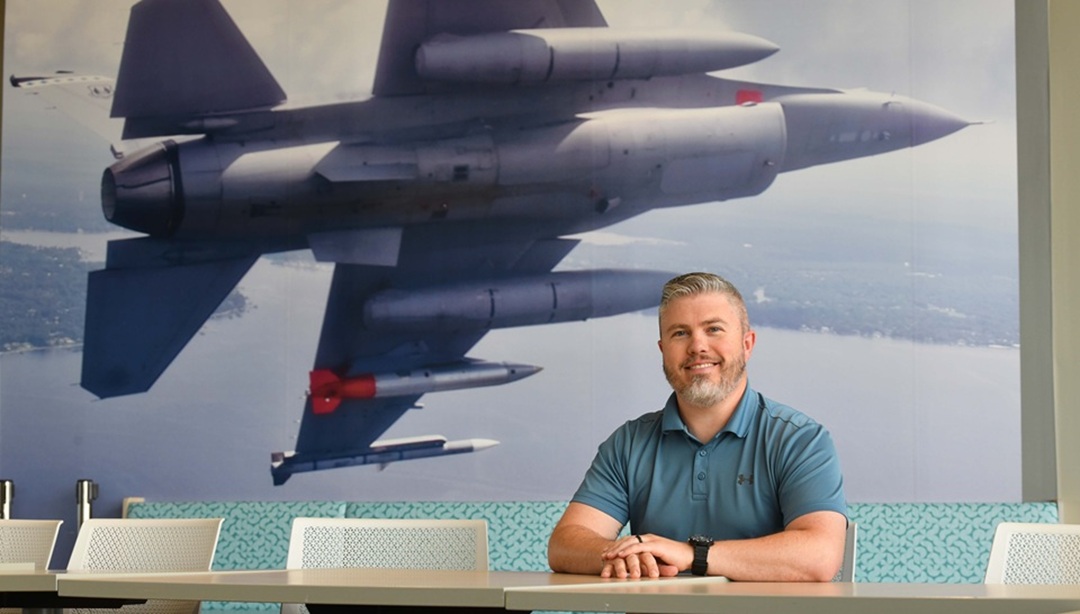
Photo by Michael Schumacher
Thousands of dedicated Pantex citizens like Sheldon Downing work every day to support the Pantex mission. Take three minutes to learn about who he is, what he does, and why he is proud to be a Pantexan.
For Solutions Architect Sheldon Downing, working in IT is more than technology. The continually advancing “world of tomorrow” captivates and intrigues him, yet what has truly kept him in IT is the same beating heart of many industries: customer service.
“I enjoy listening to internal customers and peers and supporting their needs,” Downing said. “I love networking and collaborating, helping individuals with their issues or sending them to the right person if I’m not the one to fix them. My small contributions have a great impact on mission success and the people responsible.”
Networking and collaboration lend to strong, resilient teamwork. But to get there, it’ll take a change in workplace culture, continuous effort, and open communication.
“It’s easy to find ourselves facing silos and handling problems on our own,” Downing said. “Sometimes, it may be because we don’t know where to start, but that’s why you ask anyone and everyone and figure that out. Vocalizing that you need help is hard, but having help makes the project goal so much easier to attain. You can’t stay isolated.”
Knocking down silos further reminds us that we aren’t alone in our mission, and like Downing, we should all be grateful for what we do.
“Not everyone can contribute to our national security, and I’m proud to be a part of that,” Downing said. “It wasn’t until I joined Pantex that I better understood the vital nature of our mission. We shouldn’t take that for granted, me included.”
Downing has a lot of accomplished work and strong working relationships to take pride in, but his proudest moment happened right after site separation.
“I was on the small team to replace the Unclassified to Classified system right after site separation,” Downing said. “We had to replace that system rapidly, yet we crossed the finish line ahead of schedule. For most of my work, I don’t always immediately see my contributions but to witness that take effect followed by its instant impact was amazing.”
How do you and your team contribute to mission success?
We are tied directly to Digital Transformation, modernizing several efforts across the site and the Enterprise Secure Network. We ensure we have site-to-site collaboration and can grow in stride with the rest of the enterprise.
What advice would you give to a new employee?
Don’t expect to know everything. And ask lots of questions. Find a good mentor or ask for one. Also, it's easy to stagnate and follow the status quo in our processes. Don’t be afraid to respectfully and professionally challenge methods, even if that’s the way it’s always been done.
What’s your favorite outside-of-work activity and why?
Warhammer 40K. It’s the definition of being a nerd, but I love all aspects of it; collecting, building, painting models, and even the lore. I enjoy playing with my friends and sharing this hobby with my children. It’s quiet, relaxing, and a nice break from staring at screens all day.
EVTs keep PXFD rolling; honoring the team behind the trucks
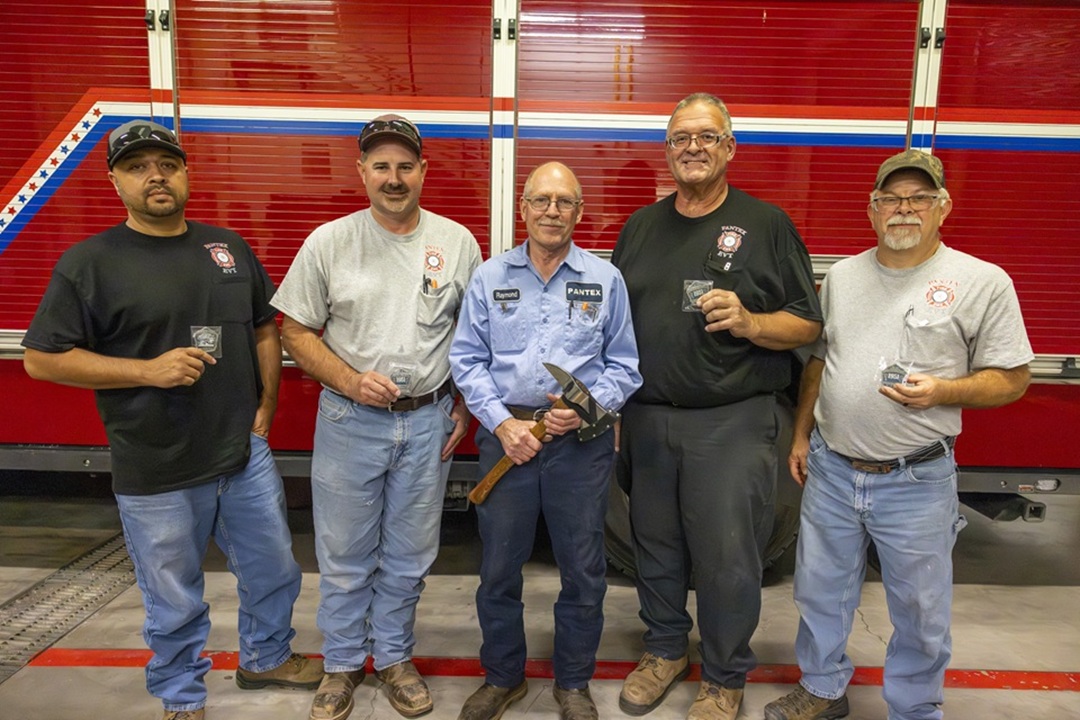
Raymond Nobile (center) received the 2026 Roy Linton Emergency Vehicle Technician of the Year award. Photo by Adam Baker.
Pantex Fire Department firefighters had just sat down to celebrate their Infrastructure colleagues at the annual Emergency Vehicle Technician (EVT) Luncheon when alarms sounded. Lights flashed inside the bay as emergency dispatchers announced the reported smell of natural gas in a building on-site and response was necessary. But you can’t respond to a potential emergency without a vehicle — and that’s where EVTs come in.
Watching the firefighters drive off from the station were five of the six EVTs being honored that day. The yearly banquet is held to thank the EVTs for ensuring that when alarms sound, emergency vehicles are ready to roll.
“Our EVTs maintain multiple different styles of fire trucks, brush trucks, and ambulances, so they are ready when we need them,” PXFD Captain Josh Brown said. “These vehicles require optimal maintenance and skilled workmanship because they are expected to last for 20 or more years. We used to take our trucks off-site, but thanks to this group’s expertise most work can now be done here.”
As highly trained mechanics, EVTs hold eight certifications which must be renewed every six years. This enhanced training and set of qualifications proves their expertise in niche automotive areas. Since 2007, they’ve been responsible for ensuring Pantex Fire Department apparatus and other emergency vehicles stay mission-ready and work when our first responders need them.
“Fire engines today are much more complicated and technologically advanced than they used to be,” Assistant Chief Bob Napp said. “The absence of modern technology here makes their jobs more challenging; however, when something breaks, the EVTs can be counted on to get it back in service.”
During the luncheon, Raymond Nobile received the 2026 Roy Linton Emergency Vehicle Technician of the Year award. He was selected for the pride he takes in his work, his attention to detail, and his willingness to lend a hand no matter how busy his schedule gets. Nobile was given a ceremonial prop axe as a trophy along with personal gratitude from emergency service members and senior leaders in attendance.
“If they could give out six awards, they should,” Nobile said. “Every one of the mechanics here puts in as much hard work as I do. We take care of what we need to take care of.”
“Nobile is a man of character and an absolute professional,” Brown said, adding the trait is typical within the group of mechanics.
The award was created to honor one of the original EVTs, Roy Linton, who died in 2020.
“Roy was a hard worker, positive, kind, and above all else a man of character. He approached his work with professionalism and took immense pride in ensuring our rigs remained operational, ensuring our firefighters returned home after every response,” Brown said. “Roy was the embodiment of reliability and integrity.”
Members of PXFD personally sponsor the luncheon and take time to prepare and serve it to the mechanics. They say this is because every department at Pantex is connected — and supporting each other — supports the mission. The shared meal celebrates colleagues and shows appreciation where it’s due. It is a thoughtful gesture to a small mechanic team that keeps the biggest trucks running.
One eye of the storm, four eyes on the radar
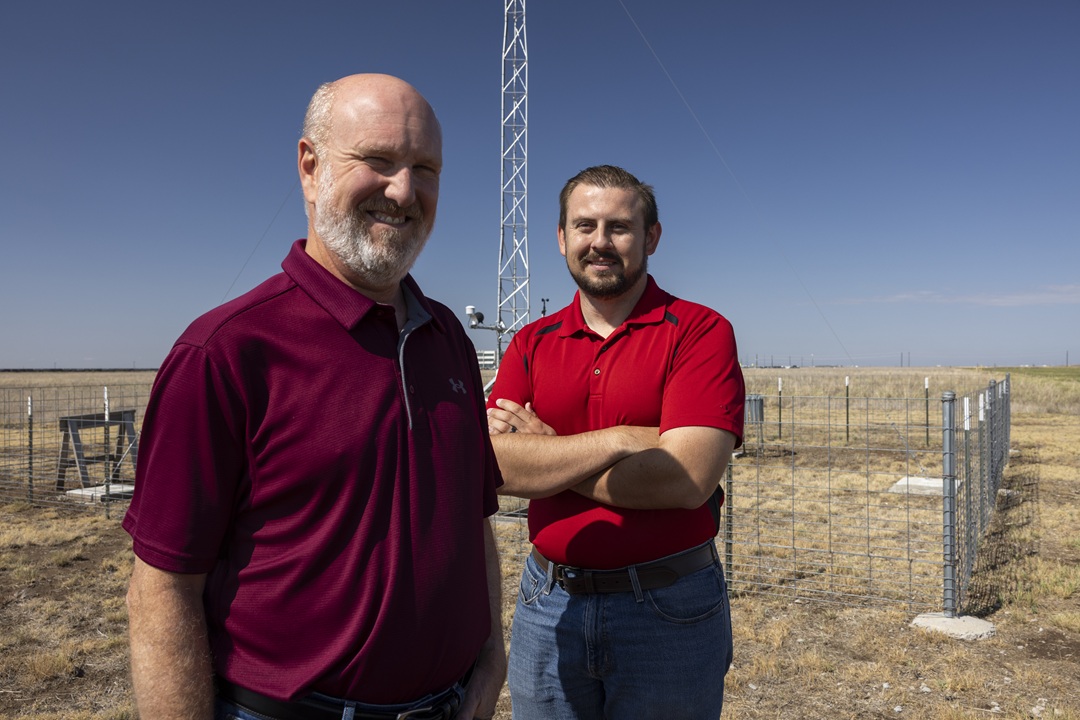
Meteorologists Steve Kersh and Corbin Voges combined have decades of local weather expertise. Photo by Adam Baker.
Reports show that in 2025, Texas recorded more than 13 million lightning flashes — the most of any U.S. state. And while Panhandle residents often welcome the rain that sometimes comes with thunderstorms, the lightning is another story. At Pantex, two on-site meteorologists work around the clock to protect the plant and its people through specialized analysis, constant monitoring, and multiple layers of redundancy.
“When I first started at Pantex in 2020, I was the only meteorologist,” Electromagnetics and Facility Engineering Meteorologist Steve Kersh said. “We were building redundant lightning systems — we only had one at the time. When that system failed, we had to scramble to get coverage back in place. Now, we’ve expanded our systems and added a second meteorologist in July of this year.”
Kersh focuses on electromagnetics, while Pantex’s new meteorologist Corbin Voges supports Emergency Management.
“I work directly with our Plant Shift Superintendent staff and the Operations Center,” Voges said. “I help establish lightning-free windows for production and support decisions when weather could prevent employees from safely getting to work — whether it’s snowstorms, wildfires, severe storms, or extreme temperatures.”
Combined, Kersh and Voges bring more than 40 years of Panhandle weather experience to Pantex — experience that matters in a region where weather changes fast. Texas’ size creates Texas-sized storms, producing high lightning count and long thunderstorm seasons. If it’s raining, chances are lightning isn’t far behind.
“Because of Amarillo’s proximity to the Sangre de Cristo Mountains and moisture from the Gulf of America, mid latitude cyclones often form right here in the High Plains,” Voges said. “We get some of the sharpest pressure gradients in the country, and this leads to that Panhandle wind many of us might despise in March and April.”
To track these systems, Kersh and Voges maintain and expand redundant weather-monitoring networks across the Panhandle. Lightning detection sites, skycams, and remote weather stations require continuous upkeep to keep production safe and ensure emergency teams have reliable, real-time data.
“We have about 94 pieces of weather equipment across the Panhandle,” Kersh said. “Sensors at places like Boys Ranch, Pampa, Clarendon, and Happy help us monitor conditions. The Happy site has been running since the early 2000s.”
Employees can also use Pantex tools to monitor weather on-site and at home. The StrikeNet app provides temperature, humidity, rainfall, wind speed and real-time lightning within 25 miles of each sensor. The Lightning Mapping Array shows cloud top electrical activity and can even detect static buildup before a lightning strike occurs. These systems benefit more than Pantex.
“Weather plays a vital role not just in our production but for our staff and surrounding communities,” Voges said. “Partnering with ranches, businesses, and other local organizations strengthens everyone’s safety. StrikeNet and our skycams support Pantex, but they also serve our neighbors.”
Pantex also hosts three West Texas Mesonet sites — east of the JCDC, on FM 683, and near Pantex Lake — providing official meteorological data to the Mesonet and the National Weather Service.
In a state where weather is always changing, the Pantex meteorology team delivers safety, preparation, and resilience. By combining advanced systems with decades of local expertise, Kersh and Voges help ensure operations continue safely — rain, wind, lightning, or shine.
Pantex awards $80,000 in 2026 Community Investment Grants
Almost $1.6 million dollars awarded to area non-profits organizations in 10 years
AMARILLO, TX – In its tradition of honoring grant requests to area non-profit groups, Pantex donated $80,000 this year to eight such groups, distributed with the assistance of the Amarillo Area Foundation.
The Pantex Community Investment Fund project was created in 2015 and in the last 10 years, has awarded a cumulative $1.56 million dollars through 183 grants to non-profits in the Texas Panhandle. The fund is a partnership between PanTeXas Deterrence LLC (PXD), the managing and operating contractor of the Pantex Plant, and the Amarillo Area Foundation.
“Pantex is very much invested in our community, and our partnership with the Amarillo Area Foundation, supporting local growth and development while giving Pantexans a voice in determining where corporate dollars are invested,” according to PanTeXas Deterrence President and General Manager Kelly Beierschmitt. “We are pleased to partner with the Amarillo Area Foundation and area non-profits across the Texas Panhandle, where Pantexans live, work, and raise their families.”
Pantex partnered with the Amarillo Area Foundation to create an innovative and effective method for contributing to the community while also engaging Pantex employee participation. The Pantex Community Investment Fund committee is comprised of approximately a dozen Pantexans who volunteer to serve a two-year term on the committee, which listens to and reviews grant proposals before making the decisions regarding Pantex’s philanthropic gifts.
"Through our long-standing partnership with Pantex, we are honored to support nonprofit organizations that are making a measurable difference all across the Texas Panhandle,” said Keralee Clay, AAF President & CEO. “This grant cycle allows us to annually amplify the impact of groups working to strengthen families, build community resilience, and create opportunities for those needing it the most. We are especially grateful for the generosity of Pantex employees, whose commitment to giving back continues to be a powerful force in our communities.”
2026 Pantex Grant Recipients $80,000 in total allocations
- Downtown Women’s Center: $10,000 — Funding provided will support programs and services for women recovering from substance use disorders and their children.
- Family Support Services: $10,000 — Funding provides prevention staff with program supplies, food, and support needed to deliver youth and family programming that builds safe, healthy communities.
- High Plains Children’s Home & Family Services, Inc.: $10,000 — Funding will be used to purchase one large generator, accessories, and installation, providing power to housing during power outages.
- High Plains Food Bank: $10,000 — Funding will be used toward food, supplies or equipment purchases for the Kids Cafe program.
- Hope Lives Here: $10,000 — The funds will be used to help cover the cost for 12 Veteran/service dog teams. They will also assist with supplies and facilities to accommodate services.
- Jack Duncan Rhodes Foundation $10,000 — Funds will be used at Jack’s Place Youth Counseling Center to increase no cost counseling sessions to meet demand.
- The Bridge Children’s Advocacy Center: $10,000 — Provide services for approximately six Texas Panhandle children in the wake of abuse or witnessing violence.
- White Deer-Skellytown Lighthouse Food Pantry: $10,000 — Funds will used to purchase protein to supplement clients’ diets with the goal of providing one meal per day per person in each client family.
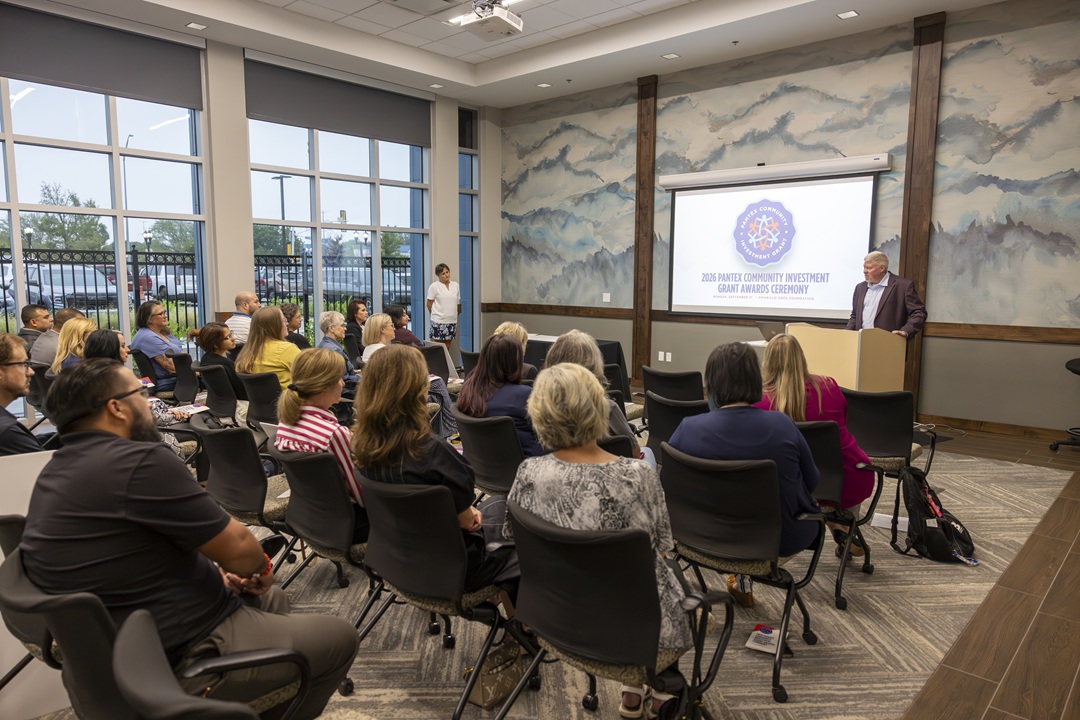
PanTeXas Deterrence President and General Manager Kelly Beierschmitt addresses the crowd attending the 2026 Pantex Investment Grants Ceremony at the Amarillo Area Foundation.
For more information on Pantex, visit www.pantex.energy.gov. Follow Pantex on Facebook, X, YouTube, Instagram, or LinkedIn.
CONTACT
Steve Myers
Communications
(C) 806-236-2826
stephen.myers@pantex.doe.gov
Pantex Citizen: Esrael Silva

Esrael Silva serves the community through the Texas Association of Sports Officials.
The Pantex Citizen feature shines a light on the remarkable employees of Pantex who go beyond the job. Pantexans manage dual roles as dedicated professionals at the plant and as active, engaged citizens in their communities. All views and opinions are the employee’s own and do not necessarily reflect those of PanTexas Deterrence, LLC.
For more than 15 years, Security Police Officer Esrael Silva has been part of the Pantex defensive line, helping safeguard the site with the kind of focus and discipline you’d expect from a seasoned player protecting the end zone. Over the years, he has stood shoulder‑to‑shoulder with teammates who take pride in protecting the mission, supporting their colleagues, and serving the Texas Panhandle community.
When Silva steps off the Pantex field, he heads straight onto another: the football field. He volunteers with the Texas Association of Sports Officials (TASO) Amarillo Football Chapter, serving as a high school and NCAA football official and chapter president. Essentially, Silva is the head coach for officials across the region.
“I became involved because I love football and wanted to remain connected to the game while giving back to student-athletes and our local schools,” he said.
In his leadership role, Silva helps recruit, train, and mentor new officials, preparing them to make the right calls when the pressure is on. He runs chapter meetings like team huddles, communicates with schools and athletic directors, and consistently promotes professionalism, accountability, and sportsmanship.
Most importantly, he focuses on developing younger officials to officiate varsity matchups under those bright Friday night lights.
For Silva, football has always been part of his playbook.
“Officiating provides an opportunity to teach sportsmanship, model leadership, and help create a safe and fair environment for competition,” he said.
As he gained experience, Silva recognized a critical need: recruiting more officials. Without them, the games simply cannot be played. Stepping into a leadership role gave him the chance to help ensure future generations of athletes keep enjoying the traditions communities cherish.
Some of Silva’s favorite moments are from watching new officials grow. Many step onto the field for the first time feeling unsure, but after training, mentorship, and game‑day experience, they begin to make confident calls, earn varsity assignments, and ultimately become mentors themselves.
Additionally, he recalled, “It is also meaningful when a coach, administrator, parent, or student-athlete takes time to thank our crew after a game. Officiating often requires making difficult decisions under pressure. Those moments remind us that our preparation, professionalism, and commitment make a difference.”
Silva believes the Pantex Citizen outcome shines a spotlight on how employees make an impact far beyond the plant gates. Many Pantexans bring their leadership, service mindset, and strong work ethic into the community, strengthening organizations across the Texas Panhandle.
“Recognizing those efforts encourages others to get involved. It also shows the community that Pantex employees care deeply about the people and communities we serve,” he said.
Silva’s advice to potential volunteers is to get off the bench and into the game.
“Start by identifying something you care about and find a local organization that supports it. You do not need extensive experience or unlimited time. You need a willingness to serve, learn, and remain dependable.” He continued, “Your contribution might feel small at first, but consistent service matters. You will build relationships, strengthen your community, and often receive as much from the experience as you give.”
In the end, Silva reminds us that whether it’s at Pantex or under the Friday night lights, we all have a role to play. So grab your gear, step onto the field, and help your community keep moving the chains.
People of Pantex: Dana Smith
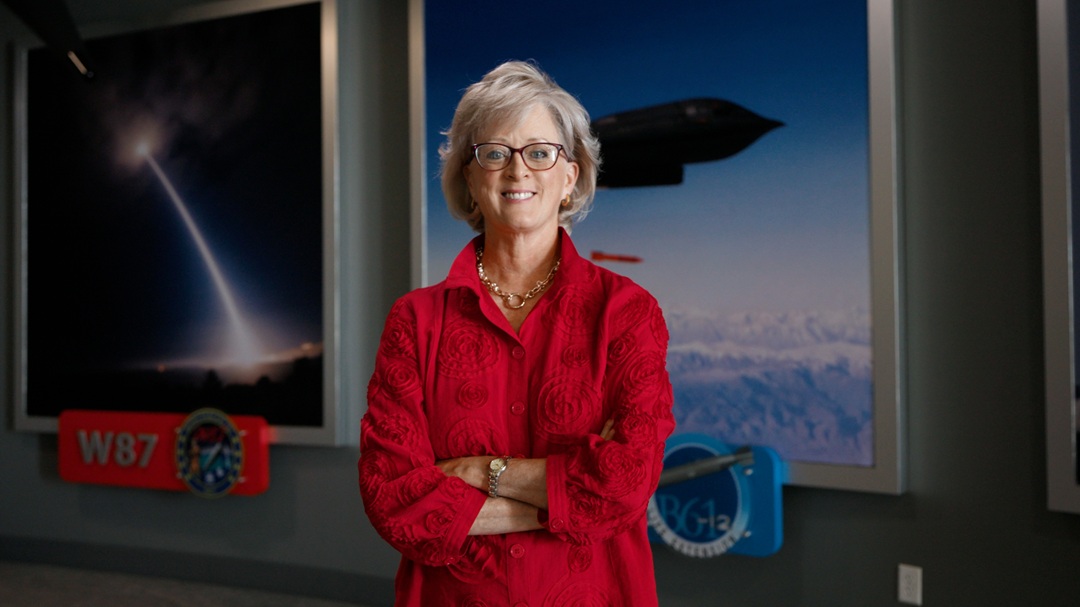
A young Dana Smith quickened her steps to keep pace with her mother. They entered the community center — a symphony of activity humming through the corridors. Smith could smell chlorine and hear water splashing among the noise. On the way to the pool where Smith would be taking her swimming lesson, an open studio caught her attention. Smith peered inside, not realizing her life was about to change.
“It was a little ballet studio with mirrors and the barre. I stopped to watch part of a class,” Smith said. “Those girls with their hair in a bun and their toe shoes and their skirts and their tutus — that was it. That’s what I wanted to do.”
At just under five years old, Smith began ballet and advanced quickly, moving from the Denver Civic Ballet to the North Carolina School for the Arts. After high school, Dana joined the traveling company known as the Washington Ballet.
“We spent more time on the road than we did in Washington, D.C. We traveled to South America and Asia,” Smith said. “It was interesting to see those cultures and interact with them, but there were parts of it that were sobering. It really opened my eyes to how unique the experience was and made me a little more grateful for it.”
Seven demanding, transformative years with the Washington Ballet produced unforgettable memories and challenging performances.
One piece was called “Glow of the Night,” performed at a benefit gala put on by English ballerina Margot Fonteyn. Appointed by Queen Elizabeth II as Prima Ballerina Absoluta — a title awarded to the most supreme female ballet dancers — Fonteyn held celebrity status, but Smith remained composed both in meeting her and performing on stage in front of her.
“It was like meeting the Audrey Hepburn of the dance world. She was gracious and kind. She just had this aura,” Smith said. “As for the performance, I don’t know if I willed it or if there was a bit of magic out there, but it was one of the only times I felt truly unbound — like I had a freedom in my body and my movement. It was so intense that when it was over, I cried.”
The most challenging piece in Smith’s career was “The Unknown Territory” created by Singaporean ballet dancer and choreographer Choo San Gogh, resident artist director at the Washington Ballet. Under his direction, Smith further cultivated her grace, developing great respect for and more importantly, a strong friendship with him.
“The piece was very abstract. It was about tribal people engaging in kind of a ritual, including a wedding,” Smith said. “The company really enjoyed it, but it was extremely difficult to try to tell that story through dance in a way that would resonate with people.”
Smith continued to evolve in studio and on stage, drawn to the unmatched blend of the tangible and intangible naturally embodied in the medium.
“I enjoyed the athleticism of it — the physical challenge of improving technique. Then as you grow, the next challenge is to combine physicality with artistry and find a way to be a performer that is interesting to people,” said Smith. “You can't just do the steps, there’s a way you must hear the musicality, the way you syncopate your movement, and the way you can project emotion.”
Yet, as with any performance, there’s always a final curtain call. Smith began to feel hers was on the way.
“I realized my talent had taken me as far as it was going to go, and dance had begun to feel more like work than passion,” Smith said.
Then came tragedy.
“Choo San and I had a very close relationship,” Smith said, tears glossing her eyes. “We shared a birthday. He liked to talk about non-ballet things such as life, about growing up in Singapore, and many other things. So, when he passed away, a little part of my love of dance passed with him.”
Although heavy with loss and burned out by demand, Smith didn’t move on from dancing right away. She carried on, taking the stage several times as one of two performers in contemporary piece called “The Time Before the Time After (After the Time Before), a demanding 17-minute duet with no costumes, characters, or pageantry — only the dance.
“When you strip away those elements, performing in a way that keeps the audience engaged in what you were doing is hard,” Smith said. “Achieving that level of audience attention without much of the artifice that sometimes comes with classical ballet was memorable.”
However, this piece was unforgettable to Smith for another reason. One day, Smith and her partner rehearsed the piece before the performance on that evening’s agenda, which was also to include a special memorial for Choo San. In attendance was Mikhail Baryshnikov, the preeminent male ballet dancer. Baryshnikov had commissioned Choo San to create a piece for him, and that night, Baryshnikov was to speak at his memorial.
Once rehearsal wrapped, Smith clipped on her Walkman, slid on her headphones and zoned out to music. Moments later, she felt a tap on her shoulder.
“Baryshnikov was standing two feet from me,” Smith said. “He placed a hand on my shoulder and said, ‘It’s nice what you do.’ He’d been watching us rehearse from darkness of the house seats. That was a high point in my life, getting that accolade from someone like him.”
While Baryshnikov’s words resonated warmly within, Smith knew it was time to earn an education and begin a professional career outside of dancing.
Smith headed back to Denver, her hometown, and went into paralegal studies, eventually acquiring a job in the field.
“It was liberating, to be free from the constant expectations from dance,” Smith said. “But ironically, I did struggle with that loss. It was difficult. So, I went back to performing, just on a smaller scale.”
For three years, Smith was a big fish in a small pond. Her resurgence into dance was now less of a demanding profession and more of a joy. But that joy was only temporary.
“I reached a point where I just realized I didn't want to do it any longer. It wasn't who I was anymore,” Smith said. “I never ever had any desire to teach or become a ballet master so I left that world. But that chance to continue performing in a way that was just a passion and not work made it easier to walk away.”
Smith spent 37 years in the paralegal world, and like her career in dance, she reached a point where she knew it was time to move on. That move was to Pantex.
Smith works in IT as the business office resource and portfolio specialist. She manages the intake of project requests and makes certain they are shepherded through the process and are in the appropriate portfolios. And although she enjoys what she does, there’s one thing that she really loves about Pantex.
“The extraordinary people,” Smith said. “They’re willing to share knowledge and give time. There’s genuine support, from leadership down to my team, and I sincerely enjoy working with them every day.”
Although ballet remains a poignant part of Smith’s life, she remains thankful. Thankful for the memories, the expression, the artistry, and the character strengths it provided her.
“Dance gave me discipline, perseverance, and focus to work harder than the other person, even when I feel like I'm at the end of my rope,” Smith said. “When life is overwhelming, it helps me remain mentally focused, to push on, that I can always find a little something more in myself.”
Learn more about Dana Smith.
Pantex firefighters continue 9/11 memorial tradition

Firefighters Joshua Brown, Jacob Frame, and Mike Kendrick climbed 110 stories to honor the 343 firefighters killed in the line of duty on September 11. Courtesy photo.
“We climb for them. We honor the fallen. We will never forget. Never.”
Pantex Fire Department Captain Josh Brown spoke these words as he prepared to climb a distance equal to the height of the twin towers — 110 stories — to memorialize the 343 firefighters who gave their lives responding to the terrorist attacks in New York City on September 11, 2001. In full gear, Brown and fellow Pantex firefighters Jacob Frame and Mike Kendrick participated in the Kansas City 9/11 Memorial Stair Climb for the second year in a row to honor the legacy of the fallen.
“Side by side, veteran firefighters and our newest members carry on the traditions and keep the memory of those 343 fallen brothers and sisters alive,” Brown said. “This was one of the most physically challenging events I’ve ever participated in. The heat was 102 degrees in the stairwell, and we were climbing in full gear with air packs. Yet, despite the heat, the gear, and the physical exhaustion, every step reminded us of the firefighters who willingly ran up those stairs, believing they might be able to save lives. They were heroes that day, heroes who gave, not lost, their lives.”
Each participant carries the photo and badge of a firefighter who ran toward danger but never made it home. Climbers take on all 110 stories by going multiple times to the top of the Skyline Collection high-rise in downtown Kansas City to deliver the photo to the top. The route winds up the interior stairwell of the building, where photos, handwritten notes, family pictures, and mementos line the walls, surrounding each climber with the faces and stories of the heroes they represent.
“Traditionally, a 25th anniversary is symbolized by silver, a metal known for its resilience, durability, strength, and ability to hold up under pressure,” Brown said. “Over the last quarter-century, this nation has been tested by terrorism, natural disasters, and a global pandemic. Yet, the United States and its people do not break. We adapt, we push through, and we stand ready whenever the call comes.”
The final act of the climb is to ring a ceremonial bell as a tribute to those who could not ring it themselves.
“Whether serving our national security mission at home or honoring our fallen brothers and sisters in Kansas City, we stand together,” Brown said. “As we strike the bell and call out the name of our assigned fallen firefighter, we will be doing so in honor of all Pantexans.”
PXFD's commitment extends far beyond emergency response. Whether supporting neighboring departments through mutual aid, leading safety training, mentoring local students, or climbing 110 flights of stairs in honor of fallen heroes, the department takes pride in representing Pantex throughout the community. With each step of the memorial climb, PXFD firefighters not only honored those lost on 9/11 but reaffirmed their own dedication to a profession rooted in service.
“We climb to remember,” Brown said. “And we vow never to forget.”