



News
Pantex Proud: Misty Churchwell
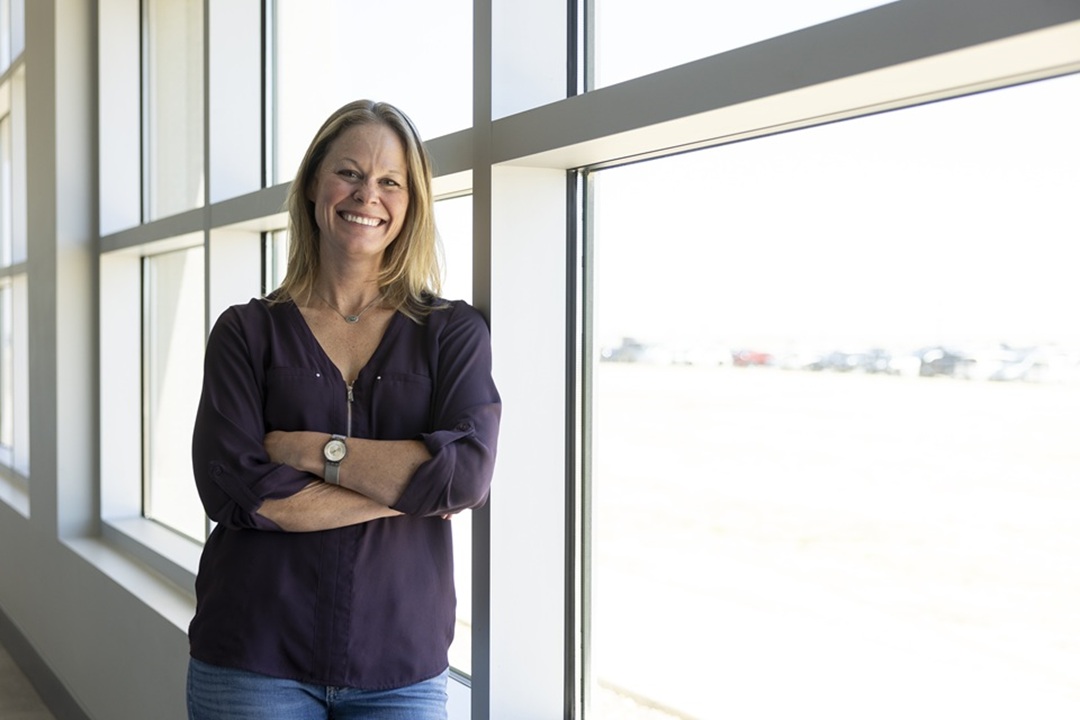
Thousands of dedicated Pantex citizens like Misty Churchwell work every day to support the Pantex mission. Take three minutes to learn about who she is, what she does, and why she is proud to be a Pantexan.
It’s been said that the only consistent thing in life is change. But for Misty Churchwell, the stability at Pantex has been a constant through her adult life.
“All my major milestones have taken place while working here; marriage, kids, career, etc.,” Churchwell said. “The people I have met and the relationships I have established have had a lot to do with shaping me into the person I am now. I’ve grown so much during my tenure here.”
Churchwell has worked at Pantex for 15 years, starting as a quality assurance technician before becoming a process engineering technical specialist and ultimately an environmental scientist.
In her current role, she develops National Environmental Policy Act reviews for site projects by coordinating with people throughout the plant to identify environmental controls.
“Not only does teamwork allow you to rely on others to ensure you put forth quality work, it also allows you to develop relationships,” she said. “By developing those relationships, you become accountable to yourself and those around you. Plus, the people are always who you show up for.”
Churchwell believes pride in the workplace, continuous improvement, and a growth mindset contribute to mission success.
“There is always more to learn and by being open to that, you have the chance to improve things both for yourself and others,” she said. “If you don’t make efforts to learn, you grow stagnant. There is so much opportunity to grow and each person can choose the path that is right for them. But even while choosing different paths, we still get to stay connected.”
A budding career, flowering relationships, and a blooming future are not the only things Churchwell cultivates.
“I love to garden,” Churchwell said. “I find it very relaxing and rewarding, and I’m pretty good at it.”
Why is it important we keep a questioning attitude?
Technology changes, goals change, people bring different experiences and knowledge that may not have been available when the status quo was developed. Good enough can always be better. By questioning things, you learn and improve.
What advice would you give to a new employee?
Just slow down; Pantex is different. It’s intimidating to get started out here and in each new position/organization you choose to be a part of. Your previous experience really is relevant, you just have to get used to all the unique processes out here. It’ll come with time. And, also, go on plant site when you can if that is not part of your normal job. That’s where the magic happens. Make a point to learn why you are here.
What is one thing your coworkers would be surprised to know about you?
When I was 19, I went swimming in the middle of the Bermuda Triangle while on a summer school at sea trip. It was fun and exciting then, but I look back now and think... if that was my kid! Oh my gosh!
Pantex Crimefighters: The Dynamic Duo
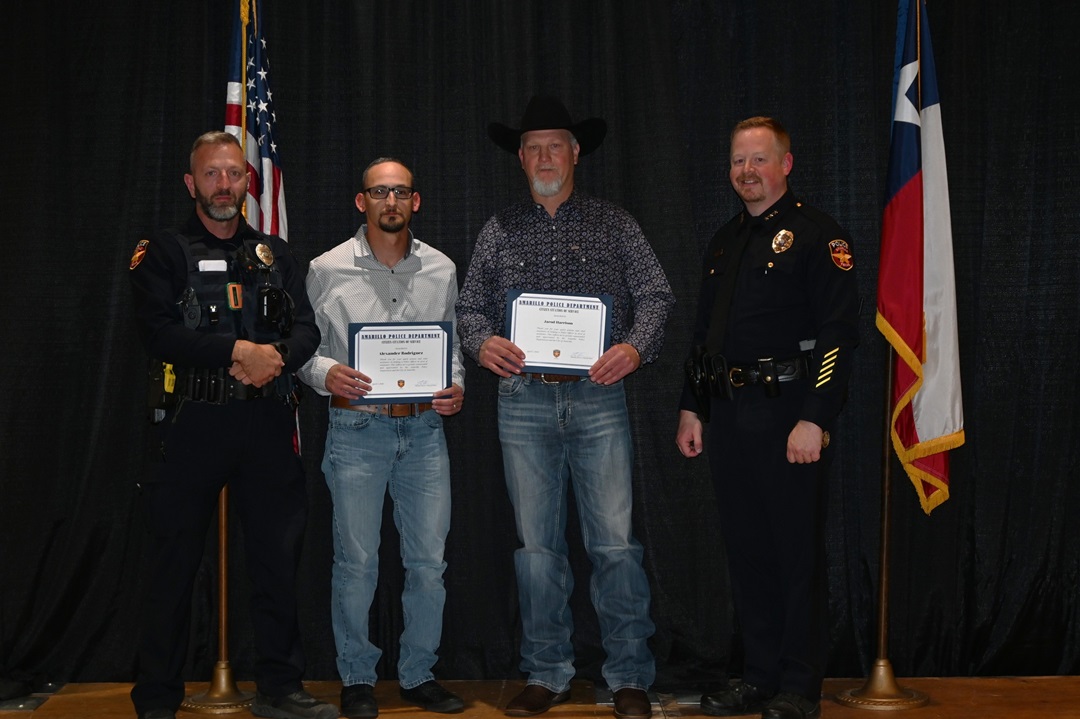
Pantexans Alex Rodriquez and Jaron Harrison received special citations from the Amarillo Police department for their actions in assisting a police officer during an arrest.
We often think of crimefighters as wearing capes or possessing superpowers, but heroism usually doesn't wait for a uniform. For Pantexans Alex Rodriquez who works as a mechanic, and Jarod Harrison from emergency management, hero status came in the form of split-second decisions on an ordinary afternoon commute — one that would see them charging headfirst where angels fear to tread, defending a lone police officer from an aggressive suspect.
Last year, Alex and Jarod were heading home from work in their respective vehicles. Alex recalled that traffic was heavy that day on Interstate 40, leading him to take a different route home, bypassing his usual turnoff.
As he exited at Ross Street and pulled up to a red light, something immediately caught his attention. He noticed a man walking down the middle of the street. An Amarillo police officer pulled up beside the man, and when the light turned green, Alex had a sudden realization.
“I thought to myself there was a reason why I was brought this way. So, I pulled into the turning lane to try to shield the officer (from traffic) and turned on my hazard lights,” he recalled.
As he parked his car, Rodriquez saw the officer deploy his taser, which dropped the man to the ground — but only for a few, brief seconds. The suspect got back up and lunged toward the officer, who had taken a defensive posture with his baton. Sensing the impending danger, Alex stepped in.
“It goes with what I preach to my sons,” Rodriquez said. “Help others when you can, no matter their shape, size, or color.”
At that moment, out of the corner of his eye, Rodriquez caught a glimpse of his co-worker Jarod Harrison sprinting across traffic and taking down the suspect with a flying tackle.
“I ran over to assist them with getting him detained. It seemed like forever for the officer’s backup to arrive, but it was probably only a minute or two,” Rodriquez said.
Afterward, both Pantexans filled out paperwork detailing their actions, were graciously thanked by law enforcement, and went on with their respective lives.
A few months later, Alex received a voicemail from an unrecognized number. After listening to the message, he anxiously told his wife the news: he and Jarod were being recognized for their efforts at a special Amarillo Police Department ceremony.
“I didn’t want to go because I’m not the kind of person who needs recognition for helping others, but my wife was quick to let me know that I was going — it wasn’t an option,” Rodriquez joked.
Rodriquez’s nerves mounted as they arrived at the ceremony and only increased when their names were called and their story was shared with the crowd. The pair walked up on stage, shook the police chief’s hand, and received a resounding standing ovation.
“I’m a mechanic, and we don’t get many awards, much less an entire room of people standing up and clapping for you. It was very nerve-wracking, yet incredibly rewarding as well,” he noted.
When reflecting on that fateful afternoon, Rodriquez keeps his perspective humble.
“I tell people I was just in the right place at the right time. Would I do it again? Absolutely. I’m just the type of person to help anyone in need,” he said.
It sounds exactly like something a true hero — and a proud Pantexan — would say.
Pantex Proud: Darryl J. Hunt

Thousands of dedicated Pantex citizens like Darryl J. Hunt work every day to support the Pantex mission. Take three minutes to learn about who he is, what he does, and why he is proud to be a Pantexan.
For nearly a quarter-century, Protective Force Major Darryl J. Hunt has been a steadfast guardian at the Pantex Plant, dedicating more than 23 years to safeguarding our nation's nuclear assets. As acting deputy chief, Hunt’s commitment extends far beyond a job description; it’s a deeply ingrained sense of duty and pride.
Hunt’s daily responsibilities are diverse, ranging from Protective Force coordination and recruitment to leading critical security escorts. Yet, for him, joy lies in human connection. When asked what he enjoys most about working at Pantex, his response came quickly.
“Recruiting candidates to become security police officers,” he said. “Also, helping others. These are my favorite parts of the job.”
And what makes him a proud Pantexan?
"Being able to say that I am one of the people that protect the nation’s nuclear assets makes me very proud," Hunt said.
This profound sense of purpose was perhaps most keenly felt during one of his proudest moments at Pantex, when he conducted a security escort for the vice chair of the Joint Chiefs of Staff – a testament to the high stakes and critical importance of his role.
Pantex itself holds a special place for Hunt, but it’s the people who truly make the difference.
"I work with an amazing group of men and women from the bottom to the very top," Hunt said, highlighting the camaraderie and shared commitment that define his team.
For Hunt, professional growth is continuous. Teamwork, accountability, and communication are not just buzzwords but foundational pillars for achieving goals, setting new standards, ensuring progress, and building trust through active listening.
Why is Pantex’s mission important to you?
As long as we have men and women in uniform defending our country, Pantex has an obligation to provide the weapons necessary to defend privileges and freedoms Americans sometimes take for granted.
Why is it important we keep a questioning attitude?
Being able to know and understand the “why” and avoid complacency is important — challenge assumptions.
What advice would you give to a new employee?
Understand Pantex is a small family and no one wants you to fail, so don’t be afraid to ask questions and do the best you can. Show up tomorrow and be better than the day before.
Who in your life has inspired you the most and why?
My mother … raised three boys by herself and kept us in line. She taught love, respect, and discipline. She was a leader, hard worker and allowed us to learn from our mistakes. My brothers and I are family men with great careers. There are not enough words to express the gratitude, influence, and direction she provided to my life.
Masters of organization, keepers of calm

Masters of organization, professional problem solvers, chaos coordinators – all unofficial names for those who provide behind-the-scenes assistance across all divisions of Pantex. We know them officially as administrative professionals, and in the realm of IT, we know them as Kristy Horn and Tracy Morris, the dynamic duo who support IT so IT can support us.
Horn discovered her passion for administrative support at Utility Engineering of Amarillo and eventually sharpened those skills at BSA Health System and Amazon.
Morris went to college to become a funeral director and quickly learned the industry’s emotional demands. However, with her servant’s heart and organizational skills honed in the funeral business, she transitioned into administration and eventually served as senior admin to AIG’s president in Amarillo.
Accustomed to the corporate environment, their move to Pantex proved fairly easy. The jump into IT, however, was a different story.
“I hadn’t worked in IT so it was a little overwhelming,” Morris said. “Initially, the specialized terminology was challenging but with experience my comprehension significantly improved. It has been a valuable learning experience to understand the diverse IT applications and systems critical to plant operations.”
Despite a steep learning curve riddled with technical language, acronyms, and programs and processes, Horn and Morris gracefully stepped into unfamiliar territory. Driven by a deep need to serve others, they continue to grow personally and professionally while getting the job done.
“Our roles demand exceptional adaptability to address a diverse range of tasks,” Horn said. “These responsibilities can shift from routine support functions, like managing supplies, to critical problem-solving, such as streamlining processes for colleagues. While core daily duties exist, the overarching workflow is dynamic, requiring a proactive approach and a commitment to finding solutions.”
Horn and Morris each have their own specialties. For example, Horn assists with visitor access and Morris with department travel. While each supports specific IT organizations, they also cover each other when needed. Despite who or what needs assistance, simply helping others is the joy of the job.
“I thrive on being a go-to resource for diverse needs,” Horn said, “from locating essential office supplies like a pen or a box of tissues to preparing and presenting a crucial PowerPoint with just a 15-minute lead time before a meeting.”
The IT admins also support staff in a different way, focusing on bolstering comradery through personability to create a more relaxed environment.
“When I first came to Pantex and we had our morning meetings, no one said ‘good morning,’” Morris said. “I made a point to say it every single day. Eventually, they started returning it. I truly value being able to help colleagues in any capacity, even if it’s just lifting spirits with a smile and warm greeting.”
Since joining IT, Horn and Morris’ powerful influence remains undeniable across all teams and staff. Their commitment to teamwork and encouragement exemplifies leadership from within, which doesn’t go unnoticed.
“In an IT organization as complex and fast moving as ours, Tracy and Kristy aren’t just support staff — they are the backbone of our operational discipline,” Chief Information Officer and Director of IT Seth Ritter said. “Their coordination, foresight, and guidance keep our teams aligned, our priorities clear, and our mission advancing. We simply couldn’t deliver at the level we do without them.”
Pantex Proud: Francisco Armendariz
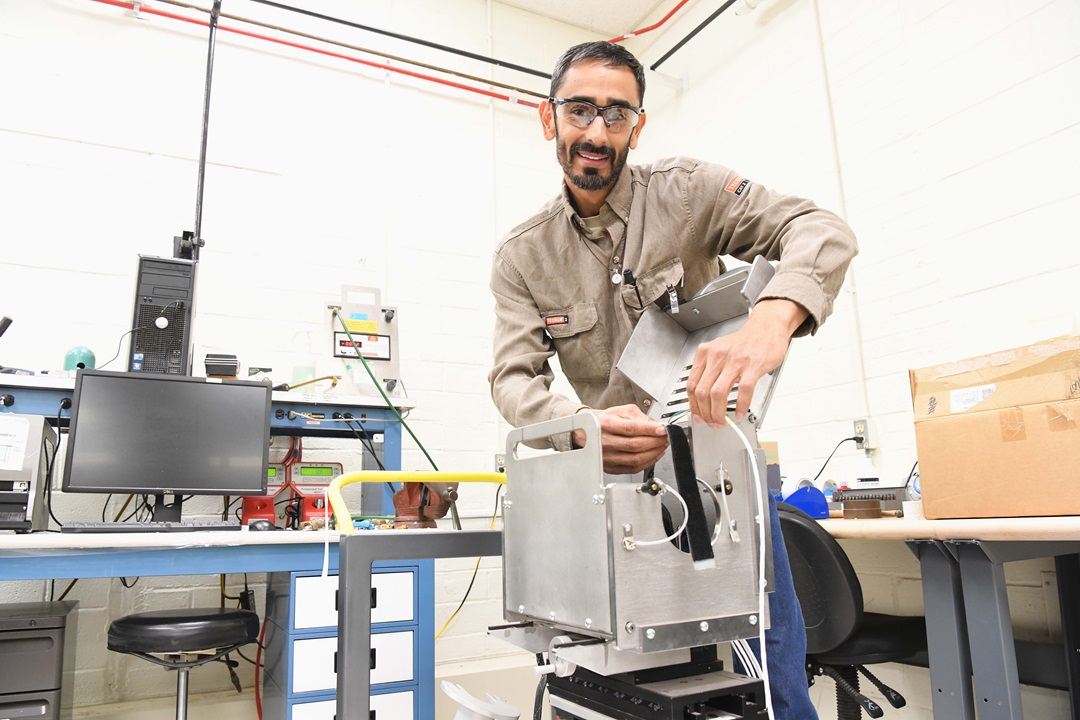
Thousands of dedicated Pantex citizens like Francisco Armendariz work every day to support the Pantex mission. Take three minutes to learn about who he is, what he does, and why he is proud to be a Pantexan.
Attention to detail is a skill that most people have to practice, but for some, like Instrument Technician Francisco Armendariz, they seem to have been born with a magnifying glass in hand. For Armendariz, no aspect of a task is too small.
“I got my attention to detail from my mom,” Armendariz said. “She is very particular about doing things the right way. I learned that from her. When I’m at home now, I see myself doing things the way she did.”
Armendariz has worked at Pantex for nine years, dedicating all of them to some form of electronics work. Currently he tests and calibrates tools, signing off when each piece of equipment is ready for work. He takes pride in writing his name by each verified tool, an acknowledgement that he has done his part to ensure his co-workers’ safety and the quality of work being done on the line. Though Armendariz gets joy from his day-to-day responsibilities, his love for tinkering started at an early age.
“I just remember troubleshooting Christmas lights when I was maybe six or seven. A light bulb was out and I was able to fix them for my mom,” said Armendariz. “I grew up thinking about that experience and carried it with me to college. I studied electronics and I built upon that.”
And build he has. His experience has provided him with the ability to work on all types of items at Pantex. One of his proudest moments was being able to build a control box with a teammate from bare bones to fully functional.
“My coworker and I delivered a project, but what made it special was the fact that we started from scratch. We started with an empty control box and ended with a complete unit full of wires and parts. It was a good feeling when we turned everything on and it worked.”
From Christmas lights to control boxes, Armendariz contributes his talent to the mission one detail at a time.
Why is being open to learn from others critical for mission success?
The more you know the easier it will be for you to perform your job. There is a saying in Spanish – “Al Major Acador se le va la liebre” – which translates to “even the best hunter loses its hare.” Even if you’re the best at what you do, you should never stop learning. When you think you know it all, you open yourself up to mistakes. The guy that doesn’t know much but wants to keep learning — he is going to surpass you. You have to stay humble.
What do you think makes Pantex so special?
For me, it is the work-life balance. We can always work something out when I need to be off. This is very important for me now that I am married and have three daughters.
Who in your life has inspired you the most and why?
My dad. He taught me to be patient without saying a word. His actions said a lot and, thanks be to God, I picked up on that.
Continuing a Legacy: Oppenheimer's Enduring Echo at Pantex
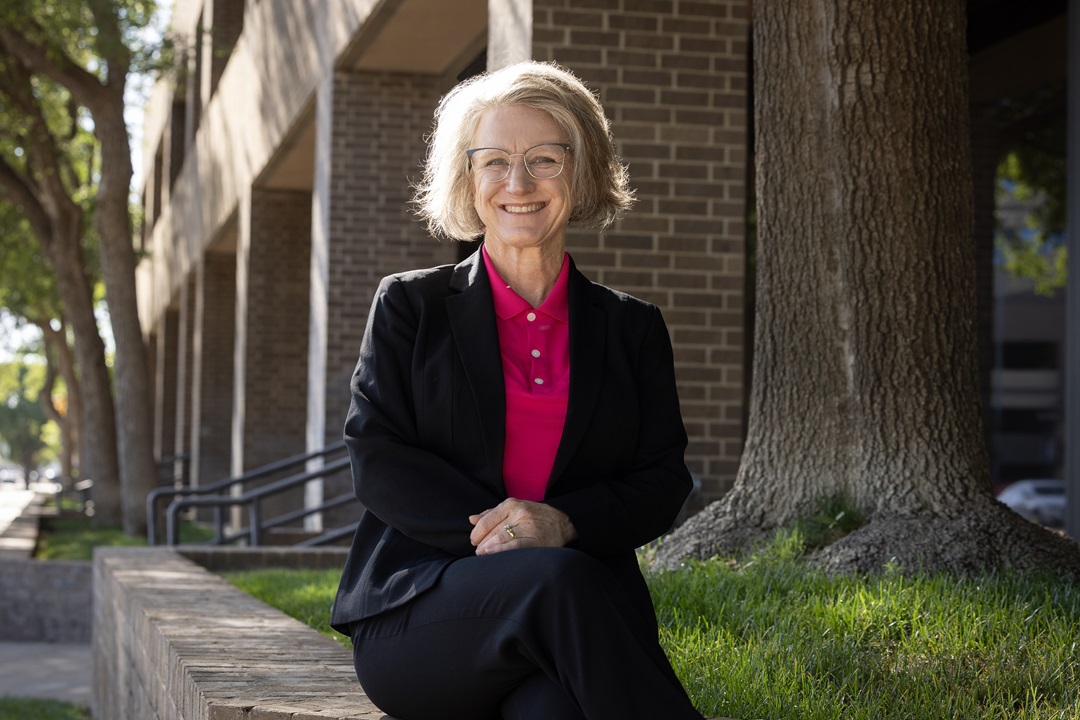
At the heart of the nation's nuclear security enterprise, the Pantex Plant plays a critical role in maintaining the safety, security, and effectiveness of the U.S. nuclear weapons stockpile. This vital mission, rooted in the foundational science of the atomic age, surprisingly brings a direct connection to one of history's most recognizable scientific figures: J. Robert Oppenheimer, often called the “father of the atomic bomb.” While Oppenheimer himself never set foot at Pantex, his legacy and the profound impact of his work is still evident today.
This connection became clear when Dr. Dorothy (Oppenheimer) Vanderford, J. Robert Oppenheimer's granddaughter, recently visited the Pantex Alternate Emergency Operations Center. A contractor for the Department of Energy, Dr. Vanderford works within the National Security Enterprise and her presence not only brought a direct familial link to the architect of the atomic bomb but also highlighted the human story behind nuclear deterrence.
"There are different people in the family who feel a little more strongly against nuclear weapons, and I have not mentioned this before; that my father would take us on trips to protest nuclear testing,” she said. “And that is what’s so interesting about my grandfather; he wasn’t just a scientist. He was a fully-fledged human being. And it turns out we all are. And that’s what the movie did … brought a humanity to the science. Speaking for myself, nuclear weapons are not going away. It's better to embrace them and keep them maintained.”
Her first visit to Pantex focused on her work with the application of the Emergency Communications Network Program (ECNP) which ensures robust communication channels, while supporting the national security framework at government sites.
"Well, we’re here to perform a site survey…we want to find out what can we do for you? What do you need? What new capabilities are you looking for? So, really, it’s customer care. We have these mobile kits; a satellite network that’s always available, and we can go basically anywhere in the world. We’re continually expanding and looking at new technology.”
PanTeXas Deterrence President and General Manager Dr. Kelly Beierschmitt adds another layer to the Oppenheimer history. After his arrival at Pantex, the media team at Los Alamos requested an on-camera interview, asking if he would recall some of his memories during his time there.
He recalled a very personal connection he made with Oppenheimer when Los Alamos began the process of digitizing historical files for the Smithsonian.
“When I first started there, I actually loved the classified library," Beierschmitt said. “You would put on white cloth gloves and get to hold Oppenheimer’s log book with all of his personal notes. He was monitoring both Hiroshima and Nagasaki drops and doing calculations almost in real time as they were getting information back. It was truly fascinating.”
Hearing this account about her grandfather’s connection to Pantex, Dr. Vanderford’s face lit up.
“I understand the feeling of being close to my grandfather’s handwritten objects. And I continually appreciate when people say they had sort of an emotional reaction to my grandfather’s artifacts because it brings that human element.”
While J. Robert Oppenheimer never walked the grounds of the Pantex Plant, his intellectual footprint undeniably shaped the world that necessitated its creation and continues to guide the site’s mission.
Through the dedicated work of individuals like Dr. Dorothy Vanderford, and the reverence for history shown by leaders like Kelly Beierschmitt, the human element at the core of national security, forged in scientific discovery, continues to evolve and thrive at Pantex.
Pantex Proud Tim Sanchez
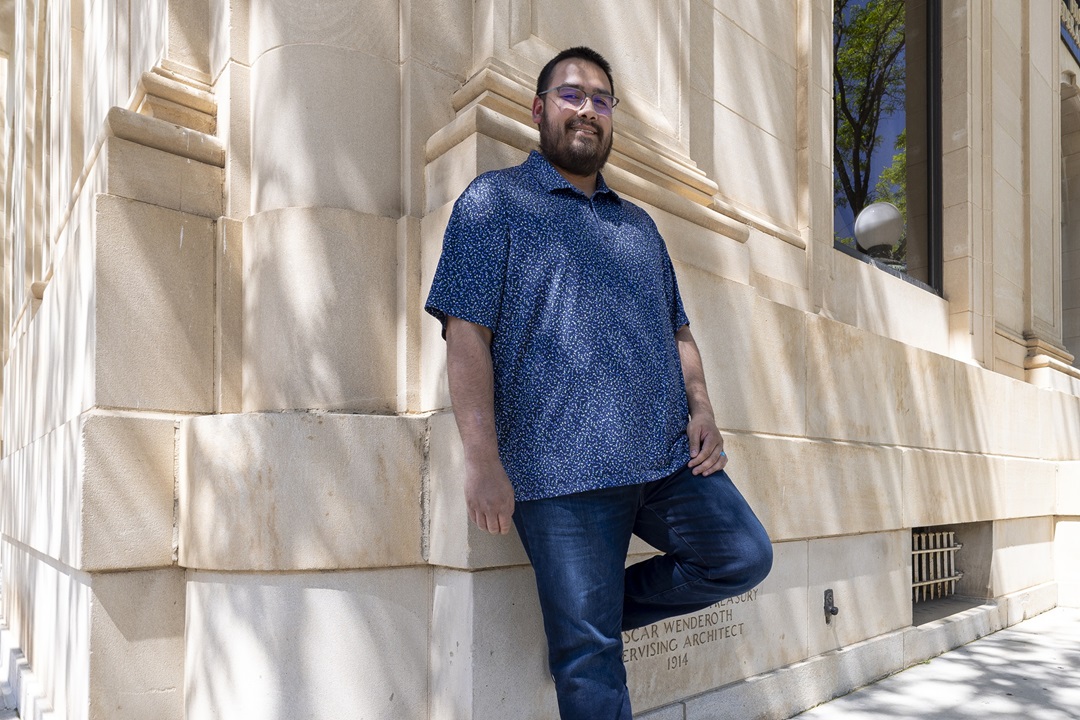
Thousands of dedicated Pantex citizens like Tim Sanchez work every day to support the Pantex mission. Take three minutes to learn about who he is, what he does, and why he is proud to be a Pantexan.
Software Engineer Tim Sanchez hoped to fulfill a soon-to-be college graduate’s dream — secure a job before donning that cap and gown. He sent out résumés, one of which arrived at Pantex. Pantex called, but after one interview, he never heard back. So, Sanchez accepted a job elsewhere, working web and mobile development along the way. Two years later, the bomb plant rang again, this time with an offer.
Sanchez joined Engineering, serving as a software developer. Although he enjoyed the job, as time went on, he wanted to return to web and mobile development, but at Pantex. With a little patience and time, he found just the job to fulfill that budding interest.
“I maintain TheZone, various org sites, contacts, and the paging system within contacts,” Sanchez said. “I mainly work on the backend of our applications. That includes handling and managing our APIs, or data endpoints, and logic and server communication to our frontend. Essentially, I manage things that users don’t usually see.”
With some keyboard-and-mouse wizardry, Sanchez has helped produce many other amazing code-based products, one of those being a well-missed blast from the past.
“I’m proud to have been part of reviving the AdZone,” Sanchez said. “That was really cool to bring that back to Pantex. The database table already existed, we just had to build from there. Now, it’s used often, just a nice resource for Pantexans.”
Sanchez’s pride for his work doesn’t stop there, though.
“We are the only assembly and disassembly plant, and although we IT people don’t work directly with the weapons, we contribute,” Sanchez said. “I’m extremely proud to be a part of the mission.”
Call it timing, fortune, luck, or whatever the case, Sanchez remains thankful a job and his ideal position opened up at Pantex. He’s grateful to be an asset to, and invested in, something greater than himself. And along the way, he has discovered one of his favorite things about being a Pantexan.
“The people,” Sanchez said without hesitation. “I have met some of my closest friends here. Just a great place to make new, strong relationships. Plus, everyone is always willing to help, and that makes our mission a success.”
Why is being open to learn from others critical for mission success?
Learning from SMEs and others helps us better grasp what we’re trying to do before we actually do it. It also helps us ensure we are providing correctly for the mission overall.
What advice would you give to a new employee?
Pantex and your job may be overwhelming at times with all the approvals, abbreviations, and so on. It will take time to learn. You don’t have to understand everything the moment you get out here, so don’t panic. You were hired for a reason. Trust in that.
What’s your favorite outside-of-work activity and why?
Hanging out with my wife and kids. Doing crafts, playing outside, and more. It’s always fun to do stuff with them after work and on weekends. They keep me busy all the time.
Decorated Navy SEAL empowers Pantexans in leadership
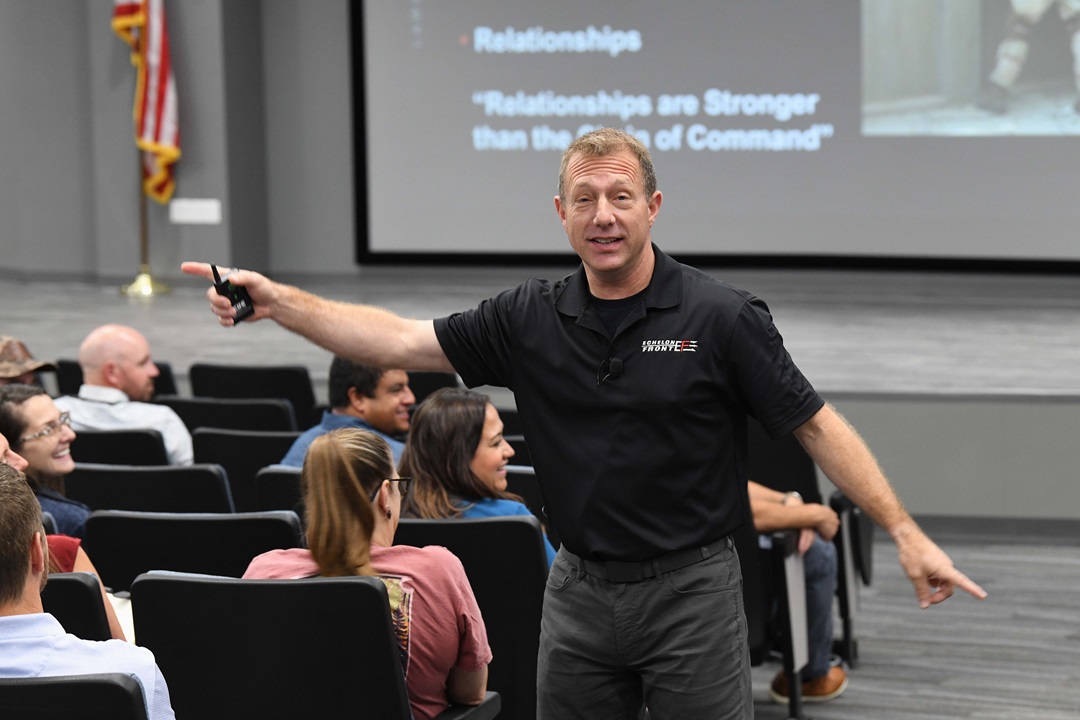
To kick off Pantex’s “Speaker Series,” the introductory speaker was Andrew Paul, a leadership instructor from Echelon Front — the premier leadership consulting firm founded by decorated Navy SEALs. The speaker series is a new initiative designed to provide enriching engagement events that empower employees to learn, grow, and thrive in their professional careers.
Bringing the combat-tested principles of the bestselling books “Extreme Ownership” and “The Dichotomy of Leadership” to Pantexans, Paul challenged attendees to rethink their approach to everyday leadership and professional development.
Paul detailed the Four Core Leadership Principles to build high-performing teams necessary for any organization to succeed:
- Cover and Move (Teamwork): True collaboration requires breaking down silos.
- Simple: Simplicity is vital for execution.
- Prioritize and Execute: In high-pressure environments, multitasking and emotional reactions lead to failure.
- Decentralized Command: Everyone is a leader.
The speaker event was not just an opportunity for Pantexans to learn; it also left a lasting impression on Paul himself. He shared, "It was an honor to spend time with the team at Pantex. I was incredibly impressed by the professionalism, humility, and dedication of the people there. Every person I met was welcoming, engaged, and committed to excellence.”
While at Pantex, Paul participated in a tour and spoke to several Pantexans after each of his three speaker sessions.
“While most Americans will never fully see or understand the critical role Pantex plays in our nation's security, I left with an even deeper appreciation for the men and women who quietly carry that responsibility every day,” Paul said. “Their commitment to protecting our country, our freedoms, and our way of life is something all Americans can be proud of."
Pantex Proud: Dan Ferguson
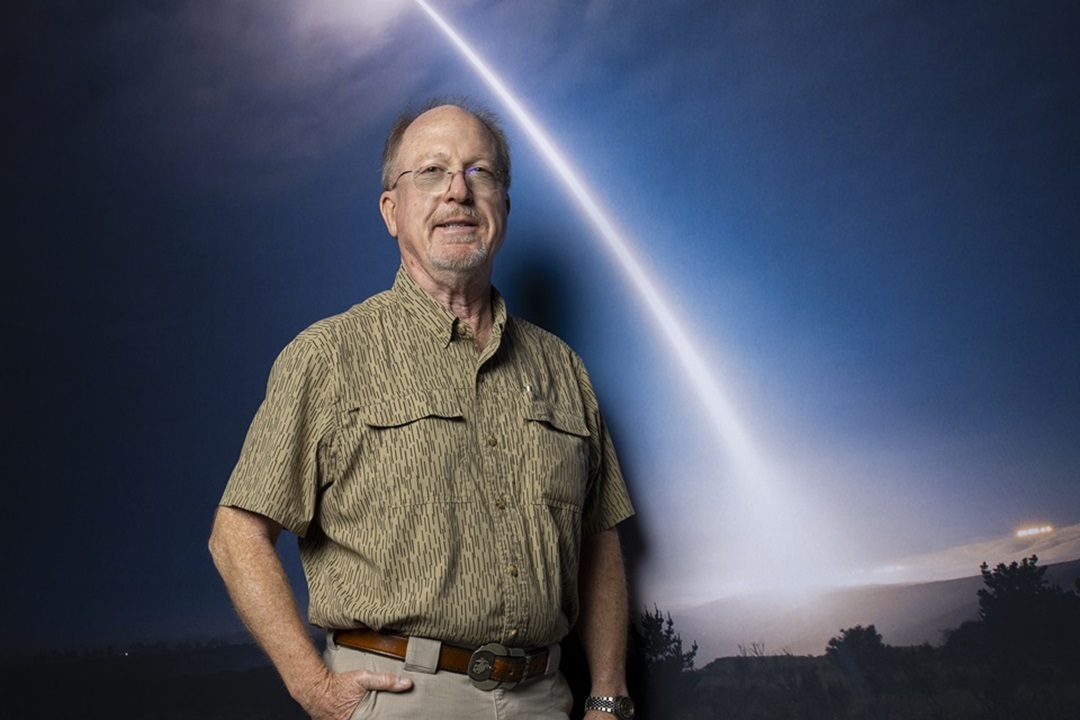
Information Security Specialist Dan Ferguson
Thousands of dedicated Pantex citizens like Dan Ferguson work every day to support the Pantex mission. Take three minutes to learn about who he is, what he does, and why he is proud to be a Pantexan.
They call him Dangerous Dan — but the only thing he poses a threat to is the release of sensitive information.
Information Security Specialist Dan Ferguson stands proud with 32 years of dedicated service to Pantex, where he embodies a profound commitment to national security and the well-being of his colleagues. His journey at Pantex began as a production technician, and from there he found an opportunity as an explosives operations leader. After some time, he took his expertise to Weapons Training where he spent over 20 years. About four years ago, he transitioned to Information Security.
In his current role, Ferguson is a crucial guardian of sensitive information. He conducts self-assessments to ensure Operations Security (OPSEC) requirements are met, and he reviews information releases and construction plans through an OPSEC lens. He contributes to the development of OPSEC News Briefs and diligently spot-checks waste streams, preventing any accidental leaks of sensitive unclassified information that could benefit adversaries.
“We are not building car engines here,” Ferguson said. “Our products keep our nation and our families safe and not everyone gets to be a part of it.”
Ferguson was a recipient of the Secretary's Achievement Award in 2011 for the B53 Weapon System Dismantlement. The B53 was a Cold War-era bomb that was retired in 1997. Even beyond his direct contributions, Ferguson believes Pantex's uniqueness lies in the attention to detail required of our workers and communication across multi-disciplined support organizations.
When asked what his favorite thing about working at Pantex is, Ferguson emphasized “Pantexans,” highlighting the strong “esprit de corps” that reflects pride in their work and the plant's vital mission.
“I am blessed to work with a great team and get to work with many of our Pantexans from gate to gate.”
How do you and your team contribute to mission success?
We provide the means to educate the workforce on established security requirements. We maintain a program of awareness and countermeasures to deny adversaries of the United States the opportunity to exploit the assets entrusted to us.
Why is being open to learn from others critical for mission success?
We cannot grow if we accept “that is the way we have always done it.” There are times when a fresh set of eyes or someone with a different skill set can provide a positive impact.
Why is teamwork important?
To accomplish a mission as a team, we need to encourage and applaud people when they’re successful. We need to also know our team members and recognize if they are struggling. The analogy of geese flying in a V formation is a great example. The goose at the front bears all the burden and the other geese call out to it with encouragement. When the lead goose gets fatigued, another one replaces it, and it falls in formation to recuperate. This helps the flock maintain a productive pace.
Why is it important we hold ourselves accountable in our daily tasks?
If you’re not doing the little things correctly, odds are you’re not doing some of the big things correctly either.
Celebrating 250 years at the heart of the nation's defense

As the nation comes together to celebrate 250 years of American independence, there is a quiet, enduring truth behind the parades and fireworks – America’s freedom must continue to be secured. At Pantex, providing for the common defense and securing the blessings of liberty is our daily mission.
“For the past two-and-a-half centuries, the United States has stood for liberty, democracy, and self-determination,” PanTeXas Deterrence President and General Manager Kelly Beierschmitt said. “The Pantex Plant is at the heart of our nation’s defense and stands for the same values.”
Celebrating America turning 250 is more than a historical date to Pantexans. This milestone is a direct reflection of the daily work that fulfills the site’s mission. Every component, every weapon, every safety measure contributes to the defense of the constitutional values that were signed in Philadelphia 250 years ago.
To honor this national milestone and recognize the connection to Pantex’s mission, a series of special, employee-focused events were held on July 2. The day included flag-raising ceremonies, food trucks, and the selling of exclusive Pantex America 250 merchandise.
The celebration reaffirms the commitment to the defense of a free nation, proving that the spirit from 1776 is still alive and well.
Beierschmitt concluded, “As America enters its next chapter, Pantex remains vital to preserving the nation’s peace and security.”