



News
I am Mission Success: Cindy T.

Take 5 minutes to learn about Cindy T., personnel security senior associate. This article details her role at Pantex and reinforces the diverse workplace culture CNS offers. Now included in the questions is one related to a CNS performance element (communications, teamwork, problem‑solving, accountability, interpersonal, technical competence, or leadership). All views and opinions are the employee’s own and do not necessarily reflect those of CNS.
With approximately 4,600 employees at Pantex, it is almost impossible to meet every Pantexan, but there’s one person who comes close. Cindy T. welcomes new employees by giving their initial security-awareness brief, congratulates employees who just received their DOE clearance by conducting their comprehensive security brief, and bids employees farewell when terminating their security clearance. This complex, lengthy process is a team effort that Cindy is proud to lead.
“It takes a village to process all clearances––from the applicant, to the processor, to the NNSA,” Cindy said. “Without one [member of the process], the clearance process would not work, so we have to trust and respect each other by providing the necessary information in order for an applicant to receive their clearance.”
Having worked just shy of 19 years at Pantex, Cindy has learned a lot of lessons, but having a questioning attitude is her biggest takeaway.
“When I first came to Pantex, I had come from another DOE site, and I thought all sites worked in a similar fashion,” she said. “I learned that Pantex has a very different mission than where I came from. So, I learned quickly to ask questions, and that saved me from some embarrassing mistakes.”
Pantex’s growth is the most surprising thing Cindy has seen in her time at the site. Each month, her team receives a report from the NNSA that details the volume of work that Pantex processes. Despite being a smaller DOE site, Cindy is proud that Pantex’s numbers keep up with the larger sites. She believes that this growth emphasizes the importance of the site’s mission.
“We respect our country and what it stands for,” she said. “Those who work for CNS, work towards the common goal of meeting our mission to help protect our country and [the people] who call this land home.”
Cindy feels that Pantex isn’t just a place where you ‘work’–– it’s a place where you can establish a lifelong career. In the short time that employees spend with Cindy, it’s easy to understand why she has a passion for her work. Her infectious energy as well as her commitment to security excellence and the CNS mission is contagious.
“We have a mission to provide national security for all who live in the United States. We have to be held accountable, or we could fail that mission,” Cindy said. “We are dedicated to the mission success of CNS by providing our customers with integrity, trust, respect, teamwork, and excellence in all we do to process security clearances, which is a vital part of fulfilling that mission.”
What work advice would you offer someone who is new to Pantex or Y-12?
Pantex is a place to work like no other. We are unique in what we do. Garner as much information and knowledge as you can from those who have been here a while, and have a questioning attitude. If you don’t know, ask. Follow all the rules, and you’ll be fine.
What’s your favorite outside-of-work activity and why?
Spending time with my family and reading a good book. I’ve just become a new “Nana,” and I’m enjoying that role wholeheartedly. Family is very important to me and was always something my parents instilled in each of us, so I enjoy spending as much time as I can with each of my three children and their spouses (and now, my grandchildren). I also enjoy reading because it takes me to some places I might never get to travel to and also provides me with relaxation.
I am Mission Success: David B.

Take 5 minutes to learn about David B., project controls scheduler for Construction Trades. This article details his role at Pantex and reinforces the diverse workplace culture CNS offers.
Balancing the priorities of different projects all at the same time is a tough task. Pantexan David B. does not back down from the challenge. He is responsible for the project controls on 83 construction projects active at Pantex, all in various stages of planning and construction across the site.
Scheduling is a key function in the position David holds in Construction Trades. He works with field engineers to plan out the work and tracks material, equipment, and permits. He checks in each week with construction management and superintendents, where they review durations, dates, and resources and update progress, ensuring that the team delivers as promised. Program managers come to these meetings to ask questions and set (and change) priorities, while project engineers manage issues and change requests.
A Pantexan for 2 years, David is proud to be part of the company.
“Everybody I know that’s ever retired from Pantex had pride in what they did and where they worked,” David said. “Of course, I didn’t understand how they were keeping our nation safe until I started working here. I think every Pantexan shares that pride to some degree.”
Teamwork and camaraderie are two things David values at Pantex.
“Pantex is a massive industrial site with thousands of employees, and it’s the teamwork between people and departments that makes everything we do possible,” he said.
David feels he contributes to mission success by supporting Construction Trades and working to revitalize outdated and aging infrastructure, “delivering as promised” a long and continuing series of construction projects.
“Updated facilities and equipment support the machinists, production technicians, engineers, chemists, and more,” he said. “Collectively, all of our work supports this nation and I feel honored to be a part of that.”
With every completed project, David sees another victory.
“I get to see how the incredible complexity of all the puzzle pieces come together, with different planning and execution, to complete the big picture,” he said. “Construction Trades does it all from classified conference rooms to creating additional office space, modifying areas to increase production capabilities, and making buildings safer for employees.”
David knows new employees may not understand the “why” behind the way things are done or the culture at Pantex. Having a questioning attitude is needed and helpful to getting acclimated.
“Asking questions can lead to seeing a problem from a different perspective or seeing the problem or solution in a different light,” he said.
The most surprising thing about Pantex for David? The size of the site.
He said, “I knew Pantex took up a lot of real estate, but this place is like a small city.”
A small city, with a big team, all working together to achieve mission success. David fits into that puzzle seamlessly.
What is your favorite aspect about your work environment? How does that aspect make you know the mission is being met?
We turn abandoned 80-year-old buildings into modernized office spaces that house the most advanced equipment in the world. We correct deficiencies in old areas so we can perform new production work. We perform abatements to make buildings safer for employees. Every completed project, like a little victory, lets me know the mission is being met now and in the future.
Who in your life has inspired you the most and why?
My grandfather Alton D. and aunt Nancy H. worked at Pantex for many years. My cousin is a nuclear engineer and interned here while attending Texas Tech. I feel blessed to work at the same place they did.
What is one thing your coworkers be surprised to know about you?
I used to have really (really) long hair when I was younger and I was a tattoo artist when I was in college.
The Organization Expo Series Strengthens the Aggregate IQ of Pantex

Pantexans learn about Mission Engineering at the Organization Expo.
Understanding how each organization contributes to the mission is vital to fostering a sense of unity, enhancing operational knowledge, and establishing a strong culture. To support these efforts, the Organizational Expo Series was established—offering Pantexans valuable insight into the organizations at our site.
The expo took place from July to October and featured bi-weekly presentations highlighting key contributions of various departments. The goal of the series was simple yet impactful—help employees become acquainted with how different parts of the site operate in tandem for the greater good of the mission.
“It’s not always apparent how interconnected we are, but these sessions gave everyone a clearer understanding,” said Melissa Roy, director of organizational development and training. “It is vital to highlight the role of support organizations and their importance to the Pantex mission.”
The expos provided an excellent opportunity to showcase how departments fit into the bigger picture.
Jared Brown, director of facility and infrastructure operations, said he enjoyed the expos and valued his time as a presenter.
“The expo gave us a platform to share our challenges and accomplishments with the wider team, which helps humanize the work we do and build stronger relationships across departments,” Brown said.
Brown said the series will bring about long-term benefits, allowing Pantexans to “address challenges and find new ways to be more efficient.”
The primary focus of the Organization Expo Series was to increase the aggregate site IQ—a concept that refers to the collective understanding employees have of the site’s operations. A high site IQ allows for better decision-making, stronger collaboration, and an enhanced sense of belonging among employees. This initiative was a significant step toward shaping a more cohesive work culture where every employee feels their role is critical to the site’s success.
“The expo series was established to increase our combined site’s aggregate IQ and to allow Pantexans the ability to become more acquainted with how the site operates for the good of the mission,” said Pantex Site Manager Colby Yeary.
Attendees were equally enthusiastic about the expos.
“These expos have been excellent. Putting faces to the various organizations truly adds value and helps build strong connections,” Kyle Brack, emergency services advisor, shared. “The expos were incredibly helpful. Hearing about the different organizations encourages us to follow up with inquiries about tools and initiatives that could benefit our team.”
Brack also highlighted the importance of seeing the people behind the organizations.
“Learning about their initiatives has been a great way to explore valuable tools for our organization. I had no idea how some of the other departments functioned before this series,” said Brack. “It’s amazing to see how much effort goes into each operation, and I feel more connected to my work knowing how we all play a part in the company’s success.”
Another attendee, Natalie Waters, high risk senior specialist, reflected on her experience as well.
“I enjoyed learning about the different business and various functions across the plant,” said Waters. “It gave me valuable insight into how these functions are organized, funded, and contribute to the mission.”
She also appreciated how the expos provided opportunities for future collaboration.
“It was an excellent opportunity to identify subject matter experts I can reach out to for future questions or projects,” Waters concluded. “These expos have really opened my eyes to how essential each team is to our success. I now feel more confident in collaborating with other departments, and I appreciate the bigger picture even more.”
The Organizational Expo Series laid a strong foundation for increased engagement, cross-departmental collaboration, and a deeper appreciation of the site’s culture. As the final expo wrapped up, the feedback was overwhelmingly positive, with many employees requesting more opportunities to learn about the work their colleagues do.
By providing a space for knowledge-sharing and collaboration, employees continue to strengthen the bonds between teams, foster a collaborative environment, and ensure every Pantexan feels they belong to something bigger.
High Pressure Fire Loop water conservation happens one drop at a time

One of Pantex’s pump houses holds approximately 400,000 gallons of water. The conservation efforts on this pump house are saving 185,000 gallons of water per month.
Water is a precious commodity, especially in the Texas Panhandle, and actions taken to conserve water will impact future generations for years to come. At Pantex, the Environmental Compliance department focuses on a Department of Energy sustainability goal to reduce the overall annual water use.
“For the last few years, we tried to focus on finding projects that can be done easily to conserve water,” said Environmental Compliance Manager Alicia Barley. “We identified several different projects and have focused on the High-Pressure Fire Loop (HPFL) specifically for a while.”
Pantex has two water distribution systems: the domestic water system and the HPFL system. The HPFL system is made up of three pump facilities and approximately 20 miles of underground distribution piping, providing a dedicated water supply to fire protection suppression systems (also known as fire sprinkler systems) across the plant. In addition to being on standby to support fire suppression systems in a fire event, the HPFL also provides means to conduct various fire system maintenance and testing activities.
Environmental Compliance’s focus on water conservation happened to coincide with an effort by the HPFL System Engineering team to reduce water usage while still meeting its daily operational demands. The team’s conservation efforts focus on making necessary system repairs and improvements to reduce the system’s water waste.
One of the conservation efforts put in place is to reduce the amount of process water used with operating the system’s maintenance support water pump. Any time the maintenance pump runs without flowing water to support maintenance activities, the pump discharges water to drain which prevents internal damage.
“Before the upgrades we made to the maintenance pump, we had to manually start and stop the pump each day, resulting in the pump running continuously all day, every day discharging a large amount of water to drain,” said Colton Mooney, HPFS system engineer. “Now, with the ability to remotely start and stop the pump, it can be specifically run when it is needed for maintenance activities. Thanks to the maintenance personnel and support from Facility Engineering, this improvement has resulted in an approximate 50% reduction (or an average of 185,000 gallons of water saved) per month just by utilizing the pump only when it is needed.”
The work the team is doing to conserve water becomes more important every year.
“We are seeing the climate change over time and we can expect longer seasons of drought,” Barley said. “Any time we can conserve water, we need to make it a priority.”
The HPFL water conservation efforts began several years ago when the team identified the need to measure the system’s leaks and to reduce the amount of water wasted to perform its own system inspection and testing requirements. In 2018, the HPFL was equipped with flow meters, which are used to measure the amount of water that is being lost from the system, providing the team with the ability to quantify its water losses within the distribution piping and supported fire systems.
“The average municipality leaks about 10% of their daily water usage,” Mooney said. “Our current leak rate on the HPFL is approximately 20 gallons per minute, which sounds like a lot, but considering the size of our system and all the fire systems we support, we actually have a very tight system. With the ability to measure the leak rate, we can now see issues and react.”
In addition to monitoring leaks, the HPFL team has future pump facility upgrade plans which will provide the team with the ability to recapture the water used and reduce the water needed to perform its required quarterly, annual, and 5-year inspections and tests.
“Right now, in order to perform our quarterly and annual requirements at all our pump facilities each year, we have to discharge a combined total of approximately 465,000 gallons of water to the ground. Every 5 years, we are required to conduct an internal tank inspection at each of our facilities,” Mooney explained. “With our facility improvements, we will have the ability to recapture all of the 465,000 gallons of water wasted annually. For the 5-year inspections, we’re looking into bringing in remotely operated vehicles or divers to conduct those inspections instead of draining the tanks.”
All Pantex employees can do their part to save the precious resource, one drop at a time. These changes are great steps forward to conserve water at the plant and move the facility closer to the DOE sustainability goal target of reducing water use intensity 50% by 2030 from the 2021 baseline.

Employees got an inside look at what makes the pump house work during a recent employee infrastructure tour.
NNSA Release: NNSA launches Enterprise Blueprint, a 25-year roadmap to deliver essential infrastructure on time and at scale
WASHINGTON – Today, the Department of Energy’s National Nuclear Security Administration (NNSA) released its Enterprise Blueprint, a 25-year plan to align the delivery of specialized infrastructure with demands across the nuclear stockpile, global security, and naval nuclear propulsion missions. The Blueprint prioritizes capabilities for mission delivery and takes a practical approach to becoming a more balanced, responsive, and resilient enterprise.
Read the full release on the NNSA website.
I am mission success: Josh Horner
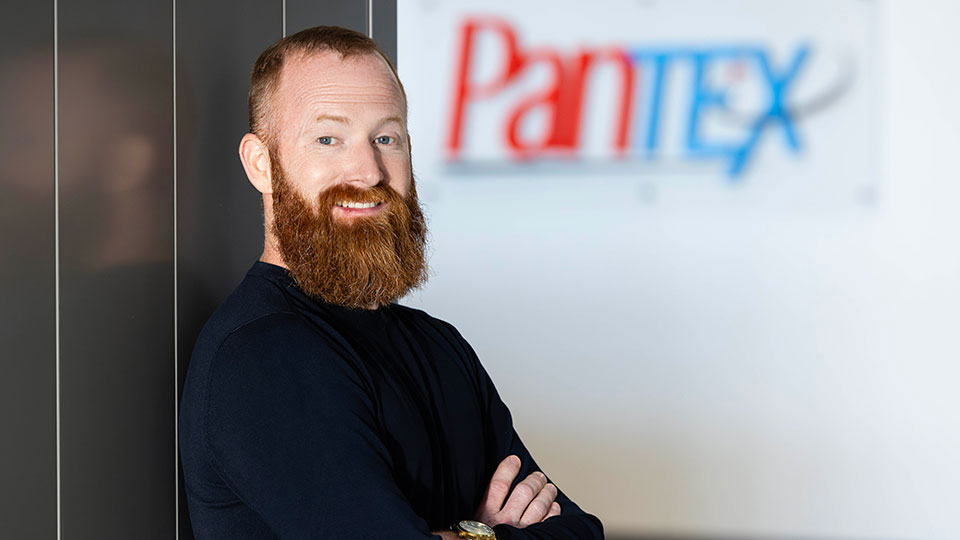
In an environment like Pantex, the old adage “you don't know what you don't know” can create angst ––both for new employees and for seasoned employees who are constantly learning new things. Creating an environment built upon trust can lessen the burden and lead to great relationships, especially when learning through mistakes.
Making a mistake is hard, but owning up to it is even harder.
“Owning up” is exactly what Josh H. believes that people should do when mistakes are made –– even when it isn't the easy thing to do. In fact, Josh, who has been at Pantex for 13 years, encourages people to take ownership over everything they do.
“The experience will grow your problem–solving skills, and you will earn the reputation of a person that is caring and reliable,” said Josh. “Find the right people to call when you run into problems outside your area of expertise, and treat them well. If you do that long enough, you'll have a host of people ready and willing to support you when you find yourself in need.”
Josh, who was an electrician by trade when he joined the Pantex team, now leads a team who works with engineers on ways to improve systems around the plant.
How has teamwork allowed you to grow as an employee?
I'm not a natural team player. Early on in my career, I thought that meant that I was capable and independent. When I took the position that I'm in now a few years ago, I became overwhelmed with all the responsibilities that I assumed were mine alone to bear. A few key people –– my excellent supervision team and our integration lead –– showed me the value of trusting good people to do their job well. I learned that thinking I was an island was not only naïve and vain but was also depriving me of the best tools in my tool belt.
What stands out to you about Pantex?
It is always going to be the people for me. The quality of people out here, the quality of craftworkers we have, is exceptional. We have incredibly thoughtful and intelligent people that work out here who show a lot of dedication to the mission at whatever level they can support it. It is sometimes hard for me to relay the big mission we have out here, but the people here take great care of their daily customers' business and personal needs. I've seen people take care of each other out here.
Why am I mission success?
Any success I have had that is not attributed to my team would be because I deeply care about what I do. I take ownership of what my team is responsible for.
I was an electrician before, and that's how I started at Pantex. I loved that I provided a service to people that they were happy with. When I started out here, I got to do the same thing, but it was the same customers over and over, so I built great relationships.
I don't get to do hands–on work anymore, but I do still get to provide service to a lot of people here, and all that service we provide to one another adds up to the big mission we have.
Give an example when teamwork has helped you in your role.
Every success I've had at Pantex is owed to a team, especially the latest project we were assigned. Luckily, my management, the supervisors that work for me, the men and women that work for them, and the engineers at Pantex are incredibly good at their jobs. They provided the tools, means, and drive required to meet those goals and then proceeded to exceed them. I'm proud that I got to be part of that team.
Who in your life has inspired you most and why?
My wife. She is the most intelligent, thoughtful, and responsible person I have ever known. She is a better parent and spouse than I will ever be, and she models how to do it right. She is reliable, loving, and encouraging. She gracefully teaches me to be better and provides me with the means to improve myself.
High Explosives Science and Engineering Facility continues to progress

An aerial view of the High Explosives Science and Engineering Facility.
The High Explosives Science and Engineering (HESE) Facility continues to achieve milestones as construction pushes forward to improve High Explosive (HE) operations here at Pantex.
The HESE main works (HESE MW) project began in April 2022 and has experienced two major challenges to construction. The first was a redesign of the HE Lab walls and elevated deck during construction. “Consolidated Nuclear Security (CNS), Burns & McDonnell (BMcD), and Hensel Phelps (HP) collaborated seamlessly to revise drawings, minimize project impacts, and allow construction to proceed on track,” said Katy Beyer, BMcD, Onsite Project Engineer. The second was funding issues associated with the FY24 continuing resolution that required stakeholders to deploy strategic scheduling activities to avert potential setbacks. “Through careful planning throughout the continuing resolution and great partnership with HP, the project was able to mitigate significant impacts to the schedule,” said Steve Kemp, subcontractor technical representative.
The project has overcome these challenges and as of July 2024, Hensel Phelps, the construction company assigned to the HESE MWs project, has placed all of the HE Lab walls. “At the onset of completing the final structural building components, the project is transitioning into interior buildout phases with a large focus on mechanical, electrical, and plumbing systems to support start up and commissioning activities,” said Cody Edwards, HP, Project Manager. The project is also targeting aggressively completion of the Technology Development & Deployment Laboratory (TD/DL) three months ahead of the overall project completion date.
In August 2024, BMcD, the construction company assigned to the HESE Firewater Pump & Tank, commenced erecting the fire water tank that will provide fire water for not only the TD/DL and HE Lab, but future projects such as High Explosives Synthesis, Formulation, and Production Facility.
Currently there are an average of 120 people per day working on the HESE MWs project and they have worked over 390,000 injury-free manhours. The HESE project has a total project cost of approximately $295 million, encompasses 72,762 square feet, and will replace about a dozen existing Cold War-era facilities when complete. It contains 1.3 million pounds of structural steel and is closing in on over 4 million pounds of reinforcing steel. More than 12,000 cubic yards of concrete will be used to build the HESE before project completion in August 2025.
I am Mission Success: Sabrina Perez

Take 5 minutes to learn about Sabrina Perez, recruiter for Pantex Mission Assurance and summer internship coordinator. Now included in the questions is one related to a CNS performance element (communications, teamwork, problem‑solving, accountability, interpersonal, technical competence, or leadership). All views and opinions are the employee’s own and do not necessarily reflect those of CNS.
Sabrina Perez knows how to find talent. As a recruiter for Pantex Mission Assurance, she considers managers’ needs and sources candidates who are the best fit. From application to onboarding, she helps candidates through the hiring process, but she also continues to care for employees’ journeys through career development and internal transfers.
Perez started as a recruiter in 2023 and was immediately impressed with the Pantex mission, and the way the workforce implemented their values into everything they do.
“I was really surprised at how critical the work we do here in little ol’ Amarillo, Texas, is to the nation and the world,” Perez said. “How unbelievably awesome is it that we get to serve our country and the world from this great city on the High Plains?”
Recruiting, Perez believes, is a special job because it gives her a hand in shaping the future at Pantex and the lives of those she helps bring to the plant.
“The absolute best part of my job is extending an offer to a candidate who has waited their whole life to get on at Pantex,” Perez said. “It’s the call that changes their life and sometimes their family’s lives. It’s overwhelming sometimes to hear about their backgrounds and the joy and hope they have for their future career goals at Pantex. Sometimes there are tears, and I’m a crier, so I jump right in there and join! It’s such a blessing.”
Perez also molds the future as the Pantex summer internship coordinator in charge of the internship experience at the site. She loves working with interns because she gets to learn about their interests and capabilities. Whether it is new hires or interns, she thinks Pantex employees stand out among the crowd.
“I love how people implement the values we learn at Pantex into their everyday jobs,” she said. “We all focus on getting our mission completed by making the right decisions for the right reasons, having a questioning attitude, or striving for continuous improvement.”
What daily task lets you know you’re helping achieve the CNS mission?
I love our regular meetings with the managers across Mission Assurance. When they are trying to hire for a new position or backfill one of their team members who has moved departments, I love getting to hear about the work they do and the skill set needed to meet deliverables. It’s so interesting to get to know their work and then go out and hunt for the perfect candidate to fill the spot and join their team. Knowing that my fellow Human Resources teammates and I are getting the right people at our company is rewarding.
What is your favorite aspect about your work environment?
My Recruiting and Placement team is awesome! We all have different strengths and personality types, but we’re all in it together to get people hired and give them a positive experience that fuels their love for the mission and their organization. We’re all here to be a catalyst for a candidate or a current employee’s next best step in their career. Because we are elevating the individual while also building great teams for our managers, we are elevating Pantex as a whole.
Why are communications important for all Pantex and Y-12 employees?
I had the opportunity to see Brené Brown speak at a conference. She said, “Being clear is kind. Being unclear is unkind.” That statement reminded me of the power behind purposeful communication. When you bring clarity to a situation (the who, the what, the how, the why), you set everyone involved up for success. You’re being kind by making sure you are providing accurate details, engaging others in the conversation, asking for clarification when there’s confusion, and correcting any miscommunication along the way. Communication helps serve the people around you.
What work advice would you offer someone who is new to Pantex?
There’s probably a form for that… Ha!
What’s your top bucket list item and why?
I love traveling! I’ve been to six countries (Cambodia, Spain, England, Mexico, Costa Rica, and the Dominican Republic) and Maui a few times. My bucket list locations are a food and wine tour of Italy, walk where Jesus walked in Israel, play golf in Ireland, and take a Sound of Music tour in Austria!
Pantex’s awards more than $117,000 in 2024 Community Investment Grants
More than $1.34 million dollars granted to area non-profits in history of program
AMARILLO, Texas– In its continuing tradition of granting requests from regional non-profit groups, Pantex has donated another $117,070.53 to twelve such groups, distributed with the assistance of the Amarillo Area Foundation.
Now in its ninth year, the fund has awarded a cumulative $1.34 million dollars with 164 grants to non-profits in the Texas Panhandle. The CNS Pantex Community Investment Fund is a partnership between Consolidated Nuclear Security, the managing and operating contractor of the Pantex Plant, and the Amarillo Area Foundation.
Amarillo Area Foundation CEO Clay Stribling said “We so appreciate our great partnership with CNS Pantex and their employees. They are fantastic community partners who truly believe in investing in the well-being of residents in our community. This program is an annual reminder of their generosity and commitment to our region.”
CNS first met with the Amarillo Area Foundation in 2014 to create an innovative and effective method for contributing to the community in a way that would also better engage Pantex employees. The Pantex Community Investment team is comprised of about a dozen Pantex employees voluntarily serving a two-year term on the committee, which listens to all the proposals and then makes the decisions regarding Pantex’s philanthropic gifts.
“Our goal is to give Pantexans a voice in determining where corporate dollars are invested in the community where they work,” said Ashlee Estlack, Pantex Site Communications Manager. “As a company, we are extremely pleased to partner with the Amarillo Area Foundation and community organizations for the betterment of Amarillo and the Texas Panhandle—where our employees work, live, and give.”
The 2024 Pantex Community Investment Grant Award recipients are:
- Against All Odds Social Services: $10,000 to support cost involved with new clients aging out of foster care.
- Amarillo Independent School Foundation: $10,000 to support the Families in Transition Emergency Fund supporting for homeless students & resources.
- Amarillo Little Theatre: $8,712 for Check out ALT! covering admission for library cardholders.
- Another Chance House: $10,000 to support the self-sufficiency program.
- Brothers-Sisters of Our Military Adventures: $10,000 to support Hunting with Heroes Program.
- Camp Alphie: $10,000 to support Kid’s Camp for kids with cancers and their siblings.
- Downtown Women’s Center: $10,000 for support of program support for DWC’s Recovery Program.
- Dumas Education and Social Ministries: $10,000 to support the Senior Food Pantry.
- Family Support Services: $10,000 to upgrade the security system at the Safe House shelter for domestic violence survivors.
- Martha’s Home: $10,000 to support Present Needs and Future Success helping keep individuals enrolled and completing their education.
- Texas Ramp Project: $10,000 to support Texas Panhandle ramp projects.
- Transformations by Amarillo Angels: $8,358.53 to support back-to-school support for children, youth and families experiencing foster care.
Consolidated Nuclear Security, LLC operates the Pantex Plant, located in Amarillo, Texas, and the Y-12 National Security Complex, located in Oak Ridge, Tennessee, for the U.S. National Nuclear Security Administration. Bechtel National, Inc. is the lead member of CNS; minority members include Leidos, Inc.; ATK Launch Systems, LLC; and SOC LLC. Pantex and Y-12 are key facilities in the U.S. Nuclear Security Enterprise, and CNS performs its work with a focus on performance excellence and the imperatives of safety, security, zero defects, and delivery as promised.
For more information on each site, visit www.pantex.energy.gov or www.y12.doe.gov. Follow Pantex on Facebook, X or LinkedIn. Follow Y-12 on Facebook, X, and LinkedIn.
CONTACT
Steve Myers
Communications
Office (806) 573.0490
Cell (806) 236.2826
Stephen.Myers@pantex.doe.gov
I am Mission Success: Chelsey Westfall

Chelsey Westfall helps make sure the efforts of Safeguards and Security run smoothly.
The most visible part of Pantex’s Safeguards and Security division is the team of Security Police Officers patrolling every inch of the sprawling complex. However, the department is much more – it encompasses eight divisions responsible for protecting the people, technology, and information that makes Pantex so vital to our nation’s defense.
One of the team members who makes sure the fast-paced division flies down its assigned task list like an Olympic bobsled team is administrative assistant Chelsey Westfall. She is responsible for a wide variety of tasks, from authoring letters, to organizing spreadsheets, to responding to Emergency Response Organization calls.
“With constantly changing environments, people, and technology, there is never a dull moment for me in the division office,” Westfall said.
Westfall, a native of Spearman, Texas, joined Pantex in 2015. She worked first as a shipping clerk, then joined Infrastructure before settling in Safeguards and Security in 2019.
“I never realized just how much work goes into managing the stockpile, supporting the nuclear deterrent mission, or protecting our assets until I started working at Pantex,” Westfall said. “I was overwhelmed with the depth of our mission and layers of security at Pantex. The push for safety, education, OPSEC, and being good stewards of our funding have been a constant since I started working for CNS.”
Chelsey and her husband Kirk have been married for 17 years and share four children, all of whom are frequent subjects of her hobby as a photographer. Their oldest daughter, Kayleigh, lives in Ruidoso, New Mexico; Lexi is a student at West Texas A&M University; Ian serves in the United States Marine Corps; and their youngest, Kaine, is a student at River Road High School.
What stands out to you about Pantex?
The pride and patriotism that Pantexans share and feel for their work. Most employees are keenly aware of just how important our work is to the nation, and we are very proud to be the chosen few who are entrusted with these tasks. Working for Pantex is a job you can be proud of, knowing that you’ve made a difference.
What has surprised you the most since joining CNS?
I’m most surprised by the exponential growth Pantex and Y-12 have seen in employees over the last couple of years. The mission is growing, and to accommodate that, so is our workforce. When I started, I was explicitly told that you are still considered a “new” employee until you have been at Pantex for at least 10 years. I wonder if that still holds true?
What top strength do you bring to your organization and why?
My organizational and communication skills. I build spreadsheets for nearly everything that is important in my job, and having a system to easily track information and effective ways to communicate have made our department more efficient and timelier.
What advice would you offer a newer employee about the importance of solving problems and asking questions?
I would tell a new employee that it is important to get to know “people who know people.” A vast majority of the issues I deal with day-to-day are solved by asking someone for help who knows more about the issue at hand. It is always okay to ask questions if you aren’t sure about something; CNS promotes having a questioning attitude.
What’s your favorite outside-of-work activity and why?
I have always enjoyed photography, especially sports photography. When my kids were young, I used to spend insane amounts of money on professional photos from competitions. And sometimes, there just weren’t any good photos of my kids. I thought, why don’t I just teach myself how to do that? And I did.
I did a lot of research and watched a lot of videos, and I took a lot of blurry, awful photos! I started just taking pictures of my own kids. Eventually, people started asking me to get a few shots of their kids, too. I just love the look on someone’s face when they see a photo of them doing what they love.