



News
Pantex Proud: Carrie Brain
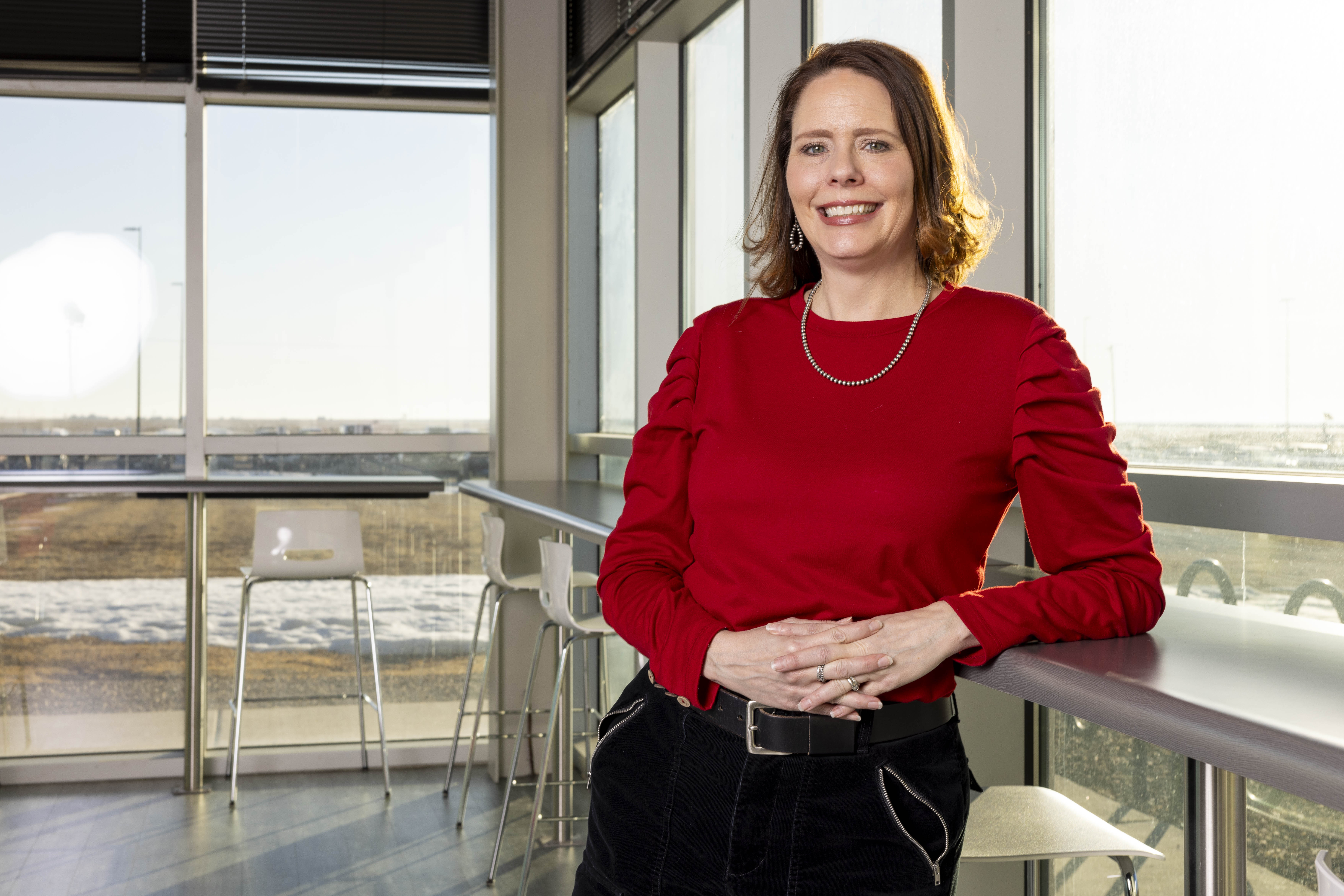
Thousands of dedicated Pantex citizens like Carrie Brain work every day to support the Pantex mission. Take three minutes to learn about who she is, what she does, and why she is proud to be a Pantexan.
Behind every LaRusso, Balboa, and Skywalker, there’s a Miyagi, Mickey, and Master Yoda. These mentors teach and help sharpen their pupils’ respective disciplines, typically set to a memorable montage. We don’t have that luxury in the real world, even if we crank “Eye of the Tiger” to 11. What we do have at Pantex, however, are great instructors, and instructors for those instructors.
That’s where Carrie Brain comes in. Brain serves as the lead instructor of instructor programs at Pantex. Her responsibilities include curriculum development, assisting with training compliance job duties, and leading instructor developmental classes. Essentially, she’ll teach you how to teach.
At one point in her life, Brain believed she’d become a copy editor for Random House or Penguin Books, but as the saying around the plant goes, all roads lead to Pantex. Fortunately for Pantexans, that included Brain’s career.
“I grew up in Amarillo,” Brain said. “Back then, people didn’t talk about Pantex. Because of that, I was scared to start a job here, but the second I came aboard I knew I was part of something greater than myself. Joining Pantex made me more of a patriot.”
Brain still has passion for the written word, and she’s adopted certain elements into her instructional development. Does your team need to know updated training procedures? Looking to train new hires? Great! She will help you figure out what to say and how to say it and help tailor your content based on your audience.
“Not everybody likes to be mentored the same way,” Brain said. “Pantex is a team, but each of us learns how to do things differently. As a mentor, ask your trainee what they think they need. Also, don’t just tell them how to do something, show them how to do it.”
Brain loves her students and sees them as messengers of the mission. She’s proud to be a part of that system, empowering them with skills and tools needed to be great instructors. Yet, with any great mentor/mentee story, be it cinematic or real life, there’s a cyclical nature to the dynamic.
“I’ll run into instructors that I trained months later and see how they use the skills I taught them,” Brain said. “Yet, as I watch them train others, I learn new tricks and techniques on how to better myself as an instructor. I provide them with feedback as well. It continues on and on like that. I’m a source of support for them, and they’re a source of support for me.”
Who in your life has inspired you the most and why?
My dad. As a kid, I didn’t understand why he did or said certain things or didn’t say anything when I thought he should. When I grew up and we talked as adults, I realized he did those things to take care of me. He taught me how to think, research, and articulate for myself.
Why is it important we hold ourselves accountable in our daily tasks?
We have to meet Conduct of Operations, for one. Secondly, we need to take ownership of the good and bad. By doing so, we can correct those mistakes faster and learn from them. The more we understand why we need to hold ourselves accountable, the less fear we may have when owning up to our mistakes.
What advice do you offer someone who has made a mistake in his or her job?
Stop and or pause work. Seek out a peer or mentor and get the ball rolling for a path of correction. Mistakes happen. The sooner you speak up, the better off you’ll be.
Provide an example of lessons you’ve learned through overcoming a work-related challenge?
Stop talking and listen. I constantly try to became a better listener because sometimes when we’re silent, you have a chance to process what the other person is saying rather than thinking about your response. Don’t let yourself miss the point because you wouldn’t listen.
Pantex cuts ribbon on new downtown Pantex Amarillo Campus
AMARILLO, TX – As part of Pantex’s ongoing efforts to strategically manage available on-site office space and accommodate long-term growth, it is moving employees into the Pantex Amarillo Campus, located at the Happy State Bank Building in downtown Amarillo. In celebration of this important step forward, Pantex held a ribbon-cutting ceremony on Tuesday, April 15.
“Today is not just about cutting a ribbon – it’s about progress, growth, and the continued collaboration between Pantex and the Amarillo community,” said Kelly Beierschmitt, Pantex president and general manager. “We are proud to be here, and we look forward to the positive impact this facility will have on our operations and the continued success of our mission.”
This new location, situated in the heart of Amarillo’s central business district, provides office space for more than 400 Pantexans.
"Center City is excited to welcome the Pantex team members who will be working in our downtown,” said Beth Duke, executive director of Center City of Amarillo. “The addition of the Pantex workforce will add vibrancy to our efforts to continue improving Amarillo's historic downtown. They will discover the downtown dining district, Hodgetown, our downtown hotels, and all the great downtown businesses that are ready to welcome them."
The lease agreement includes an initial five-year base period, with potential extension options. Pantexans began work in their new offices on April 14.
###
PanTeXas Deterrence, LLC (PXD) is the management and operating contractor for the National Nuclear Security Administration's Pantex Plant located in Carson County near Amarillo, Texas. Pantex maintains the safety, security, and effectiveness of the nation's nuclear weapons stockpile. PXD is a joint venture led by a BWX Technologies, Inc. (BWXT) subsidiary – it also includes Fluor; SOC, A Day & Zimmermann Company; and The Texas A&M University System.
CONTACT
Rachel Smith
Communications
(806) 573.6032
rachel.smith@pantex.doe.gov
Slips and falls may come with a steep price
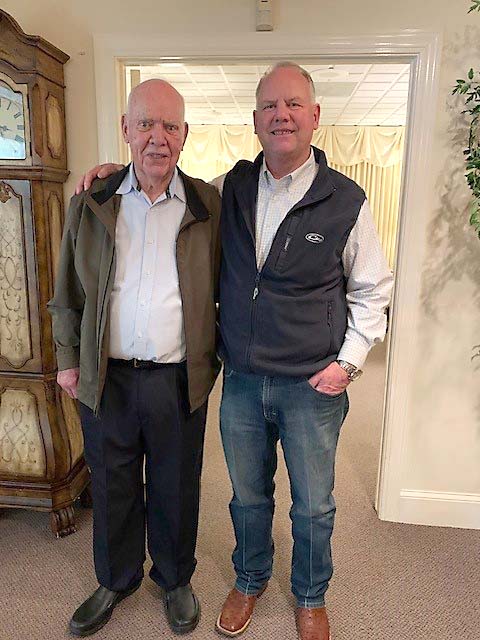
Courtesy photo of Randy Broom (right) and his dad Jack (left).
How much money would it take to completely alter your life?
For Randy Broom, it was just a small bucket of change.
Broom’s dad died in January because of a slip and fall incident. His father was taking coins to the bank to be exchanged when the container holding the money slipped out of his hand. His dad tried to catch the container, causing him to lose his footing and fall, injuring his neck and spinal cord.
“If you’re going to do something, don’t set yourself up for failure,” Broom said. “My dad put the coins in a container that was smooth and didn’t have a handle, so when the weight caused it to slip from his hands and he tried to catch it, rock salt on the ground and uneven footing caused him to fall and become paralyzed from the neck down.”
Slip and fall injuries can happen to anyone. Broom says this tragic event is a good reminder that even small choices have big consequences.
“Decisions matter,” Broom said. “You have to weigh each decision and think the outcome through before you do it. You want to take care of yourself, and in doing so, you’re also taking care of the craft, because you’re trying to put out the best work package to mitigate any hazards.”
Broom, senior advisor, teaches a conservative decision-making class educating Pantexans on the importance of protecting themselves and others through thoughtful actions.
“In my class, I tell people that the decisions you make do not just affect you, they affect family, coworkers, and others,” Broom said. “People have to be safety minded and ask themselves critical questions before performing any task.”
Is what I am about to do necessary? Is the weather going to affect this job? Is there a time crunch? Should I wait until I’m better prepared? Do I need help with the task? Does the task have the correct tools or containers that will make me successful?
Broom says safety should be at the forefront of everything we do—big and small. Asking questions can’t prevent all bad things from happening, but it can help lessen the likelihood of an incident.
“My dad was laying in the hospital bed and told me, ‘Randy, I wish I had taken that money and threw it in the trash. It wasn’t worth it,’” Broom said. “I said ‘dad you can’t think about it that way’. You don’t know what is going to happen. What happened to my dad might not have occurred if he would have had the right safety tools for the job like a container with a handle or a clear walkway.”
Broom says when going out to a job site, check your surroundings for slip and fall hazards. The site might be dry when the job was planned, but rain could happen at any time. Do a visual inspection and think ahead.
Spare change changed Broom’s life, but he’s honoring his dad’s legacy by educating others on thoughtful decision making and adherence to safety requirements.
“I talked to my dad every day,” Broom said. “I did everything for him, and he did everything for me. And now he’s gone. You never think it’s going to happen to your family. I encourage everyone at work or out in town, just be mindful and take care of yourself. Take care of others. It’s not just you that is affected.”
Pantex Proud: Chris Perez
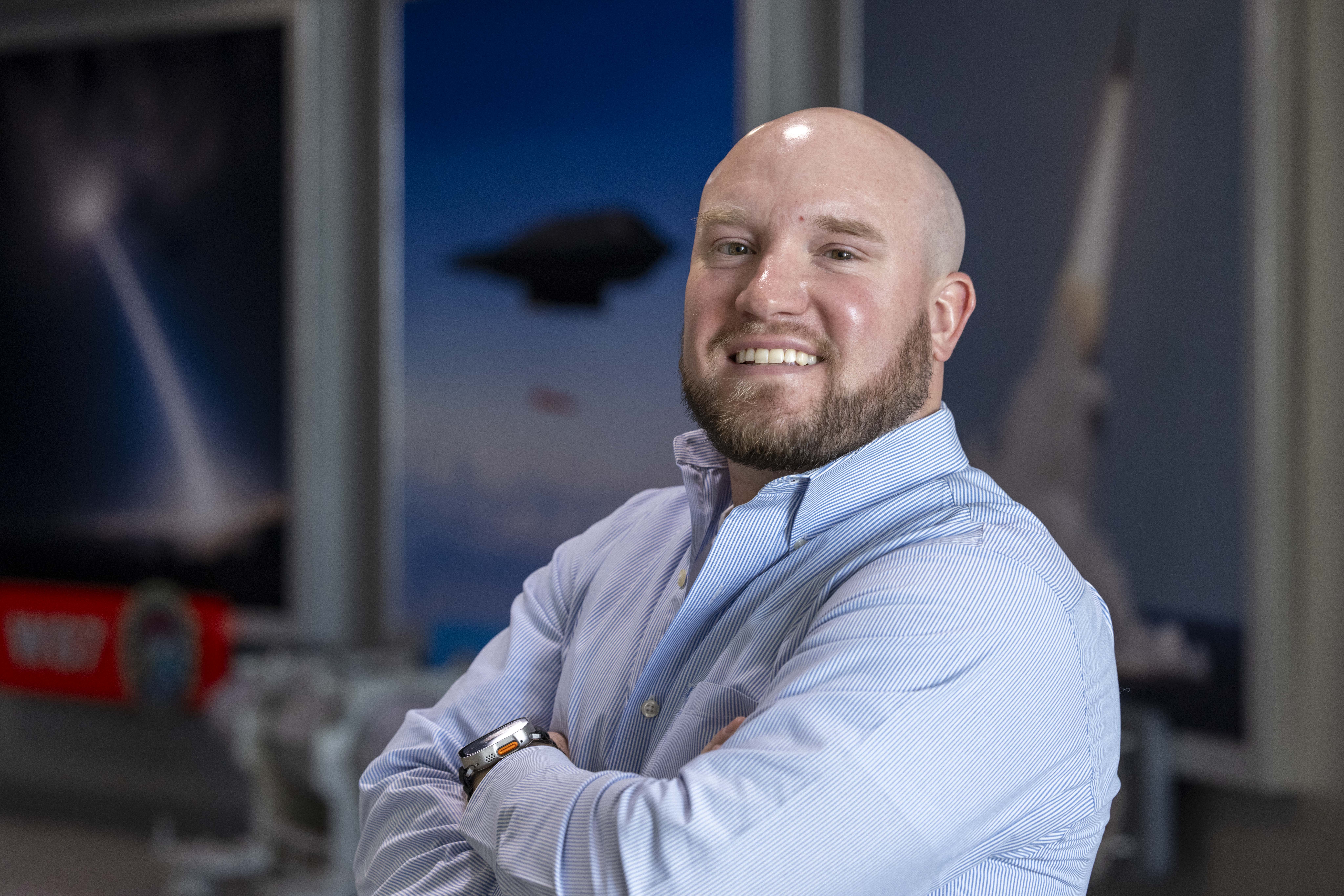
Thousands of dedicated Pantex citizens like Chris Perez work every day to support the Pantex mission. Take three minutes to learn about who he is, what he does, and why he is proud to be a Pantexan.
The Human Reliability Program (HRP) is a security and safety reliability program designed to ensure that individuals who occupy positions with access to certain materials, nuclear explosive devices, facilities, and programs meet the highest standards of reliability and physical and mental suitability. As the HRP Management Official, Chris Perez has the unique role of making sure Pantex is held to that standard.
Growing up, Perez always thought he would be a high school coach. While in college, he began working at a bank and realized his passion had changed. When an opportunity at Pantex presented itself, he knew he was ready for the next step in his career.
“Pantex is the only one of its kind, meaning the work done here is unique,” he said. “For me, there is a lot of pride in understanding the kind of contribution you can make toward the overall mission and delivering for our nation and allies.”
After joining the Pantex team, Perez was surprised by the overall size and amount of diverse work it takes to carry out the mission. “The passion of my fellow coworkers and those involved in HRP is unmatched,” Perez said. “It is one of the main requirements to conduct the work here at Pantex, and that makes me proud.”
While HRP helps ensure safety and security, it is also about ensuring the well-being of our fellow Pantexans. “Working with people that might be going through something is never easy, but it’s part of the job,” Perez said. He added that it is very important to him that the employees who participate in the HRP know he cares about them no matter what they are going through.
This position has allowed him to develop his problem-solving skills. Questions or concerns are presented daily, and it is Perez’s responsibility to make sure they are handled appropriately. The longer he is in this role, the easier it gets to find solutions. However, Perez has found that not being afraid to ask for help and listen to different perspectives has contributed the most to his success in his role.
Everyone offers value to our tasks. Why must we be open to learning and hearing from others?
The work at Pantex is full of policies, procedures, orders, regulations, etc. Oftentimes, there are many different perspectives or interpretations of what something means. There is a very dynamic and knowledgeable workforce at Pantex, and talking advantage of that is the best way to learn. It also allows you to create your own understanding.
What advice do you offer someone who has made a mistake in his or her job? How should they be accountable for that issue?
We are HUMAN. It is literally the first word of the program: Human Reliability Program. Mistakes are going to happen no matter how big or small. It’s your response to the mistake that is crucial. Holding yourself accountable and showing focus and sincerity in the corrective actions is important.
How has teamwork allowed you to grow as an employee?
In HRP, we are dealing with the majority of the plant population. Working together with not only the HRP team but the plant population is vital to the success of the program. It also increases my overall plant knowledge—I learn something new every day that allows me to apply new knowledge to my job.
Why must we understand the requirements, procedures, etc. tied to our jobs?
HRP is driven by regulation, just like many other programs. The understanding of the requirements is vital because of the access individuals are being granted to complete the mission. If an HRP requirement is missed, that means the individual is not allowed to conduct HRP work, which could mean they are not contributing to the mission until all requirements are met.
What work advice would you offer someone who is new to Pantex?
Understand that it’s going to be overwhelming at first. However, embrace it and find people that are passionate about their job and learn from them. Also understand, there is a reason for everything and if you don’t understand, ask!
Who in your life has inspired you the most and why?
My Father-in-Law, Jimmy “JW” Walker. He took me under his wing when I was young and, at that time, I needed a male role model in my life. I have never seen someone work so hard and be as dedicated to his family as he was. He was battling cancer for the latter part of his life and for the most part you couldn’t tell by his attitude. His perspective on life was much different than I have ever seen. He was someone that cared about everyone and those that knew him loved him. I could never repay him for what he did for me or my family, but I do my best every day.
Celebrating the first, first responders
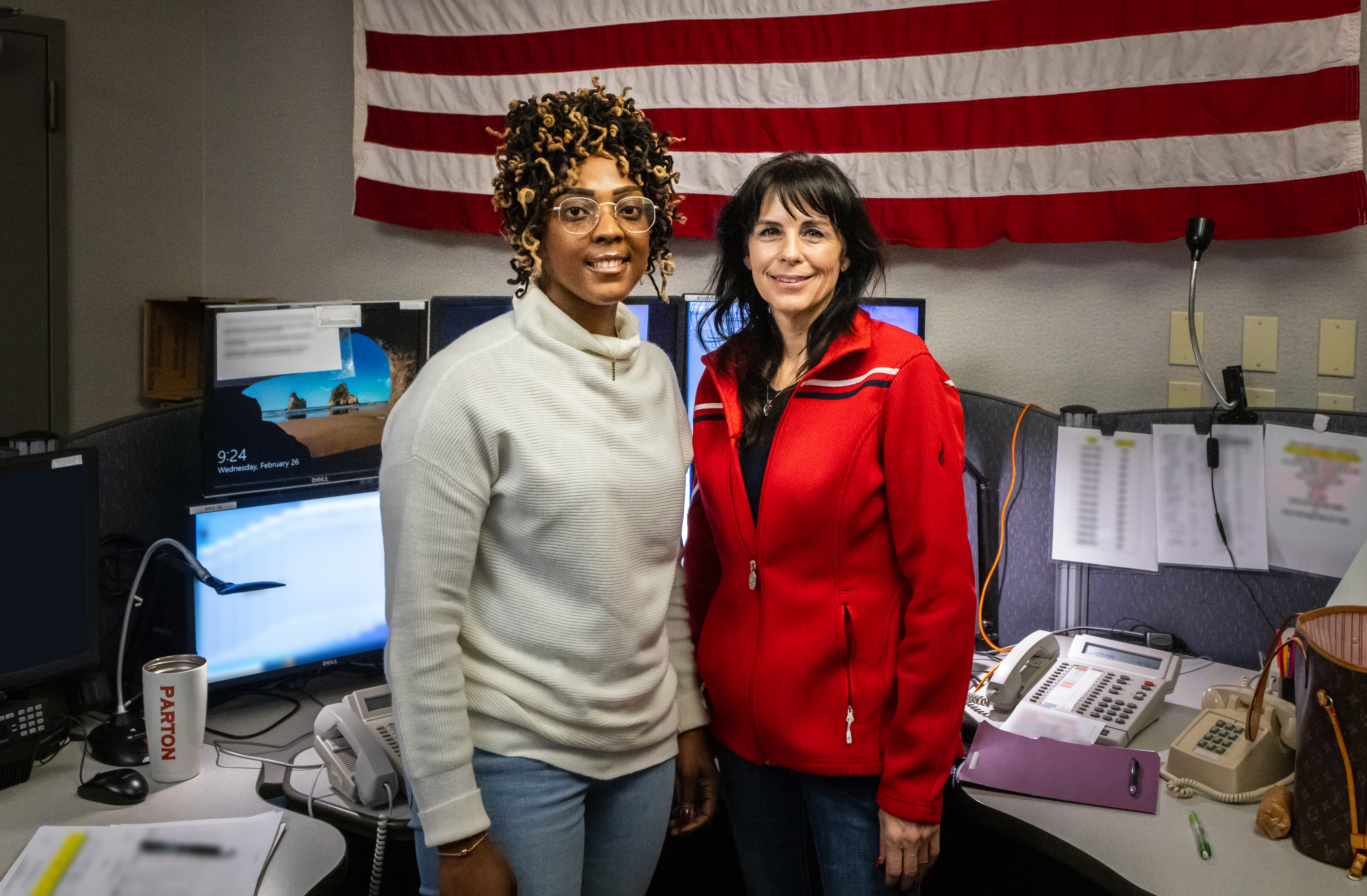
Dispatchers Ayana Moore and Melodi Parton say teamwork is essential when coordinating response during an emergency.
What is an emergency? It may seem like an easy question to answer, but an emergency to one person may not be urgent for the next. Life experience, knowledge, and individual circumstances, among other things, may lead people to differ on their opinion of a true emergency.
Seeing firetrucks and wanting to know what happened — not an emergency.
Ordering a pizza and the delivery driver forgets the drink — also not an emergency.
Someone’s life or health is in danger — emergency.
Property, public health, or the environment is in danger — also an emergency.
When an emergency happens, dispatchers answer the call. The Pantex Fire Department maintains a 24/7 Emergency Services Dispatch Center. When dialing 9-1-1 from a phone at Pantex, the call is routed to their dedicated team. If calling from a cell phone, the emergency will be handled by the appropriate off-site dispatch center.
Even though dispatchers are often the initial point of contact for emergency situations, they sometimes do not receive the same recognition as other first responders. National Public Safety Telecommunicators Week aims to change that. Held annually the second week in April, NPSTW honors and recognizes 9-1-1 professionals like dispatchers Ayana Moore and Melodi Parton — both frontline responders.
“I got into this line of work because my heart’s desire is to make a difference in my service,” Moore said. “We are trained to protect and serve, so I feel my service is to protect from greater danger, to prevent a greater tragedy, and to provide the help that is needed.”
Dispatchers are trained in taking emergency medical and fire calls, monitoring alarms, mutual-aid requests, and answering non-emergency calls. Parton says it is important to stay calm while working in such a fast-paced, high-pressure environment.
“A clear mind allows for better decision making and communication which can be vital in emergencies where every second counts,” Parton said. “Panic can lead to mistakes or delays that could exacerbate the situation. My reaction has to be one of urgency coupled with composure.”
If there is an emergency, stay calm and remember to breathe. When calling 9-1-1, first give the location of the emergency. If the address is unknown, use landmarks or describe things nearby. Dispatchers are highly trained professionals ready to use the information provided to effectively respond to a variety of calls.
“I never know what type of situation I may have and who I have the pleasure of talking to,” Moore said. “If someone calls with an emergency and they’re panicking and I’m panicking, I wouldn’t be of any service to them. Staying calm is the key to dispatching.”
While one dispatcher takes calls, asking questions and gaining valuable information, their teammates are hard at work notifying responders to get them enroute quickly. Training and experience help dispatchers know what information is critical to ensure an appropriate response.
“When receiving a call, the process begins with an immediate assessment,” Parton said. “Dispatchers focus on gathering essential information from the caller and ensuring they feel heard and supported. Dispatchers then determine the best course of action. They remain calm to effectively relay information to first responders and coordinate resources efficiently.”
Dispatchers are a crucial aspect to public safety, acting as the link between callers and the responders providing emergency assistance.
“When I help get resources to someone during an emergency, I feel relieved, hopeful, stressful … many emotions but overall grateful to serve in this capacity,” Moore said.
National Public Safety Telecommunicators Week shines a light on the people behind the phones who serve our plant and our community as first responders. Whether the call involves people, property, or even pizza, dispatchers will answer ready to coordinate a response.
“Knowing that my actions can significantly impact someone’s life during a critical moment is both humbling and motivating,” Parton said.
The Ruck Up Foundation honors fallen soldiers
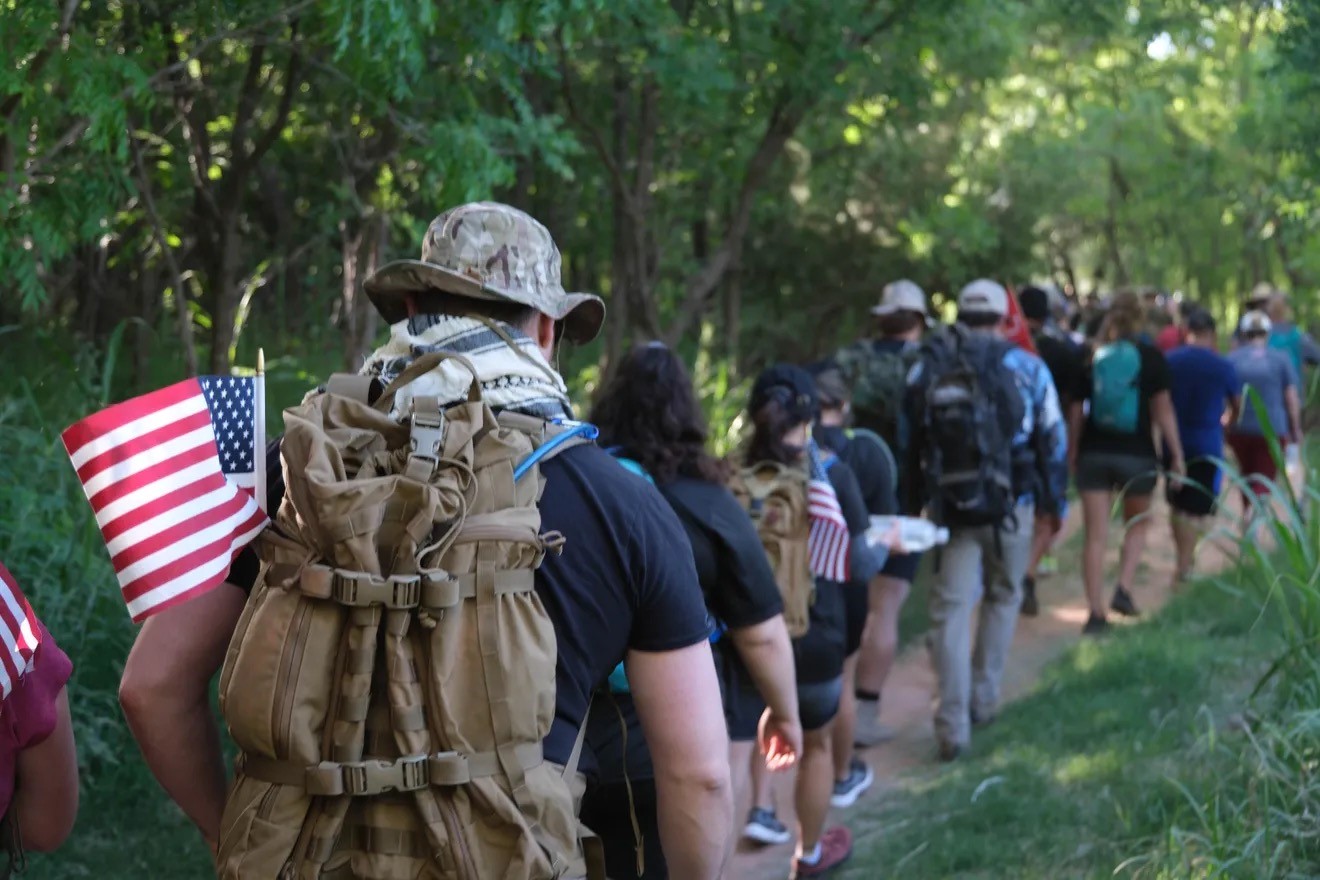
The Ruck Up Foundation embarks on their annual Memorial Day ruck styled hike in Palo Duro Canyon.
Holidays and special occasions can be bittersweet. Sweet are the times you get to celebrate and share your love with those closest to you; bitter are the periods of grief that creep in and remind you that someone you care about isn’t there to share those moments. Memorial Day is one holiday that is hard for families of fallen soldiers.
A small group of proud Pantexans – Cosme Alonzo, Anthony Jaramillo, Daniel Mata, Ismael Ordaz, and Daniel Prieto – who are also combat veterans, saw an opportunity to help local Gold Star families and bolster the legacies of these fallen heroes. A Gold Star family has experienced the loss of an immediate family member as a result of active-duty military service.
“For many, Memorial Day is a weekend to barbeque and enjoy the start of the summer season, but there are a lot of people who find themselves in a really negative place during Memorial weekend,” Alonzo said. “One year, we decided that we needed to stop drowning our sorrows in unhealthy outlets and find a wholesome way to memorialize our fallen comrades.”
And so began the Ruck Up Foundation.
The men, all of whom are Security Police Officers, wanted to find a way to say “thank you from a grateful nation.” The Ruck Up Foundation has committed to sending birthday cards to children of fallen heroes through their 21st birthdays. They have also established an annual college scholarship for a family member of a fallen soldier. Through their 10-mile ruck in Palo Duro Canyon and other events, they raise money to host an annual Gold Star Christmas event, partnering with Toys for Tots, to provide Christmas presents for the children.
“Our Ruck Up hike for Memorial Day is our biggest event and my personal favorite,” Mata said. The group sponsors a 10-mile hike to raise money for these projects. “For $50 you get into Palo Duro Canyon, a t-shirt, and some fun swag. What started out as three guys trying to pour their grief into a healthy outlet has turned into 121 individuals hiking in remembrance of fallen soldiers.”
The Ruck Up Foundation feels so lucky to have the support and compassion of their coworkers and encourages anyone who wants to tag along.
“I would say about 50 percent of our participation comes from Pantexans or immediate family members,” Jaramillo says. “Pantexans like Chelsey Westfall. When I reached out to her for a quote for her photography services, she was so supportive of our cause that she donated her services for free. At the end of the day, that’s the kind of support that allows us to do this.” Westfall is the Administrative Assistance for Safeguards and Security.
For many, Memorial Day marks the kick off to summer. For the Ruck Up Foundation it is time to pause and reflect on what the day is really about. They encourage people to take a moment to give thanks and honor those who paid the ultimate price for our freedom. And, if you’re up for it, join a group of dedicated Pantexans on Sunday, May 25, for the Foundation’s annual hike at Palo Duro Canyon.
If your family, or a family you know, could benefit from the services the Ruck Up Foundation provide or if you would like to participate in any of their events, visit their website for more information.
Be prepared for severe weather
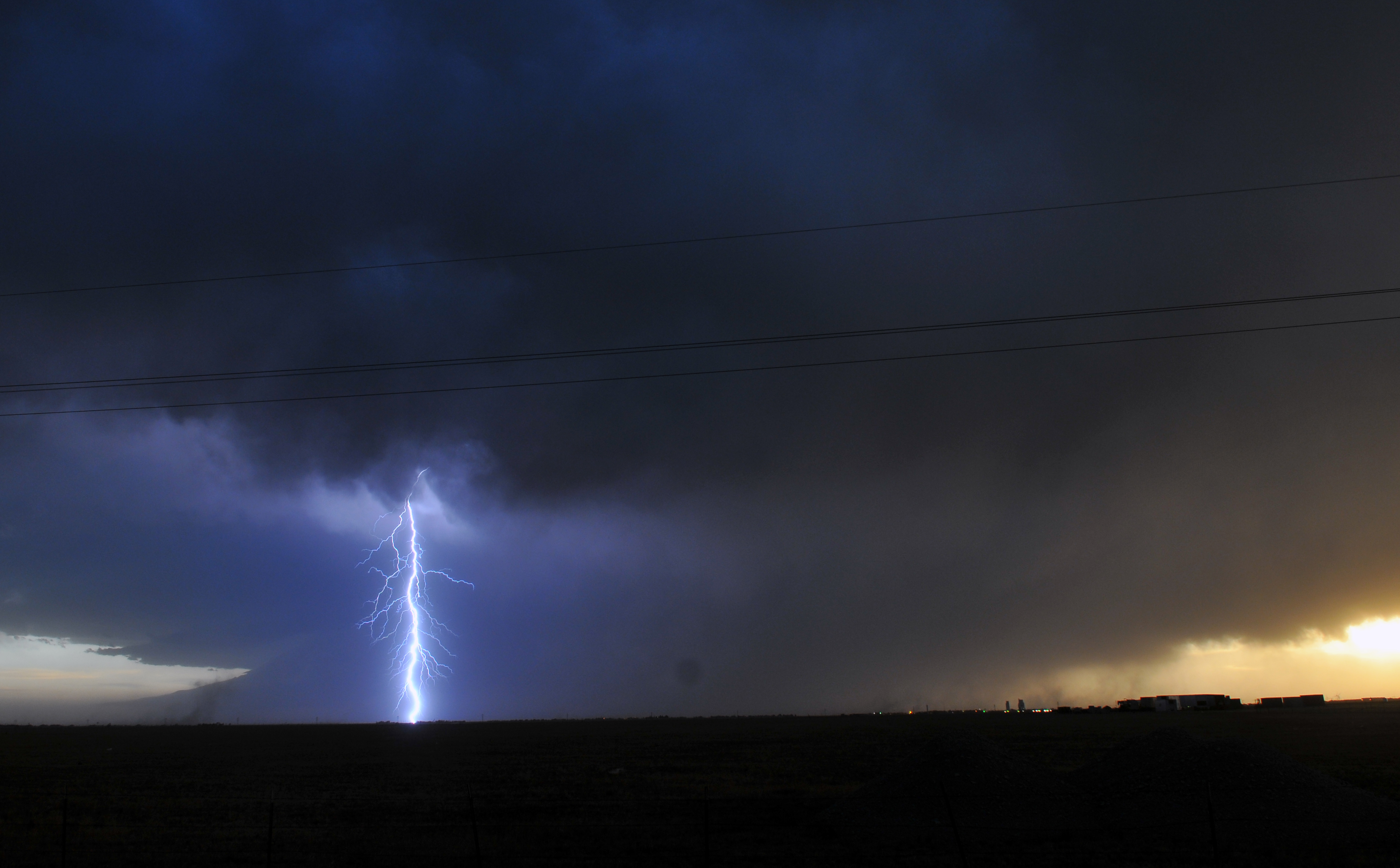
Severe weather season is unpredictable, scary, and can be dangerous if you are not prepared. Whether on‑site or off, it is important to know what to do if severe weather hits. Here are a few ways to prepare and keep yourself and your family safe:
- Make sure at least one family member knows first aid and CPR.
- Download the FEMA app for resources and safety tips.
- Have a family plan in place; all members of the family should review and practice the plan.
- Have family members’ and other important phone numbers written down or memorized.
- Assemble an emergency supply kit and keep at least three days of food and water at home.
- Store important documents in a fire‑proof safe or safety deposit box.
- Know how to shut off utilities including natural gas and water.
To be more informed about local weather, the Pantex StrikeNet© app offers meteorological information such as wind speed, wind direction, temperature, relative humidity, dew point, barometric pressure, rainfall, rainfall rate, and even lightning data. Download the app on your phone through the Apple Store and Google Play.
Pantex Proud: Steven Kemp

Thousands of dedicated Pantex citizens like Steven Kemp work every day to support the Pantex mission. Take three minutes to learn about who he is, what he does, and why he is proud to be a Pantexan.
When Construction Manager Steven Kemp started framing houses at 15, he knew he wanted to be involved in construction for the rest of his life…and he hasn’t done anything else since.
“You get to step back every day and see how you’ve progressed and you get to see what you are building and giving to the owner. Some jobs you have to wait until the end to see what you have done. I have always known this is what I was going to do, but I didn’t know it would take me as far as it has.”
Prior to joining Pantex in 2019, Kemp was a commercial construction superintendent who was a part of building schools, hospitals, and other industrial structures. Here, he is part of the line-item projects group and works primarily on the High Explosives Science and Engineering Facility. He oversees the contract scope, schedule, and budget, and ensures that the contractor delivers what is agreed upon and the owner gets what they paid for. Building relationships is key to a successful project.
“Someone told me early on to really work on relationships with other departments and to make contacts. On huge line-item projects, you need something every day. You may have to interrupt someone who doesn’t have time, and if you have a good relationship with them, they will probably make time.”
Those inter-departmental relationships not only help Steven with day-to-day issues but also keep work going at Pantex. Without that camaraderie, the work stops.
“We have some pretty tight requirements on-site and we continuously have to communicate with the project engineers and the architecture firm who designed the building. We will pull together the whole team and we will go through and figure out what we can do to move that task forward while the paperwork is being processed to save time. Because I have access to all these people, we can come to an agreement to get the job done quicker and safer.”
Everyone offers value to our tasks. Why must we be open to learning and hearing from others?
I don’t believe that there is any room on projects to be closed minded. There are people with a lot of experience and diversity in backgrounds. I have over 25 years of experience, and I’ve learned a lot from so many people out here.
What advice do you offer someone who has made a mistake in his or her job? How should they be accountable for that issue?
You’re not working if you’re not messing up. There is a reason that you learn more from valleys than hilltops. If you just started and everything came together, you wouldn’t learn much. You own that mistake, store it in your mind, and make sure it never happens again.
How has teamwork allowed you to grow as an employee?
I have received accolades during my time at Pantex, but none of them are possible without my construction management and project management team. I don’t think any of us can perform any of these tasks without each other. We all bring different strengths to the projects, and without each other we would not be successful. There are a lot of minds put together to work on these unique facilities.
Who in your life has inspired you the most and why?
My dad has always been the person who inspired me most. He was everything you needed him to be when you needed it. I watched him get up every day and go to work. As kids we didn’t have a lot, but he worked all the time, with a daily job and then side jobs. He was always my biggest fan, too. Without question, he just always seemed to know what I needed.
Pantex Proud: Susan DeBault

Thousands of dedicated Pantex citizens like Susan DeBault work every day to support the Pantex mission. Take three minutes to learn about who she is, what she does, and why she is proud to be a Pantexan.
Construction Project Manager Susan DeBault considers her role to be like that of an orchestra conductor.
“We make sure all the instruments are in tune and that all members are playing from the right sheet of music,” said DeBault. “Within the Facility and Equipment Upgrades and Disposition portfolio, I am responsible for all phases of the project, overall performance, ensuring objectives, schedules, and budgets are met.”
DeBault followed her dad around the world during his career in the U.S. Air Force and grew up primarily on Air Force bases. Her belief in the mission started in 1985.
“I think the most impactful assignment we had as a family was in Berlin, Germany, while it was still under communist control. Seeing people living without freedom made a big impact on me. Working here has given me a greater appreciation of the work we do and the importance of the mission.”
With a degree in Business Management, DeBault has worked in marketing, facility management, and most recently as a project manager for the Texas A&M University system. A little over four years ago, she started in Project Management and because of Pantex was able to make a journey back to Germany.
“Several members of an Integrated Project Team I was on traveled to Poland for a factory acceptance test and landed in Berlin. To see the wall, the barbed wire, the guards all gone—it was incredible.”
DeBault says her favorite part of the job is that every day is different, and there are continual challenges and opportunities to solve problems. She also really likes working with the people in the plant who are going to use the facilities and seeing how their needs are going to be met.
“I learn from every project I work on. That helps you grow, because if you run into a challenge on one project, you take that information with you to the rest of your projects. You apply those lessons learned over and over.”
As the number of new projects on-site continues to increase, more Pantexans will benefit from the expertise and diligence that DeBault brings to the plate.
Why are you proud to be a part of your specific team at Pantex?
We help provide modern facilities that support our mission and production goals. I work with a really distinguished group of people who are very talented. I am always impressed by the caliber of people we have here.
How has teamwork allowed you to grow as an employee?
We have such a talented group of project managers with diverse backgrounds and areas of expertise. Being part of my specific portfolio, other project managers have stepped in to help me when I have faced difficult project challenges and have proposed possible solutions. I highly value the guidance and input that they have given me. When someone is out, another project manager is there to keep their projects going. We have an incredible backup system. I have never experienced this level of teamwork before.
What advice has a team member given you that has helped you in your career at Pantex?
Marlin Connor is the mentor for the Project Management group. He told me early on to actively listen to learn, and that has been so valuable for me. When you start, it feels important to show what you know, but it’s different at Pantex. You have to be humble, ready to listen, and open to learning new processes.
What has surprised you the most since joining Pantex?
How quickly things change within the organization. It’s constantly evolving and improving. Not just with people, but with projects changing to improve efficiency and execution.
What’s your top bucket list item and why?
I love to travel with my husband. My twins just graduated college a year ago, so I think we are finally going to be able make that happen. My dream trip is to travel to Italy—and it’s tentatively in the plans for the next couple of years. When we lived in Europe, we didn’t get to make it to the places I wanted to see in Italy, so I’m excited to go there.
What role does communication play in your job?
Communication is critical to the success of any project. The stakeholders are diverse, and it is vital that you are getting the right input from the right people. You can’t make decisions or operate in a silo here. Communication is the top skill that determines if a project will be successful and is the most important thing we do in my opinion.
The Nuclear Family: The Lesters

The Lesters: Clockwise from back left are Amy and Kurt Lester with their children Darby and Jake.
When Facility Representative Kurt Lester started at Pantex a little over five years ago, he was excited to be surrounded by people who have similar interests as him. In his words, “a bunch of nerds.” Then a couple of years later, Kurt started seeing more familiar—or rather familial—faces around the plant.
In 2022, his daughter, Darby, started as an intern, and was officially hired on in 2023 as a Mechanical Design Engineer after a year in the Career One engineering program. Then his son, Jake, started in 2022—first in Quality before moving to his current position in Safety Analysis Engineering in late 2024. Finally, his wife, Amy, left her 21-year career in elementary education to try her hand at something new at Pantex, and now works as an Issues Management Specialist for Production Operations.
Mom, daughter, and son all credit their dad with helping guide them to their positions. He searched and matched each member of his family with jobs he thought they would be good at. Over time, each family member got the call to join their new family—the Pantex family.
“I’ve known I wanted to be an engineer since I was twelve,” Darby said, “so I figured Pantex was the most logical place to work. Now, it’s weird waking up and getting ready at my house with my parents, then going to work with my parents, then eating dinner with my parents. It’s a lot sometimes, but it’s a blessing.”
Both siblings, who started within a few months of each other, will be getting married within a month of each other in 2025. They work two cubicles apart from each other and feel very proud for each other that they have secured great jobs so early in their careers.
“We work at one of the premiere places in the panhandle, and the fact that all four of us get to work out here? It’s amazing. We are very lucky,” Jake added. “We get to save some money, too, because we drive to work together sometimes.”
With the whole family at Pantex, “Lester Lunches” and group chats named “The Funky Bunch” soon commenced. They really love to “pop in” on each other when they can and love that they can share the common language that comes with working at such a unique place all together. When friends see one of the Lesters out and about, they will ask where the rest of the family is.
“When other people see my kids, they always tell me what great ‘young adults’ they are, and I am a very proud mom,” Amy said. “Of course, when they hear I’m married to Kurt, they always joke—but then tell me what a good man he is and that he is great at what he does.”
A very important member of the Lester family whose presence is felt at the Pantex Plant is Kurt’s late father, Tom. People find out that a member of the family has a connection to Granddad Tom and the stories start to flow.
“It is a really special feeling to know that we are continuing the legacy of my granddad,” Jake said. “There is a lot of pride in knowing now that three generation of Lesters have served the country and the world through the mission of Pantex. We lost him at such a young age and don’t have a lot of memories of him…so when people come up and tell a story about him, I am happy that he did such a good job and that people knew him. I think he would be proud of Darby and I for making it out here.”
When considering the fact that they all work together, Kurt is glad his family is able to carry on a tradition his dad started.
“I think people within the Pantex community enjoy seeing families or familial relationships at Pantex since Pantex is a tight knit community by default of what we do out here. As parents, there is a joy knowing that your children are in successful careers and in an industry where there is a lot of growth for them to achieve. I am thankful for that.”