



News
Working with your mom can be Bliss

Vicky Bails and her mom, Alma, have both used their talents to make Pantex great.
It’s important to see people who look like us and who we can identify with both to mentor and to help us grow in the workplace. Compliance, Assessments, and Analysis Lead Assessor Vicky Bails took that quite literally, as her mentor and hero at Pantex was her mom, Alma Bliss.
Bliss worked at Pantex from the late 1970s until she retired in 1994. She spent most of her career in Purchasing, which is now named Procurement. She told Bails stories of old, like rattlesnakes in Building 16-12 and the van pool she took from their home near Lake Tanglewood to Pantex, which was exactly 29.5 miles from her front door to the parking lot. When reflecting on her mom’s retirement, Bails recalls how sad she was to be leaving.
“It was really hard for her to leave and walk away from her team and the work that they did. She always told me it was a family out here, and I got to see that. I got to go on site many times to eat lunch with my mom. I got to go to her department Christmas parties. They really lived like a family. I was part of the Pantex family before I could even remember.”
As Bails prepared to start a family of her own, her mother encouraged her to apply at Pantex. She knew it was a good way to provide for a family and knew Pantex treated families well. Not long after starting her position in Information Technology in 1992, Bails met her husband Tony, who worked in her brother’s department. Two of Bails’ brothers have also worked at Pantex.
“It has been continual blessings. I got a bachelor’s degree for less than $500 because of the educational assistance. Additionally, we had a really sick child when he was first born, and our supervisors were very kind and understanding through the whole process.”
Though mom and daughter were in different organizations for the two-and-a-half years they worked together, there were lessons learned that translated across departments.
“My mom told me to let my work prove my worth. Because my dad died and left her with four children, she had to work. She had to be a very hard and dedicated person. I think I took after her in that respect.”
Since Bails has worked at Pantex, she has worked in Information Technology, Operations, Safeguards and Security, Engineering, and now Quality. No matter where she works, people love to tell stories of her late mother.
“She made people toe the line, and if they didn’t, she would let them know. I’ve heard countless stories about people who still revere her. Even when she was not the one in charge of the department, people say she ran that place.”
As an organization filled with people who take great pride in our history, it is easy to forget that generations of Pantexans have come through the gates. Though there are many lineages that span three generations of men at Pantex, there are far fewer women whose mothers or grandmothers worked at Pantex despite the majority of the workforce being women at Pantex during World War II. Generations of women being raised by Pantexans now are the future. As of today, Pantex is the proud employer of more than 1,000 women who play a critical role to further the success of the Pantex mission.
Statement on Equal Opportunity
PXD employment decisions are made without regard to race, color, sex, age, religion, national origin, ancestry, genetic information, disability, or veteran status.
PXD maintains a work environment that is free from unlawful discrimination, harassment, and retaliation. PXD does not tolerate discriminatory conduct that interferes with an individual’s work performance, creates an intimidating, hostile, or offensive work environment, or affects tangible benefits and/or conditions of employment, including recruitment, hiring, promotions, transfers, demotions, layoffs, return from layoff, rehires, compensation, benefits, training, educational assistance, social and recreational activities.
PXD will consider reasonable accommodations for individuals with a disability and disabled veterans (as defined in the Rehabilitation Act of 1973, Americans with Disabilities Amendment Act, the Vietnam Era Veterans Readjustment Assistance Act of 1974, as amended by the Veterans Employment Opportunities Act of 1998, and the Jobs for Veterans Act of 2002) who apply to or employed by PXD.
Employees and applicants are protected from discrimination, coercion, threats, intimidation, harassment, interference, reprisal, or retaliation for filing a complaint, assisting in an investigation, compliance evaluation, or hearing pursuant to Section 503 of the Rehabilitation Act of 1973; Vietnam Era Veterans Readjustment Assistance Act of 1974, as amended by the Veterans Employment Opportunities Act of 1998, and the Jobs for Veterans Act of 2002; Title VII of the Civil Rights Act, as amended; Americans with Disabilities Amendment Act; Genetic Information Nondiscrimination Act; Age Discrimination in Employment Act; and the Equal Pay Act.
At PXD, we treat each other with dignity and respect, while embracing diversity, integrity, open dialogue, and teamwork. An inclusive workforce that engages the unique backgrounds, experiences and perspectives of all employees yields innovative solutions, robust decision-making, and the greatest value for our customers. If you need additional or how to report a concern, issues, I encourage you to contact Talent Management team.
Kelly Beierschmitt
Ph.D. President and General Manager
Pantex Proud: Macey Ray

Take 5 minutes to learn about Macey Ray, Weapon Material Program materials engineer. This article details her role at Pantex and reinforces the diverse workplace culture Pantex offers. All views and opinions are the employee’s own and do not necessarily reflect those of Pantex or PanTeXas Deterrence.
With close to 4,700 Pantexans employed, it may be easy to think of yourself as just a number in a sea of people; however, it takes every one of us to make the mission successful. Weapon Material Program (WMP) Materials Engineer Macey Ray contributes her success to being open-minded.
“I value hearing the thoughts of others because they bring their own experiences, opinions, and perspectives. Without any other input, there is a risk of putting yourself in an echo chamber, which limits your ability to find the best solution,” Ray said. “If I am the smartest person in the room, I am in the wrong room.”
As a material engineer in the Adhesives and Films, Sylgard, and Paints and Coatings Materials groups, Ray certifies and delivers quality production materials.
“Material engineers own the entire life cycle of materials used across the plant and are involved with various working groups and programs to assure their needs are met,” she said.
When Ray began her career at Pantex more than a year ago, she was surprised to see how different Pantex is compared to other organizations.
“I was surprised to find that coming to Pantex is comparable to entering a time machine. It is interesting to see the pros and cons of crucial work being completed using technology and equipment years behind its time,” she said. “It is a testament to the direct and reliable means of performing work, while simultaneously inspiring opportunities for improvement sitewide.”
Ray shared the phrase her organization commonly uses: “We are smarter as a collective.” She emphasized this when detailing the pride Pantexans take in their work and their representation of something larger than self.
What daily task (specific meeting, report, etc.) lets you know you’re helping achieve the mission we have at Pantex? How/why does that task let you know you’re working toward the mission?
WMP's main endeavor is continuous improvement. This is illustrated by improving processes and methods in supplying quality, certified material to the line. Some of the daily tasks that embody this endeavor are material/drawing reviews, which guarantee a material is meeting specific requirements and are being used properly, as well as equipment implementation in our laboratory and blending and packaging facility to ameliorate material production and testing.
What is your favorite aspect about your work environment? How does that aspect make you know the mission is being met?
My favorite aspect of my work environment is WMP's ability to collaborate with multiple organizations across the site. Getting to work with people in every department shows Pantex's dedication to the mission and how every person and job are necessary to support production.
What top strength do you bring to your organization and why?
I bring optimism to my organization—a cheerful attitude, which encourages open-mindedness within the team when faced with tasks. My positive perspective allows me to enjoy every day and take pride in the work that I accomplish for the Weapon Material Program.
What’s your top bucket list item and why?
My top bucket list item is to compete on Survivor. I have always been a fan of the show. I enjoy seeing the differences in competitors as they compete in physical, intellectual, and socially strategic challenges. Survivor is a game of balance—showing your strengths without becoming too much of a threat and balancing the needs of the group against the needs of the individual. I would love to adapt to this social experiment and see if I could become the sole survivor.
Pantex and West Texas A&M University forge future of research with new facility
CANYON, TX– Pantex has sprouted roots in Canyon, Texas, with the launch of the Palo Duro Research Facility. The research facility is located on the campus of West Texas A&M University, approximately 50 miles southwest of the Pantex Plant.
“We have had a really good relationship with WT,” said Darnell Austin, conduct of operations specialist. “This is something we’re really excited about and it fits what we’re trying to do.”
This is the first research lab Pantex has on a university campus.
“As a proud member of The Texas A&M University System, \WT is pleased to be associated with the System’s leadership partner role at Pantex and Los Alamos National Laboratory bringing integration between Nuclear Security Enterprise design agencies and production sites,” said Walter V. Wendler, president of West Texas A&M University. “Having Pantex on the campus is another way WT is serving locally first, paying attention to our region, and investing in people, programs, and places as THE Panhandle’s University.”
Pantex is dedicated to forming and maintaining strategic partnerships, and this facility emphasizes the importance of the continued collaboration with the Texas A&M University System.
“Pantex has long been proud to be a cornerstone of the Texas Panhandle community, just like West Texas A&M University,” PanTeXas Deterrence President and General Manager Dr. Kelly Beierschmitt said. “This partnership represents not just a physical space, but a commitment to the future—one that fosters innovation and collaboration.”
Once operated as a hospital, the building now belongs to WT with Pantex leasing the space. After renovations, the research facility houses approximately 15 members of Pantex’s research-and-development group, with more than 7,500 square-feet dedicated to research and lab areas plus office space.
“The Palo Duro Research Center is more than just a physical structure—it is an environment where engineers and scientists will tackle the challenges of tomorrow while partnering with future leaders,” Tyfani Lanier, Pantex engineering director and chief engineer said. “We are investing in talent, building a pipeline of skilled workers who will contribute to the growth and security of our country.”
The facility welcomed occupants in March 2025. Dozens of people contributed to this project, which has been underway for approximately 3 years now.
“I have to give credit to everyone for the work they did,” said Ben Stallwitz, technology development director for Pantex Engineering. “I think you could point to a lot of people in a lot of organizations at Pantex and WT who worked hard to get this project across the finish line.”
Several years of research and working through requirement processes has led to this cost-effective solution.
“This space provides us a great opportunity to continue to grow our partnerships and leverage the collective intellectual horsepower of our researchers,” Stallwitz said. “This setup is more aligned to our exploratory research portfolio and our growing body of material science, digital technologies, and advanced manufacturing capabilities.”
It is also a convenient place for WT students in applicable science, technology, engineering, and mathematics fields to have access to internship learning.
"The new Pantex Lab on the WT campus is more than just a facility—it is a bridge between education and industry, research and real-world application. This collaboration will provide students with hands-on experience, create workforce opportunities, and foster groundbreaking collaborations between WT and Pantex researchers,” said Dr. Angela Spaulding, vice president of Research and Compliance and dean of the Graduate School. “The innovations developed here will drive economic growth and strengthen national security. Pantex has been a longstanding partner with WT, and we are excited to see this collaboration enter a new phase. We proudly welcome Pantex to the WT campus."
Pantex’s commitment to the Texas Panhandle mirrors WTs dedication to serving the region. Together, Pantex and WT are shaping a stronger, more dynamic future for the entire Panhandle.
“The addition of the Palo Duro Research Facility on WT’s campus furthers our commitment to being a regional research university,” Wendler said. “Having Pantex on campus provides an opportunity for our students that no other university has—we are proud to educate and train the future workforce that will contribute to the Pantex mission.”
###
PanTeXas Deterrence, LLC (PXD) is the management and operating contractor for the National Nuclear Security Administration's Pantex Plant located in Carson County near Amarillo, Texas. Pantex maintains the safety, security, and effectiveness of the nation's nuclear weapons stockpile. PXD is a joint venture led by a BWX Technologies, Inc. (BWXT) subsidiary – it also includes Fluor; SOC, A Day & Zimmermann Company; and The Texas A&M University System.
CONTACT
Dr. Amberly Winningham
Communications
(806) 340.2624
amberly.winningham@pantex.doe.gov
Uncleared connection: stories of friendship

Abbey Miller and Joy Taylor reunited for a photoshoot in the uncleared room where they first met.
Joy—It’s a name, but it’s also the emotion Abbey Miller felt when she entered the uncleared room at the John C. Drummond Center on her first day of work after New Employee Orientation. A friendly face welcomed her to an unfamiliar workplace as she began her exciting career at Pantex in Project Management.
Abbey was assigned to sit behind Joy Taylor and knew instantly they would be friends.
“Everyone needs a Joy in their life,” Abbey said. “When we met on the first day, she walked me through everything. She took me under her wing and made me feel comfortable.”
In Room 106, Row 4, Abbey sat across from Joy, a safety analyst in the Nuclear and Explosive Surety Department. The two formed a fast friendship.
“She was assigned to sit right behind me. She was so bubbly and fun, and I knew we’d hit it off well,” Joy said. “Abbey is hilarious. She kept us laughing with her stories.”
What is it about a room filled with up to 79 strangers from different backgrounds, education, experience, and interests that brings people together? Joy says it is all about leaning on each other.
“We’re all experiencing big life changes and learning new things at the same time,” Joy said. “Having the support from the people around you while navigating through new tasks makes a huge difference. The friendships I’ve made from being in the uncleared room are friendships that I can see lasting a lifetime.”
There’s no set time for how long it takes an employee to be granted a clearance so they can move to their permanent workspace. People can spend months to over a year in the uncleared room. During that time, networking helps build professional relationships and diversify personal knowledge of the plant. Joy and Abbey work in different areas, but owe their friendship to those professional conversations and work performed in the uncleared room together.
“It was nice to walk in to work and have welcoming faces smiling and letting you know the transition and all of the changes are going to be okay,” Abbey said. “We both support the mission in different ways and now we make an effort to see each other outside of work.”
Eventually both Abbey and Joy gained their clearances and moved out of the uncleared room.
“I was sad when I left because I was leaving the people that I was closest to,” Joy said. “Sad and happy at the same time. I was excited for the work I was going to get to do after gaining my clearance, having more responsibility and the opportunity to get to know my team better. But I knew I’d miss my friends from the uncleared room.”
The old adage, “it’s not what you know; it’s who you know” perfectly describes the significant impact connecting with coworkers in the uncleared room has by enhancing employees’ base knowledge and building professional – and personal – relationships in new areas.
“You find that person to answer your questions, calm your nerves, eat lunch with, be an outlet,” Abbey said. “We don’t work together anymore, but I’m so thankful to have met her.”
People of Pantex: Anne Marie Wilkerson
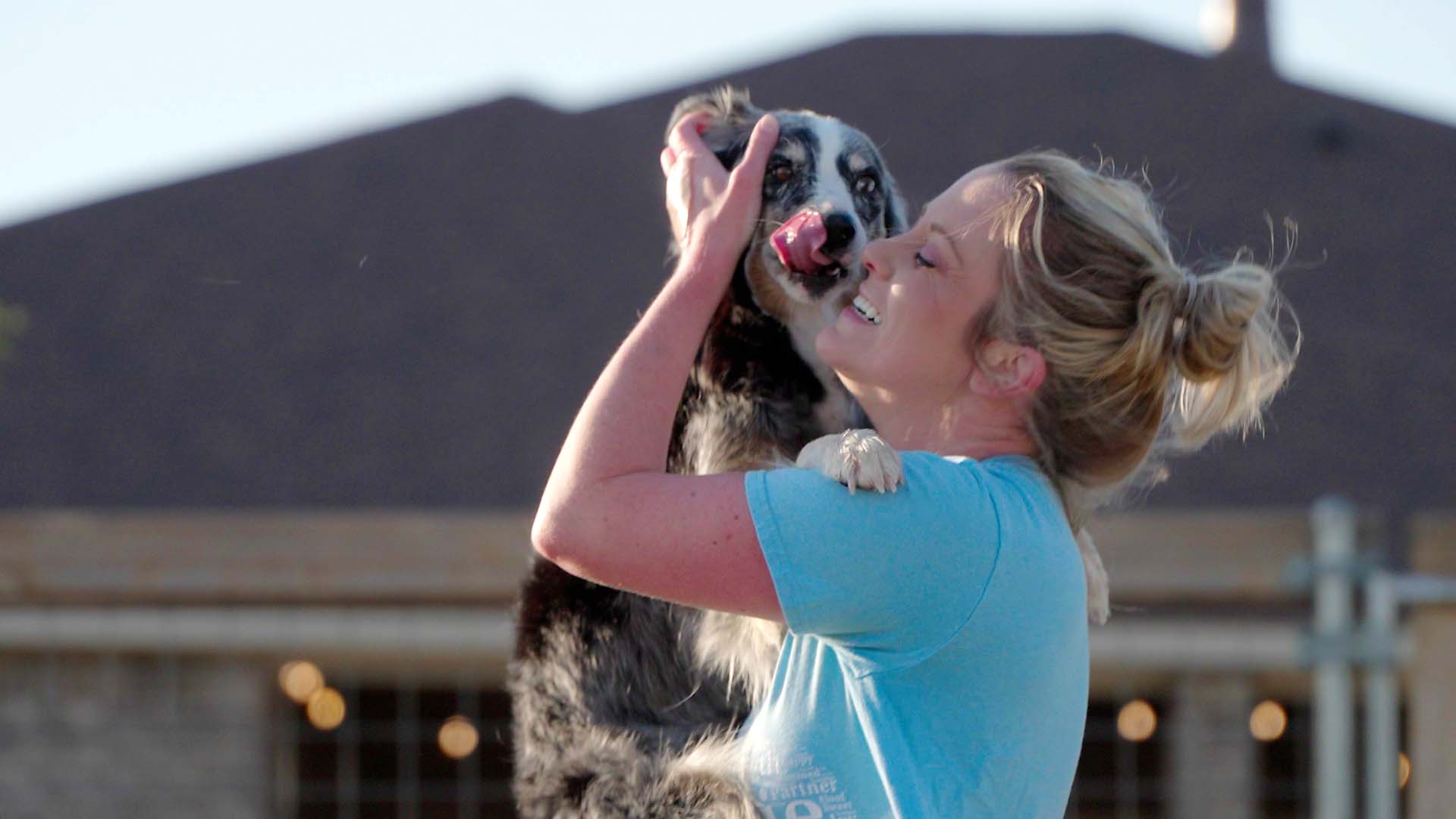
Information Release Office Lead Anne Marie Wilkerson is a self-described “reformed competitive horse-showgirl.” While horses may have been her obsession early on, it is the Australian shepherd dogs that she grew up with as a child on the farm that play such a big part of her life today.
“We've had this family of dogs since I was an infant, and I decided in 2012 that I wanted this puppy my parents raised named Lightning,” she said. “Australian shepherds are highly productive, versatile dogs that are driven to please their owners and are very task oriented. And like me, they crave a lot of structure, which is probably why I enjoy the breed like I do.”
Structure is cornerstone to Wilkerson’s position at Pantex, where she and her team ensure documents are examined thoroughly to prevent the release of sensitive information. Wilkerson’s experience at fact gathering and naturally inquisitive mind have come in handy as she thoroughly researches the bloodlines of her dogs. Lightning’s lineage can be traced back to the original Australian shepherds on both his mother’s and father’s sides. In order to save the bloodline of the dogs her family had for generations, Wilkerson established a kennel, Code Red, with the Australian Shepherd Club of America. Her goal is to breed the dogs to be structurally correct to meet breed standards, while preserving their brain power.
“Australian shepherds are smart. They can learn up to 3,000 words and are very instinctive animals,” she noted. “They’re able to perform almost any task that you want them to, whether it be working your cattle, bringing your chickens up, or asking them to perform in shows for fun. These dogs can achieve all the tasks you give them.”
Wilkerson’s competitive nature eventually led her to showing the dogs from her kennel, Code Red. She craves competition and strives for excellence with each run she does with her dogs. Though she grew up showing horses, she finds that dogs are much easier to haul around. And she has developed close friendships with many of the people she has met at competitions around the country.
“I crave the competition and I love the people who go to the shows,” she said. “I’ve met a lot of good-hearted people who share my love of dogs and love showing them as much as I do. It’s a great community of which to be a part because they all want to see you succeed.”
Though fun is the primary goal of competing for Wilkerson, winning titles for her dogs is a close second. The more titles behind each dog’s name, the more the dog has proven what it can do. Lightning, who passed away in 2022, has a legacy of winning that is continuing through his daughter, Ritzy (or her official registered name: Code Red’s Initial Public Offering).
Wilkerson and her husband have a daughter, named Claire, who is growing up with Ritzy’s puppies that arrived not long after she did. Wilkerson plans to teach Claire to compete as a junior handler with these dogs in both the Australian Shepherd Club of America’s Agility and Stock Championship Program.
“Staying close to this line of dogs is very much a family task for me since I’ve had them all my life,” she said. “I don't have a particular puppy picked out for Claire, but she will be raised with this herd of dogs, and it's interesting to see how they interact with her.”
"It is a constant puzzle as to how I communicate with my dogs. It is all about managing personalities —whether it be verbally or with my body language. In order to be an effective leader and trainer, I have to be flexible in my approach and tailor my approach to the individual dog.”
While it requires a considerable amount of time and effort to raise, care for, and train them, the joy Wilkerson—and now her young daughter—get from her Australian shepherds makes it all worthwhile.
“It’s a second job. It is a lot of hard work, and a lot people can't or won’t do it,” she said. “But I'm passionate about saving the breed, about saving and maintaining the Australian shepherd. So it’s well worth it to me.”
To find out more about Wilkerson and her dogs, watch this video.
Pantex Proud: Hayden Erwin
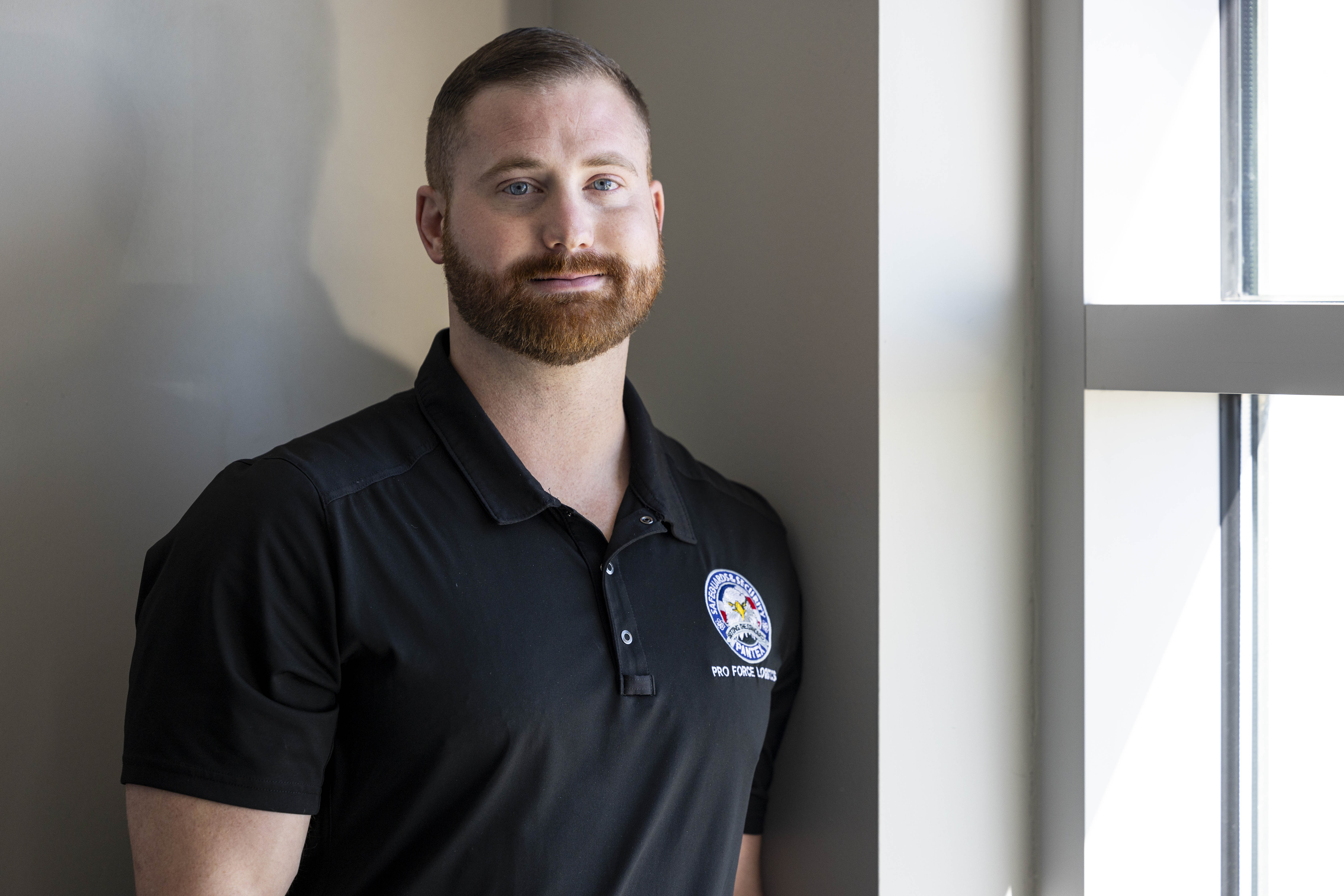
Thousands of dedicated Pantex citizens like Hayden Erwin work every day to support the Pantex mission. Take three minutes to learn about who he is, what he does, and why he is proud to be a Pantexan.
For most people a first job involves fast food, a supermarket, or retail.
Hayden Erwin’s involved firearms.
Instead of asking, ‘would you like fries with that?’ or marking down produce to half price for the manager’s special, Erwin worked in the family business founded by his grandfather in 1982.
The namesake shop, Erwin Pawn, primarily sold firearms to numerous law enforcement departments and gun enthusiasts — including many Pantexans. As Erwin grew, so did his interest in weapons. He began doing gun repairs and machining in 2012. The skills he learned in that first job transferred directly to knowledge needed in his current position at Pantex.
“I had never intended on leaving the family business,” Erwin said. “An opportunity arose to support our country and its national security. I started here at Pantex in late 2018 doing a job that I love to do.”
Erwin has worked the last six years as a Protective Force armorer. He maintains, repairs, and ensures the operability of all firearms within the Protective Force. Accountability for firearms, ammunition, and pyrotechnics for security also fall under his scope. Safety and accountably play a major role in their daily job duties.
“I work with a great group of people within Safeguards and Security,” Erwin said. “The energy is always positive and everyone strives to work hard. We motivate one another to ensure that we meet our deadlines, stay productive, and enjoy the workplace all at the same time.”
Erwin is proudest of the quality work that his team does while refinishing fielded guns with new coating, repairing and testing broken firearms, and performing general munition maintenance.
“I absolutely love my job and what we do here in the armory,” he said. “I’m proud knowing that I can put out quality work ensuring firearm operability to support the mission.”
What has surprised you the most since joining Pantex?
The operational side of each department and the sheer size of the plant. It’s great to see everyone working together as a team, and helping one another when needed.
What stands out to you about Pantex?
Pantex isn’t just a place or a job. It’s a historical landmark with a fascinating history. Every Pantexan, past and present, has been a part of the mission and we are all key in ensuring that Pantex operates in an optimal manner that will continue to secure America for decades to come.
What work advice would you offer someone who is new to Pantex?
Always show up to work with a positive mindset. Set goals and challenge yourself to be the best that you can be. We are all here to support the Pantex mission and to provide for our families.
What’s your favorite outside-of-work activity and why?
I love working outside and spending time with family. I do a lot of gardening and if I ever feel like I might have some free time, I’ll start another project or five.
Everyone offers value to our tasks. Why must we be open to learning and hearing from others?
Everyone has their strong suit. It could be from past experience or newly introduced ideas. We are bound to be successful if everyone can collaborate and work together.
Why must we understand the requirements, procedures, etc. tied to our jobs?
Each and every job on plant site plays an important role. If we follow the procedures set in place for our job, we ensure our safety and mission success.
Pantex Proud: Karla Rich

Thousands of dedicated Pantex citizens like Karla Rich work every day to support the Pantex mission. Take three minutes to learn about who she is, what she does, and why she is proud to be a Pantexan.
Mission success at Pantex “takes a village” according to Pantexan Karla Rich. She is proud to be part of the plant’s community for the past 21 years and takes pride in the work she contributes in the Special Tooling Program.
Rich’s duties include a multitude of special tooling tasks from scheduling work; maintaining inventory, inspection, and repairs; disposing of obsolete products; managing the needs for line operations; and coordinating delivery and movement of special tools. She attributes her success to the personnel that work with her on a daily basis.
“The pride of the people who work at Pantex is one thing you can always count on,” Rich said. “Pride in not only the way we provide the best quality product to the customer but how we support one another and the community.”
Overcoming challenges and obstacles head-on gives Rich a great sense of accomplishment. Providing direct support to line operations is how Rich feels she contributes to the mission.
“It takes strategic thinking and problem-solving to provide all of the special tooling used by Weapons Operations,” she said. “As long as they have the tooling they need, when they need it, the line is working to meet the mission.”
What advice do you offer someone who has made a mistake in his or her job? How should they be accountable for that issue?
Everyone makes mistakes and owning those mistakes is what makes you grow, not only as a person, but in your role at Pantex. Although it may be painful, owning a mistake may help you learn new skills, such as problem-solving or communication. I would encourage everyone to communicate mistakes with their management so they can solve those mistakes together.
What has surprised you the most since joining Pantex?
The growth. The mission has grown exponentially since I started 21 years ago and thus so has the workforce.
Who in your life has inspired you the most and why?
My dad—he worked for over 30 years with a disability and it never stopped him. He worked for the railroad in a dangerous position, but he never asked for special treatment. The culture back then led him to believe that his disability would force his retirement, so he found ways to overcome his disability. He was a pillar of strength for our family and passed on an exceptional work ethic to my siblings and me.
What is one thing your coworkers would be surprised to know about you?
Prior to Pantex I worked for a small family-owned business and I not only did financial analysis but I did in-person repo work.
Pantex Proud: Heston Hollar
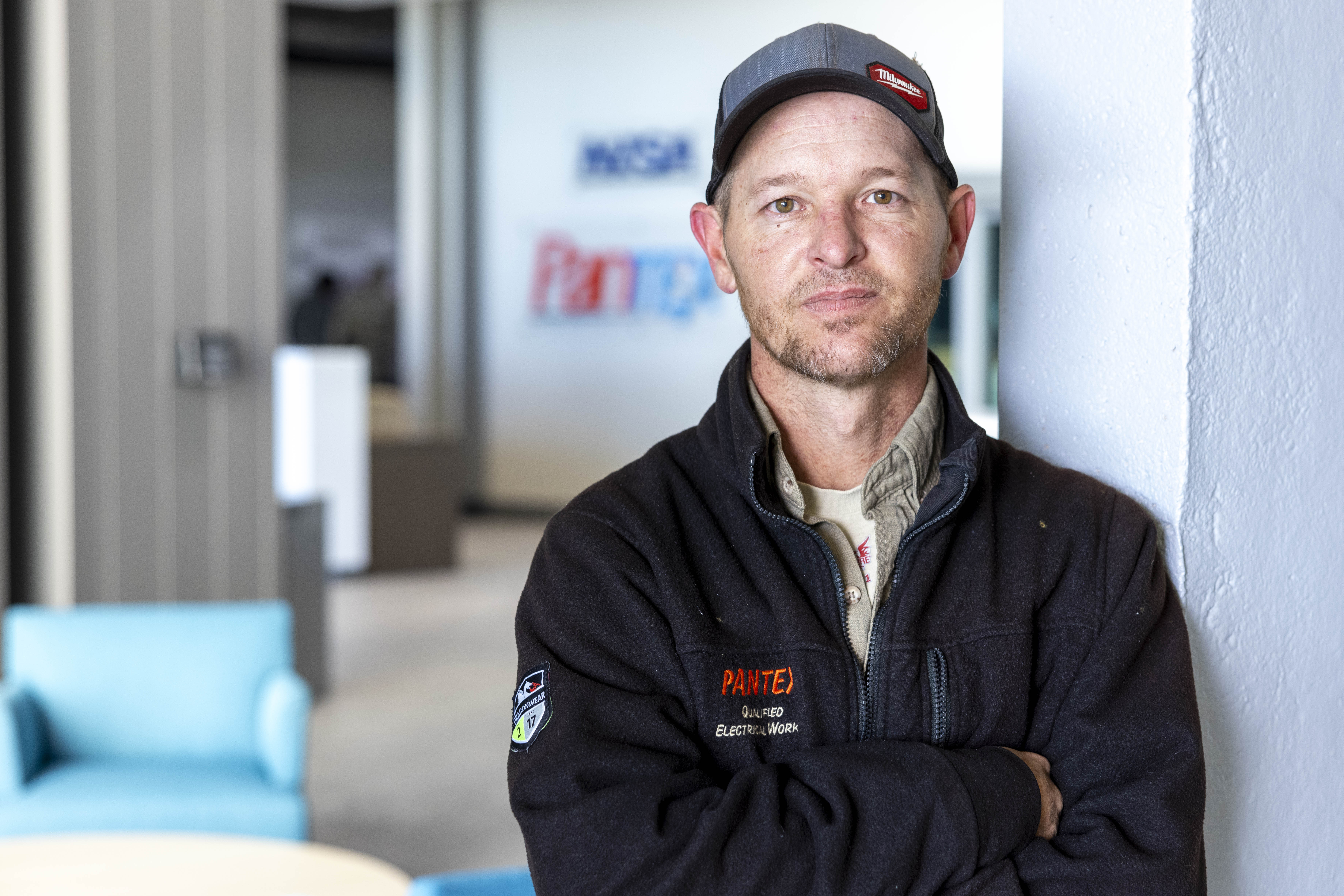
Thousands of dedicated Pantex citizens like Heston Hollar work every day to support the Pantex mission. Take three minutes to learn about who he is, what he does, and why he is proud to be a Pantexan.
Some Pantexans have worked at our plant for a time, left for a variety of reasons, and found their way back. Heston Hollar is a prime example. He started at Pantex in 2015 and left for a short period before returning in 2019. And while people have a variety of explanations for why they chose to leave and come back, Hollar returned to Pantex for one main reason: safety.
“What stands out to me about Pantex is the safety culture. At regular jobs you are sometimes asked to do things that aren’t the safest. Out here, safety is the number one priority and there has never been an instance where I have been asked to do something that would bring me harm. It’s a relief for myself and my wife and kids.”
Though Hollar has been in his current position since 2019, he started at Pantex in production. He also worked for Lawler Wood in the JCDC for a time.
“Pantex is the land of opportunity. If you don’t like where you are at, you can learn something new by changing roles.”
Hollar believes he has found a home for himself on his current team. And though the work he does is different from what he has experienced off-site, he believes every role at Pantex is important.
What work advice would you offer someone who is new to Pantex?
Working here is a big adjustment for anyone. This job is going to be a lot different than anyone you’ve had before. Try to find your place out here. It may not be the first place you land, but there are a lot of moving parts at the plant and I believe there is a fit for everyone somewhere within it.
What daily task lets you know you’re helping achieve the mission we have at Pantex? How/why does that task let you know you’re working toward the mission?
My daily tasks mostly deal with correctives or modifications, so we get involved if a facility has something wrong with it. Once something breaks or needs to be fixed, my partner and I run out to the job. We get to see something get fixed. It’s higher priority and we get to see the physical impact in the operations from what we do.
What advice do you offer someone who has made a mistake in his or her job? How should they be accountable for that issue?
Own the outcome. I messed up a job early on in my career at Pantex. Understanding that I messed up, I found that I had a lot to learn about how the department worked and it encouraged me to learn the rules that drove our department and were there to put myself and co-workers in the best situation to succeed on future projects.
Why must we understand the requirements, procedures, etc. tied to our jobs?
Knowing and following the rules and procedures keeps everyone on the same page, keeps our records complete, and ensures we are safely making a quality product. Our requirements are rigorous, as they should be considering the importance of our mission.
Robot dog makes helping people a piece of cake
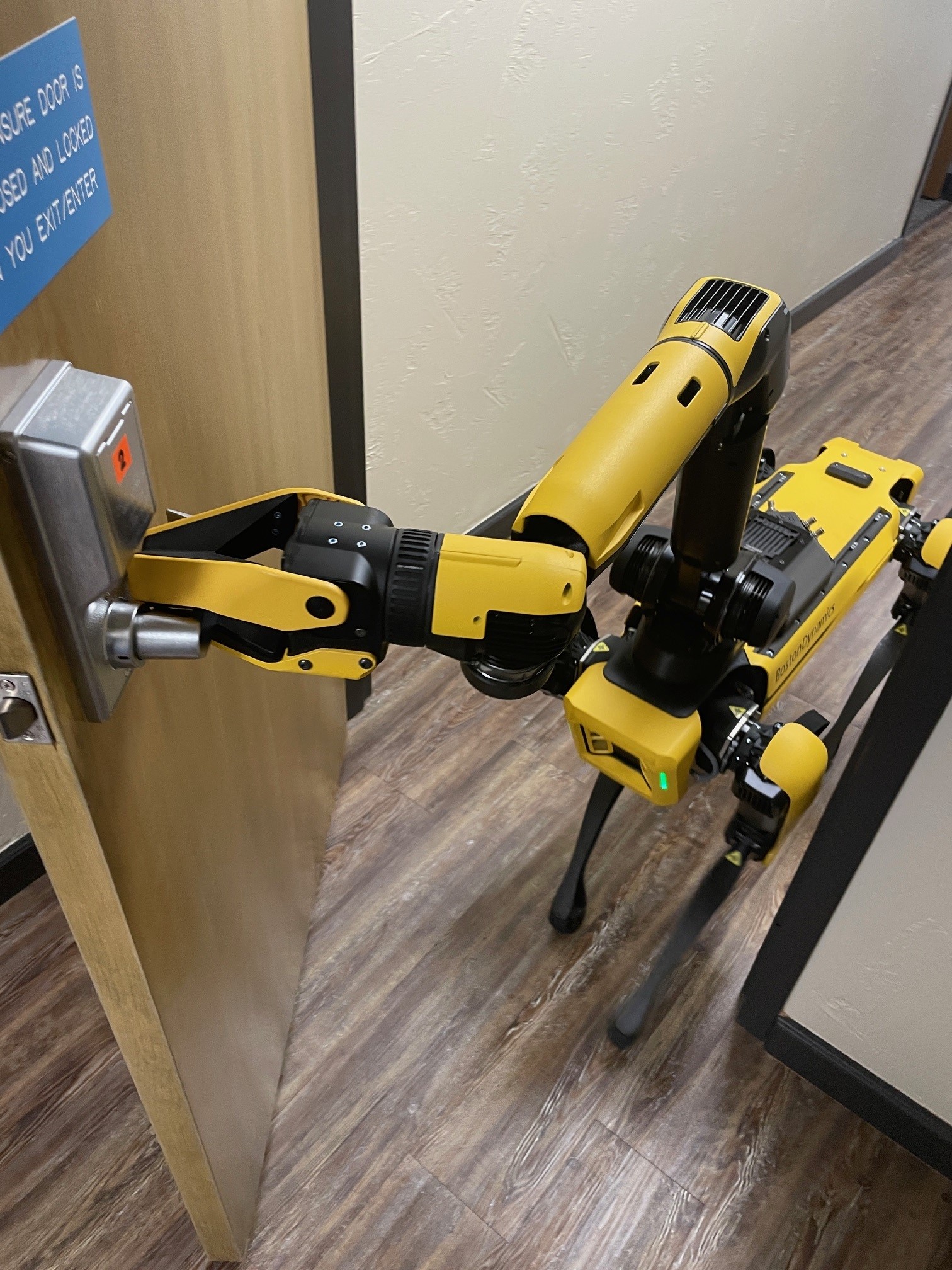
Unlike your family pet, Pantex Emergency Management robotic dog, Cupcake, can do more than just sit or shake; she can autonomously open and walk through doors.
Training a dog is not as easy as pushing a button—unless your pup is a robot dog.
Sit, fetch, and roll over are all common tricks for four-legged companions, but for Pantex’s agile robot dog, Cupcake, tricks are more technical.
“She can open and go through doors,” Emergency Preparedness Specialist William Easley-McPherson said. “We tell her on the controller what type of handle it has and she is programmed to open a variety of doors autonomously. She can provide a live-view with her multiple cameras and laser detection which gives us situational awareness for any kind of incident.”
Just like a normal dog, Cupcake needs to be fed and rest from time to time. Instead of kibble, she relies on electricity to keep her going and has a special kennel where she energizes.
“She can go, sit down, and basically go to sleep and it charges her battery,” Easley-McPherson said. “When she knows she’s low on battery she automatically heads to her kennel to recharge.”
Cupcake was purchased from Boston Dynamics in 2023 as part of a Plant Directed Research and Development grant funded by the Department of Energy. Her original name was Spot, but she was lovingly renamed Cupcake by a team member's daughter. Easley-McPherson is one of her handlers and says part of the mission will be to go where it is dangerous for humans to go.
“The first and foremost priority is human safety and the ability to expand situational awareness,” Easley-McPherson said. “Not only for radiation, but let’s say we have a building collapse for some unknown reason and we needed to know if it is safe to go in there or if we have people who need to be rescued.”
Easley-McPherson said in situations like this he could put Cupcake into crawl mode and produce a live feed of building support beams and see if any areas need reinforced before people go in for rescue efforts.
“She’s very stable,” Easley-McPherson said. “She also has the ability to handle electrical things that would possibly be unsafe for people, like high voltage. Her arm can manipulate breakers; she can flip one. Whereas a person would have to suit up and get into protective gear, she can go in and do it straight away.”
Easley-McPherson noted that future package upgrades could allow Cupcake to take measurements of radiation. The main goal, he said, is keeping the human operator as safe as possible.
“If there ever is a situation where we want to know if it’s safe to approach, Cupcake is the one we could send in first to obtain real-time measurements.”
Cupcake has generated interest in the community from local schools, colleges, robotics clubs, and emergency services partners covered under our mutual-aid agreement.
“Robots are going to become such a unique part of our future and our children’s future,” Easley-McPherson said. “They’re going to be doing more of the repetitive or unsafe tasks to keep people safe. When we take Cupcake to the West Plains High School Robotics club—they’re already studying and building their own robots. They’re able to see a professional commercial robot and its capabilities and what can be done in the future.”
Cupcake strengthens social engagement through live demonstrations, such as the 2024 Introduce a Girl to Engineering event. Participants were split on response to the robot.
“Almost straight down the line we have two reactions,” Easley-McPherson said. “One set—they love it and they think it’s the coolest thing. They want to interact, they want to learn more about how it works, and they want to see the display. The second are a little creeped out by it that this thing can do things autonomously. They’ll say ‘what do you mean you can point it at a door and tell it to open it?’”
Despite the polar-opposite reaction, Easley-McPherson says many of the participants wanted to take a selfie with Cupcake to commemorate seeing a working robot in action. He wants to take Cupcake to more of the area schools to build on community outreach and show people what is possible with technology.
“It all goes back to protecting people,” Easley-McPherson said. “We can teach the next generation about robotics and how it can be useful in life whether that be practical, fun, or for emergency situations.”