



News
People of Pantex: Scott Nelson

People of Pantex is a series that highlights what makes Pantexans unique when they are not at our plant, and how those activities help them contribute to the mission.
At just over 5,000 feet in the air, Scott Nelson radioed over the common traffic advisory frequency that he was circling back to land his plane at Tradewind Airport in Amarillo. It’s something he’s done hundreds of times as an adult, but his passion began its ascent decades earlier when he took his first flight at 5 years old.
“My uncle had flown his plane from Oklahoma to take us back to his house for the summer,” Nelson recalled. “My sister and I are walking out to meet him and I thought ‘my uncle must be a fighter pilot because look at this airplane he’s got.’ It turned out to be an old Cessna 206, but at the time he stepped out with the Tom Cruise sunglasses and — as kids — we thought he was a rock star.”
Nelson was instantly hooked. From that day on, he dedicated his life to flying and helping people. He began his career in law enforcement, became a deputy sheriff, a firefighter, and an EMT. All of that led him to Pantex where he’s worked for the past 26 years.
As the management self-assessment program manager, Nelson’s job at Pantex is similar to flying planes. Just like he does mandatory safety checks to make sure all systems are working properly before takeoff, at Pantex he oversees the program where managers and workers perform self-assessments to ensure proper readiness in the mission — so they can catch problems before they happen.
“When you’re flying there are all sorts of rules — including the laws of physics,” Nelson said. “You can’t cheat the laws of physics. If you don’t have enough air speed going over an airfoil, you’re going to crash. At Pantex, we have rules and procedures we follow, and if we don’t, something could happen.”
Nelson’s dad retired from the Navy and was also a pilot. He continued the legacy of patriotism his dad instilled in him at a young age sitting in the co-pilot seat. One way he did that was by shuttling veterans around the United States for their medical appointments. Nelson is proud to have helped people who served our country and said he enjoyed going to new places every day.
“My family got a contract with the Veterans Administration system supplying the VA with air ambulances for veterans. We flew them all over the United States for surgeries and things like that,” Nelson said. “Back then, each individual VA had a different specialty, so you would pick up veterans at that hospital and fly them to Cheyenne, Wyoming, New York, or wherever for the next surgery they needed. That had me flying on an everyday basis.”
One day Nelson and his dad decided to take their hobby a step further and purchase, restore, and fly old wartime aircraft.
“We said ‘we should get a WWII airplane and go play with that,’” Nelson said. “So, we went and found an old UC-45J. It’s a 1939 model from the Navy and it’s an old photo reconnaissance aircraft that flew throughout the Pacific theater. We restored it back to its original condition and ended up selling it to a museum up in Chicago.”
It didn’t stop there. Nelson and his father’s passion took off faster than the aircraft they were rebuilding.
“That kind of morphed into a ‘hey why don’t we become fighter pilots,’” Nelson said. “So, we started looking at how we could get into a fighter jet. We got into the MiG-15 and then a little later we got into the MiG-17. The MiG-15 was the Korean War era. The MiG-17 was Vietnam era.”
Even though flying is now just a hobby, Nelson continues to give back to others in the air.
“One of the exciting things we do is Uncle Scott’s Christmas Light flights,” Nelson said. “We take kids up in an airplane at night and fly about 1000 feet over Amarillo. We fly circles and let them see the Christmas lights from the sky and say ‘this is what Santa sees as he comes in to land on your roof.’ We’ve had everything from kids ages 3 to 18 looking out that window with their nose pressed against the glass of the airplane just going ‘oooh’ and ‘ahh.’ It’s very rewarding to give a kid their first chance to go flying.”
Nelson is still taking flight and inspiring the next generation of potential pilots or aircraft enthusiasts, just like when he took his first ride in the sky more than five decades prior. To hear more about Scott’s love of flying – and giving back – watch his People of Pantex video here.
There’s no place like home

Scott Kennedy stands in the upcoming High Explosive Science and Engineering Facility.
Scott Kennedy recently moved back to his hometown of Panhandle, Texas, when he joined PanTeXas Deterrence as the division director for Infrastructure and Modernization. Though he enjoyed his stints in Carlsbad, N.M., Portsmouth, Ohio, and Los Alamos, N.M., that took him away from the area for about 11 years, he was ready to be back at Pantex.
“It was a good chance to come home,” Kennedy notes. “My wife and I talked about it and thought it was a good way to finish out my career. Coming back to help accomplish the mission at Pantex that I was a part of from 1982 to 2012 was important to me.”
Shortly after finishing his civil engineering degree at Texas A&M University, Kennedy was offered a job in the oilfield that would require a move to Dallas. After a discussion with his wife, they decided they wanted to stay closer to home. He set up an interview with Mason and Hanger and was offered a job on the spot, but again, Kennedy asked for time to discuss the opportunity with his wife. They made the decision for him to accept that job — which led to his first 30 years at Pantex.
Growing up, Kennedy worked on farms and ranches, in restaurants, driving buses, and for oil companies, all the while peppering in construction jobs.
“I think that background helps in my position now,” Kennedy said. “My grandfather was a civil engineer and he did a lot of heavy earthwork construction. My dad also studied architecture, and even though he was a preacher he always had something he was building at every church, so I was immersed in that world growing up.”
Since his return to Pantex, Kennedy considers himself lucky to have an organization that shows great commitment to diligently and safely supporting the mission. Though he has seen lots of new faces upon his return, he considers himself fortunate to recognize many familiar faces as well.
“I am fortunate because I have known a lot of them for a long time,” Kennedy said. “Between Infrastructure’s Quality of Life initiatives and more line-item projects coming to Pantex, we will see more new faces to help contribute to making our great site even better. When those people get here, we want to develop them. Improving the maturity of the current staff and training our new staff is very important, and making sure they have the right coaching, mentorship, and exposure to experienced employees is key.”
Modernization is the goal for the future of Pantex, but the largest near-term undertaking for Kennedy’s organization is sustaining existing facilities to meet today’s mission. Looking forward, there are many new facility and infrastructure needs that are mission critical and necessary for successful future mission delivery.
“We have a lot of existing facilities that we have to sustain to support today’s mission so we continue to deliver,” Kennedy said. “My entire organization works toward that. Modernization plans for the site include resilient facilities that will optimize performance. We are getting started on this with the Advanced Fabrication Facility and the High Explosive Science and Engineering Facility.”
When Kennedy is not focused on improving the site or the people in his organization, he plays golf and fishes. Though he does not have a camper currently, he loves camping with his two daughters and their families — and there are plans to pick out a camper soon.
Came for the experience, stayed for the mission
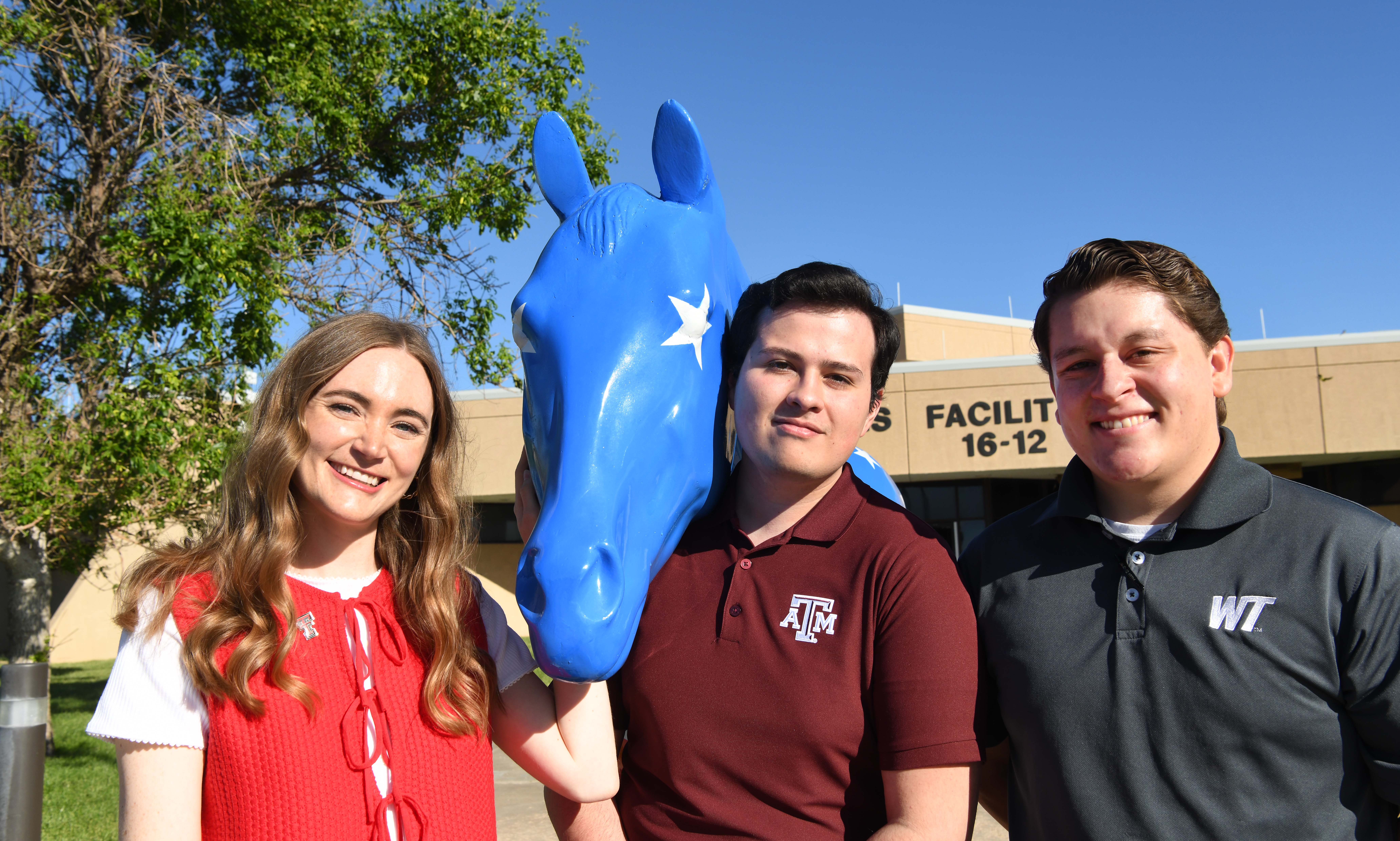
Emmy Schniederjan, Octavio Almanza, and Isaac Kendrick are 2024 summer interns turned full-time Pantex employees.
It’s one thing to learn something and another to actually put it into practice. Internships help close the gap between knowledge and experience, which is especially important at Pantex where the work is specialized and unique to anywhere else.
“My internship experience helped me develop a keen eye for small details, and also exposed me to the collaboration process between cross-functional teams,” said Octavio Almanza, information system security officer. “I find myself using these skills for my current position on a daily basis.”
Pantex recently welcomed 35 students representing 18 different colleges across the nation to a 10-week summer internship experience at the site. The interns will spend time in concentrated training gaining real-world experience with their host organizations. Their experience will culminate in a final project they will present at the Intern Expo on Tuesday, July 22, from 11 a.m. - 1 p.m. in the John C. Drummond Center cafeteria.
Summer Interns
|
Almanza graduated from Texas A&M University and interned at Pantex through the NNSA Minority Serving Institutions Internship Program in summer 2024. That October, he made the transition from summer intern with the Cybersecurity Formal Authorization & Risk Management team to an employee with the same group.
“I personally found my internship experience to be very rewarding,” he said. “I felt very welcomed by my team and was able to learn so much from my mentor and other cybersecurity professionals here.”
From the 2024 summer intern group, 18 of 38 interns converted into full-time hires. Emmy Schniederjan, environmental science associate, graduated from Texas Tech University and interned with the Environmental Projects group before being hired in August 2024.
“My internship was a fantastic learning opportunity,” she said. “I was able to get a really great idea of what working at Pantex would be like.”
Schniederjan said the internship experience itself offered great experiences like plant tours, social activities, and professional development, but she especially loved how her internship project made her feel like an integral part of the greater Pantex mission.
“During my internship, and now as an employee, I have the privilege to work with wonderful people to better the health of the surrounding environment and protect the organisms that rely on it,” she said. “I love getting the opportunity to do my part in contributing to my team’s efforts.”
The incoming 2025 group includes seven returning interns back for more hands-on learning about the work at Pantex, highlighting the excellence of the internship program, the mission, and mentors who take the task of teaching the inexperienced. Isaac Kendrick, West Texas A&M graduate and structural design engineer, interned at Pantex for two summers before becoming an employee in 2025.
“My first summer, I was put to work with all three disciplines in my group (civil, structural, architectural),” Kendrick said. “My second summer I wanted to shift my focus on just structural engineering. I really like my department and everything about my job.”
Kendrick appreciated the chance to discover what discipline in Project Engineering he would be most interested in and said the most important skill he learned was to not be afraid to reach out for help.
“When I was interning and I wasn’t sure I knew how to do something, I would tell my mentor at the time and he would sit down with me and give me a lesson,” he said. “Even now that I am full-time, I still ask for help when I need it.”
With all the skills these three Pantexans learned through their time as interns and now full-time employees, they offer some wise advice for the 2025 intern group:
“You're going to be surrounded by professionals in your field who want to see you grow and succeed throughout your time here,” Almanza said. “Use this opportunity to ask lots of questions.”
“Take advantage of all of the amazing tours and professional developments the program has to offer, and reach out to your fellow interns,” Schniederjan said.
“Take time to get to know other departments and managers,” Kendrick added. “Don’t be idle and waste time. If you have nothing to do ask your manager or coworkers if there is anything that you can help with.”
Paramedics demonstrate skill, compassion with every call
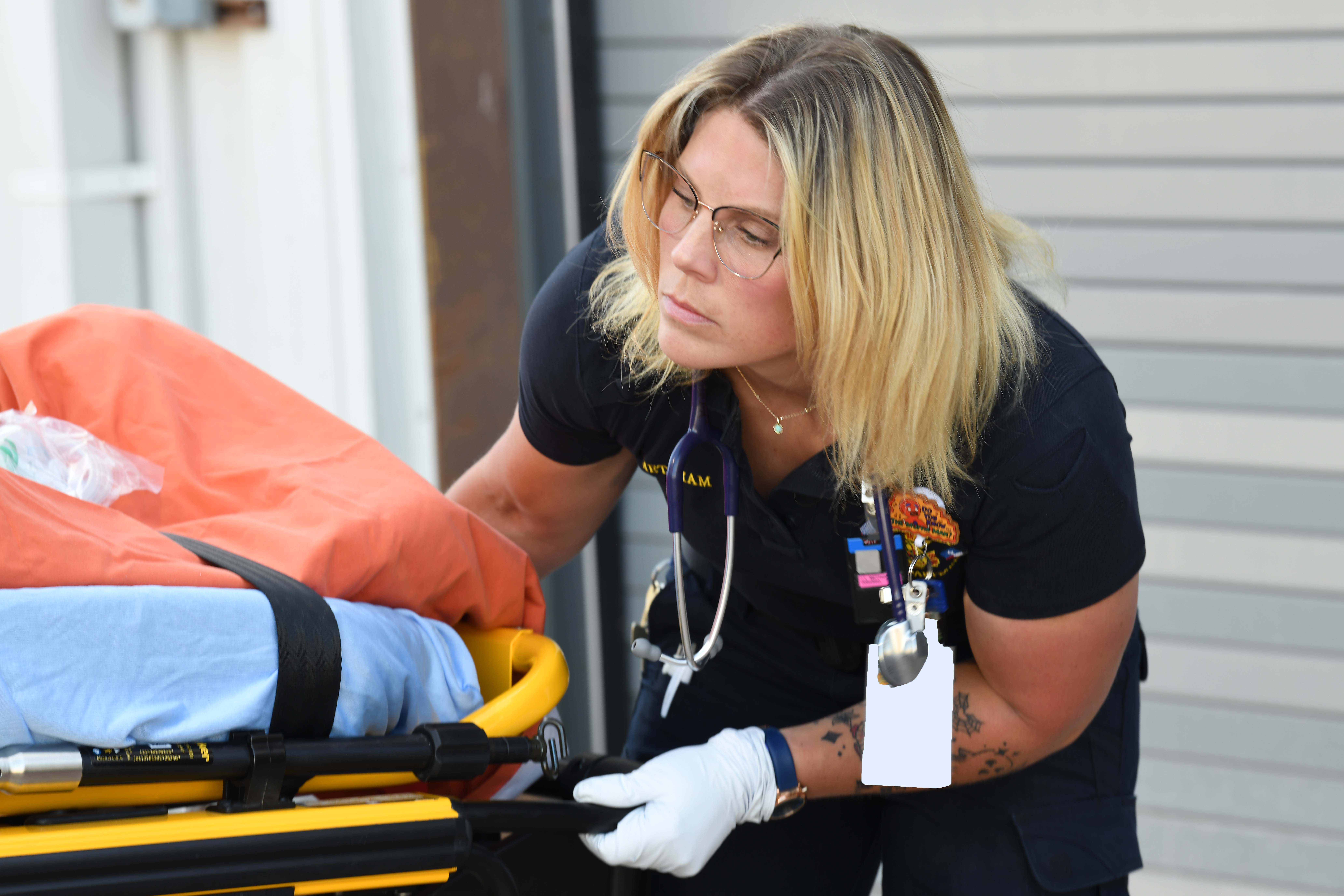
Firefighter and Paramedic Jenny Winters cares for a patient during an Emergency Management exercise.
Brave, resilient, dedicated, and heroic are words that can be used to describe the firefighters, EMTs, and paramedics working at Pantex — including Firefighter and Paramedic Jenny Winters. Emergency Medical Services professionals like Winters are appreciated year-round, but honored the third week in May during National EMS Week. The celebration is a time to recognize the entire EMS workforce for its critical service to people needing medical attention at Pantex and in the surrounding communities. National EMS Week is also a time to acknowledge the lifesaving medical services they provide.
“Whether providing patient care or combating fires, we play a vital role in supporting Pantex's mission,” Winters said. “My desire to become a first responder was driven by a commitment to help those in need. When we receive a call, we are stepping into what may be the worst day of someone's life and making a positive impact in those moments is incredibly rewarding.”
While Pantex does not have a standalone EMS station or department, it runs a state-licensed EMS service. All firefighters are certified basic EMTs, advanced EMTs, or paramedics. Currently, Pantex employs 35 EMTs and 27 paramedics. Paramedics like Winters provide all the same services as EMTs, but have advanced education that allows them to provide additional care in ambulatory settings while enroute to the hospital.
“We are on call for immediate responses to fire alarms, smoke or gas odors, grass fires, and medical emergencies for employees facing unfortunate situations,” Winters said. “Our work is crucial for maintaining safety on-site, ensuring that production remains uninterrupted.”
Winters says mornings are crucial in emergency services. After a team meeting, they exchange keys and receive shift updates before heading to the truck bay to conduct daily inspections of fire apparatus and ambulances. The crew dedicates time to weekly cleanings, vehicle upkeep, and thorough detailing.
“It’s essential that everything is functional and prepared to respond to any emergency at a moment’s notice,” Winters said. “Throughout the week, we engage in ongoing education and training, continuously refining our skills and knowledge to provide the highest level of service possible.”
Mutual trust and friendship develop between the medical professionals working at the Pantex Fire Department because of the close-knit atmosphere in which they serve.
“One of my favorite activities is cooking breakfast and dinner together on weekends,” Winters said. “These gatherings foster a sense of family and camaraderie, encouraging meaningful conversations and enjoyable moments shared around the dinner table. No better way to end a day!”
Emergency responders are often the first on the scene, delivering critical care that can save lives. Winters and other first responders manage situations requiring immediate action, acting as the initial line of defense. Alongside partners, they work to earn the trust of individuals and their families through precise communication, ensuring swift and safe transport to hospitals.
“When dispatched, we often face the unknown — whether it’s a fire or a medical emergency — sparking adrenaline and excitement for the job ahead,” Winters said. “Overall, those of us in fire and EMS are all ‘fixers’ at heart, driven to assist people during their most challenging times. We share a common dedication to serve and protect, aligning our mission closely with that of Pantex.”
NNSA Release: NNSA completes assembly of the first B61-13 nuclear gravity bomb ahead of schedule
AMARILLO, TX – U.S. Secretary of Energy Chris Wright announced at the Pantex Plant today that the Department of Energy’s National Nuclear Security Administration (DOE/NNSA) has completed the manufacture of the first B61-13 gravity bomb, the latest modification to the B61 family of nuclear weapons. The first unit was assembled almost a year before the original target date and less than two years after the program was first announced, making the B61-13 one of the most rapidly developed and fielded weapons since the Cold War.
Read the full release on the NNSA website.
Pantex Proud: Terri Gutierrez
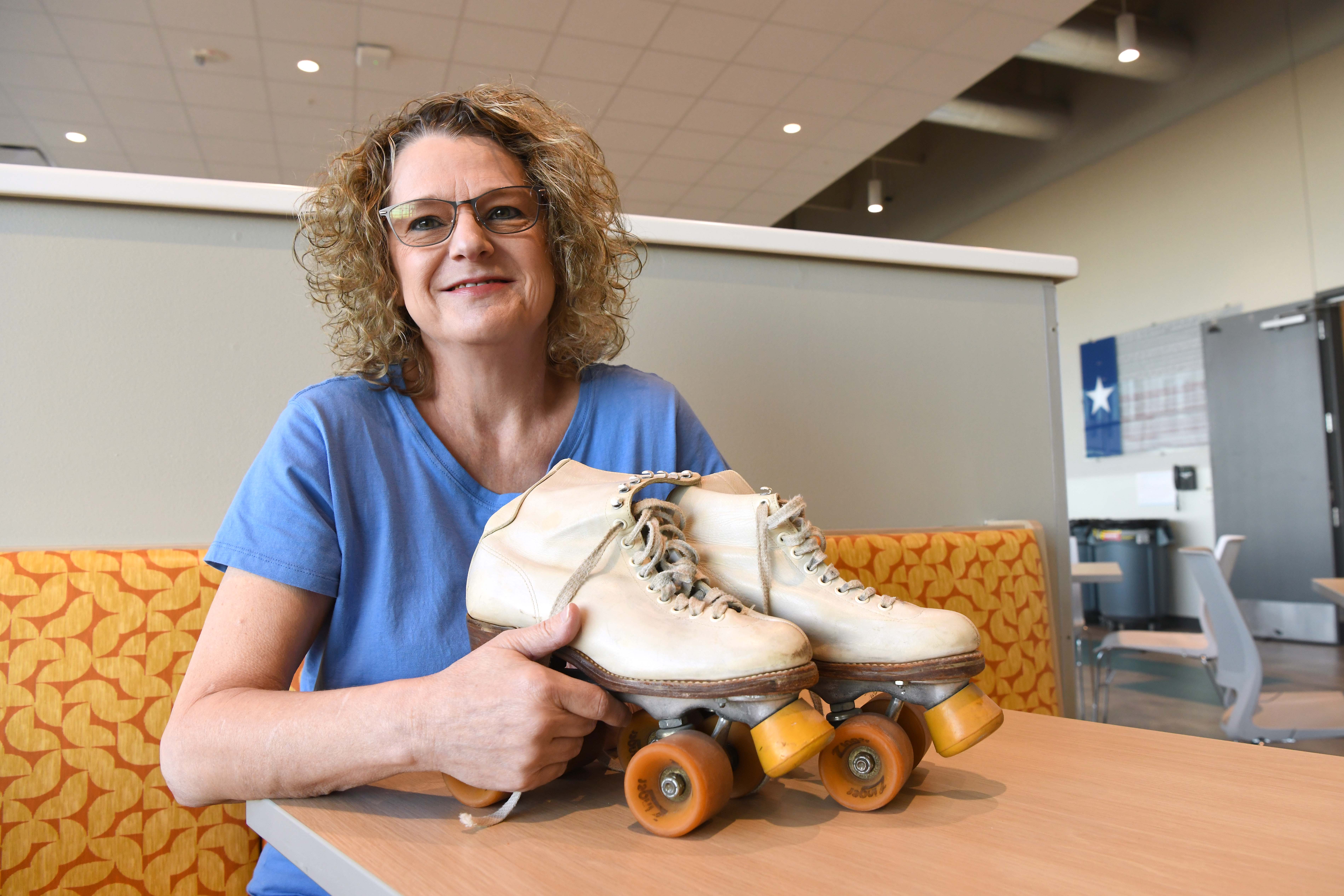
Thousands of dedicated Pantex citizens like Terri Gutierrez work every day to support the Pantex mission. Take three minutes to learn about who she is, what she does, and why she is proud to be a Pantexan.
Terri Gutierrez has been roller-skating for so long her skates used to have wooden wheels. They were handed down from her mom who used them as a teenager. Gutierrez has since upgraded the wheels to modern racing wheels, but she relishes the memories made wearing her mother’s vintage set at the rink growing up.
“Roller skating puts a smile on my face as it takes me back to when I was in junior high and how fun it was with my friends,” Gutierrez said. “I used to save all of my money from birthdays and holidays for wheels and to go roller-skating.”
Gutierrez is as natural on eight wheels at the roller rink as she is on two feet performing her job at Pantex. As the administrative senior support for Communications, she’s the go-to for all support functions.
She contributes to the mission by assisting Communications with daily tasks, scheduling requests, monitoring trainings, ordering supplies, and putting out neighbor notifications of activities occurring plant-wide.
“Helping others is my favorite aspect of my work environment,” Gutierrez said. “As a mother takes care of her children, I feel as if I am taking care of my coworkers. If I can help my coworkers complete their daily tasks, it makes their job more successful in completing the mission.”
Gutierrez stays busy with work and family life but still makes time to skate when she can. Her job requires time working at a computer, so she roller-skates to move her body and stay active.
“Skating is good exercise with my life now, and exercise is much needed,” Gutierrez said. “If I could skate every week, I would.”
Why are communications important for all Pantex employees?
Communication is key to knowledge. With such a large workforce, we must get the accurate information out to employees. Inaccurate information shared can break a task. We must ensure the most accurate information is shared.
What work advice would you offer someone who is new to Pantex?
Breathe — we have all been in your shoes. It can be an overwhelming environment. Don’t be afraid to ask questions.
What’s your favorite outside-of-work activity and why?
Since my kids are older, I haven’t been able to sneak to the roller rink as often, but I love to crochet, knit, and sew. Being creative and seeing something from start to finish makes the activity exciting. With a teenager and her activities, my current outside activity is school basketball.
Who in your life has inspired you the most and why?
My grandparents. They always said I could do anything if I really wanted to. They were hardworking people and I loved spending my school vacations at their house and working on the farm.
What advice do you offer someone who has made a mistake in his or her job? How should they be accountable for that issue?
Be honest! We ALL make mistakes. We are human.
What characteristics define a good leader to you?
A good leader is respectful to employees, upfront, and honest. Good leaders take the opportunity to get to know employees and listen to them.
Staying hydrated in the heat
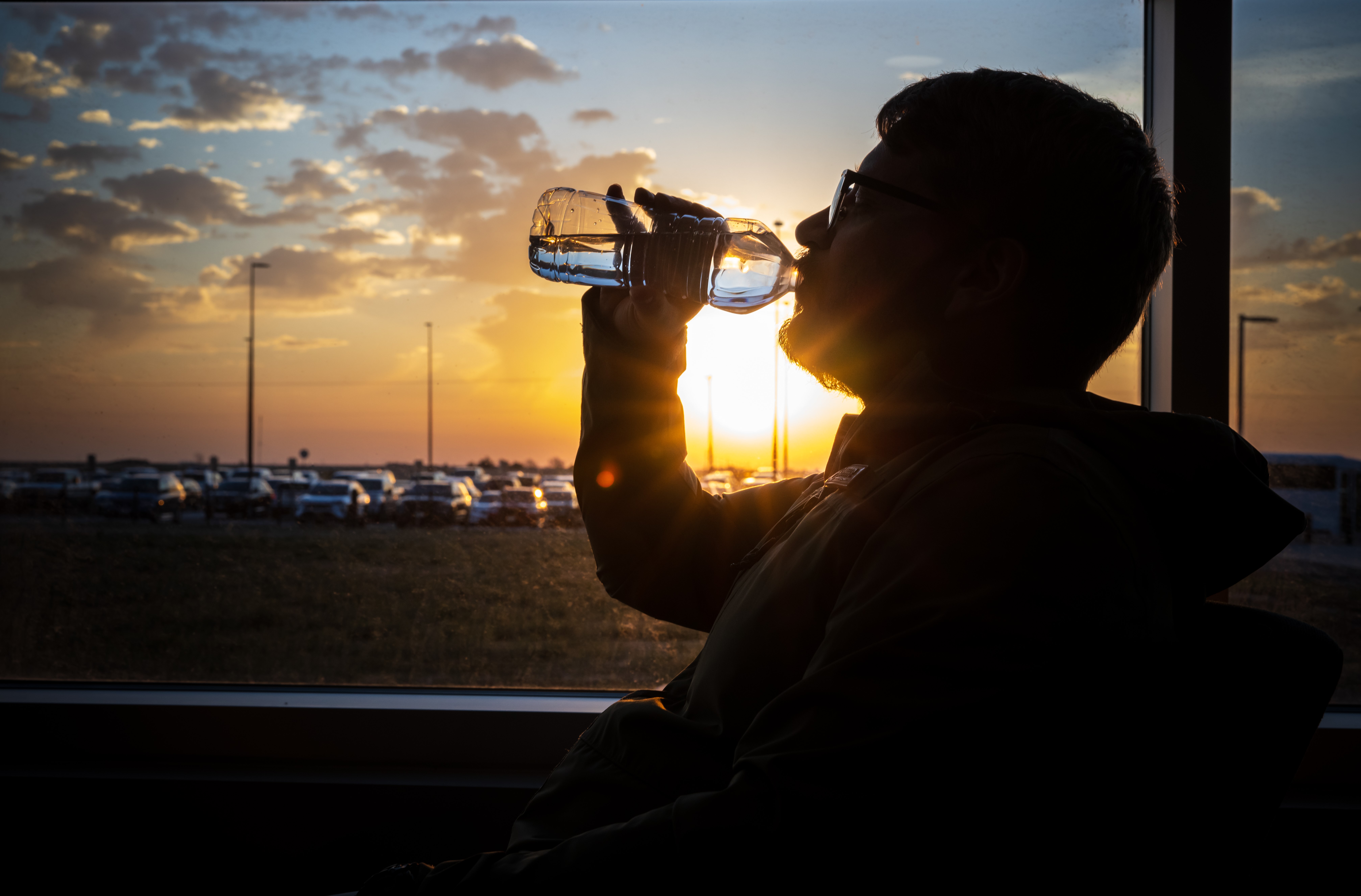
Proper hydration is essential for maintaining focus, energy, and overall well-being. Dehydration can lead to fatigue, dizziness, and reduced concentration, increasing the risk of safety incidents. Even mild dehydration can impair cognitive function and reduce reaction times, making tasks more difficult and hazardous. Staying hydrated helps regulate body temperature, support muscle function, and prevents heat-related illnesses.
As temperatures outside rise, staying hydrated is the key to maintaining safety and performance on – or off – the job. Pantex Site Occupational Medical Director Dr. Michael J. Paston recommends:
- Drinking water regularly. And don’t wait until you are thirsty to get a drink – at that point you are already beginning to dehydrate! Aim for at least 8-10 cups of water per day, or more if working in hot conditions
- Bringing a refillable water bottle with you and take small sips though out the day
- Taking hydration breaks
- Limiting caffeine and sugary drinks; energy drinks and sodas can dehydrate youv
- Eating hydrating foods; fruits like oranges, watermelons, and cucumbers help keep you hydrated
- Recognizing the signs of dehydration: fatigue, dizziness, dry mouth, and headache can all be early signs that you need more fluids
- Following the “clear urine” rule: if your urine is dark yellow, you need more water. Clear light yellow means you’re properly hydrated
- Using cooling stations or shaded areas if available
Staying hydrated throughout the day is the best way to prevent dehydration and keep your body functioning at its best so you can enjoy summertime with your loved ones!
Names in stone, memories in heart
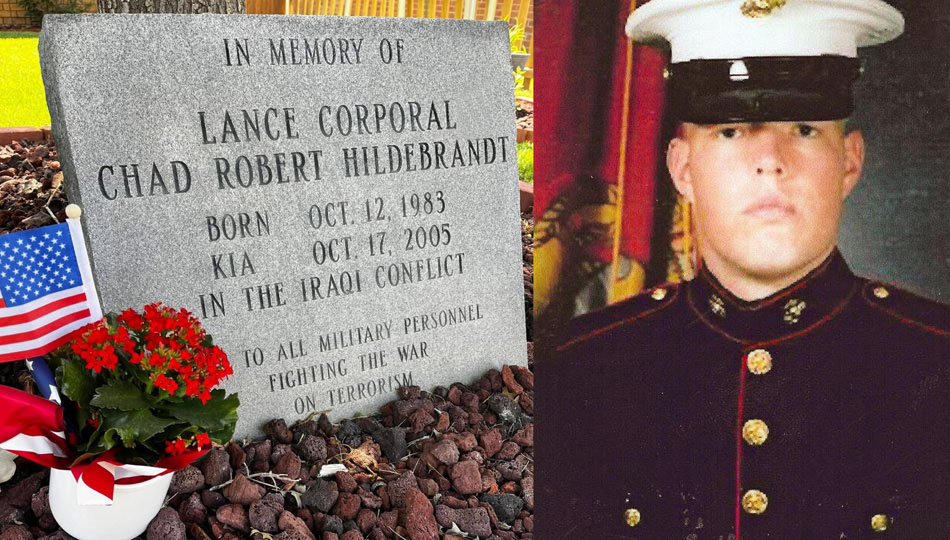
Lance Cpl Chad Robert Hildebrandt. Memorial stone outside the Hildebrandt residence. The stone is a replica of a memorial located in Springer, N.M.
This article is a personal reflection on Memorial Day, written by Public Affairs Specialist Amberly Winningham.
For many, Memorial Day is a welcome day off to cook out or relax by the lake with family and friends. I will always remember it, however, as a somber reminder of the day I watched my parents being handed a neatly folded American flag as I listened to taps and watched a community mourn the loss of a 22-year-old hero — my big brother.
Lance Cpl. Chad Robert Hildebrandt — my “Bubba” — was killed in action Oct. 17, 2005, during Operation Iraqi Freedom in a combat operation against enemy forces in Al Rutbah, Iraq.
The death of a loved one to combat would understandably hit anyone hard. As a 10-year-old baby sister who idolized her big brother, it utterly changed my life.
After the terrorist attacks on Sept. 11, 2001, Chad made the decision to join the United States Marine Corps. Just days after graduating high school in 2003, Chad left for Marine Corps Recruit Depot San Diego.
By the time he departed on his second tour to Iraq in 2005, I knew the dangers my Bubba would face, but you’re never prepared for the worst.
On a sunny, brisk fall afternoon, two Marines walked up our driveway to tell us Chad had given the ultimate sacrifice; the neighboring small New Mexico communities where we lived halted everything to honor him — a small-town hero.
From the hundreds of people in attendance at Chad’s funeral to the groups of people lined up and down Interstate 25 to pay respect as Chad made his final drive, the honor and respect felt was indescribable.
While I lost my brother, the Marines who accompanied him every minute of every day to his final resting place also lost a brother.
I often think about the pain and sadness my brother’s Marine friends felt during those days and how they feel now. I hope they know how much I appreciate their dedicated service in honoring Chad.
We’re approaching the 20-year anniversary of his death and my family still finds coins on Chad’s grave. (Leaving coins indicates a specific connection the visitor had to the deceased.) It’s a bittersweet reminder that my brother continues to be remembered two decades later.
On this Memorial Day, we remember the men and women who gave their lives to fight for our freedom. I also take time to remember those who made it home but lost someone with whom they fought.
Memorial Day will always bring me waves of memories. But, it’s ultimately a day to be thankful and to celebrate the sacrifices given by the noblest and bravest among us — and enjoy that extra burger or hot dog. My Bubba would approve.
Carla Nelson named Administrative Professional of the Year
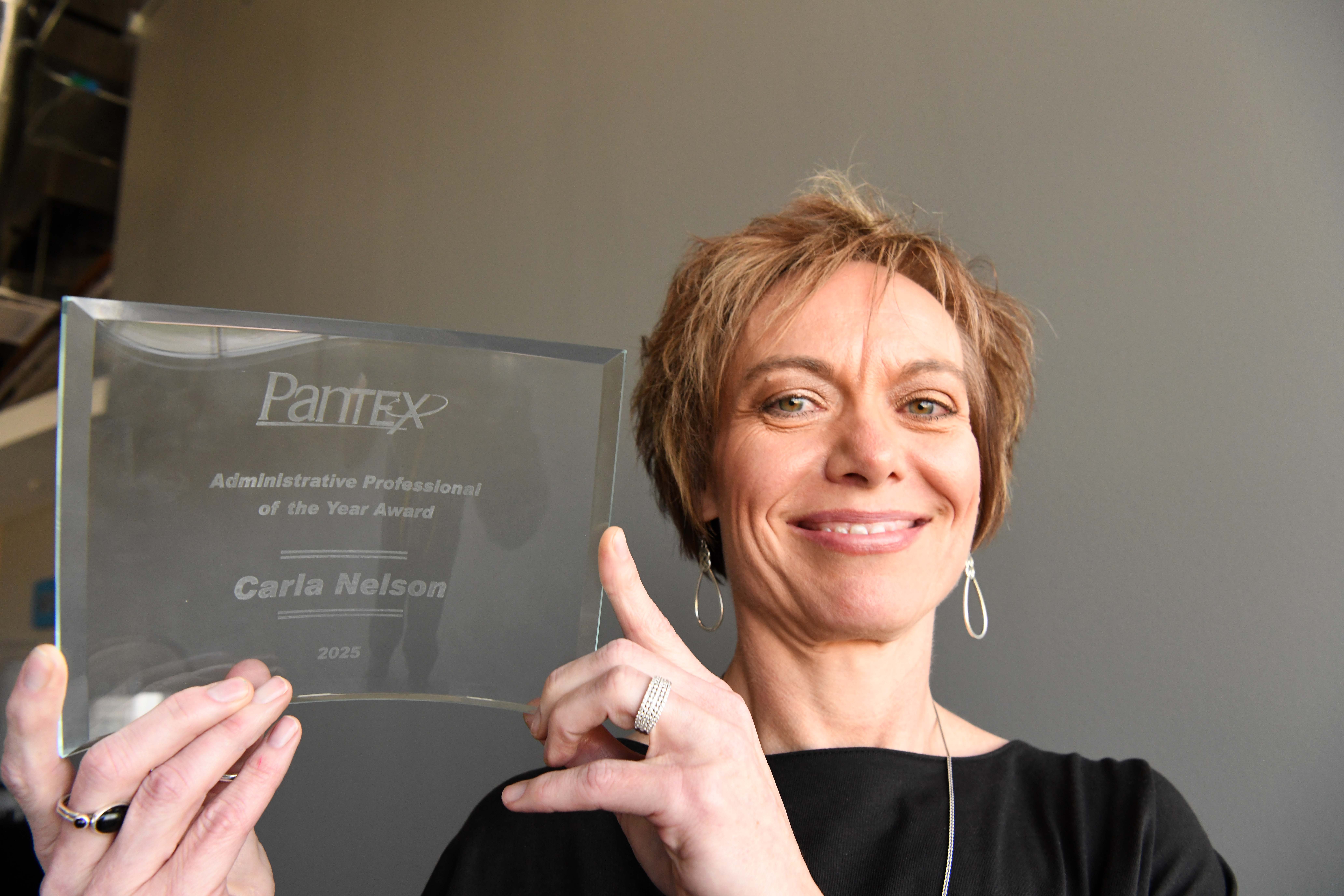
Carla Nelson is the winner of the 2025 Pantex Administrative Professional of the Year Award.
It’s nearly impossible to overestimate the influence administrative professionals have in the workplace. Solving problems, keeping teams organized, and wrangling schedules are just a few of the many daily tasks these professionals take on – often with little to no accolades.
Every year, Pantex celebrates administrative assistants by recognizing their achievements and contributions. This year, Carla Nelson, senior support for both Environment, Safety, and Health, and Infrastructure and Modernization, was announced as the 2025 Administrative Professional of the Year.
“Carla’s dedication is exemplified by her willingness to support these many groups and she does so with the best of attitudes,” said Harry Gulley, Environment, Safety, and Health division director. “If you ask her coworkers, you will hear the same replies — on-time, hard-working, sets the example, and dedicated. What would we do without her?”
Nelson started at Pantex in 2018 as a division training officer and transferred to her current role in 2021. She has also been serving as a telephone operator in the Emergency Response Organization for many years.
“Carla is always thinking of the employees and how to help them get their jobs done effectively and efficiently,” said Jimmy Rogers, executive officer for Environment, Safety, and Health. “She is here to make Pantex successful. She is never too busy to come in person and discuss a problem or request and never issues a final answer of ‘I don't know.’”
Rogers said that on top of all the incredible tasks she accomplishes with exceptional professionalism every day, she is always helping train others. Not to mention, it is in Carla’s nature to keep up with birthdays, make cookies, and work to keep team morale high.
“She truly cares and takes the time to mentor others to ensure each division is successful in their contribution to the Pantex mission,” Rogers said.
To Nelson, an administrative professional plays a key role in enhancing operational efficiency, providing customer service, and contributing to the overall success of the organization. She’s part of the glue that helps hold her organizations together.
“Embracing my heart for service has helped me become more open-minded, a better listener, a team player, and an independent worker, which I think makes me a better Pantex citizen,” Nelson said. “Working in the profession has also provided me with proof that I can be resourceful, organized, and professional.”
When she found out she was being recognized, Nelson immediately felt gratitude to her nominating managers, Harry Gulley and Jimmy Rogers, and the judges.
“My success is a direct result of the collaboration and support of my team and colleagues, who I want to thank as well,” Nelson said. “When you love what you do and have great leaders surrounding you, coming to work is enjoyable.”
Wildfire season sparks emphasis on safety, planning
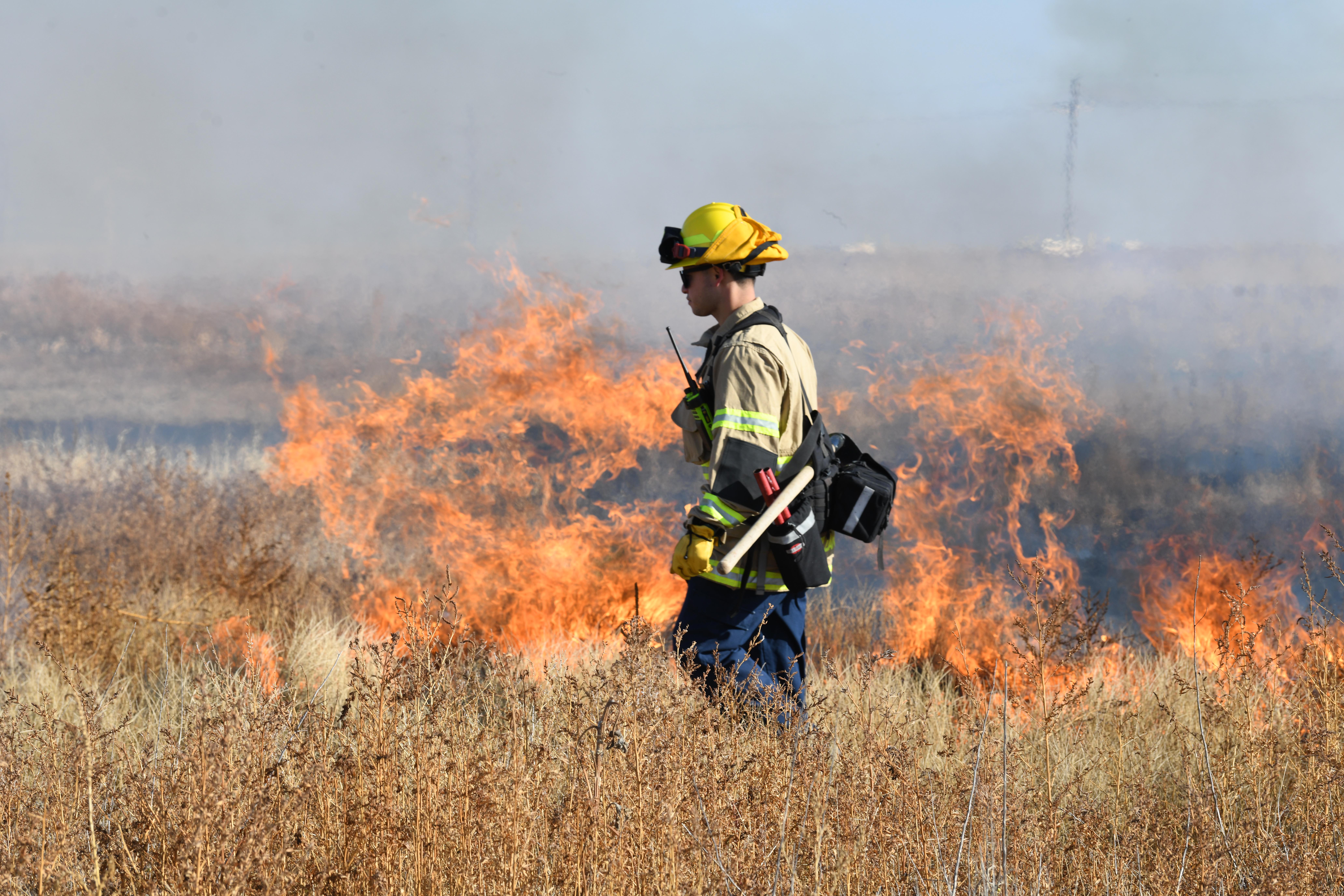
When you’re a firefighter in the Texas Panhandle, knowing how to fight wildfires is a critical skill – one that Fire Captain Blake Crockett has spent decades honing.
“Wildfires are very unpredictable in their nature,” Crockett said. “There are all kinds of variables that will affect the fire, the movement, and growth.”
Crocket noted that wildfire season in the Panhandle generally extends from around November through April. While the peak season is February and March, that can extend when the combination of warming temperatures, low humidity, and strong winds occur while grass fuels are cured.
When fire conditions are right, eliminating all activities that could initiate a spark is important. This can include driving vehicles in tall grass, grinding or welding, or even dragging metal chains which can easily spark and ignite a fire that could spread rapidly and resist control. Stay aware of local conditions and ensure you have a method to receive warning notifications. During periods of increased risks of fire danger, the National Weather Service can issue a red flag warning.
“A Red Flag Warning means that critical fire weather conditions are either occurring now, or will shortly, and people need to be vigilant and take precautions,” Crockett said. “High temperatures and more extreme values of low relative humidity, in addition to high winds, can create favorable weather for rapid fire growth and spread.”
Crockett says the Texas Panhandle is a unique region because the adjacent plains areas have a distinctive geography that contributes to high wildfire frequency. The Federal Emergency Management Agency categorizes the wildfire risk in the region as moderate with high frequency. The region is semi-arid, which means it is relatively dry and lacks trees, but enough moisture exists to support vast grasslands. These grasslands provide a fuel source that burns very easily and allows for rapid spreading in dry conditions.
“Fire is a natural part of our environment and will never go away,” Crockett said. “People need to be proactive and mitigate the risks when there is no fire threat, rather than to be reactive and try to save their property and livelihood at the last minute. It is never too early to prepare for what is inevitable. It’s not if but when a wildfire will happen.”
Whether you’re at work or at home, the key to wildfire safety is the same: preparation. If a wildfire approaches, have a plan in place. Pantex Emergency Management Specialist Stacie Pahl says proactive safety measures increase survivability outcomes during emergency evacuation situations.
“We all put ourselves in a better situation by simply taking time to consider and prioritize our own readiness,” Pahl said. “This can be done by registering for or signing up to receive local emergency alert notifications; knowing evacuation and egress routes from home, school, work, and office locations; preparing an emergency supply kit; having a family plan; etc.”
On high-fire probability days, Pahl recommends charging your phone, fueling your form of transportation, and prepping a go-kit containing extra water, non-perishable food, a flashlight, first-aid kit, a small tool kit that includes scissors, back up charger, batteries, wet wipes, a dust mask, map and compass, and any required medications.
Both Crockett and Pahl agree: one of the most important tips during wildfire response is to stay calm.
“While it’s not necessarily easy, it is important to remain calm and collected during emergencies,” Pahl said. “Being frantic will only lessen the ability to communicate, think clearly, and remain safe during the wildfire.”
The Texas Panhandle gives striking views of the skyline, sunsets that stretch for miles, and acres of tranquil fields. But it also provides an environment inherent to wildfires. Stay safe, informed, and prepared to confidently respond if people, property, or the environment are in danger due to rapidly spreading flames.