



News
Holiday cheer and season bringing you down?

Holiday stress and seasonal affective disorder can affect everyone
The festive energy in the air, the colorful lights on houses, and the hustle and bustle of the season is an atmosphere straight out of a Hallmark movie. Despite the seasonal feeling, statistics show this time of year leaves many people stressed and depressed.
According to the American Psychological Association, 89% of adults have stress over the holidays. This busy time of year can bring a unique kind of challenge. The long to-do list, financial burden of gift buying, and overall full schedule can leave people feeling more anxious than cheerful.
The Mayo Clinic offers tips to help you overcome feeling blue during the holidays:
- Acknowledge your feelings and allow yourself to feel each mood.
- Reach out to connect with others who may bring you joy.
- Be realistic about what the holidays look like for you this year.
- Set aside differences with family members and avoid talking about stressful topics.
- Create a budget you can realistically afford to spend.
- Plan ahead by scheduling holiday errands and tasks on specific days.
- Say no to things when you feel overwhelmed.
- Keep up healthy habits by getting enough sleep, eating right, and exercising.
- Give yourself a break and spend at least 15 minutes alone without distractions.
- If you feel constant sadness, depression, and anxiety, seek help from a medical professional.
Additionally, seasonal affective disorder (SAD) becomes more common when there is less daylight during the fall and winter months.
The American Psychological Association estimates approximately 5% of adults in the United States suffer from this disorder; people living far from the equator, women, and younger adults are the most commonly diagnosed.
SAD is more than having a bad day or feeling down in the dumps. According to the Mayo Clinic, “symptoms may include feeling sad, angry, or easily irritable most of the day nearly every day; lack of interest in activities once enjoyed; difficulty concentrating; persistent tiredness; lack of energy; and, in some cases, feeling that life isn’t worth living or having suicidal thoughts.”
As the season continues, some people may experience continual tiredness and weight gain. While it may seem dark, there is light at the end of the SAD tunnel.
The Mayo Clinic recommends people who struggle with SAD follow these tips:
- Spend at least 30 minutes a day in front of a light therapy box.
- A light therapy box is a lamp that mimics natural sunlight
- Speak to a healthcare professional.
- Stay involved with regular activities and engage with social circle.
- Exercise at least 30 minutes a day, three times a week.
Understanding the potential of stress, anxiety, and illness and proactively addressing it can remove risk and allow employees to focus on the mission.
A Legacy of Giving

Volunteers ringing bells outside store for The Salvation Army’s Red Kettle Campaign.
During the winter of 1955, Pantex employees decided to forgo exchanging cards and gifts among themselves; instead, they pooled their money to purchase toys and clothing for families in need within the community. This act of giving has, for 69 years, brought joy to thousands of families who otherwise would have gone without during the holiday season.
Now known as the Pantex Christmas Project, this long-standing tradition offers a special opportunity for employees to serve both youth and elderly in our community. Part of the Christmas Coalition of Amarillo, which is a group of nonprofit organizations dedicated to meeting community needs during the holiday season, the project is powered by volunteers and supported through employee contributions, fundraisers, and our community. Co chairs Lennet Hernandez, who has dedicated 25 years to the cause, and Tamara Packard, an 18-year volunteer, coordinate the project. Along with their team of “elves,” Hernandez and Packard bring holiday cheer to people in the Amarillo area each year.
The project kicked off in early August, when applications were made available through school counselors in Amarillo. Referrals come from a variety of sources, including local schools, churches, childcare facilities, and community organizations for the elderly. (Although the program focuses mainly on youth, about 10% of recipients are elderly.) Once a committee reviews the completed applications, they interview each family or participant to verify the submitted information is correct. The committee then selects the families who will be part of the project.
Children and elderly participants are represented by “angel tags” placed on a virtual Christmas tree and advertised to Pantexans via the intranet. Employees choose an angel and purchase the items listed on the tag, which include a complete outfit, a new pair of shoes, and a special wish-list item. A special item for each child could be a toy, while elderly recipients may receive additional clothes or other essentials. The gifts are distributed a few days before Christmas.
“Without this program, many children would go without,” Packard said. “It’s not just about the toys. Some of these children only receive hand me down or donated clothing. Our goal is to ensure every child on our tree receives two complete outfits and two pairs of brand-new shoes. More than anything, our outreach ensures these children receive the blessing of clothes and shoes—as they deserve.”
To ensure as many families as possible are served, those selected are allowed to participate only once. The elderly, however, stay with the program the rest of their lives.
“We are so happy to be able to help so many deserving families each year,” Hernandez said. “It truly is the highlight of the holiday season for us. With the generous donations from Pantexans and community organizations, the Pantex Christmas Project is able to grant these individuals wishes.”
The Pantex Christmas Project recently partnered with the Teen Christmas program to give Walmart gift cards to teens in our community. A local Walmart employee started the Teen Christmas program about 20 years ago. When he retired, the program faced an uncertain future, but thanks to collaboration among the Pantex Christmas Project, Salvation Army, and the Christmas Coalition of Amarillo, Teen Christmas continued. Donors to this program spread holiday joy to teenagers in need by purchasing and donating gift cards so teens can pick their own gifts. The program is going strong, partly thanks to the generosity of Pantexans.
In addition to these gifting programs, Pantex partners with the Salvation Army and the High Plains Food Bank to address community needs during the holiday season through The Salvation Army’s Red Kettle Campaign and HPFB’s Together We Can Food and Fund Drive. Both efforts align with Pantex’s mission to serve the community, not only through financial contributions but also through volunteerism.
Dedicated employees volunteer every year to ring bells outside stores for the Red Kettle Campaign. A Christmas tradition since 1891, the campaign began when Salvation Army Captain Joseph McFee used a kettle to collect funds for the hungry. Today, the campaign relies on donations to support vital programs in communities across the globe. Every penny raised through Pantex efforts with the Red Kettle Campaign stays local and helps fund services such as food assistance, shelter, and social programs.
“For several years, many Pantexans have volunteered their time from early November through early to mid-December to ring a bell for 2 hours,” said Community and Educational Outreach Coordinator Darla Fish. “It’s become a meaningful way for Pantexans to show their love and support for the community.”
Pantex has been involved for over 20 years with the Together We Can Food and Fund Drive. As a major sponsor, Pantex provides a $10,000 monetary donation and mobilizes volunteers for the annual fundraiser each December. Through the drive, just $1 can provide 9 meals to help feed individuals and families across the 29 counties in the Texas Panhandle.
“Our partnership with the HPFB strengthens our community by ensuring children, seniors, and families have access to nutritious food,” Fish said. “It’s not only about our financial support; our employees also donate their time to inspect, sort, and repack donated food. This commitment to helping those in need is something that makes me truly proud to be a Pantexan.”
This spirit of giving showcases Pantex’s commitment to being a good corporate neighbor and making a lasting impact in the Texas Panhandle.
I am Mission Success: Brenda Martin

Take 5 minutes to learn about Emergency Services’ Brenda Martin. This article details her role at Pantex and reinforces the diverse workplace culture Pantex offers. All views and opinions are the employee's own and do not necessarily reflect those of PXD.
“I enjoy feeling like I solved a problem, like I fixed something,” said longtime Pantexan Brenda Martin.
Camaraderie—at work and in her personal life—is a strong motivator for Martin, as is contributing to the community she calls home.
“I love giving back to the community,” she said. “When I say I have a lot of volunteer experience and that it’s my passion, that is my passion. I have been fortunate to sit on several nonprofit boards and raise a lot of money for many nonprofit organizations in Amarillo. There are so many worthwhile causes and it is a feeling of giving back that I can’t describe.”
This mindset is why Martin was named Amarillo’s Woman of the Year in 2012.
An enjoyment for working with people and supporting her community are traits that serve Martin well. Her role at Pantex involves problem-solving and tackling both known and potentially unforeseen emergencies. The tasks that she and her colleagues take on depend upon solid communication and mutual cooperation, and involve the safety of the entire Pantex community.
To anticipate, analyze, and resolve issues, Martin has to have a rock-solid understanding of Pantex and how it operates. In this, she has an advantage, though she didn’t initially set out to use it.
“My parents both worked out here,” Martin said. “There is another DOE site in Burlington, Iowa. My parents transferred to Pantex from Burlington in 1974 when I was just a kid. I had no earthly desire to come to Pantex after listening to my parents at the dinner table! My dad was DOE and my mom was Mason & Hanger. You can only imagine!”
Instead, Martin pursued a vocation in marketing financial institutions, spending more than a decade in that field before coming home, so to speak, to Pantex.
Part of her role at Pantex involves the Emergency Public Information team, a disparate group of employees across the plant who respond to emergency situations to share timely, accurate, and appropriate information with the media, public and their fellow employees.
“They do a great job communicating to our employees, the media, and stakeholders,” she said.
Looking back on a full career, Martin said her sense of accomplishment extends well beyond her own sphere of influence.
“I’ve been here more than 32 years, and I’m still in awe of our impact,” she reflected. “Being the only site that offers our specific contribution—the importance of what Pantex does for our nation makes me feel good.”
What is one thing your coworkers would be surprised to know about you?
I once got a speeding ticket in my driveway. I had been speeding down the street, and turned into my alley right in front of a police officer.
What’s your top bucket-list item, and why?
I would love to go to Italy. I had a friend who went there recently and showed me amazing beautiful photos. It looks picturesque. Would love to go and experience Italy.
What characteristics define a good leader to you, and why?
A good leader has to be able to listen. He or she must have integrity, respect, and compassion. They need to be trustworthy. They definitely must have great communication skills. I just think about what makes a leader you look up to, somebody you respect, and I’m thinking of influential people in Amarillo. Those are the words that come to me.
What advice would you offer someone who is new to Pantex?
Be thankful for what you have been given. Do your best at the job you have been given, do your best every day. We are so fortunate to have these good jobs with good benefits—don’t take it for granted.
Describe the evolution of your problem-solving skills. What was behind this change?
We are fortunate here at Pantex to have so many different trainings and tools from which to learn, particularly as issues management specialists. I have been fortunate enough to attend and learn from some of the best and most knowledgeable resources available. Our training and tools are genuinely excellent.
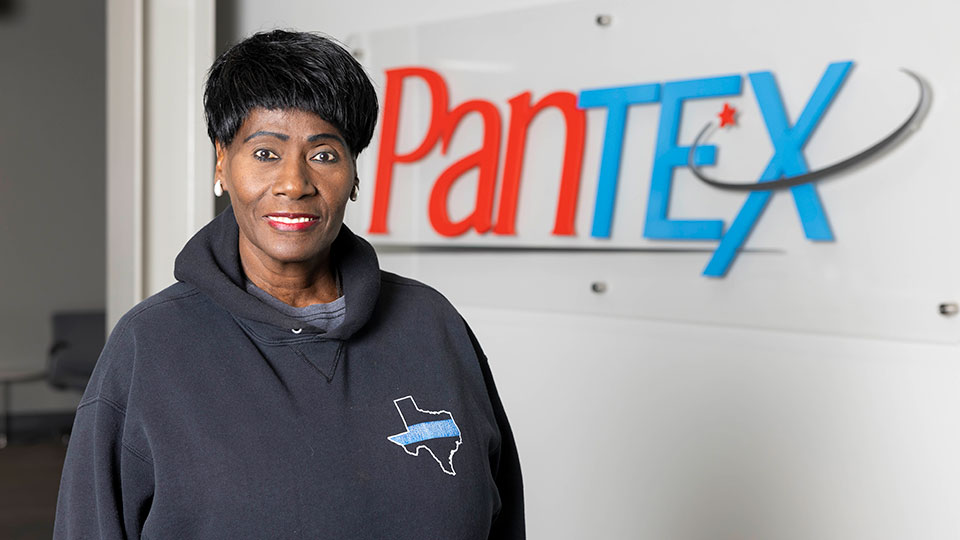
I am mission success: Debra Wiseman
By Candice Copelin —
Take five minutes to learn about Debra Wiseman, janitorial custodian. This article details Wiseman's role at Pantex and reinforces the diverse workplace culture Pantex offers. All views and opinions are the employee's own and do not necessarily reflect those of PXD.
When Debra Wiseman is asked about a time during her career at Pantex when she felt like she was thriving, she quickly responded, “I thrive every day.” This spirit is something she has carried with her throughout her 41–year career at Pantex.
Wiseman started at Pantex on April 26, 1982—when her son was just five weeks old. Like many employees who have been around a while, Wiseman has seen many changes at the plant, including numerous transitions between management and operating contractors, and has continued to remain positive about each one.
“If you want to know about the history of Pantex, it's change,” she said.
Wiseman has ridden the waves of change in her position, like a switch to nights during the pandemic, but she says the changes make her value the people she works with even more. “You should find a way to work with people,” she said. “Learn to be merciful. Learn to be kind. Because down the road you'll need it too. That comes with age and wisdom.”
She shares that wisdom with not only her co–workers, but with people around the plant. Now that she is approaching retirement in December, people are starting to share just how much her kind and giving spirit has affected them—much to her surprise.
“It's a melting pot out here. There are so many personalities out here, and you have to meet them where they are,” she said. “It is just in me, probably from the church, to help those in need. If someone needs you, you help them. I've had people from one of the shops tell me, ‘I want you to know, before you leave, that seeing your smile got me out of a depression. Your positive attitude helped me today.' I had no idea.”
The impact that Wiseman has made on Pantex comes not only from her need to help others, but the pride that she takes in doing a good job.
“I've cleaned every building on this plant besides the JCDC,” Wiseman said. “It takes everybody to make this place run. I try to encourage everyone to take ownership over what we do.”
What motivates you to be successful?
My motivation is to get things done right. I don't know how to slack on a job. I learned that from my parents. I learned that at six years old. I instilled that in my kids.
What advice would you give a new person in your position?
You have to be willing to work. At the end of the day when your boss is looking around at what you did, they ask ‘what did you do?' You don't want to be the one that hasn't done anything. I tell them to be accountable.
Reflecting on these last 41 years, what is it that you want to remember?
Gratefulness. It's been a pleasure and a great opportunity to work at a place where you can advance if you want to. I'm too blessed not to be grateful.
Any final thoughts?
For my sanity, I don't put myself in positions where I am stressed out—and if I end up there, it's not for long. You have to be happy, because if you are happy, you will do a good job. Stressing or being upset is when you miss things. I don't want to live my life angry. I want to be grateful. I'm grateful to be here and thankful for the opportunity to be at such a fine place to work. We are doing business for our country. What an honor. Let's treat it as such. We need to go above and beyond.
Pantex recognized with EVMS certification

Pantex earned an Earned Value Management System certification following an implementation review conducted on the under-construction HESE facility.
An Earned Value Management System, or EVMS, is a structured project and program management process that integrates work scope, schedule, and cost. This ensures accurate and timely reporting, which supports informed decision-making throughout projects.
Recently, Pantex earned the Department of Energy EVMS Certification following a successful implementation review by the Department of Energy Director of Project Management Paul Bosco. Bosco’s responsibility was to validate project performance baselines, ensuring that scope, cost, and schedule align with expectations to ensure each project remains on track. An evaluation was conducted the High Explosive Science and Engineering (HESE) facility, which met all performance baselines. The HESE facility is currently under construction, with the current forecast for completion in August 2025 and approval for qualification release by the third quarter of 2027.
Achieving EVMS Certification reflects the ability to plan, manage, and deliver projects successfully while maintaining the highest standards of accountability and performance. It highlights the strength of project controls and the ability to track cost and schedule performance with precision, ensuring that resources are used both effectively and transparently.
“This certification is a critical recognition of our operational maturity and reflects the thoroughness with which we manage complex projects,” said Bill Bridenbaugh Jr., EVMS director. “It demonstrates that Pantex is fully equipped to execute large-scale construction projects, like the HESE facility, with confidence.”
This achievement not only serves as a testament to the commitment to excellence in project management and operational efficiency, but also positions Pantex as a trusted partner capable of delivering results with integrity to the Department of Energy. It is also a mark of leadership in managing complex, high-stakes projects.
“The EVMS Certification reflects the hard work and dedication of everyone involved,” Bridenbaugh said. “It’s not just about meeting standards, but about setting benchmarks in performance measurement and project management.”
The certification confirms Pantex to provide accurate, data-driven insights on project performance, enabling stakeholders to make informed decisions and address risks proactively. This milestone is the result of contributions from many personnel across the organization, including the leadership team, which underscores the collaborative efforts that led to this success.
Ultimately, this accomplishment strengthens Pantex’s position to continue to deliver the mission with excellence. It also reinforces the ongoing commitment to continuous improvement, ensuring that Pantex remains at the forefront of best practices in project management and performance measurements.
“The key to EVMS success lies in consistent implementation across all projects and programs. This is just the beginning on our journey,” Bridenbaugh added.
LUCAS joins Pantex Fire Department

Pantex Fire Department trains on use of LUCAS chest compression devices
The Pantex Fire Department has added a new member to its ranks – LUCAS.
Who is LUCAS? It’s more of a what…
LUCAS, which stands for Lund University Cardiac Assist System, is a mechanical chest compression device now on each of the three ambulances at Pantex. LUCAS is another tool used to help increase the chance of survival in cardiac arrest patients thanks to its automated and synchronized compressions. Stryker Medical, the company that created the device, says they chose to personify the name because LUCAS is more than a piece of equipment, it’s a member of the life-saving team.
Pantex Fire Department Captain Jeremy Baker says LUCAS limits interruptions during manual chest compression, which increases the patient’s chances of survival. Data shows LUCAS increases blood flow to the brain by 60% versus manual CPR.
“LUCAS mechanically applies force to the sternum to compress the heart which helps restore blood circulation while allowing first responders the ability to render other aid,” Baker said. “Better blood circulation to the brain means the patient has a better chance of recovering without deficits.”
LUCAS also increases first responder safety. According to Baker, 30-40% of patients who regain a pulse on scene will rearrest prior to arriving at the hospital, some during transport.
“This requires Emergency Medical Services (EMS) providers to be unrestrained and standing in a vehicle to perform CPR compressions,” Baker said. “We all understand the importance of being restrained when inside a vehicle. Having LUCAS allows emergency services to be seated and buckled rather than standing while providing compressions to patients.”
According to the LUCAS website, unrestrained occupants are 6.5 times more likely to be severely injured and 3.8 times more likely to be killed in the 4,500 ambulance crashes that occur each year.
Baker says 58 Pantex firefighters and paramedics are trained on how to use LUCAS devices.
“This is a big step in our continued effort to provide the highest-quality care to the patients we encounter while helping to ensure the safety of our firefighters,” Baker said.
Patients at Pantex and surrounding communities will all benefit from the new technology.
“At Pantex, we are lucky to work closely with our mutual aid partners, including Panhandle, Claude, and Washburn, just to name a few,” Baker said. “We depend on the help of our mutual aid departments as much as they depend on ours. Since we have personnel staffed and ready to respond 24 hours a day, 7 days a week, these partner agencies will contact us to respond when we have a faster response time or when their departments are on other calls or require additional assistance such as additional ambulances, fire apparatus, or personnel.”
Pantex Emergency Services responded to 133 EMS calls for service in 2023. Fifty-seven of those calls were mutual aid requests from neighboring communities.
“The people who live in these communities are fellow Pantexans, friends, or family members,” Baker said.
The device is set up prior to use following the American Heart Association guidelines for CPR compression rate of 100- 120 beats per minute. Baker said if performed immediately, CPR can double or triple the chance of survival. But, he added, CPR is a very labor-intensive process that quickly tires responders which can affect quality, which is a big advantage LUCAS has over traditional manual care.
“This device is a great addition to our service, but survival from cardiac arrest is dependent on a team approach based on the American Heart Association’s Chain of Survival,” Baker said. “We encourage people to stop a firefighter and ask us questions about performing CPR when you see us around plant site.”
Baker recommends finding a local CPR course to learn what to do when witnessing a victim in cardiac arrest.
“EMS is only one link in the Chain of Survival,” Baker said. “When we work together, we can improve patient outcomes.”
Eat smart, move more: maintain, don’t gain this holiday season
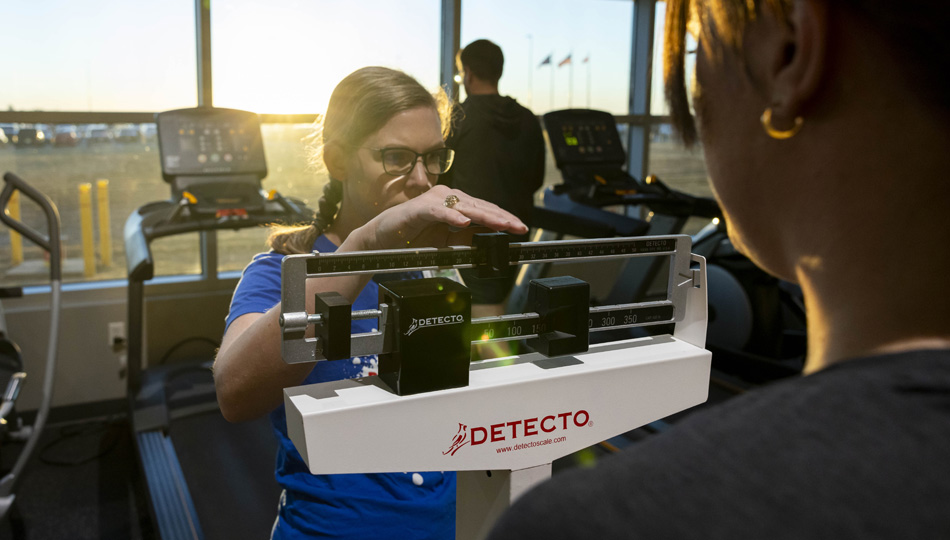
LiveWise’s Registered Dietician, Tessa Pendergraft, weighs employee in preparation for the Maintain Don’t Gain Challenge this holiday season. — Photo by Adam Baker
The holiday season is full of meats and treats that tempt us to overindulge. Mealtime traditions are a big part of the holiday season, but they can lead us to make unhealthy choices. The key is a healthy and realistic mindset. Many people head into the holiday season swearing to stick to a New Year's resolution. Instead of making a drastic lifestyle change, however, try focusing on something sustainable so weight maintenance will be a more achievable goal. These tips may help:
- Plan your meals: If you plan to eat a large meal, eat a small snack before your meal to stay full and keep from overeating.
- Consider your portions: Small portions can still satisfy your cravings. Be mindful of portion sizes and how many servings you are consuming.
- Enjoy the social aspect of eating: Spend time between bites catching up with family and friends. Remember the holidays are a celebration of loved ones—food doesn't have to be the focal point.
- Don't drink your calories: Limit high–calorie drinks and supplement with sparkling water, seltzers, or diet sodas. Alcohol can stimulate the appetite and quickly add calories.
- Burn calories: Start your holiday with moving your body. After your holiday meal, consider taking a walk. Walking burns calories and helps you deal with holiday stressors.
- Avoid overindulging in desserts: Allow yourself to enjoy desserts, but enjoy them in moderation. Watching your servings and portion sizes can allow you to enjoy guilt–free desserts.
- Slow down: Take your time eating, savoring, and enjoying your food. This will allow time for your food to digest and keep you from eating when you are full.
- Listen to your body: Stop eating when your body has had enough. Wait 30 minutes before going back for seconds, and only go back if you're still hungry.
- Beware of snack foods: Small finger foods can add up. Choose low–calorie finger foods when possible, such as vegetables, fruits, or pretzels.
- Don't be a grinch: Forgo the “all–or–nothing” mindset and treat yourself! Depriving yourself of special foods or guilting yourself for enjoying them isn't part of a healthy eating strategy. Enjoy this holiday season's treats in moderation and remain guilt free.
Maintaining a healthy weight can provide, among other benefits, a way to help you manage and prevent diabetes, hypertension, and heart disease. Set realistic weight–maintenance goals this holiday season, and join your fellow Pantexans in pledging to eat smart and move more. Reach out to LiveWise to access our Pantex Registered Dietician, Tessa Pendergraft, to create a personal nutrition plan to improve your health.
Confident in crisis: Exercise helps Pantexans prepare for the worst
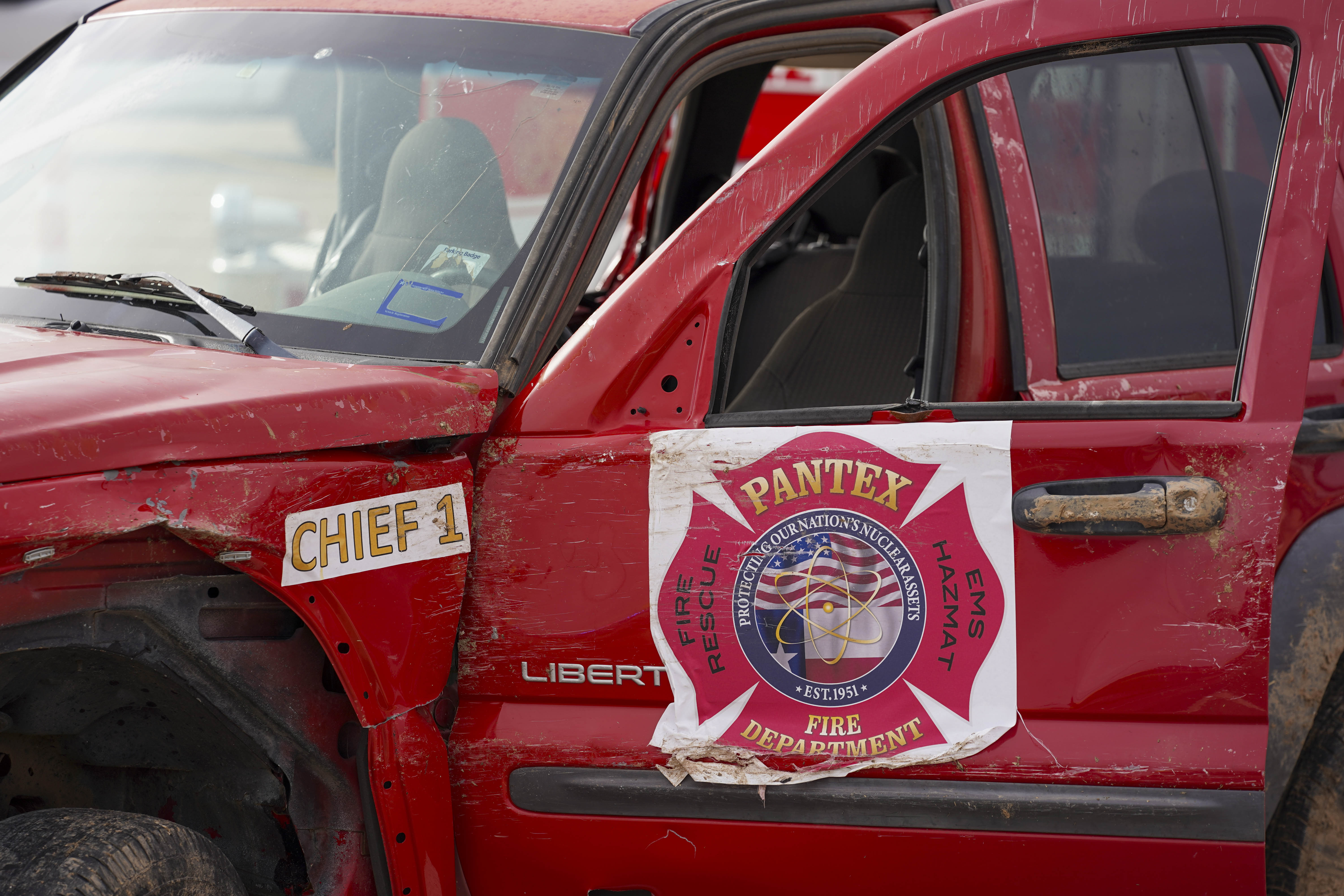
A damaged vehicle used during the full-scale exercise on November 6
Pulling onto a busy farm road, a vehicle is T-boned at high speeds, trapping the occupants. Extraction rescue tools, sometimes known as the jaws of life, were quickly used to pull the wreckage away from the patients and rush them to an awaiting helicopter. At the same time, an explosion sets a building and the surrounding wildland ablaze.
It all looked serious, but none of it was real.
Emergency Preparedness Specialist Kenton Falerios and his team planned the practice scenario down to the frantic actors elevating the urgency at the scene by screaming for help.
Even though the “fire” was orange plastic cones, the firefighters treated it as a real scene and worked to preserve life and property. A mannequin was “driving“ the mangled car but first aid was administered as if the patient were real. Roads were closed down to simulate the real-life conditions needed to bring a medical helicopter on-site.
The full-scale exercise held on November 6 tested first responders’ emergency response capabilities. Emergency Response Organization (ERO) team members do not know ahead of time what the exercise will consist of or when it will occur. This is to replicate the essential rapid deployment of services across the plant site and to surrounding communities during a real disaster.
“Drills are a form of training and are important for our personnel to learn from,” Falerios said. “Exercises are the test to validate our plans, procedures and responses.”
When a crisis happens, even if only for training, the ERO is activated. More than 200 members make up 14 specialized teams collaborating to support emergency response. The ERO brings together subject matter experts to handle the incident and advise the incident commander, the person responsible for managing all aspects of the response.
First responders and members of the ERO participate in drills and exercises throughout the year, preparing for various emergency scenarios. These training sessions are essential for ensuring proficiency.
“Our goals are life safety, material protection, public safety, and restoring services to continue our mission,” Falerios said.
The exercise was site-wide and included Pantex first responders on shift, on-call ERO members, and local community partners from Carson County, the city of Panhandle, and Life Star helicopter ambulance service. The dedicated responders are concerned about the safety and welfare of the site and employees.
“Pantex Emergency Management could not effectively accomplish successful exercises or response without the support of Pantex volunteers and personnel,” Falerios said. “When the unexpected happens, we have a well-trained team ready to respond and restore operations as quickly as possible.”
This scenario was simulated, but what if a real emergency occurs at Pantex? Always call 477-3333 on a site phone to alert first responders. Falerios said to follow the direction of the Plant Shift Superintendent, uniform emergency responders, and building wardens.
Pantex first responders play a crucial role in ensuring safety, both within the plant and in our surrounding communities.
“They are a vital part of the safety envelope for not only the plant but for our surrounding communities,” Falerios said. “Each individual is assigned to a team with common skills or interests, creating a vast knowledge base to help key decision-makers find the best possible solutions.”
Practicing the skills needed to respond when disaster strikes leads to the team being ready to respond whenever an emergency happens.
“These exercises are proof Pantex is capable of handling any emergency at any time,” Falerios said.
I am Mission Success: Zane Brorman
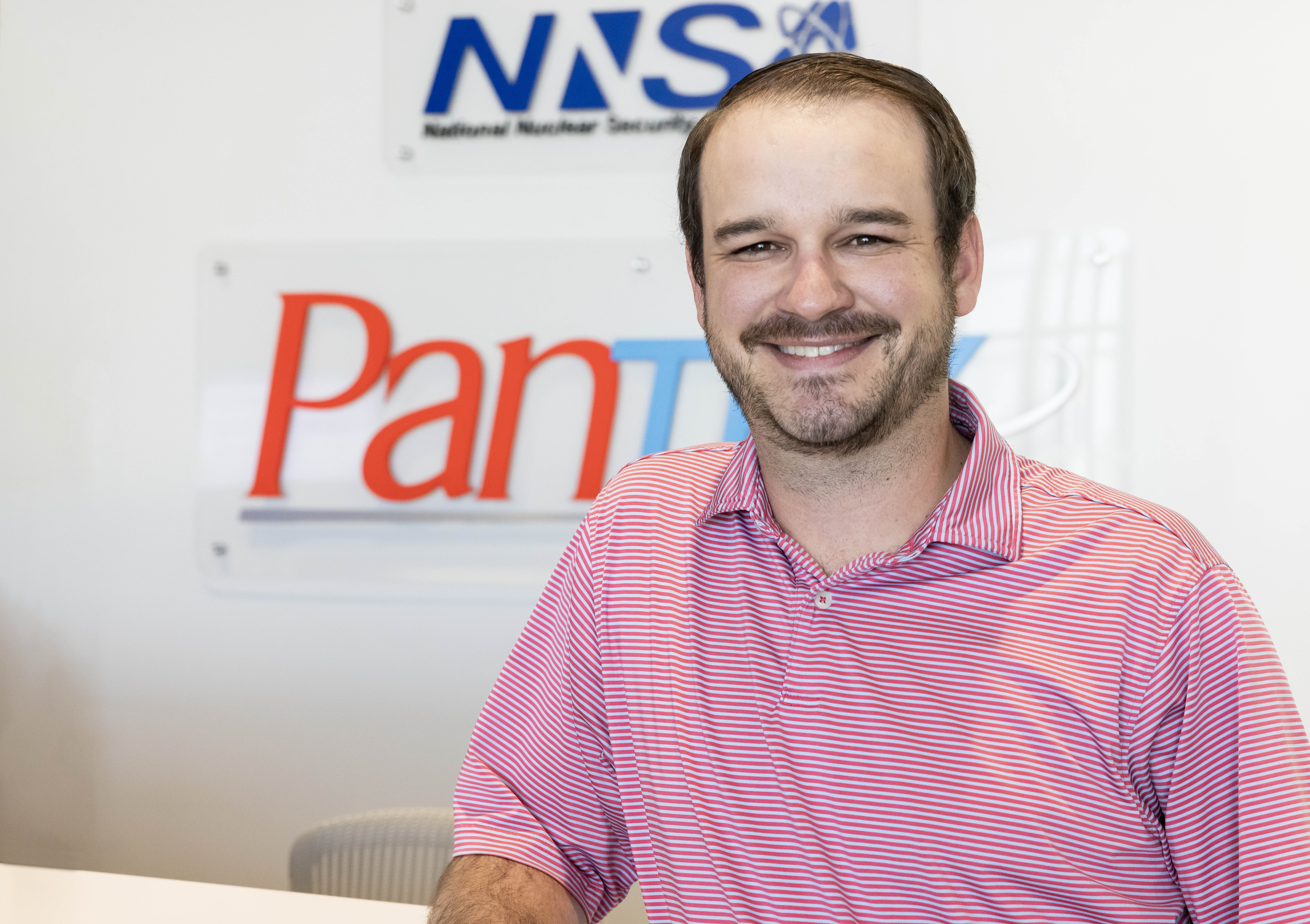
Take 5 minutes to learn about Zane Brorman, line-item project controls representative. This article details his role at Pantex and reinforces the diverse workplace culture here. All views and opinions are the employee’s own and do not necessarily reflect those of PXD.
Growing up not too far from Pantex, Zane Brorman was like many people in the site’s neighboring communities: he thought he knew about Pantex.
The site’s size, scope, and efficiency became clearer, however, when he joined the Pantex workforce.
“You always hear about Pantex and how many people work there, but you never really understand until you see the day-to-day operations,” he said. “I never thought I would be involved in construction projects at a nuclear facility.”
It may not have been the career Brorman envisioned, but life’s unexpected journeys are often the most rewarding.
“In college, I started working part time for a construction company in Amarillo, and I have just kind of run with it since. It is really cool to see a project from start to finish, no matter the size,” he reflected.
Looking back, Brorman better understands not only the complex makeup of the site and all the various work that goes on here, but also the common purpose that unites its people.
“There are many people who work at Pantex who are from different walks of life,” he explained, “but we are all on the same mission.”
All Pantexans have a share in the site’s mission to enable the U.S. military to field a powerful deterrent to the nation’s adversaries. Brorman indicated his work at Pantex has given him an even higher regard for his personal contribution to that mission.
“My current role on the [High Explosives Science & Engineering Facility] project has really put the mission into perspective,” he said. “Being involved with the construction of a much-needed updated facility gives me a daily reminder that I am helping achieve the Pantex mission.”
To that end, Brorman believes he brings a lot to the proverbial table at Pantex.
“A good work ethic … is something that my dad instilled in me when I was growing up out on the farm,” he explained. “My work ethic has helped me achieve the current role I have on the HESE project, and I believe that working hard within the team demonstrates my abilities to accomplish any task I am assigned.”
That solid work ethic is important but, by itself, it is not enough. To the incoming Pantexan, Brorman adds this sage advice:
“Never stop learning,” he said. “It’s something we could all benefit from.”
While the comment may have been uttered in a general sense, the notion of the group benefiting from the life lessons of each individual is, of course, a concept embraced across Pantex. Nowhere, he said, is that principle more evident than on a construction project where life and death might literally hang in the balance.
“Communication is the most important part of the mission, in my opinion,” he said. “How can we work toward the same goal if there is no communication? The ability to communicate across all platforms of construction is very important to the success of a construction project; if information is not being relayed across different areas/departments, it could be devastating to the project.”
Sometimes, Brorman said, the way communication happens is as important as the message itself.
“When a coworker noticed a mistake on a report we were working on, he approached me in a respectful and constructive manner instead of pointing the finger and reprimanding me,” he said. “The overall experience taught me the significance of constructive criticism and supporting each other in a professional setting.”
According to Brorman’s supervisor, Kris Lindsey, this kind of learning and application are among his greatest qualities.
“Zane’s dedication, attitude and team mentality exemplifies mission success,” he said.
What is your top bucket-list item, and why?
I would say to play golf at Augusta National, but that is pretty much impossible, so just attending the Masters would be awesome!
What advice do you offer someone who has made a mistake in his or her job? How should they be accountable for that issue?
Take accountability and handle the situation in a professional manner. Acknowledge the mistake, and learn from it.
Every employee brings value to our tasks. Why must we be open to learning and hearing from others?
There are many ways to accomplish the same thing. Although you may not agree with their process, it does not mean that it is wrong. Also, it promotes the questioning attitude that we should all have.
What characteristics define a good leader to you?
There are many characteristics that define a good leader, but I think the most important one is trust.
What drives you to be successful?
Continuous improvement—always striving to do better the next day or next report helps me look for different areas where I can improve … Always do the right thing, no matter the outcome.
People of Pantex: Andrea Caudill

People of Pantex is a series that highlights what makes Pantexans unique when they are not at our plant, and how those activities help them contribute to the mission.
Pantex technical editor Andrea Caudill was smitten the moment she was introduced to the very concept of horses.
“Horses make me happy down in my soul,” Caudill said. “Being able to interact with them, and to work with them, and learn with them, and teach them; it all just makes me very happy.”
Through her lifetime of passion for horse riding, Caudill (and her quarter horse, Matt) became 7-time world champions in western dressage, and are all-around horse ambassadors to the community.
“Being a horse person, the passion tends to consume you and tends to trickle out into the rest of your life,” she said. “My coworkers will occasionally hear me use horse terms that they might not be familiar with, but just seems like a standard thing for me. Everything that I do revolves around me having the horses.”
Caudill was born into what she calls a “city family” in Minnesota. Despite their unfamiliarity with horses, her parents fostered her interest by taking her to riding lessons starting at 7 years old. She entered her first competition at the age of 8. When she was 13, she got her first quarter horse and honed her riding and showing skills through 4-H.
After graduating from college, Caudill moved to Amarillo to turn her passion into a career. For 20 years, she worked at the American Quarter Horse Association (AQHA), which is the largest equine breed association in the world with approximately 250,000 members and more than 6 million registered horses.
During her time at AQHA, Caudill wrote and published the association’s magazines, helped put on major programs and events, and promoted the breed. On her own time, she competed at the highest level in horse riding in multiple events, but Caudill (and Matt’s) specialty was western dressage.
“Riding dressage is perfect for a type A personality – It is all about the organization, the structure, the development of yourself and your horse,” she said. “I love being able to just dive into that. When you go out to the barn, you get to leave all your work and concerns behind.”
Dressage is much like gymnastics for horses, requiring strength and agility. The rider and horse duo are expected to do specific steps and patterns and are judged on their execution and fluidity. Each step should look smooth and effortless.
Caudill finds joy in the organized and methodical training required in dressage, which is much like the detail-oriented work she does as a technical editor and writer at Pantex.
“There is a precision required both in the equine sports that I do and the work that we do,” she said. “The mission that we serve is a very important one and it’s a very exacting one. When I’m giving my horse signals and cues, they need to be clear, they need to be precise, and they need to be accurate. When I do my job and I am editing a technical document, I need to make sure it’s clear, precise, and gives the reader the accurate message that they need the first time. That way we can get the mission done.”
After Matt’s retirement from the champion scene, Caudill continues to compete in horse riding competitions with her new horse (a quarter horse, of course), Dennis. She says while Matt brought her to the heights of competition, Dennis is reteaching her the basics as they train together. Both Matt and Dennis help her at events and parades to introduce kids and families in the community to horses.
“I grew up with limited access to horses, and now I have horses in my backyard,” she said, “I have a deep passion for sharing my horses with the general public and being able to give them the opportunity to feel the joy that putting your hands on a horse can bring.”
Watch this video for more on Caudill’s horse-riding journey.