



News
Flexing emergency response muscles
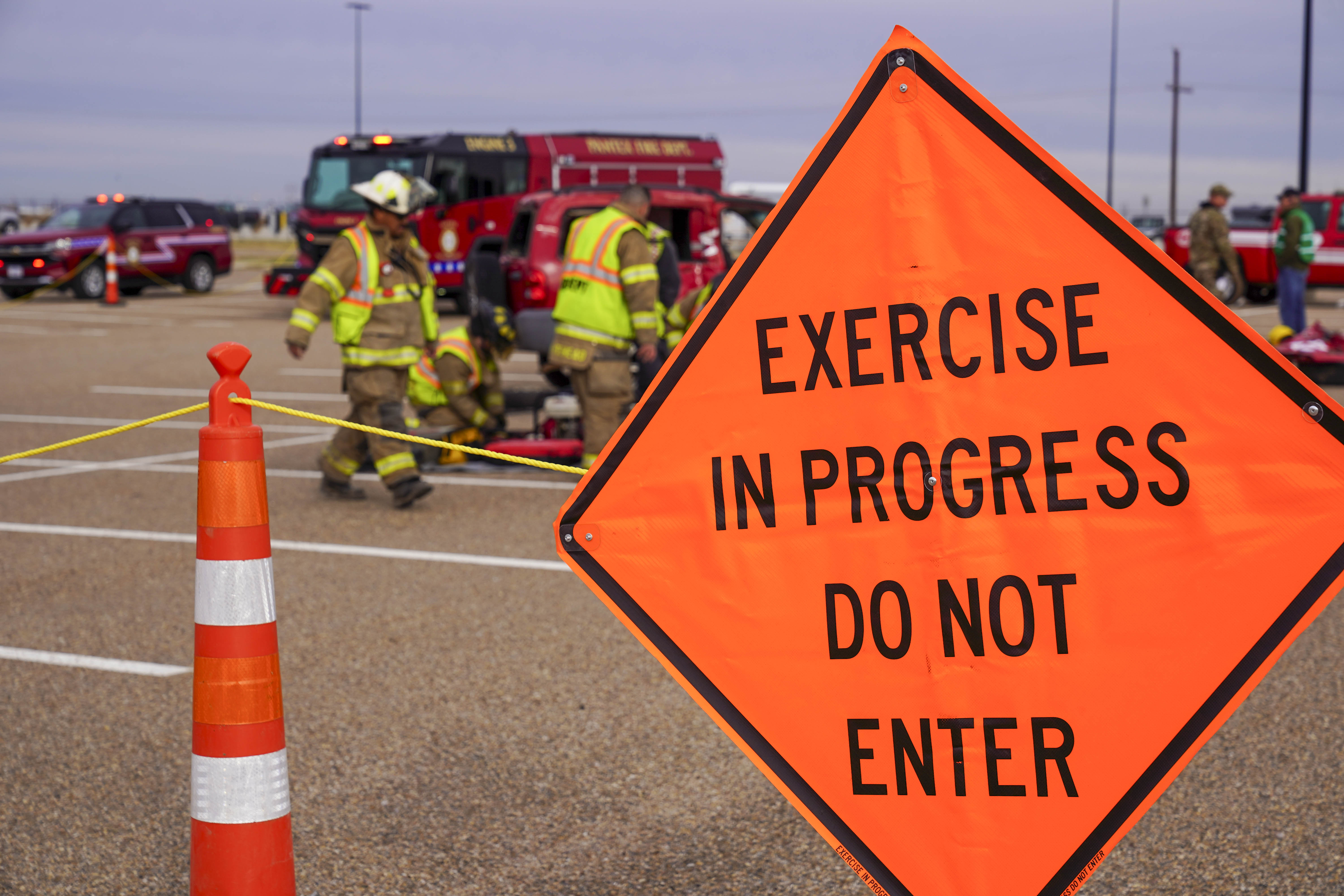
Annually, Emergency Management plans one full-scale exercise, additional exercises, and multiple drills
Radioactive wasp nests discovered in South Carolina. Twenty tons of cheese spilling on a highway in Pennsylvania. Monkeys escaping an overturned semi-truck in Mississippi — none of these things have happened here — but they did happen. That’s why when Emergency Preparedness Specialist Kenton Falerios plans an emergency exercise, he doesn’t hold back. We live in a world where fish fall from the sky, so the exercises he invents have to be realistic, but also account for oddities that sometimes happen.
“There is a method to my madness,” Falerios said. “I try to think what could really happen when planning an exercise. I might watch a show, read a book, or someone might just come up and tell me something crazy, so I have my list that I call my exercise ideas. I try to make exercises realistic, but unique. Sometimes during exercises or drills, people will jokingly say, ‘when does Godzilla come in?’ or ‘when does the alien land?’. I try to keep the practice realistic, but sometimes reality is crazy.”
The Department of Energy requires the Emergency Management department to do one full-scale exercise annually to test and validate our plans, procedures, and responses. Groups practice response to certain hazards like fires, explosions, and chemical spills among many other potentially emergent situations. The exercises are based off the Maximum Limits List (ML2) and the Chemical Control Program. From those documents, a five-year exercise plan is developed including specific hazards that must be addressed. Full-scale exercises involve a whole-site response from any department that would be involved if the incident were real. Whether people are sheltering, evacuating, or responding, they are considered part of the exercise and should go through the motions the same way as if it were real.
“Each full-scale exercise is designed to have between three to four things happen,” Falerios said. “If folks are able to respond to, manage, and plan with multiple events at the same time, then when a real emergency happens, they’ll have the confidence to overcome that situation.”
In addition to the full-scale exercises, there are two additional exercises and multiple drills per year. Due to varying employee schedules, each person required to participate has an opportunity to join at least one exercise or drill. This ensures that Pantex satisfies requirements for DOE regulations and participation in the Emergency Response Organization (ERO). The ERO is a trained and qualified team of more than 200 Pantexans who are activated in the event of an operational emergency to respond to, mitigate, and recover from crises affecting the Pantex Plant. Even though there is a designated response group, all Pantexans should be proficient in emergency response by participating in full-scale exercises.
“One of the key factors to be successful in the event of an actual emergency is to constantly train,” Falerios said. “It needs to become muscle memory where we all know what to do, and to know what those around us are doing. Having the confidence in our equipment and the abilities of each other around us will help us get through emergency situations as they arise.”
Falerios has planned 31 exercises so far during his career at Pantex. Whether it’s a forklift dropping a load, an employee facing a medical emergency, or even a tornado of sharks, these practices provide employees with the skill and confidence necessary to respond effectively and appropriately — reinforcing that Pantex is capable of handling any emergency situation any day of the week.
“You don’t want to be the person who doesn’t know what to do or where to go when something is really happening,” Falerios said. “I think it’s important for people to partake in these exercises. I may be the guy who develops them, but they’re only successful because of the teamwork between Emergency Management and every person working here. Pantex Emergency Management could not effectively accomplish successful exercises or response without the support of Pantex volunteers and personnel.”
IT Takes Two
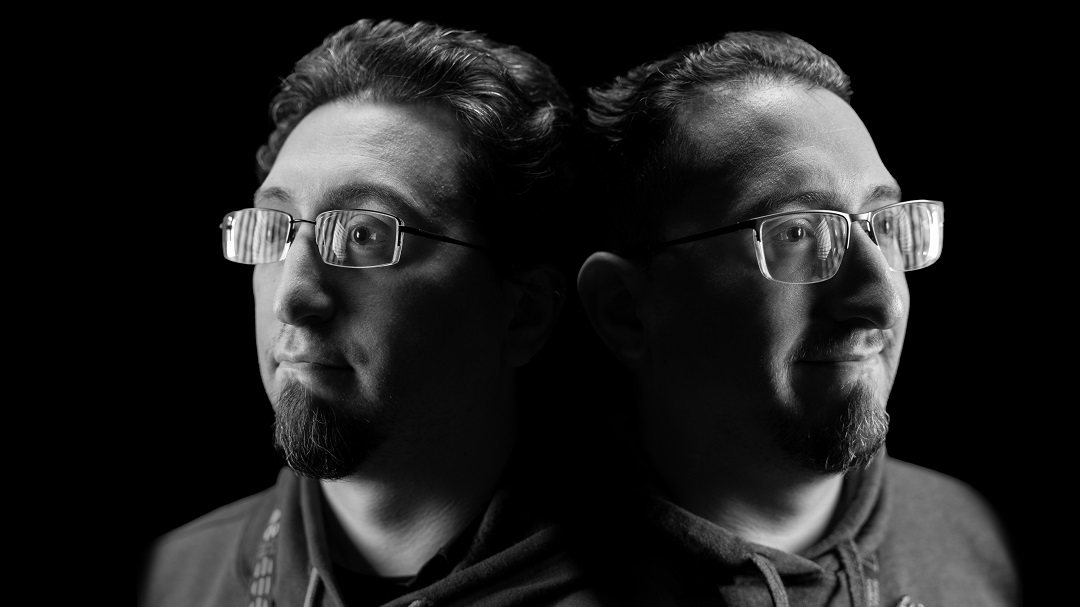
Whether on your phone crushing candy, online for a fortnight grinding for gear, or ending friendships with blue homing shells, some of us have dabbled in video games. For twins Brian and Adam Kirchgessner, gaming was —and still is — a great way to bond, but it also presented some career-leading questions.
“From a young age, we were interested in how video games were made. That fascination expanded to how other technologies are built and operate,” Brian said. “Also, our dad is into hot rods, so we had an early introduction to mechanical systems. We applied those skills along with curiosity to learn more advanced tech. By age 13, we’d built a few recycled desktops and had interest in building a laptop. That made us ask questions at our high school, which led to our first part time job as student technicians.”
Adam and Brian are fraternal twins. They share about 50% of their DNA and have similar facial features, but they are not identical. What is identical are their roles at Pantex —system administrator within Information Technology (yes, you read that correctly).
Their youthful curiousness set them up for a successful career, but along the way, they weren’t without the occasional, unintentional mix-up.
“One day in first grade, just for change, we switched our different colored backpacks,” Adam said. “We didn’t know that our backpacks were how our teachers could tell us apart. When confronted, we tried to tell them what had happened and that I was Adam and he was Brian, but they didn’t believe us. Our principal had to call our mom down to the school before they acknowledged who we said we were.”
Similar to the early games of the princess-saving plumbers, a splash of color made all the telling difference when it came to the Kirchgessner twins. Now it’s a bit easier, given Brian is one inch taller, and Adam is one minute older. Slight differences aside, genetics aren’t the only things the Kirchgessner twins share.
“We have the same type of humor and optimism,” Brian said. “Also, interests in fabrication, engineering, movies, video games, and food. We share a lot of the same passions like technology, game development and programming, and robotics, providing a mirror to bounce ideas off our whole lives. That’s led to some side projects.”
Like any good, lasting partnership, the “I” is just as important as the “us,” even if it causes a bit of friction.
“I’m a thinker and planner,” Adam said. “Brian is a bit more impulsive. While I’m OK with waiting to ensure a plan comes together, he’s ready to jump into the deep end, forming plans as he goes. We are not this way when it comes to work projects, just personal collaborations. When we have disagreements, we split it up and compare notes later. Doing this usually reveals what the other didn’t see. We can make a better product or project in the long run.”
The Kirchgessner brothers joined Pantex within months of each other four years ago, and continue to collaborate daily. They also share thoughts, values, and goals in their work.
“The ‘no knowledge lost’ idea presented during New Employee Orientation resonated with me. Like a living animal, a job is always evolving. That process fascinates me,” said Adam.” Many people do one job until they retire, and often don’t leave notes or train their successor. I think about what I’m leaving behind for someone else to have to figure out, or what will be made possible tomorrow. It’s our duty to bring the job to its next phase so the following generation has something functional and timely to keep moving forward.”
SLERG makes a splash for community
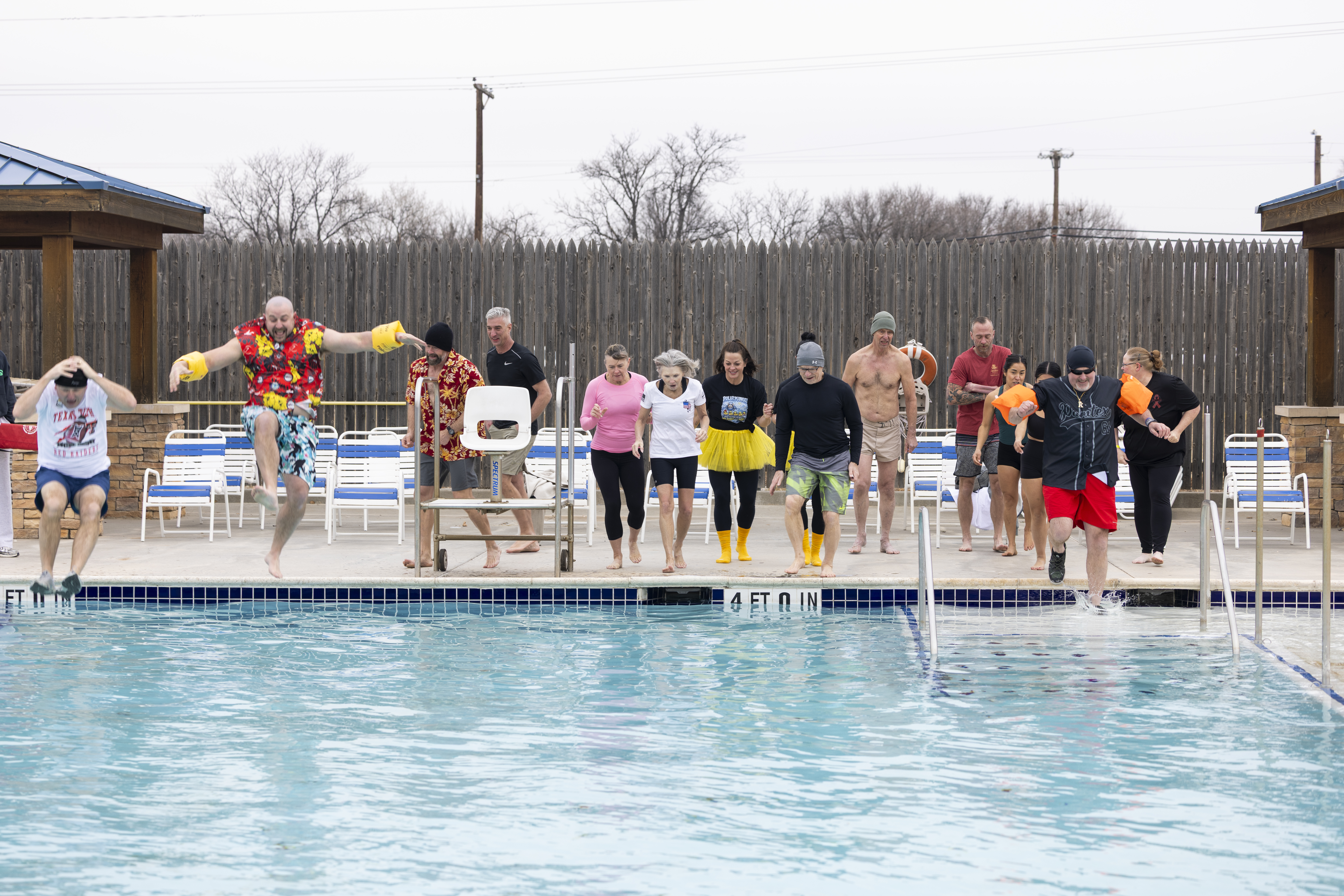
A group of Pantexans jumps into freezing water in 24-degree weather in support of the Amarillo Polar Plunge.
At 24 degrees, the Amarillo Town Club pool looked less like a place for laps and more like a dare. On the coldest day of the year, a group of Servant Leadership Employee Resource Group (SLERG) volunteers didn’t hesitate—charging straight into the icy water for the Amarillo Polar Plunge, all in support of Special Olympics Texas. This bold undertaking not only marked SLERG's official launch but also perfectly encapsulates the core principles of servant leadership that the group champions.
"It's about demonstrating stewardship not just of our resources but of collective humanity," Quality Senior Director and SLERG President Brad Reeves expressed. “The goal is to make a difference beyond our immediate work.”
Proceeds from the Polar Plunge contribute to year-round sports training, health and inclusion programs, and competitions for local Special Olympics Texas athletes. While the Amarillo Police Department participants have historically dominated Polar Plunges, Pantex and the Pantex Field Office (PFO) provided stiff competition this year and are hopeful to compete for the largest supporter role in 2027.
This event raised over $10,500 for Special Olympics Texas. The Amarillo Polar Plunge awarded Pantex the “Highest Fundraising Team” and Quality Assurance Division Director Kenny Steward was recognized as the overall “Top Individual Fundraiser.”
“I knew Pantex and PFO could, and would, step up to lead the way and, as expected, they dove in,” Nuclear Explosive Safety Analyst and Polar Plunge Team Captain Tom Ellis said. “Pantex put some skin in the game by putting some skin in some pretty cold water.”
For SLERG, a dedicated group comprised of Pantexans passionate about developing humble, bold, and inclusive leaders, the Polar Plunge is more than just a chilly dip; it's a demonstration of their commitment to empower individuals and serve the broader community.
This event exemplifies SLERG's dedication to the growth of Pantexans, fostering resilience and camaraderie among Pantex employees who volunteer for the organization. It also showcases the group’s stewardship and commitment to community involvement, extending Pantex's values to broader engagement.
The "cold shock response" experienced during a Polar Plunge, with its rush of adrenaline and endorphins, creates an exhilarating and memorable experience. For SLERG members, this shared challenge will undoubtedly forge strong connections, offering a unique avenue for team building and skill development.
As SLERG embarks on its journey to empower Pantex employees and foster a more positive and inclusive culture, their participation in the Polar Plunge for Special Olympics serves as a powerful testament to their commitment to servant leadership. SLERG’s contribution vividly illustrates that true leadership begins with service and that by serving others we can all achieve more, creating a ripple effect of positive change.
The flow must go on
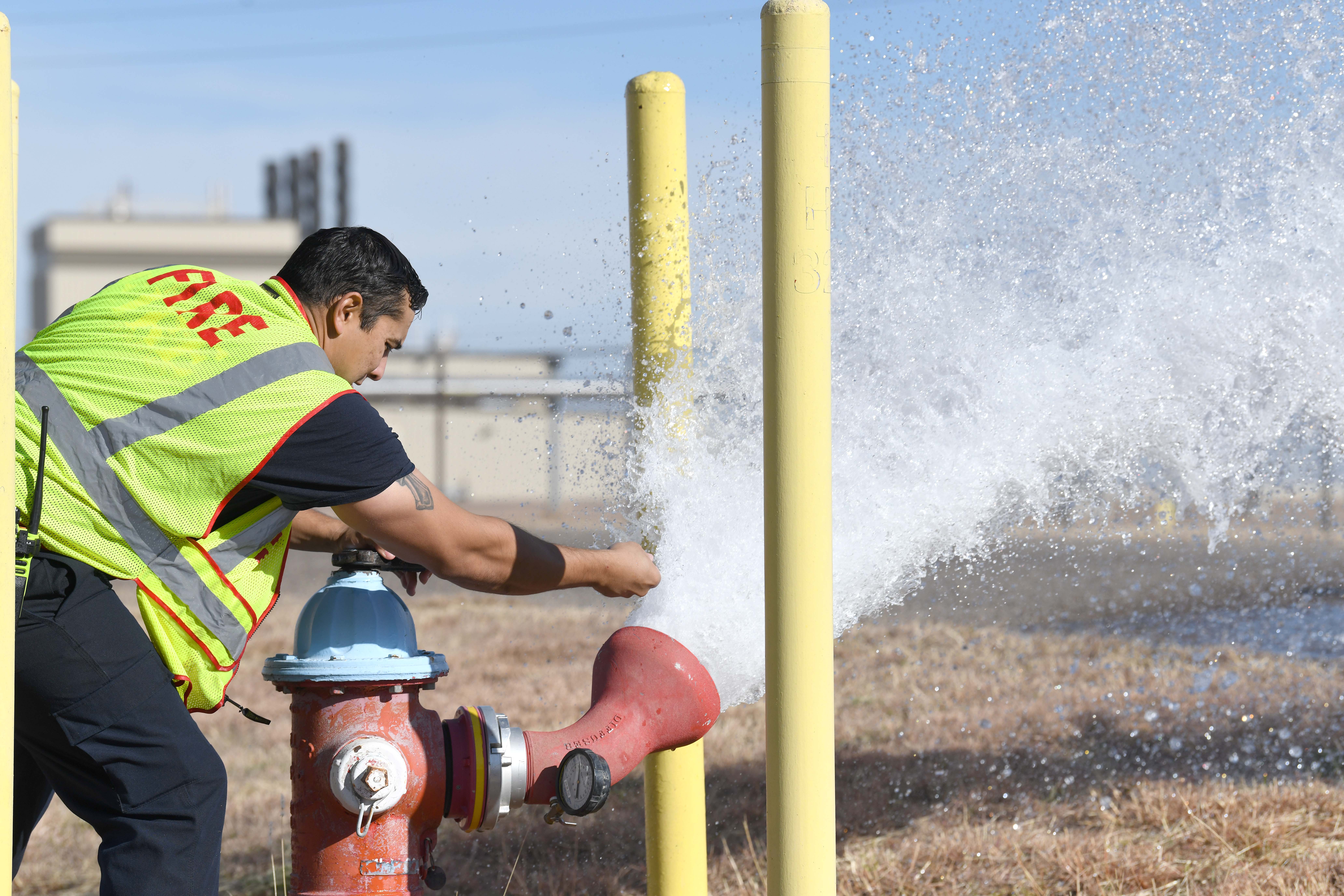
Firefighters test hydrants annually to verify operational conditions and document flow rate.
Have you ever turned on the faucet and water didn’t come out? While alarming, the cause can usually be chalked up to a water main break or a faulty valve in the line — which can sometimes be fixed in a matter of hours. Hours may not seem like a long time, but when the Pantex Fire Department (PXFD) needs water, they need it now. That’s why firefighters annually perform operational condition testing on hydrants across the site to proactively verify water flow and hydrant operability.
“This consistent verification helps prevent potential safety oversights that could arise from aging infrastructure,” PXFD Captain Matt Ketelhut said. “It allows us to verify water availability, identify obstructions, and assess system changes.”
Firefighters measure the flow rate in gallons per minute available from each hydrant. This data confirms that sufficient water volume and pressure are accessible for fire suppression. Flow tests can identify problems leading to proactive maintenance or repair. Construction or other modifications to the water distribution system can also impact hydrant performance. Annual testing helps to detect any negative effects these changes might have on water flow.
“Regular testing identifies issues such as clogged mains, corroded valves, or other defects in the water distribution system before a fire occurs,” Ketelhut said. “Addressing these problems proactively prevents potential failures of the water supply when it is most needed, which could otherwise compromise firefighting efforts.”
Pantex has domestic hydrants and High-Pressure Fire Loop (HPFL) hydrants. There are around 268 hydrants on plant site with many more being added when the High Explosive Science and Engineering Facility is finished.
“It takes the entire shift to complete the flows,” Ketelhut said. “Each engine company has a list of hydrants with multiple on each list. We must also test underground valves for the HPFL before we get to test the actual fire hydrants.”
The data collected from testing both systems leads to enhanced pre-incident planning. Firefighters know where to connect hose lines and how much water they can expect, allowing for more efficient and effective deployment of resources during an emergency. This reduces response times and enhances PXFD’s ability to contain incidents before they escalate.
“Accurate hydrant performance data is crucial for facility hazard assessments and the development of emergency preparedness plans,” Ketelhut said. “It allows safety managers to evaluate the effectiveness of the water supply against the specific fire risks present in different areas of the plant, ensuring protective measures are appropriately matched to the hazards.”
By verifying the availability of sufficient water pressure and flow, PXFD can be confident that they have the necessary resources to quickly extinguish fires. This minimizes the spread of fire, reduces damage to facilities, and protects personnel. Fire hydrant testing also ensures Pantex is compliant with inspection standards and flushing requirements.
While PXFD performs the hydrant testing, many other organizations are involved in the process including Fire Protection Engineering, Utilities, Security, the Operations Center, Emergency Services Dispatch Center, Special Mechanic Inspectors, Environmental, Waste Operations and more.
These tests align with the National Fire Protection Association standards such as NFPA 25, which is the benchmark for inspection, testing, and maintenance of water-based fire protection systems. The forward-thinking work our first responders do is best described by paraphrasing the famous quote attributed to Benjamin Franklin: an ounce of prevention is worth a gallon of water…or something like that.
Pantex Proud: Courtney Waddell

Many factors make Pantex a success — things like high-tech tools, technical expertise, and employees with a Texas-sized work ethic. But ask Courtney Waddell, and she’ll tell you the real pride of Pantex can be boiled down to one word: people.
“Without a doubt, it's the people! I couldn't have asked for a better group to work with, and I value the positive environment,” Waddell said. “Despite the many challenges our department faces, they consistently find ways to keep the mood light and have fun.”
Waddell’s people-first focus is apparent to those around her. Her supervisor, Ryan Turner, said Waddell’s demeaner and approach are a model for others.
“Courtney sets the standard for what I envision when I think of a true Pantexan,” Turner said. “She cares deeply about the people and mission, and demonstrates her dedication to both every day. She takes an active interest in those around her and is able to connect and positively impact her coworkers. She demonstrates all the qualities of a servant leader who goes above and beyond to take care of her employees and asks nothing in return.”
To Waddell, the people and their work are simply inseparable, two parts that make up the whole of one’s contributions to Pantex.
“Your work is a direct reflection of you,” she said. “Our work here is important, and although we are not perfect, how we handle our business matters. To me, pride in the workplace means putting your best foot forward in all facets of our business.”
What interested you in a Pantex career?
I was born and raised in the Canyon/Amarillo area. My best subject in school was always math, and I have my parents to thank for pushing me toward an education.
Why is giving back to the community important?
I have found a real passion for serving others. Through various community-service opportunities, I have seen firsthand both the challenges our community faces and the amazing dedication of organizations and people working to solve them. Being from this area and raising a family here, I feel a responsibility to contribute to the community.
Why is being open to learning from others critical?
Being open to learning from others promotes collaboration, helps us solve problems better, and keeps things moving forward with new ways of accomplishing work efficiently and effectively. Sharing what we've learned, whether it's about what went well or challenges we faced, prevents us from making the same mistakes and gives us a good head start when tackling new issues.
Why is communication important for your team to succeed?
Communication is the number one thing needed to be successful at Pantex. Our processes are complicated and require a lot of communication across various organizations, internal and external.
Pantex Proud: Courtney Daniel
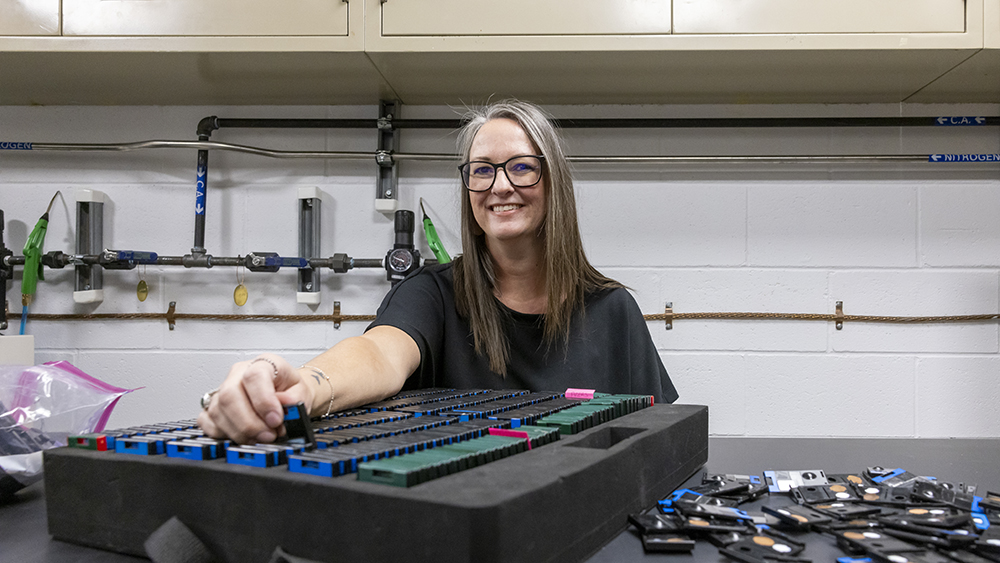
Thousands of dedicated Pantex citizens like Courtney Daniel work every day to support the Pantex mission. Take three minutes to learn about who she is, what she does, and why she is proud to be a Pantexan.
Imagine being stranded on a deserted island. What three items would you bring? For Courtney Daniel, a Health Physicist and Dosimetry Technical Lead, it’s a water purifier straw, a machete, and her husband.
“My man is so smart he’d figure out a way to build a raft out of seashells and palm trees, or something crazy, and we’d just sail out of there,” she said.
This lighthearted response to the popular “deserted island” game reveals a deeper truth about Daniel’s life philosophy: Good company makes all the difference.
“No one is an island. Being part of a team makes all things doable and sharing the burden, the stress, and the work together makes the achievement that much sweeter.”
Mutually beneficial collaboration, like Daniel describes, is exactly how the Radiation Safety team operates at Pantex. Daniel and other members of the group recently launched the Dose Records Information System (DRIS), a huge step forward in speeding up the availability of radiation dose reports. DRIS allows for immediate access to radiation dose history for everyone at Pantex.
“This was a huge accomplishment for us and our IT partners. The release of DRIS made getting personal dose information so much easier and faster for the entire site.”
On top of that achievement, Daniel and the rest of the Dosimetry and Radiological Measurements Group is prepping for another big project — bringing dosimeter processing back to Pantex. Daniel is proud of this achievement and is excited for the process to return.
“We currently have all the readers and nitrogen generators in place and we plan to start conducting all the required studies very soon,” Daniel said. “Bringing dosimeter processing back to Pantex will allow us to get results out so much faster at the end of each quarter. We are all working so hard to get everything accomplished and ready by our next Department of Energy Laboratory Accreditation assessment.”
What do you enjoy most about working at Pantex?
The group of people I work with. They are all amazingly intelligent, kind, good-hearted people. They are always willing to lift you up when you are having a rough day and are always ready to celebrate with you on the great ones.
What do you think makes Pantex so special?
Our mission is one of a kind and I think that in and of itself is pretty special. It’s also vastly understated that people outside our area have no idea what we do or that we even exist. But without us, our nation’s defense strategy would look very different.
Why is being open to learn from others critical for mission success?
No one knows everything, and being open to hear other people’s ideas can save you a lot of headaches. We attend quarterly meetings with all the DOE sites for both internal and external dosimetry. These meetings offer us a sounding board for issues or to ask questions. Also, we hear from the other sites about what is working well and what isn’t. They often present ideas or scenarios that we have never seen so when something arises at our own site, we know who we can go to for help.
Why is it important we hold ourselves accountable in our daily tasks?
What we contribute is up to us, and our work is a reflection of ourselves. Why would you want to present anything less than your best?
What advice would you give to a new employee?
Learn everything you can about as much as you can. Pantex is so diverse that there is no way you could ever know everything. It’s important to keep learning.
Why is mentoring vital to personal success?
The best way to gain a deeper knowledge about Pantex and what we do is through a mentor. Learning from someone who has been around longer and who has the ability to offer insight or direction into some lessons learned can help you avoid making the same mistakes and put you on a better path to achieve your goal.
What’s your favorite outside-of-work activity and why?
My husband and I really enjoy traveling. There’s so much this world has to offer and we want to go everywhere and see everything. We’re always looking for somewhere amazing to go and we are really trying to instill that wanderlust into our children.
Pantex Proud: Caitlin Duke

Thousands of dedicated Pantex citizens like Caitlin Duke work every day to support the Pantex mission. Take three minutes to learn about who she is, what she does, and why she is proud to be a Pantexan.
For Caitlin Duke, it all started with MySpace. Although her fascination with computers and technology started at an earlier age, her initial introduction into the world of information technology began when she coded her peers’ layouts on the online millennial mecca. She built onto those basic coding skills through her job at a large electronics retail store, developing into more areas of IT and finding an interest in troubleshooting.
“After moving from that first job, I tried a few other things,” Duke said. “Nothing seemed to satisfy my brain like IT does, and so I made the switch back to IT and have stuck with it since.”
Duke has been at Pantex for two years as a field support technician under Information Technology Service Management. She supports all IT issues at the Pantex Amarillo Campus (PAC), a service that also stands as her proudest accomplishment.
“We established and initiated full-time IT support at the PAC,” she said. “We proactively addressed any potential issues and ensured IT infrastructure was deployed and operating before launch day. I'm genuinely proud to say that the opening of the PAC has been a resounding success. I am glad I was chosen to be a part of making it happen.”
In her role, Duke meets a lot of people. While she loves what she does and is proud to serve the mission, there’s one thing she loves even more.
“My coworkers,” she said. “The people are what make Pantex special. I have worked in many environments, with various companies and roles. I can honestly say that Pantex is a cut above the rest. Anyone who gets a chance to be out here is lucky to be a part of this group of people and the mission we support.”
As a longtime Texas Panhandle resident, Duke understands the importance of Pantex to the nation, region, and community. She’s proud to serve her fellow Pantexans, and she exemplifies that pride through her daily work.
“Having pride in my role is important to me because I know how my work affects those around me,” Duke said. “Those in need of IT support rely on me to be efficient in my job so they can get back to doing theirs. I try to make them feel as comfortable as possible. It is not uncommon that people are hesitant to ask for IT-related help. I strive to change that and make their experience positive.”
Why is being open to learn from others critical for mission success?
By being open to learn from each other’s different experiences, opinions, and knowledge, we will get through any obstacle or achieve any goal. It’s critical we share and preserve knowledge from one another to continue being successful in our mission.
What advice would you give to a new employee?
Network as much as possible. I challenge everyone to build relationships with others outside of your bubble. It will open so many doors.
Who in your life has inspired you the most and why?
My parents. They both have an incredible work ethic and I’m fortunate to have them. They have done their best to give back to the community through coaching, running women’s groups, making donations, being involved in their unions, serving in the U.S. Marine Corps, and being leaders in the workplace. I strive every day to make them proud in everything I do, and try to live up to their legacies.
Pantex Proud: Terry West
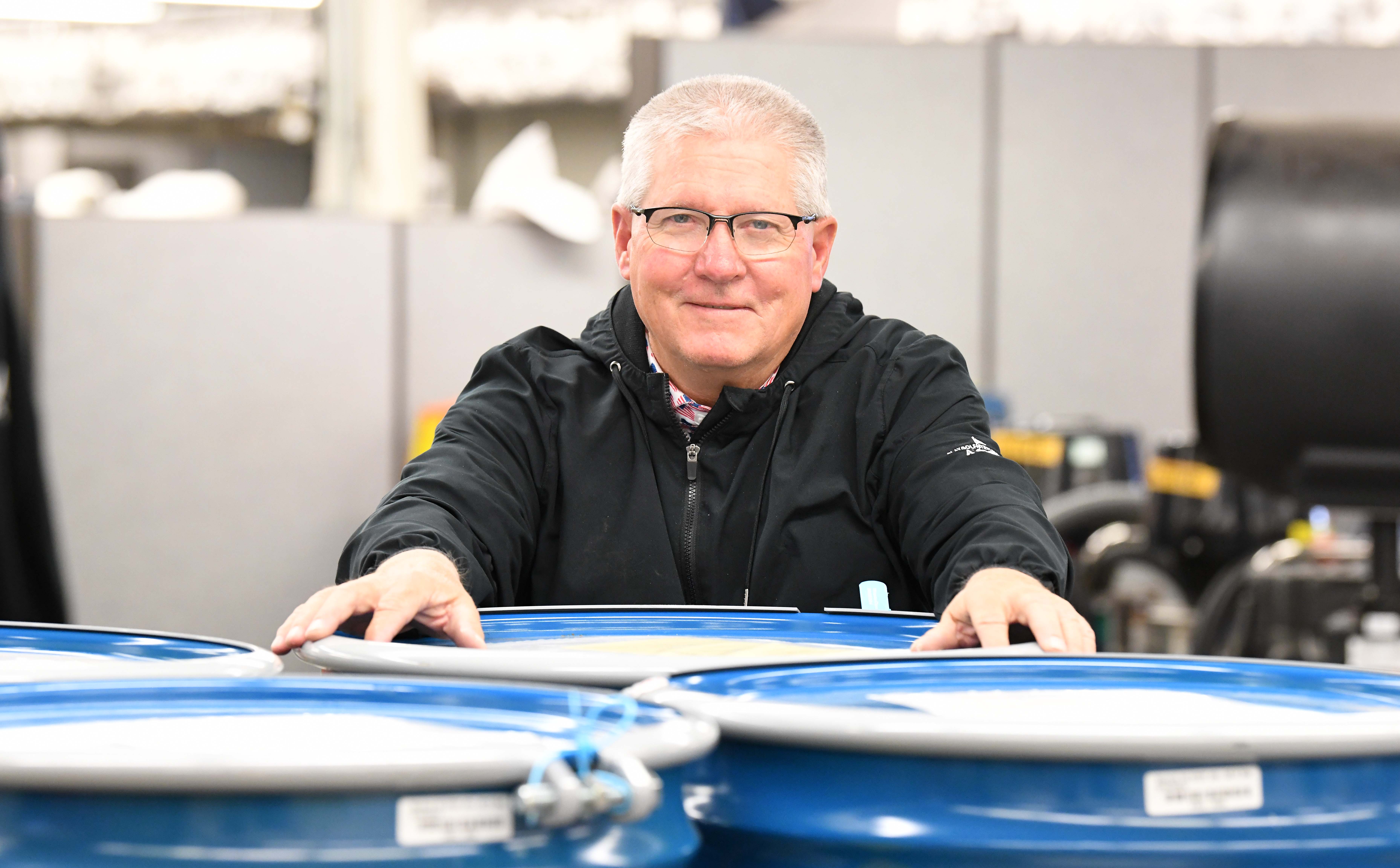
Thousands of dedicated Pantex citizens like Terry West work every day to support the Pantex mission. Take three minutes to learn about who he is, what he does, and why he is proud to be a Pantexan.
At Pantex we’re known for our assembly capabilities. Terry West, on the other hand, is known for taking things apart. As an Engineering Technical Waste Operator, West is one of the experts who knows how to get the job done right when there are things that need to be dismantled, recycled, or disposed of.
“I handle hazardous and nonhazardous waste that is generated throughout Pantex,” West said. “We take care of discarded chemicals, expired weapons material, package components, handle trash that is sent to the landfill, and process materials to the correct disposal sites.”
West is a second generation Pantexan. For the past 46 years, he’s dedicated his life to the mission. While West works with discarded or unneeded materials, he says not one minute of his time here has been a waste.
“Put in the work, and you’ll receive a lifetime of rewards,” he said. “By being employed at Pantex, I have been able to give me and my family a great life. Every job is important toward the mission. From waste operations to the plant president, we all must do our jobs, especially in a safety sense.”
Dedication and loyalty are the foundation of West’s service. He says he is just proud to be a member of the Pantex family and lucky to be associated with the people who make Pantex such a special place to work.
“We are still one the most important parts of our nation’s security,” West said. “The work that the employees and the company does that reaches the community is something to be proud of.”
Why is communication important for your team to succeed?
Communication is key in every job at Pantex. It starts at the top and needs to be communicated down to everyone in line to get the job done. No communication means no success in getting the job done.
Why is it important we keep a questioning attitude?
We all need to question the job at hand if you don’t feel it can be done safely or done right. With all the new people at Pantex, someone will bring up a new and faster way to do something. But in our business, faster is not always the safer way of getting the job done. I’ve been here long enough to know why we have procedures in place along with all the lessons learned that we read in our daily workday. We all want to go home every day after a safe day at work. So, I’m not afraid to question or even stop work just to make sure we are doing a job the safest way possible.
Why is giving back to the community important?
Kids Inc. was big in my life as a kid. I played every sport that they offered. United Way supported Kids Inc. and makes it affordable for parents to allow their kids to get to participate. So, I will always support the United Way.
What’s your top bucket list item and why?
To see the Masters golf tournament in person and see the best golfers play on the most beautiful place on earth.
What’s your favorite outside-of-work activity and why?
I have two; the first one is racing. I started racing motorcycles at 14 years old, and 36 years later, I race sprint cars. Now, my wife and I own the sprint car that our son races at Route 66 Motor Speedway. My other passion is golf. I ran the Pantex Golf League from 2006 to 2016. In 2018, I started a mini tour, Top of Texas AM Tour, to put on individual tournaments. I competed in the World Amateur Championships in Myrtle Beach for ten years. That was the ultimate of tournaments that I played in. So, I stay busy with racing and golf.
Who in your life has inspired you the most and why?
I have to say my parents. My mom was a quiet person until I didn’t follow the right rules of life. My Dad was the one that led me to racing. It was his hobby and he made sure I had the best equipment possible. We still talk about racing every time we talk. We also talk about the times that he worked at Pantex. He retired from DOE in 1994. Being 93 years old, he still remembers names and the things that happened in the past years here. So, I am very blessed to have great parents.
Pantex Proud: Taylor Cockrell
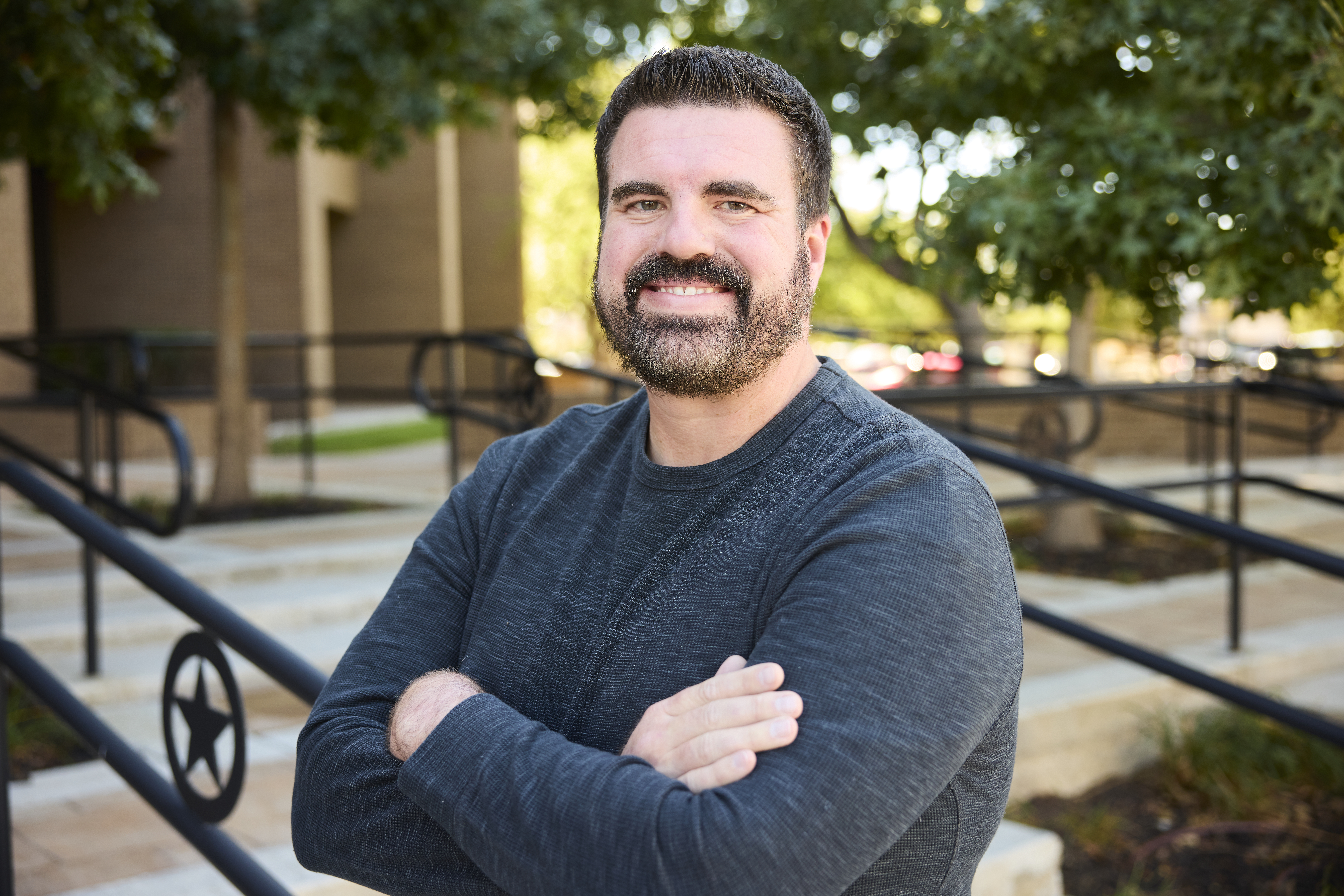
Thousands of dedicated Pantex citizens like Taylor Cockrell work every day to support the Pantex mission. Take three minutes to learn about who he is, what he does, and why he is proud to be a Pantexan.
Among the people, pews, and praise at his church, Cloud Administrator Taylor Cockrell discovered more than he anticipated — a career in information technology.
Cockrell initially went to college for mechanical engineering, but he changed his major to sound production while working as an audio technician for his church. As he learned this auditory and technical craft, Cockrell quickly realized how much it involved IT, especially with networking. This realization turned into fascination, and not long after, he found himself working in IT-related jobs. First, he broadened his IT knowledge at a massive cattle-feeding operation. Four years later, he traded bovines for bombs.
“I was really excited and also grateful for the opportunity to work at Pantex,” Cockrell said. “My first year here was during site separation, which demanded a lot from my team when migrating from OneNet to PxNet and other related duties, but I enjoyed it.”
Cockrell’s pride in working here ties into what he appreciates the most about his job.
“I’m proud to be a part of the mission,” he said. “Pantex is a community, and we all have the same goal. What we do goes beyond our site borders. It’s important to me to be a part of that, and along the way, I get to work with a lot of diverse people with different skill sets. We help each other. I get better at what I do every day because of them.”
“Iron sharpens iron, so one person sharpens another” is a proverb that Cockrell lives by daily. He also knows that while you can improve through interaction with others, a continuous pursuit of knowledge is just as valuable to personal development.
“When you stop learning, you don’t grow as a person,” he said. “I continue to learn in my job and personal life to be the best I can be. Also, part of that growth comes from what not to do and in holding ourselves accountable. No matter how big or small you mess up, don’t sweep it under the rug. Own it and grow from it.”
What’s your top bucket list item and why?
Skydiving. Life can be so routine and skydiving is something out of the norm. I know a few people that have done this and have really enjoyed it. I think it would be a one-and-done situation, but I could look back and be proud I conquered something that earlier in my life I was too afraid to do.
What’s your favorite outside-of-work activity and why?
Coaching my son’s flag football team. The opportunity arose and I was hesitant at first, but I ended up really loving it. It’s made a huge positive impact on our relationship.
Why is giving back to the community important?
It’s important for Pantex to show it is more than just a government entity and that it cares for the people in the community, that we care about the area we all call home. I also believe it’s great to serve others and to see how happy they are when you help them when they need it the most, even if it’s something small.
Do you volunteer or remain actively engaged in the community?
I now run sound at my church as a volunteer. I’ve always enjoyed doing that and serving in the kingdom of God to help others.
SWAT Team mobilized for safety on walkways and trafficways
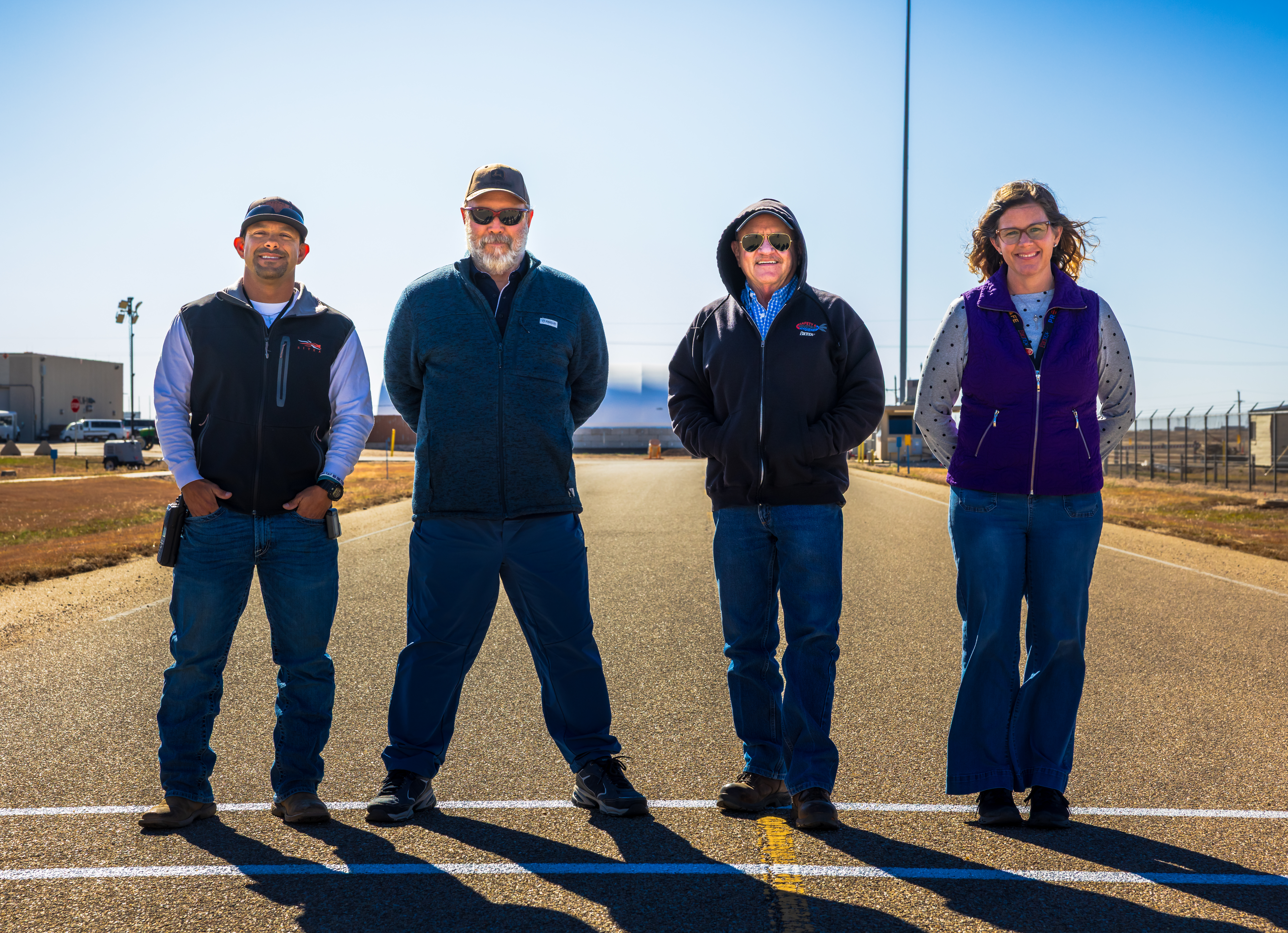
Members of the SWAT team stand in the newly painted walking path leading from the Building 16-37 Argus to Building 16-001
Safety & Industrial Hygiene is calling in the SWAT team. But don’t worry, it’s probably not what you’re thinking.
Pantex has deployed a proactive new approach to site safety with the establishment of the Safe Walkways & Trafficways (SWAT) team. The term "SWAT" typically makes people think of specialized tactical units responding to critical incidents, but the Pantex SWAT team does not engage in high-risk law enforcement scenarios. Their mission however, is equally critical: safeguarding Pantexans from preventable injuries.
The team's name underscores site leadership’s dedicated focus on improving the infrastructure that Pantexans navigate daily. Designed to address issues before they escalate, this proactive approach mirrors the strategic and focused nature of its law enforcement namesake.
“SWAT was created to identify and remediate issues before they become a problem for Pantexans,” Safety and Industrial Hygiene Support and Compliance Manager Laresa Halcom said. “The team charter was formed to help fill the gap of a tripping hazard being identified and being repaired.”
This initiative aims to systemically identify and mitigate potential hazards related to slips, trips, and falls across the site, reinforcing Pantex’s commitment to a safe and secure work environment for all employees. This proactive stance is expected to streamline the resolution process and reinforce overall site safety.
The formation of the SWAT team is a direct response to persistent safety challenges. Over the past five years, Pantex has averaged approximately 16 documented slips, trips, or falls annually. The three-year average stands at 15 incidents per year, with 15 documented incidents already recorded for the current calendar year. These statistics point to the need for an intentional reduction effort.
"The intent is that we are improving walkways and roadways with controls that will eliminate or mitigate hazards that contribute to slips, trips, or falls," Halcom stated. “In our first charter meeting, we immediately identified areas that have been reported as an issue or seen first-hand. Currently, we are working through that list; however, we plan to begin going from facility to facility, zone by zone until we can say we have inspected the entire plant.”
The strength of the SWAT team lies in its diverse expertise and representation from across Pantex, including Safety and Industrial Hygiene personnel, the Metal Trades Council, the Pantex Guard Union, Facility Operations, Infrastructure Roadways, and Infrastructure Maintenance. This multidisciplinary team ensures that a wide range of perspectives and technical knowledge are applied to identifying and solving safety issues. Even though the team is relatively new, its already making a big impact around the site.
"This initiative began in August and we have been successful in creating a walking path from the Building 16-37 Argus to Building 16-001,” Halcom said. “I look forward to seeing the team accomplish additional improved surfaces.”
Safety is a collaborative effort at Pantex, and Halcom expects that the formation of the SWAT team will lead to tangible improvements in site conditions and a reduction in preventable injuries.
Pantexans are encouraged to actively participate in this new safety initiative. If you identify any areas of concern regarding walkways or trafficways that could pose a safety risk, contact the SWAT team by reaching out to Halcom or MTC and PGU Safety representatives. We all have a collective responsibility and commitment to creating a safer environment for every individual at the Pantex Plant.
"The expectation is that we as a team get out and walk the walkways and trafficways of Pantex and are successful in delivering safe, new or repaired areas and eliminating hazards!" Halcom said.