



News
NNSA Release: NNSA establishes new federal office for the Pantex Plant
Pantex Field Office begins operations on April 2
AMARILLO, Texas – The National Nuclear Security Administration (NNSA) has established a new field office to oversee operations at the Pantex Plant.
The NNSA Pantex Field Office (PFO) replaces the abbr title="National Nuclear Security Administration">NNSA Production Office which was previously responsible for oversight of operations at Pantex and the Y-12 National Security Complex in Oak Ridge, Tennessee. The Y-12 Field Office has also been established to oversee Y-12 operations. Both new NNSA field offices began operations on Tuesday, April 2.
PFO’s mission is to ensure safe, secure and cost-effective operations at Pantex, which is operated by Consolidated Nuclear Security (CNS) for NNSA. Pantex is a key facility in the U.S. Nuclear Security Enterprise and is responsible for the final assembly, dismantlement and maintenance of nuclear weapons.
CNS will continue to manage and operate both Y-12 and Pantex for NNSA until a new contractor is named for the Pantex Plant. The CNS contract to run Pantex currently extends through September 30, 2024. CNS’s contract to run Y-12 currently extends through September 30, 2025, with two 1-year option periods.
Jason Armstrong will serve as the Manager of the Pantex Field Office. He previously served as the NPO Pantex Manager and as the Manager of the NNSA Savannah River Field Office.
Pantex Fire Department response to wildfires reveals benefit of mutual aid
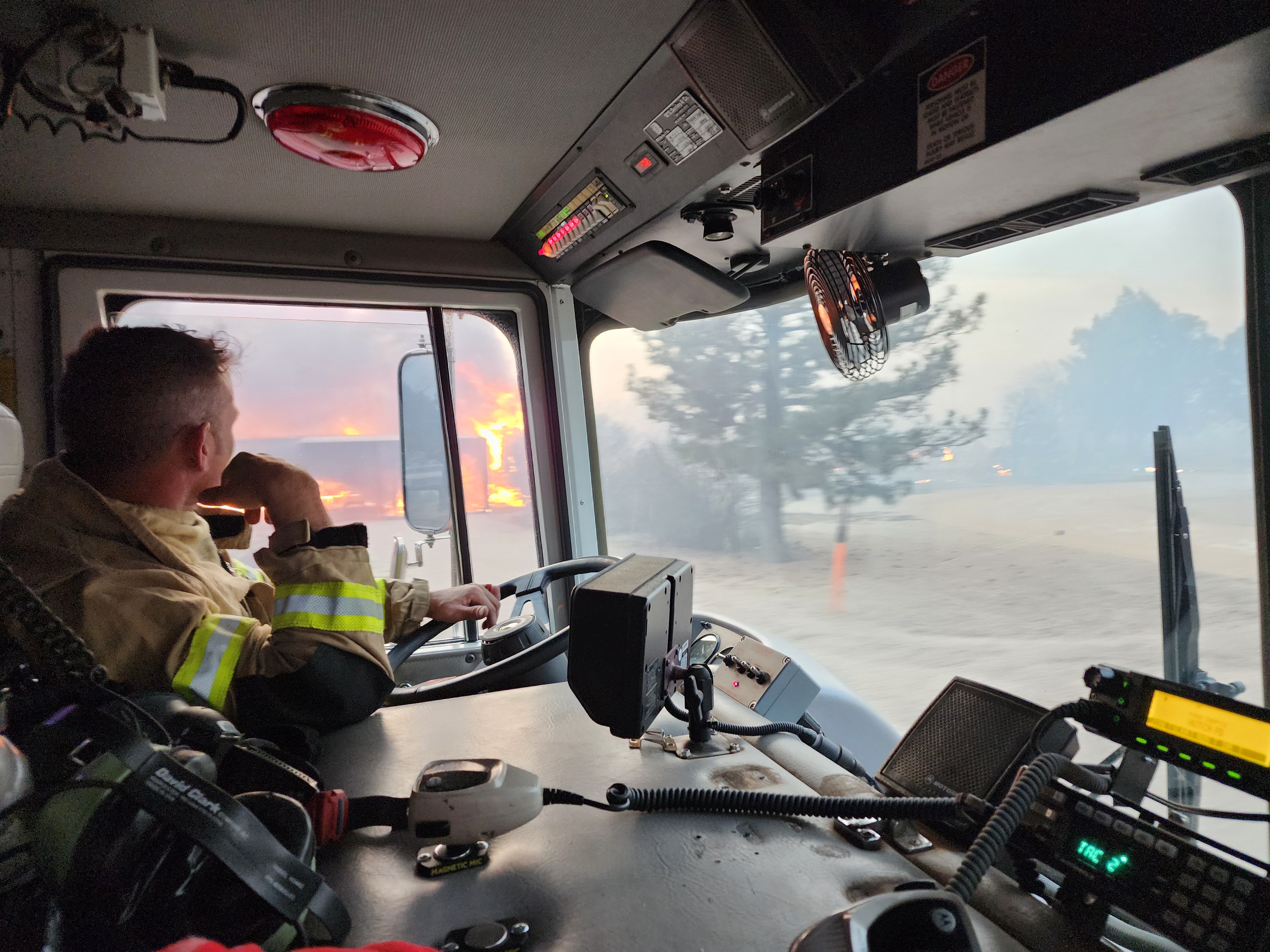
Pantex firefighters respond to local wildfires under mutual aid agreement.
Wildfires are an unpredictable threat that can occur with little warning and leave massive damage behind. To combat wildfires and other emergencies, the U.S. Department of Energy and the Pantex Fire Department (PXFD) have established vital mutual aid agreements with neighboring communities. During emergencies, these agreements effectively multiply and strategically direct resources to the affected fire departments, enabling them to surpass their own response capabilities.
“PXFD is exceptionally fortunate to have a fully staffed, paid fire department capable of immediate deployment to assist our mutual aid partners at any hour, day or night—a luxury not afforded to the volunteers we support,” said PXFD Captain Joshua B. said. “These agreements not only enable our highly trained members to continually perfect their skills, but also facilitate their crucial support for the surrounding communities.”
The significance of these mutual aid agreements with Carson, Armstrong, Hutchinson, and Potter counties was evident in recent weeks amid the rise of wildfire activity. PXFD rapidly responded to a call for mutual aid to fight the Windy Deuce Fire—a significant fire north of Pantex—alongside the Smokehouse Creek Fire, which became the largest wildland fire in Texas history. This devastating fire consumed over a million acres, equivalent to nearly 2,000 square miles—an area surpassing the entirety of Delaware.
“Pantex employees live in each of these counties, adding personal significance to our emergency responses,” Captain B. said. “Numerous times, we’ve found ourselves extending aid to Pantexans’ family members, or even our own, either through medical assistance, or emergency response to car accidents or house fires.”
During the PXFD deployment to fight the Windy Deuce Fire, the firefighters found themselves patrolling one of the hardest-hit areas. Amid their duties, they even provided vital assistance to the parents of one of the Pantex fire captains; the parents faced evacuation and feared the loss of their home and livestock.
“The PXFD firefighters prevented the impinging fire from reaching their residence and contained the fire’s spread to the exterior of the home,” Captain B. said. “To this family and many others, PXFD and its members are a godsend.”
The “mutual” part of the agreement means both parties can receive aid. The Windy Deuce Fire got uncomfortably close to the Pantex site, but thanks to changes in weather conditions, the actions of the Pantex response team, and mutual aid partners from neighboring communities, the fire never reached the site boundary.
“We’re not just responders; the PXFD seeks to be an integral part of the communities surrounding Pantex,” said Captain B. “Whether it’s you, your family, or our neighbors in need, PXFD will respond when called upon.”
Forecast calls for severe weather safety

Series of lighting detection photos of one storm that rolled across Pantex in August 2019 composited into one image.
Severe weather season is unpredictable, scary, and can be dangerous if not prepared. It is important to know what to do if severe weather hits. Y-12 and Pantex meteorological programs monitor weather conditions. Pantex Meteorologist Steve K. and Y-12 Meteorologist Matthew S. provided insight on how to prepare for spring and summer severe weather.
Understanding the importance between a tornado watch and warning is vital for the safety of yourself and others around you.
Steve said, “a tornado watch means that conditions are right for a storm to develop and produce a tornado. A tornado warning means that either a thunderstorm is rotating and could produce a tornado at any time, or a tornado has been sighted by law enforcement, a storm chaser, or some other trained storm spotter or meteorologist.”
In the case of a tornado warning, people should secure shelter. At home, people and pets should go into a basement or the most interior room of the house. Covering yourself with blankets and pillows will help protect you from debris should a tornado hit. Having access to a weather radio or electronic device where you can monitor weather reports is important.
There is always the possibility that a tornado could form while someone is driving.
“If you cannot drive away from the tornado, then get out of the car and get into a ditch or low place on the side of the road and cover your head,” said Steve. “Do not get underneath overpasses for protection as winds will actually be stronger underneath an overpass during a tornado as the air tries to squeeze itself into a smaller space under the overpass.”
Heavy rains and flash flooding are also common severe weather threats. The National Weather Service has the common saying, “Turn Around, Don’t Drown.” If you drive up to an area with cars already underwater, you are most likely going to face a similar fate if you try to drive into that water.
“Tires are filled with air and air does not like being below the water; it wants to be above it. So, with only 1-2 feet of flowing water, a car will start to float and become a really bad boat—with no steering mechanism to move it along,” said Steve.
Hail is also possible with thunderstorms.
Matthew said, “Hail is something we monitor for closely when severe storms roll through as it typically comes with more major weather outbreaks.” As with tornados, Steve emphasized that an underpass on a highway or interstate is the worst place to take shelter during a hail storm.
With rain and hail comes the potential for lightning. The sound of thunder can travel approximately 10 miles away from where a lightning strike occurs. Therefore, if you hear thunder, lightning is near and you should stay indoors.
“If you are outside and you feel your hair stand up or see the hair of someone else stand up, what you are witnessing (or feeling yourself) is electricity going up from the ground to meet static electricity coming down from the cloud,” Steve said. “You have enough time to crouch down like a catcher behind home plate as this will lift your heels off the ground to where only your toes are touching the ground. Put your hands over your ears and close your eyes. If you are struck by lightning in this position, the electricity will enter through your head or back and exit through your toes. If you are lying flat on the ground, then a greater amount of your body will suffer electrical burns from the lightning strike.”
When struck by lightning, people will often need immediate CPR due to the shock stopping the heart. Others may exhibit violent shaking and muscle spasms. Witnesses should call 911 immediately and start CPR, if necessary.
Pantex and Y-12 have meteorological towers and detection systems in addition to meteorologists monitoring weather at all times. Both meteorological programs collaborate with the National Weather Service and local stakeholders to keep up-to-date with the latest forecast.
Matthew said, “It is key to plan ahead and make sure coverage is there to protect materials, infrastructure, and most importantly, life safety.”
A lasting legacy treating Pantexans
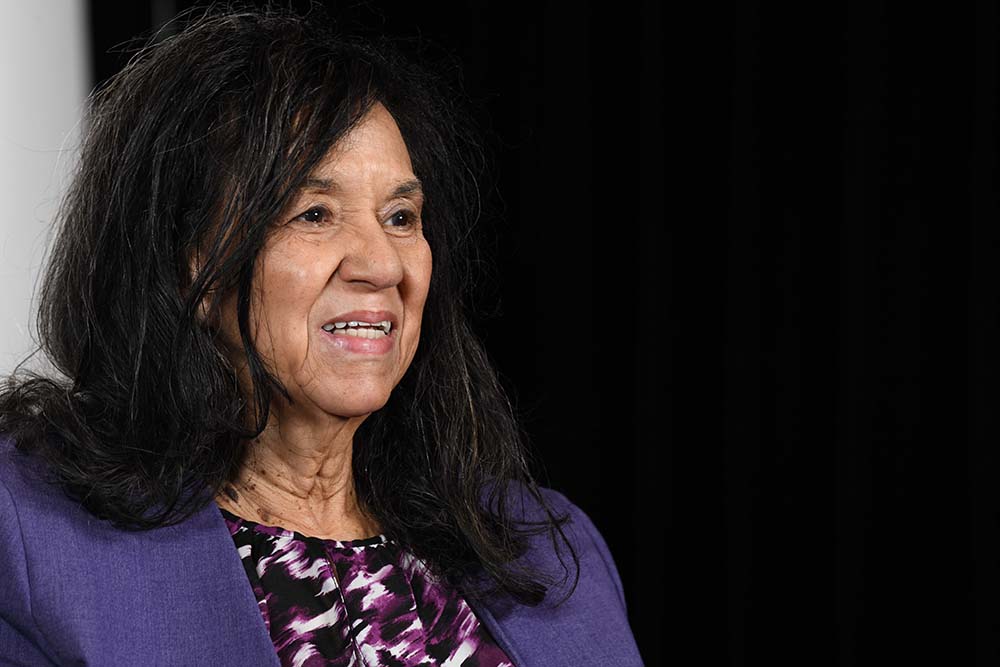
After working as an Occupational Health Services nurse for approximately 52 years, Betty retired this year.
Life looked a lot different for Betty S. at Pantex in 1972––she was one of three on-site occupational health nurses, she had to dress in all white, and she was not allowed to wear pants. However, one thing that did not change was her continuous dedication to treating patients.
“I liked the things I was doing to help increase the health and well-being of the people at Pantex. It was a journey that I’m glad I took,” Betty said.
That journey lasted almost 52 years. Betty was hired at Pantex straight out of nursing school and recently retired at the beginning of 2024.
“It was challenging, but my goal was to do the best I could. Life gives you ups and downs, but you just work with it and try to make sure every day counts,” Betty said.
Building 12-2 was where Betty started her career. It was the brand-new central health facility, and she worked in that building until 2018––when Occupational Health Services moved to the John C. Drummond Center. Each decade brought changes that Betty had to adapt to.
“In the late `70s, they decided we could wear pants, which was more comfortable than skirts, and then in the `80s, we could wear colored uniforms,” Betty said. “In the `90s, I became the head nurse.”
Betty remained diligent in being trained to take care of everything from yearly physicals to emergency situations. She was even on-site during the 1977 explosion.
“We heard this boom, and then just right after, we knew that it was a major explosion,” said Betty. “When the fire department notified us they were bringing in casualties, we got set up for that and took care of the patient they brought to us that was still alive, and we ended up stabilizing him and got him to the hospital.”
Throughout her time at Pantex, Betty is proud of what she did to reduce occupational injuries and raise safety awareness.
“We worked with safety to help people become aware of what they needed to do so they would not get hurt,” Betty said. “You’re doing a job, and you want to do it well, but you want to do it safely.”
When asked if she had any advice for current and future Pantexans, Betty emphasized the importance of continuing education, training, and having a questioning attitude.
Betty said, “You are already trained for what you know how to do. When something comes along that you do not understand, ask for help.”
Introduce a Girl to Engineering exposes young minds to the possibilities in engineering

It was another captivating year for middle‑ and high‑school‑aged girls at Pantex and Y‑12’s Introduce a Girl to Engineering.
Annie P. is only an eighth-grader at Panhandle (Texas) Junior High, but as she participated in Pantex’s annual Introduce a Girl to Engineering event last month in Amarillo, she was already thinking big.
“We get to learn about science and engineering and how it helps the world and how we can help the world, too,” Annie said.
Annie was one of more than 900 girls that participated in Introduce a Girl to Engineering events at the partner sites of Pantex and Y-12 on February 22. In all, girls from 63 schools filled the lobby of Y-12’s New Hope Center and the event area of AmTech High School in Amarillo to engage with staff, visit booths, and broaden their understanding of the possibilities in science, technology, engineering, and math (STEM) fields.
This year marked the 11th IGTE event at Y-12 and the seventh at Pantex. Each event showcases Consolidated Nuclear Security’s (CNS) commitment to supporting and educating the communities around the sites.
“I didn’t realize how many different fields there are, and it was cool getting to talk to other people who went through the college experience,” said Emily C., a sophomore at Sweetwater (Tenn.) High School.
Emily said she enjoyed learning about the different engineering disciplines available to her. Educating girls like Annie and Emily about opportunities in STEM career fields is the goal of these events.
NNSA Production Office Manager Teresa Robbins shared her energy and enthusiasm for STEM fields with the next generation.
“We need the best and brightest to continue our national security mission,” Robbins said. “I hope many of these ladies come and work in the Nuclear Security Enterprise in the next 10 years. I would love to see one of them work through their career and replace me someday.”
Students started their day at Y-12 in an engaging panel discussion with four women engineers sharing their experiences led by Julie C. Students asked thoughtful questions about what to expect in college, career, and life. Following the panel, students interacted with booth participants showcasing a wide range of STEM career disciplines and experienced engineering principles in action with activities like building marshmallow launchers.
Meanwhile at Pantex, junior high and high school girls visited interactive STEM booths, run by women, to encourage them to get more interested in STEM career fields.
Marina Y. said “the hands-on activities can teach girls creative and problem-solving skills and help maintain their interest in STEM areas to build the next generation of STEM leaders.”
Stefanie C. worked with her team to help girls build catapults and had a competition to see who could build a foil boat that held the most pennies.
“I wish this type of event was around when I was young,” Stefanie said. “There are more women in STEM careers now, and it is so encouraging to see the interest these young girls have in learning more about it. The hope is that we can inspire even just a few girls to pursue a STEM career and show them what they can do with it and how to keep going.”
According to Pew Research Center data, fewer women are graduating and working in STEM fields than their male counterparts, despite the potential to earn more than in traditionally female-dominated fields. Though they make up half of the workforce, only 26% of individuals currently working in STEM fields are women, making events like this incredibly important for the future of young women.
“Events like this help CNS and our local communities in bold ways,” Mission Engineering Vice President Tony Boser said. “It allows us to invest into eighth grade and high school students and introduce them to possible career paths. It also gives our folks the chance to give back. Our volunteers are passionate about showing how engineering can be fun and how it makes a difference in the things we do every day.”
CNS is the Managing and Operating contractor for the Pantex Plant in Amarillo, TX and Y-12 National Security Complex in Oak Ridge, TN.
Science showdown

Devin C. participates in a round of the 2024 Regional High School Science Bowl.
Picture the scene—tensions are high, two teams are pitted against each other, the clock is ticking down, and the buzzer sounds. This is not a basketball game during March Madness; it is the high intensity regional middle school and high school science bowls. Pantex sponsored the two competitions in January and February for students to showcase their STEM skills through a question-and-answer competition over biology, chemistry, Earth science, physics, energy, and math topics. This is the thirty-second year Pantex sponsored the competitions.
“Much like an athlete performs in their certain sport, these kids are extremely bright and this is an opportunity for them to demonstrate their excellence in STEM-related activities,” said Pantex Deputy Site Manager Kenny Steward. “It’s important for us as Pantexans representing the government to make investments in the future of technology and engineering. Identifying these students early on helps build a potential pipeline for these students to come work with us.”
Volunteers from Pantex, NNSA Production Office, Amarillo College, and West Texas A&M University dedicate their time to work as moderators, timekeepers, scorekeepers, science judges, and runners. Mugisha A., a Pantex mechanical engineer, has been a science bowl volunteer for the past 3 years.
“I am a big believer in giving all the students an opportunity that says ‘we believe in you’ and it gives a lot of hope for the future when you see these students answering questions that I don’t even know the answers to,” said Mugisha. “When these kids leave today and they look at the Pantex logo, it is not forgotten. This is an opportunity for me to help my community and make a difference in the next generation.”
A science bowl moderator and Amarillo College Professor Jonathan J. has a long history with the competition. He started out as a coach for Ascension Academy middle- and high-school teams and now volunteers for the event.
“I am very passionate as an educator,” said Jonathan. “I really enjoy what Pantex does and I hope that they continue to do this for many years.”
Typically, teams are comprised of five students with one serving as an alternate and one teacher serving as a coach.
“It teaches them how to work together as a team and they use their individual strengths to answer questions,” said Jackie M., Hutchinson Middle School science bowl coach.
At the high school competition this year, something unusual occurred. Devin C., a sophomore at Palo Duro High School competed by himself. The other members of his team were sick or had other obligations, so instead of backing out of the competition, he tackled it on his own.
“My first thought was ‘are you kidding me?’ I found out last night that one team member was not going to be here and then I found out about the others this morning,” said Devin. “It was stressful but I quickly changed my mindset and got focused.”
Even though Devin did not place in the competition, he won a few rounds by himself and came up with different strategies to help himself.
“Usually during bonus questions, you’ll talk with your team, which is something I can’t do, but I make it work and try to answer the multiple-choice questions I know first or let the other team answer first so I can eliminate an answer,” Devin said. “I plan on entering a
STEM career in the medical field so this will help me get my knowledge on par and prepare me for college.”
Two buildings in HESE complex at Pantex achieve milestones

The Technology Development & Deployment Lab mechanical, electrical, and plumbing installed above the ceiling.
Pantex’s new High Explosives Science & Engineering (HESE) complex clocks in at 72,762 ft2 and will replace 15 World War II-era facilities.
Two of the three buildings that comprise the HESE complex recently hit construction milestones.
In January, Hensel Phelps (HP), the construction company building the HESE complex, placed the 28th of 56 walls in the High Explosives (HE) Lab. This marks the 50% milestone for placement of the concrete blast walls, with the second half projected to finish by the end of May 2024. “This is a major milestone due to the complexity of the rebar, blast frames, and the blast valves in the walls,” said Pantex employee Chris H. “The 50% milestone frees Hensel Phelps to start construction of the roof earlier than planned.”
The Technology Development & Deployment Lab (TD/DL) also met an important milestone recently when Hensel Phelps completed installation of 50% of the building’s mechanical, electrical, and plumbing rough-in above the ceiling. Rough-in is the stage of construction in which mechanical, electrical, and plumbing are installed before ceiling or walls are installed to cover them. “Our next major milestone in the TD/DL is completion of permanent power,” said HP employee Chris W. “This will allow the project to begin equipment install and start-up and complete the building finishes.”
When this complex is finished, the HESE complex will contain more than 47 million pounds of concrete, nearly 1.3 million pounds of structural steel, and more than 2 tons of rebar—which when laid out in a line would make it all the way from Amarillo to San Francisco!
The HESE complex has an estimated completion date of March 2028 and will be conveniently located closer to HE manufacturing operations. This modernization effort supports the mission of the Nuclear Security Enterprise and the site’s designation of the National Nuclear Security Agency’s HE Center of Excellence.

HE Lab blast wall installation.
A variety of wildlife calls Pantex home
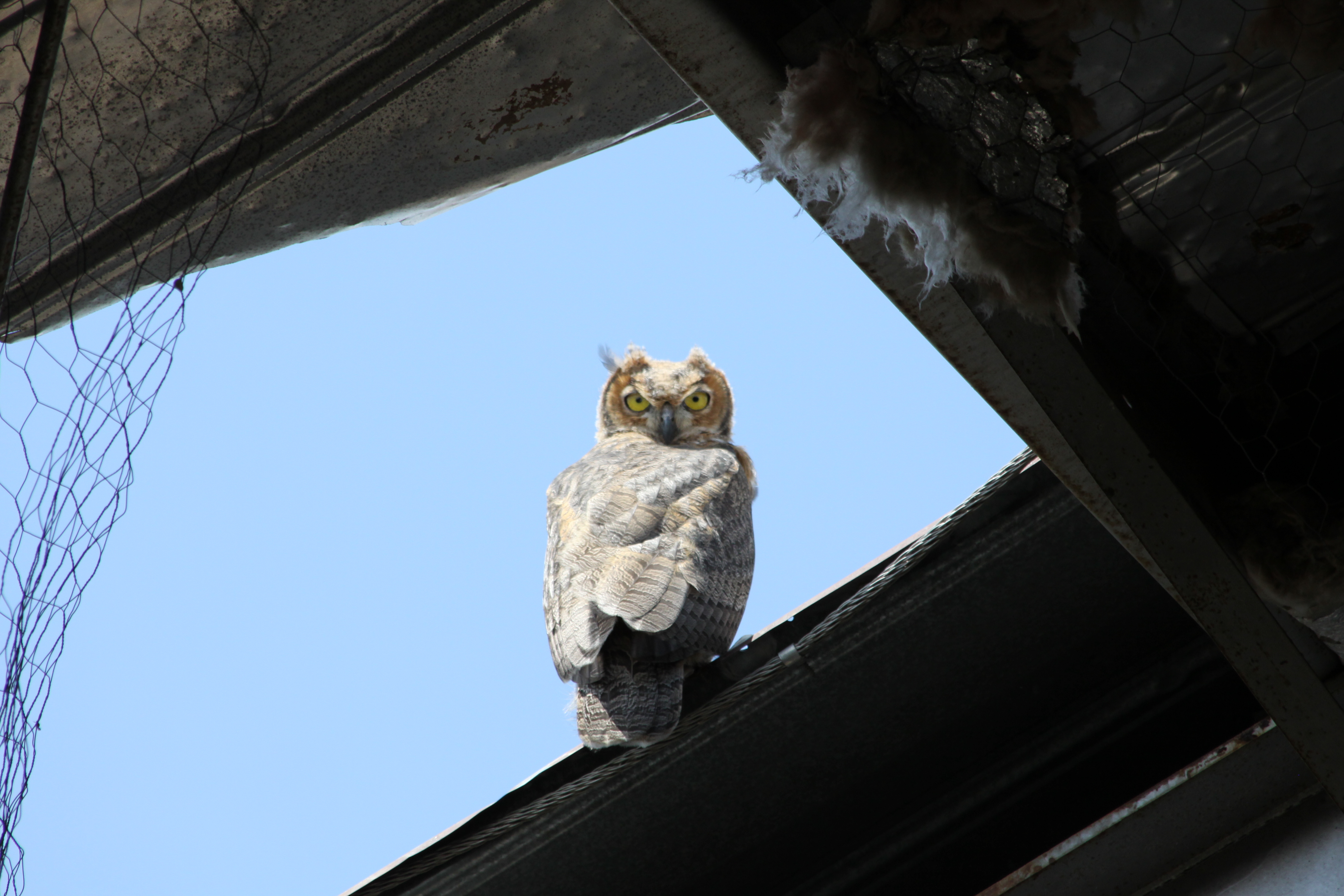
A great horned owl perches on a building.
It was the start to an exciting day for Kevin B., who works at Pantex. He got the call early in the day about a burrowing owl stuck in razor wire at the plant. After getting assistance from the yard group, they freed the small owl and it was taken to Wild West Wildlife Rehabilitation Center in Amarillo with concerns about its injured leg. Since it opened in 2016, the rehabilitation center has helped with many animals found on plant and has provided all these services for free. When Kevin spoke with the non-profit recently, it was suggested that the tiny owl might find a career as an educational animal there.
As soon as Kevin got back to the plant, he received a call about a feral cat that had been caught in a trap on-site. When he got to the cat’s location, he realized it was about 50 feet from where he rescued the owl that morning. He was able to take the cat to a shelter in Amarillo that has a “barn cat program,” in which feral cats are saved from euthanasia by being adopted by farmers who rely on them for rodent control.
According to Kevin, this kind of day is not unusual. His department has set high standards when it comes to how they handle wildlife and their work to preserve the land that Pantex inhabits. On top of removing animals and relocating them from places they should not be, he and his group also do quite a bit to maintain the natural terrain of the land. From playa lake preservation to studies tracking purple martin birds, Kevin’s group at Pantex does all they can to be good stewards of the land in the Texas Panhandle. In addition to the work their department does with the environment, they also secure safety for the site by managing hazardous situations with wildlife and routinely monitoring levels of animal waste.
Due to the heavy rain in May and June, there has been an influx of young wildlife roaming around the approximately 16,000 acres at Pantex. On the master list of wildlife that Kevin’s department reports every year, there were 103 species of birds reported at Pantex in 2023. The high levels of water in the playas last summer have brought in waterfowl that have not been seen at Pantex in decades. Examples of some of the larger species that have recently been spotted are the ferruginous hawk, the Virginia rail, and bald eagles.
Fawns have routinely been seen with their mothers around the plant, as well as plenty of young skunks, prairie dogs, snakes, and the protected Texas horned lizards. During “swift fox surveys” at night (developed a couple of decades ago to see if swift foxes were showing up at night on the plant), coyotes, rabbits, and other wildlife are seen regularly.
The growing population of young burrowing owls and Texas horned lizards is quite encouraging to Kevin, as they have seen so few of them in the years preceding 2023. The species have been in a decline in recent years, causing Texas biologists to have growing concern for the future of the species. Pantex Lake is a welcoming home for both species, which has resulted in a strict 10 mph speed limit for those driving in the area.
While the Environmental Compliance group has done copious amounts of work to preserve the habitat and protect the wildlife at the Pantex Plant, Kevin knows there is more to be done. To continue the mission and make the right decisions for all inhabitants of Pantex, they are working on a continued project to set up shrubs to prevent prairie dogs from getting into places that may be harmful for them. Another study that they are looking to do with local universities is to figure out how to keep invasive grass species that are harmful to Texas horned lizards from killing native grasses that protect the lizards. Pantex has long worked with Texas Tech and West Texas A&M University professors and students on preservation projects to make Pantex a great place for Texas wildlife.
Kevin believes that the heavy rain last spring is a big contributor to the large number of young animals roaming around, as well as animals seeking shelter closer to buildings. Although this is positive in many ways, it can also lead to wildlife being in places it should not be.
I am Mission Success: Mike Robinson
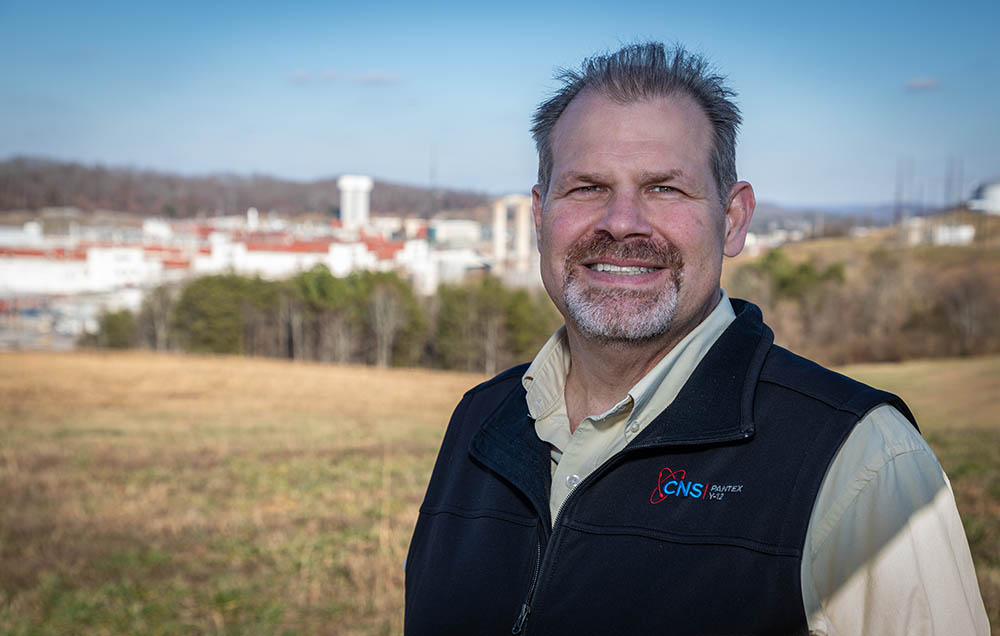
Take 5 minutes to learn about CNS Vice President of Project Management Mike Robinson. He oversees infrastructure modernization work at both Pantex and Y-12. All views and opinions are the employee’s own and do not necessarily reflect those of CNS.
Mike Robinson is in the middle of a climb. It’s a metaphorical climb up a very real mountain of infrastructure modernization work at both Pantex and Y-12. The work includes the programmatic plans and master site plans at both sites that identify new equipment and infrastructure to be installed and constructed. Robinson, vice president of Project Management, has purview of all the capital projects and many expense projects at both Pantex and Y-12, excluding the Uranium Processing Facility (UPF). He’s been in his current role for a little over a year now, but as a principal vice president with Bechtel, it’s a continuation of a lifelong career.
“The reality is in 30-plus years with Bechtel, I’ve moved over a dozen times and covered twice that many different projects or positions; it’s going where the work is needed to address challenges,” Robinson noted.
One challenge that surprised Robinson when he joined CNS was the gravity of the work versus the state of the buildings it’s completed in.
“Our people — not just within Project Management, but across CNS — find ways to be successful in facilities that have overreached their life expectancy,” Robinson said. “In FY 2023, under an increasing workload, CNS not only met but exceeded production goals. Integrated teams across CNS especially demonstrate just how important each person is to overall mission success.”
Project work is increasing to meet both current repair needs as well as to prepare the sites for the future. Buildings like the new fire station and Emergency Operations Center at Y-12 are clear examples of how new facilities improve not only the work, but also morale. For anyone who works on projects, the on-the-job daily problem-solving has a tangible outcome.
“The passion for the mission extends across the board, throughout the different departments and up and down the ladder, so to speak,” Robinson said.
How has working for CNS changed or reinforced your thoughts on our mission?
Not changed, but reinforced my thoughts on the mission. I appreciated that before, but I’ve gained additional insights into specifics of what projects we are doing to support future mission needs. I also think we’re at a time when the global environment is evolving, and it fully reinforces why our mission is needed or important. We want to play our part by safely and efficiently implementing our infrastructure modernization.
Are you doing what you envisioned as a young adult? If so, describe how you got here.
Absolutely not. I would describe it as a long strange trip. My dad and my uncle were engineers, and my brain seemed wired to build and disassemble things as a kid. I fed that spark by getting a mechanical engineering degree and then headed into the field working construction. I’ve been involved in projects and operating facilities for my entire career. I’ve always gotten satisfaction from completing projects or solving problems, and I have fond memories of the people on the teams we’ve developed along the way.
What work advice would you offer someone who is new to Pantex or Y-12?
Ask questions. Seek to gain insight from your coworkers about both the work at hand and how it fits into the mission. Getting back to similarities in the sites, it is that general pride in support of the mission that is inspiring. I think that’s unique to these sites because there’s a longer view than just any one project.
Why is it important we hold ourselves accountable in our daily tasks?
We’re all part of some plan; we all have roles and responsibilities to make it work. By holding ourselves accountable, we’re working to support the mission. If you’re not doing what you’re accountable for, you’re letting someone down. As an example, all projects have challenges — there hasn’t been a project in the history of the world that hasn’t had challenges. Good teams identify and attack issues, so being accountable prepares you to address the challenges of that project. It takes the village to complete our projects, and we need to be accountable so we don’t burden each other.
I am Mission Success: Tony J.
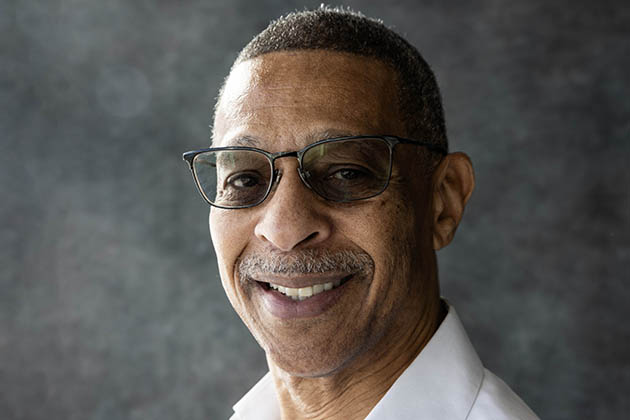
Pantex Senior Labor Relations Manager Tony J. has more than 30 years of labor relations experience and loves making a difference.
During new employee orientation, new Pantexans are introduced to Senior Labor Relations Manager Tony J. with a lighthearted, "and now we have the Academy Award winner, Denzel Washington—also known as Tony J.!” Whether or not his comparison to Denzel is because of his winning smile or his charismatic personality, even Jones’ office sign affectionately identifies him as the Remember the Titans and Training Day actor.
Tony arrived at Pantex in 2022 from Brookhaven National Laboratory in New York, bringing with him more than 30 years of labor relations experience in various industries, the last eight of which were at DOE facilities.
He says labor relations was never an industry he thought he would be a part of.
“Where I came up, there wasn’t a whole lot of envisioning what you would do when you grew up,” he said. “It was only when I got to Teaneck, New Jersey, to live with my aunt and uncle … that my life took a turn. I traveled with my Uncle Dickie, who was a Broadway musician, and my Aunt Barbara. That was when I went from surviving to thriving. I met Marvin Gaye, Diana Ross, The Temptations and more. I met so many positive and thriving African American people and was then able to envision the same future for myself. I went from Kansas to Oz—I felt like I could see in color for the first time. My friends used to tease me and say I was the Fresh Prince of Bel-Air.”
After getting an undergraduate degree in psychology from Fairleigh Dickenson University and a law degree from Case Western Reserve University, Tony landed his first job at United Technologies in Hartford, Connecticut, in labor relations. Though he disliked it at first, Tony then grew to love the work and found that he could make a difference. His main concern is that “we interact with our employees with respect and dignity.”
Tony describes himself as a lifelong learner. Not only has Tony mastered labor relations but he also now understands Pantexans, too. When he arrived, Tony was surprised to find out the “gravity and span of what we do in keeping America and our allies safe. No one else does what we do, and that is very grounding. I am constantly reminding our employees in daily interactions, whether bargaining or non-bargaining, how important our mission is, and that we cannot do it without them.”
From Diana Ross to DOE, Tony has seen a lot. But when it comes to Pantex, he believes we have a special spark when it comes to employee relations.
“I have heard many employers state that their most important assets are their employees. The thing that stands out to me about Pantex is that I see it every day in the way that we care about the safety and well-being of our employees.”
Why are you mission success?
Because I deal with the very people that put their hands on our weapons every day. No matter what our interactions are, I try to remind them how important they are, how important our mission is, and how important they are to our mission. We all have different jobs, and no one is more important than another. We are all Pantexans working toward one goal, which is to be the best we can be in support of our mission.
Who in your life has inspired you most and why?
My Uncle Dickie. He was born in Birmingham, Alabama, at a time when choices of professions for African Americans were little to none, yet he made it to Broadway in New York City! He moved to New York and made something of himself as a Broadway and studio musician. He showed me how to be a man, how to be kind and loving. If it wasn’t for him taking me in, there is a chance I wouldn’t be here. He showed me how to truly love someone who wasn’t your blood and how to be a kind, loving, and responsible individual. I truly believe everything I have achieved is in great part attributable to him.
What characteristics define a good leader to you?
By definition, a leader is someone others are willing to follow. Therefore, some characteristics of a good leader to me are being empathetic, trustworthy, credible, inspirational, and goal-centered. I believe we have leaders like this all over at Pantex –some with leadership titles and many without.
Everyone offers value to our tasks. Why must we be open to learning and hearing from others?
Nelson Mandela once said, “it is always impossible until it is done.” To me, that means some ideas sound improbable to impossible. However, I believe as Mandela did. It was once impossible for African Americans to be free, but we are. It was once impossible for man to land on the moon, but we did. It was only because we listened to ideas of others and dared to hope and dream the impossible. Robert Kennedy once said, “Some see things as they are, and say ’why?’ I see things as they could be and say ’why not?’” As Pantexans, we are challenged every day to be safer and better. It is only by listening to new, improbable and challenging ideas and ways of doing things that we endeavor to do the ‘impossible’ every day.