



News
Pantex named Employer of the Year by WTAMU’s Engler College of Business

AMARILLO, Texas – As one of the largest employers in the Panhandle of Texas, working at Pantex is the end-goal for many local university students. In recognition of its draw and excellence, Pantex was recently named Employer of the Year for West Texas A&M University’s Paul and Virginia Engler College of Business. This award recognizes employers in the community for exceptional contributions to the Engler College of Business, and commitment to promoting workplace excellence.
“Pantex has strongly committed to our students by offering high-quality internships and employment opportunities,” said Dr. Amjad Abdullat, Dean of the WTAMU Engler College of Business. “They have provided our students with valuable work experience and helped prepare them for successful careers in the business world.”
Pantex has a history of collaboration with West Texas A&M University and its students. Over the last two years, Pantex leadership and the College implemented a strategic talent pipeline to employ WTAMU students. The collaborative team led information sessions, and from these efforts alone, Pantex was able to hire 15 Buffs including six project controls representatives and five project controls summer interns, two of which have converted to Pantex employees and another two slated to start their internships this coming summer 2023.
“The support from internships and permanent positions has helped us create exciting opportunities for Buffs while filling critical talent needs in our organizations,” said Colby Yeary, Pantex Site Manager. “This partnership helps us ensure we have vibrant talent to support our national security work now and into the future.”
Pantex employs more than 4,300 full-time personnel to fulfill its vital mission to ensure the effectiveness of the U.S. nuclear stockpile in support of the Nation’s nuclear deterrent. This unique mission requires unique skills, so Pantex reached out to their partners at WTAMU to create the mutually beneficial programs that serve both students and Pantex’s mission.
“Pantex has been a dedicated partner to our College, providing exceptional support to our programs and promoting our values and mission,” said Abdullat. “Their commitment to diversity, equity, and inclusion in the workplace has also been exemplary.”
“We’re grateful for this recognition from WTAMU, and we are excited to continue creating opportunities for students and to leverage their talents toward our important mission of nuclear deterrence in service of our nation and allies around the world,” said Yeary.
For more information about Pantex’s jobs and internship opportunities, see pantex.energy.gov/careers.
Consolidated Nuclear Security, LLC operates the Pantex Plant, located in Amarillo, Texas, and the Y-12 National Security Complex, located in Oak Ridge, Tennessee, under a single contract for the U.S. National Nuclear Security Administration. CNS member companies include Bechtel National, Inc.; Leidos, Inc.; ATK Launch Systems, Inc.; and SOC LLC. Pantex and Y-12 are key facilities in the U.S. Nuclear Security Enterprise, and CNS performs its work with a focus on performance excellence and the imperatives of safety, security, zero defects and delivery as promised.
For more information on each site, visit www.pantex.energy.gov or www.y12.doe.gov. Follow Pantex on Facebook, X or LinkedIn. Follow Y-12 on Facebook, X, and LinkedIn.
CONTACT
Steve Myers
Communications
Office (806) 573.0490
Cell (806) 236.2826
Stephen.Myers@pantex.doe.gov
CNS awards STEM grants to Texas schools
Amarillo, Texas. —The sky is the limit for science, technology, engineering, and math educational efforts for five schools in the Texas Panhandle. Through $1,000 grants provided by Consolidated Nuclear Security (CNS), the managing and operating contractor for Pantex, five area schools will soon be advancing STEM education with projects ranging from robotics to drones.
These grants fund STEM activities in the classroom and represent one of the many ways Pantex is investing in development of the future workforce. This year’s grant recipients and projects are as follows:
- Boys Ranch High School, Becky Gaffney (Teacher 9th-12th grade). Students will use four programmable drone sets to learn piloting, foundations of coding, and how to use the engineering design process to solve real-world challenges. Students will experience the role that technology and automation play in our world, and market themselves and the application of their skills to various career fields.
- Clarendon High, Timothy Leeper (Teacher 9th-12th grade). These students will also study drones and learn about education opportunities and occupations related to operating and designing unmanned aerial vehicles (UAVs). Students will be also be qualified to take the Federal Aviation Administration’s (FAA) Unmanned Aircraft Systems Drone Knowledge Test, receiving a 2-year license for UAV operations in a variety of fields.
- Fort Elliott CISD, Tori Coulter (Elementary Technology). This small, rural school has already implemented robotics and engineering into the curriculum, and will use its grant to increase these programs and advance STEM opportunities for upper elementary students. This grant will help purchase coding design skill cards, coding robot sets, and STEM Bins.
- Pampa High School, Vanessa Ontiveros (Teacher, 9th-12th grade). This program will instruct students how a computer works and how to repair a Personal Computer. It can be downloaded onto classroom computers, supporting an unlimited number of users. The application will instruct Principles of IT, Computer Maintenance, and Practicum of IT classes, using gamification to apply gaming strategies, improve learning, and create an engaging environment.
- Rogers Elementary, AISD, Alma Torrez (STEM Teacher, K-5th grade). The purpose of the project is to offer students more opportunities in critical thinking, problem solving, and creativity. They will be tasked to collaborate with their peers, improve social skills, and work together through engineering and coding challenges. Students will gain knowledge of the four pillars of computation thinking: decomposition, pattern recognition, abstraction, and algorithms.
The goal of the grants is to foster advancement of STEM activities in the classroom and to help develop Pantex’s future workforce. This is the second year that Pantex has offered STEM classroom grants to Amarillo and the top 26 counties of the Texas Panhandle.
Dozens of submissions were received and evaluated by a panel of knowledgeable employees at Pantex. The group carefully reviewed all the applications and narrowed the impressive list down in order to recommend the five winners.
“To help increase the number of young men and women entering STEM fields, Pantex has offered region-wide grants for the last couple years,” said Darla Fish, Pantex education outreach specialist. “Often times, these successful students become part of the Pantex workforce as we are continually searching for talented professionals to join us in our ongoing mission of securing the nation.”
Consolidated Nuclear Security, LLC operates the Pantex Plant, located in Amarillo, Texas, and the Y-12 National Security Complex, located in Oak Ridge, Tennessee, under a single contract for the U.S. National Nuclear Security Administration. CNS member companies include Bechtel National, Inc.; Leidos, Inc.; ATK Launch Systems, Inc.; and SOC LLC. Pantex and Y-12 are key facilities in the U.S. Nuclear Security Enterprise, and CNS performs its work with a focus on performance excellence and the imperatives of safety, security, zero defects and delivery as promised.
For more information on each site, visit www.pantex.energy.gov or www.y12.doe.gov. Follow Pantex on Facebook, Twitter or LinkedIn. Follow Y-12 on Facebook, Twitter, and LinkedIn.
CONTACT
Steve Myers
Communications
Office (806) 573.0490
Cell (806) 236.2826
Stephen.Myers@pantex.doe.gov
I am mission success: Forrest P.

Take 5 minutes and learn about CNS's Forrest P., a Pantex production technician. All views and opinions are the employee’s own and do not necessarily reflect those of CNS.
“It doesn’t look right.”
When a Pantex production technician utters words like that, people pay attention. The cost of even a single mistake is simply too high.
“We received some shim stock, and it didn’t look right,” explained Forrest P., who has been a production technician at Pantex for most of his 12-year career. “It was the wrong thickness from what we were normally using.”
Forrest obtained more stock to verify there was, in fact, an issue. When the second batch came in with the same discrepancy between the labeled specification and what he knew from previous experience, Forrest and his coworkers reached out to 35 Account to begin an investigation and, ultimately, correct the problem.
Someone without Forrest’s years of experience might be tempted to dismiss the CNS directive to maintain a questioning attitude, yet such a mindset is truly foundational to the work at Pantex. After more than a decade as a Pantexan, it has become a way of life for Forrest, a small facet of the work that fills him with patriotic pride.
“I’ve always had high patriotism,” he said. “I see the weapons when they’re completed, and I get a satisfaction in doing my job, providing quality.”
Building America’s nuclear deterrent at Pantex was unimaginable for someone who once envisioned himself pursuing a career in real estate and development, but relatives working at the plant presented a positive image in Forrest’s mind.
He was eager to land a Pantex job and get to work. Forrest said success at Pantex hinges on finding the right motivation and bringing diligence to each day’s activities.
“It’s not something for everybody,” he acknowledged. “You’re stuck in a building, and it’s dark. But you’ve got to enjoy what you’re doing.”
And Forrest, who dreams of one day retiring to enjoy life in a log cabin in the mountains, does indeed relish his work.
“I’ve always enjoyed a challenge,” he said, “and this has been a challenge I enjoy.”
Why are you mission success?
What I do is for the protection of the United States — and my family.
What CNS principle drives you to be successful, and why?
Just personal satisfaction, I’m kind of a perfectionist.
What’s your favorite outside of work activity, and why?
I build and restore classic cars. I have a 1936 coupe and a ’55 Chevrolet Nomad.
What is your favorite aspect about your work environment? How does that part of your job or work environment let you know the mission is being met?
Success: When we’re finished and we sew up the unit and everything’s done properly, there’s just a satisfaction.
As an employee, what do you want to be remembered for?
I took pride in what I did and did everything properly.
NNSA Release: W80-4 Life Extension Program Enters Phase 6.4, Production Engineering
In March 2023, the Department of Energy’s National Nuclear Security Administration’s Deputy Administrator for Defense Programs approved the W80-4 Life Extension Program (LEP) to transition into Phase 6.4, Production Engineering. The W80-4 LEP achieved Phase 6.4 entry following successful execution of the Preliminary Design Review and Acceptance Group Review and the System Baseline Design Review, and passing through the System Pre-Production Engineering Gate.
NNSA has shown that the warhead baseline design complies with Department of Defense requirements and demonstrates survival and performance in expected environments. The First Production Unit of the W80-4 is scheduled for September 2027, supporting the U.S. Air Force’s scheduled Long-Range Stand-Off (LRSO) cruise missile initial and final operational capability dates.
Read the full press release on the NNSA website.
CNS sites offer gateways to exciting careers
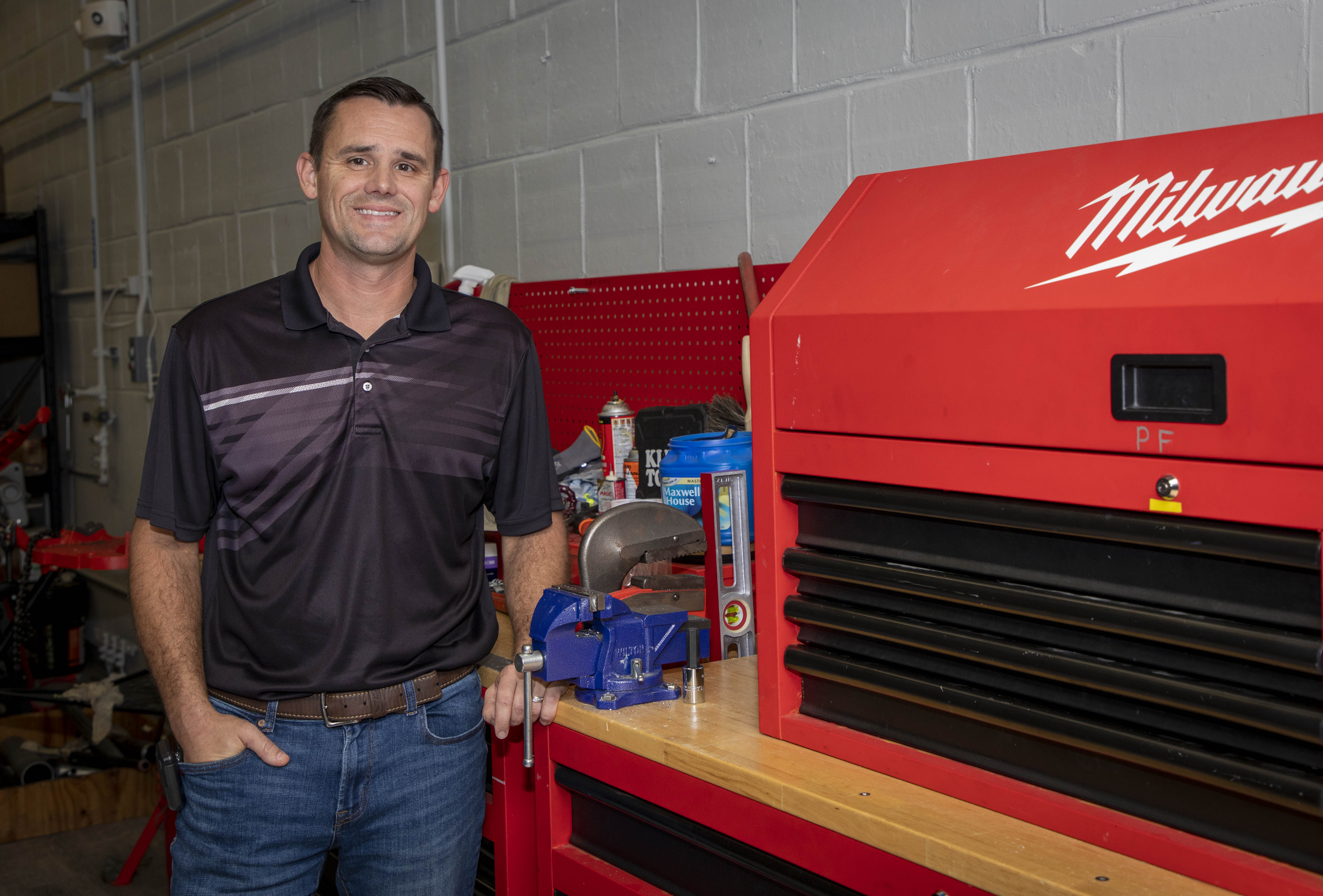
Apprenticeships are a gateway to successful Pantex careers. In one program, Pantex works with the AmTech Career Academy to train high school students who can then apply what they will learn at Amarillo College before finally joining the Pantex workforce.
The partnership positions students as future production technicians, according to Zuleyma C., a Pantex recruiter.
“If a student has that program credential, they qualify to test here,” she explained. “From there, it’s really where their talent takes them.”
The partnership is part of a long-term strategy that recognizes the potential promise for both CNS, which gains a better-prepared future workforce, and the students themselves.
“Recruiting and training the next generation for skilled trades positions is beneficial for both the individual and the industry,” said Ricky A., senior manager of mission systems and integration at Pantex sister site Y-12. “Training young people for skilled trades jobs is essential for addressing the skills gap that exists in many industries. Many skilled trades jobs require specialized training and knowledge that is not easily transferable. By recruiting and training the next generation, Y-12 can ensure that we have a skilled workforce that can meet our country’s mission needs, both now and in the future.”
Dave T., a high-explosives manufacturing supervisor at Pantex, appreciates the benefit of workers who bring a higher degree of skill from their first day on the job.
“Since technology is changing on a daily basis,” he explained. “We have a responsibility to stay on top of the job market and bring those fine folks into our family.”
Learn more about Pantex careers at pantex.energy.gov/careers/.
Pantex Earth Day efforts – maintaining sustainability

New retention pond at Pantex will hold 8 million gallons of beneficial recycled water to be used for 600 acres of crops at the Texas Tech University Research Farm.
Sustainability is the key word when it comes to CNS's efforts in recycling and being a good environmental steward.
Tracy Griffiths, Pantex’s new Environmental Science senior associate, is working alongside Alicia Barley with Pantex’s Sustainability program to meet some high-level goals on their checklist:
- Reaching carbon pollution-free electric by 2030 (currently, Pantex is at 50%)
- Initiating the fleet electrification program
- Building a net-zero emissions portfolio by 2045, and creating a 50% emissions reduction by 2032
- Developing climate-resilient infrastructure and operations
- Assisting making our Environmental Management System a business management system to support the achievement of DOE sustainability goals
“To me sustainability is so important because it is an additional way to preserve the Earth for future generations, by slowing down the affects that humans are having on the environment and climate,” said Alicia Barley, Environmental Sustainability Specialist and EMS Coordinator. “It’s easy to think that the small things don’t matter like recycling a water bottle, or reusing that water bottle instead of grabbing a new one but these small acts really do add up especially at a site as big as Pantex.”
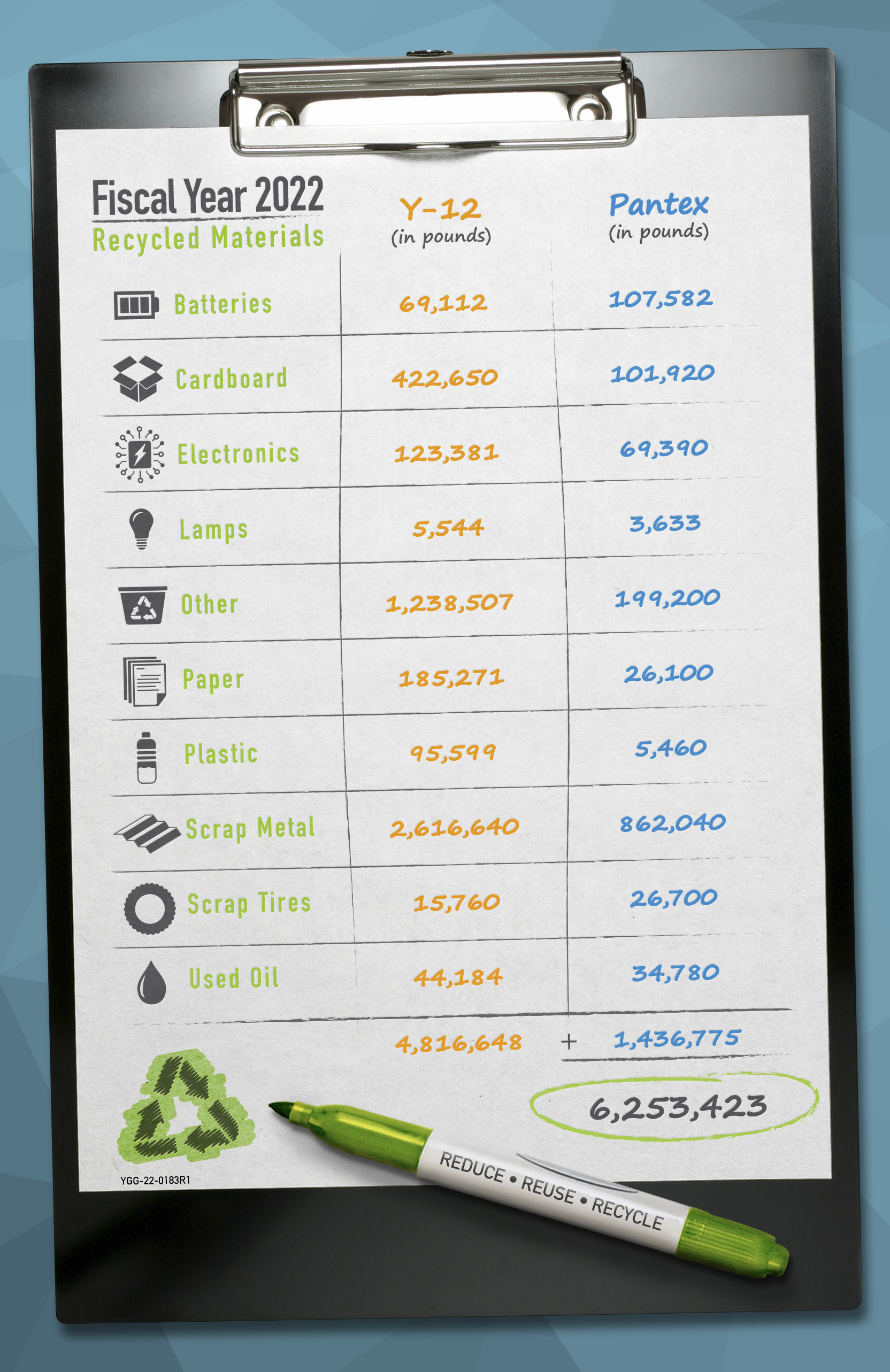
Pantex recycled 1,436,775 pounds of materials in 2022.
When it comes to Pantex’s recycling efforts, one of the biggest projects focuses on water, actively remediating its underground water. Combined with treated wastewater, water will be sent through a pipeline to the adjacent holding pond, currently under construction.
When completed, the new retention pond will hold 8 million gallons, which equals about 12 Olympic-sized swimming pools. Using a Pivot Irrigation System, about 600 acres of crops will receive the treated wastewater for beneficial reuse on land located east of FM2373 that is owned by DOE. Since the start of remedial efforts at Pantex over the last few decades, more than 1.7 billion gallons of water have been beneficially reused … enough to fill the Dallas Cowboys AT&T Stadium twice.
Since the water reclamation system contains no fish, the indigenous tiger salamander takes advantage of a predator-free environment, laying eggs in the recycled water system. The eggs hatch into larvae known as “water dogs,” and over the next few months, they sprout hind legs, lose their gills, and are able to leave the water. Some, however, become “neotenic”—sexually maturing, but maintaining their larval form. They become enormous, develop teeth, and become cannibalistic, eating salamander larvae, all because of Pantex’s water reclamation efforts and maintaining a delicate balance in the environment.

Adult “neotenic” salamander found at Pantex.

Adult tiger salamander found at Pantex.
“It’s an exciting time to be in Sustainability because we are right at the cusp of big things in renewable and clean energy, electric vehicles and greenhouse gas reduction. As a DOE site we get the privilege to be leaders in the sustainability realm and start moving toward a cleaner future,” added Barley.
The layers of the Pantex Sustainability program cascade, linking to just about every program in some way; millions of pounds of refuse that never makes it to a landfill, driving emissions-free vehicles, water recycling that benefits not only crops, but also indigenous wildlife. All due to reaching and sustaining--- sustainability.
NNSA Release: Pantex Data Center receives power upgrade to improve resilience
NNSA completed an electrical and mechanical upgrade to one of its data centers at the Pantex Plant in Amarillo, Texas to improve its resilience. Future electrical preventive maintenance activities can now be performed without having to depend on generator power for multiple days.
Read the full press release on the NNSA website.
Why we buy sustainable products
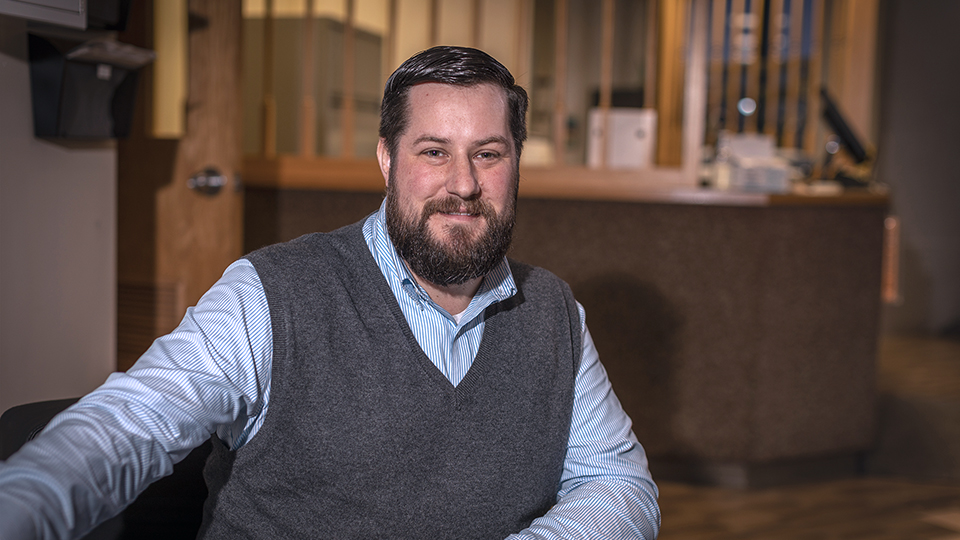
Brad Russell, the Sustainable Acquisition Program manager, wants employees to know buying green is more than a saying; it is a way of life at Pantex and Y-12.
As a government contractor, Consolidated Nuclear Security is required to abide by government regulations. One requirement is purchasing sustainable products, which provides opportunities for CNS to make positive choices for the environment.
CNS's newest Sustainable Acquisition Program manager, Brad Russell, is one of those experts guiding those purchases. “It is great when CNS and the sites are recognized for the outstanding work they do in achieving sustainability,” Russell said.
According to Russell, when CNS purchases sustainable products, “we’re not only making better choices, but we’re showing CNS's commitment to our environment. Purchasing sustainable products helps to establish a healthier environment for employees because we’re eliminating products that off gas, like cleaning products, flooring, and paint; reducing the amount of hazardous material on site; and reducing atmospheric carbon dioxide that causes climate change.”
It all adds up because the federal government is the single largest consumer in the world. “Federal sustainable purchasing is a big business,” Russell said. “Products range from remanufactured toner cartridges, post-consumer 100% recycled content paper, green electronics, bio-based cleaning products, compostable or biodegradable food containers, and non-toxic construction material.”
GreenBuy Award Winners
Congratulations to Pantex and Y-12 on each receiving a GreenBuy Award for purchasing achievement in FY 2022.
Pantex received the silver level for purchasing six priority products in four categories.
Y-12 received the gold level for purchasing 10 priority products in six categories.
This fiscal year, Russell and his program have set several goals, including increased purchasing of bio-based and recycled content. “In FY23, we want to introduce at least ten new sustainable products, issue a user-friendly quick reference guide that highlights sustainable products readily available, and replace some flooring [at Y-12] with sustainable flooring.”
When looking to buy products, at work or at home, Russell encourages checking out the product description. “Most items have a description that tells you if it is bio-based or made with recycled content,” he said.
The team tracks purchases of sustainable products at Y-12. “We like to know if you liked it, did not like it, and why. This information helps us in recommending products for future users as well as providing feedback to our vendors.”
The data collected on purchases is also used to track how well CNS and its sites do in meeting those government expectations and to show how the program has grown. Both Pantex and Y-12 have received several awards for purchasing sustainable products, with the U.S. Department of Energy GreenBuy Awards being the most recent example. This program recognizes DOE sites for excelling in their “green purchasing” and going above compliance requirements.
“Being recognized by DOE shows they recognize CNS goes beyond the requirements. The Sustainable Acquisition Program is here to make a difference and figure out what purchases can change and be more sustainable,” Russell said. “Submitting award nominations and being recognized for our efforts is really rewarding.”
I am mission success: Tony Biggs

Meet Tony Biggs, Pantex Environmental Projects manager, who has more than 30 years of service and has seen a variety of successes during his time as a Pantexan.
Take 5 minutes and learn about CNS’s Tony Biggs, Pantex Environmental Projects manager. All views and opinions are the employee’s own and do not necessarily reflect those of CNS.
It’s not that uncommon to find Pantex coworkers who have multiple decades of service along with low badge numbers. In case you don’t know him, please meet Tony Biggs with 34 years of service, badge in the 9000 range, and the current title of manager of environmental projects — not too shabby for a one‑time unemployed scientist.
“I was an out‑of‑work petroleum geologist when offered the job at Pantex,” recalled Biggs. “However, instead of chasing subsurface oil deposits, I ended up chasing contamination deposits in the soils and groundwater.”
For years as department manager, Biggs has led environmental projects, including finding innovative ways to remediate environmental concerns.
“Our staff oversees environmental construction projects, maintains and operates remediation systems, samples environmental media, and oversees contract laboratories analyzing our samples. All of this work is to address the environmental contamination resulting from legacy wastes of the Cold War era.”
Two of Biggs’ most memorable projects focused on soil cleanup both on‑site and to the southeast of Pantex.
“Back in the mid‑1990s, I managed a project to identify and clean up soil contamination in ditches by collecting the samples with a drilling rig, analyzing the samples within a couple of days using a mobile on‑site lab, determining what soil needed to be removed, and excavating and shipping the contaminated soil for disposal. It was quite a show. The prime subcontractor had talked to a couple of transportation companies, and there was a miscommunication. Both transportation companies thought they had the job and sent dump trucks. There must have been more than 50 parked down 15th Street waiting to go to work. The trucks were lined up from the traffic light and around the bend toward Building 12‑103. That was quite a sight,” recalled Biggs.
The more recent project centered on the cleanup technology known as bioremediation, removing legacy contaminants that had moved off&#site to the southeast, transported within the flow of the groundwater.
“We inject locally sourced molasses down 300 feet into the perched groundwater to feed naturally occurring bacteria. As the contaminated groundwater moves through the wall of bacteria, the contaminants are broken down until the groundwater is clean. Back in the mid‑2000s when Pantex was installing the bioremediation wells, this was cutting‑edge technology, and Pantex was on forefront,” he said. “I believe Pantex has the largest bioremediation system of all the sites within the
But as they say, “all good things,” and after deciding to push back retirement another year, 2023 will be Biggs’s last as a Pantexan.
“My parting advice? Be sure to ‘stop and smell the roses,’” Biggs recommends. “We can get so tied up in meeting schedules, accomplishing work scope, and completing our deliverables that we can fail to see what we have accomplished. We’ve done some cool stuff!”
Why are you mission success? “Managing an incredible group of people that performs the cleanup requirements of Pantex’s state and federal permits and allows the operations at the Plant to continue.”
Describe how your career compares or contrasts to your expectations. “Since college, I knew I didn’t want to be stuck behind a desk 24/7. Early in my career, most of my work was outdoors; now most is indoors, so it’s been a nice mix. I couldn’t have asked for a better job!”
What is the greatest strength you bring to your organization? “I had a supervisor once say, ‘My job is to remove the roadblocks so you can perform your job.’ I think I’m doing that for my staff. They are really talented and get the job done.”
As an employee, how do you want to be remembered? “Being fair to my coworkers and staff; my humor — I enjoy injecting humor into meetings and discussions; and the work my group has accomplished cleaning up the environment.”
What would your coworkers be most surprised to learn about you as you plan for retirement? In the past, I enjoyed making my own beer, and when I retire I plan to do more of that. I also used to make my own biodiesel and drive an old Mercedes to work. For retirement, I’ve got to get a camper so my wife and I can go to the National Parks.
JTAs: Testbeds provide vital data to NNSA engineers, military

JTAs: Testbeds provide vital data to NNSA engineers, military.
In September 1992, President George H.W. Bush ended explosive testing of the United States’ nuclear arsenal less than 2 weeks after the so‑called “Divider” detonation at the Nevada Test Site. Though few at the time expected it would be the nation’s last live‑fire nuclear test, the Clinton Administration decision 4 years later to sign the Comprehensive Nuclear Test Ban Treaty marked an undeniable turning point in the nuclear weapons era.
Clearly, the end of live testing did not end the U.S. nuclear weapons enterprise. Today’s weapons are significantly more advanced than those of the Cold War. However, without actual detonations, how is Uncle Sam to keep his nuclear spear honed for a battle he hopes never to fight?
One key answer to that question lies in three simple words: Joint Test Assembly.
“JTAs are nuclear explosive look‑alikes,” Production Manager Curtis Chamberlain said.
These mock‑ups look and respond like a completed weapon, but lack a physics package and other components. What they do have, Chamberlain explained, is the ability to record and/or transmit telemetry that feeds valuable data to National Nuclear Security Administration scientists and engineers. Without the risk to human life or the environment associated with a nuclear blast, JTA flights augment virtual testing which drives the modernization and lifetime‑extension programs at Pantex and NNSA labs elsewhere.
Following assembly by teams of adeptly trained Pantex technicians, each resulting “test weapon” records “how it is doing in flight and that everything is happening according to plan — just how it would in the real world,” Chamberlain said.
After some JTA flights, the assembly may be returned to Pantex for disassembly and recovery of additional performance data.
“The data collected during JTA assembly is strictly focused on surveillance,” said J.D. Harris, a former production manager. “It helps the design agencies with annual assessments to … maintain certification on the weapon program.”
It is a complex, ongoing process that balances the need for an understanding of how devices age, the effectiveness of new modifications, and the given quantity in the nation’s inventory. While JTA testbeds may not produce a proverbial big boom, the impact of their assembly, disassembly, and analysis are just as far reaching.
“There are quality driven tests as part of the assembly process,” Harris confirmed.
One system assembled at Pantex, the B61 12, is the twelfth iteration of a munition that entered service at the height of the Cold War as an unguided air‑dropped nuclear bomb. Another system, the W88, entered the stockpile in 1988 as a submarine‑launched system. Regardless of which system is involved, JTAs are a normal part of a weapon’s life cycle.
Chamberlain and Harris explained that the NNSA lab responsible for a given weapon system — B61 12s, W88 Alt 370s, or any number of others — determines the annual number of JTA flights to conduct. Lab staff then coordinate with the expert technicians at Pantex, ensuring the necessary components are included in each assembly, depending on what functionality each flight is designed to test.
Building and dismantling a JTA requires its own qualification program. For the men and women of these programs, the payoff is knowing that their work allows NNSA officials to assure the president of a secure nation. Occasionally, Chamberlain noted, there might be an additional bonus.
“The reward is that I am sometimes able to send [my team to observe] flights,” he said. “They get to see their product in use.”
Today, thanks to the teamwork and skills of Pantexans and their NNSA colleagues, thoroughly updated and modernized B61‑12 and W88 Alt 370 programs remain vital resources in the nation’s deterrent force.
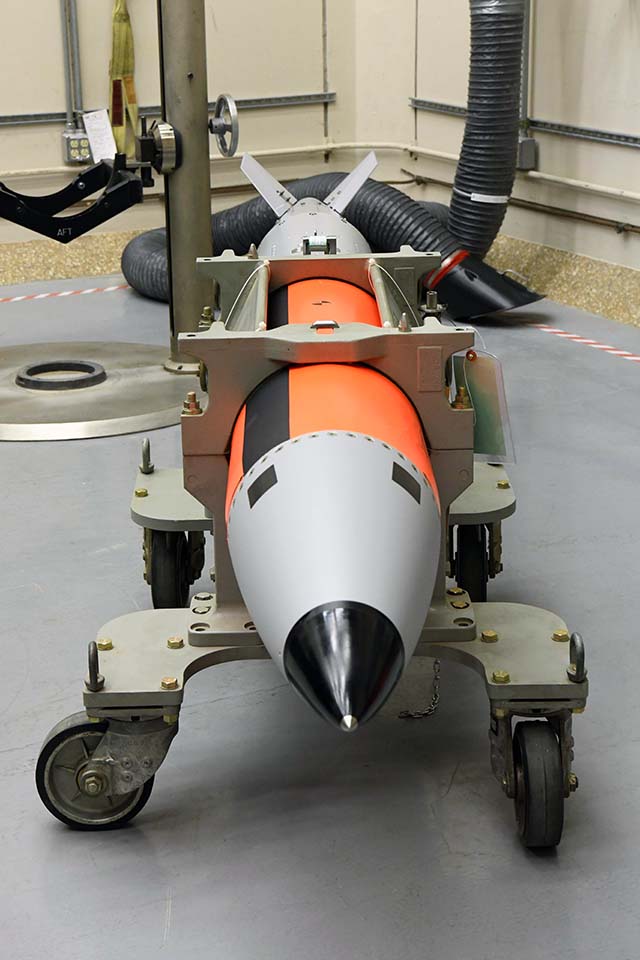
B61 Mod 12 Joint Test Assembly