



News
People of Pantex: Geoff Cormier
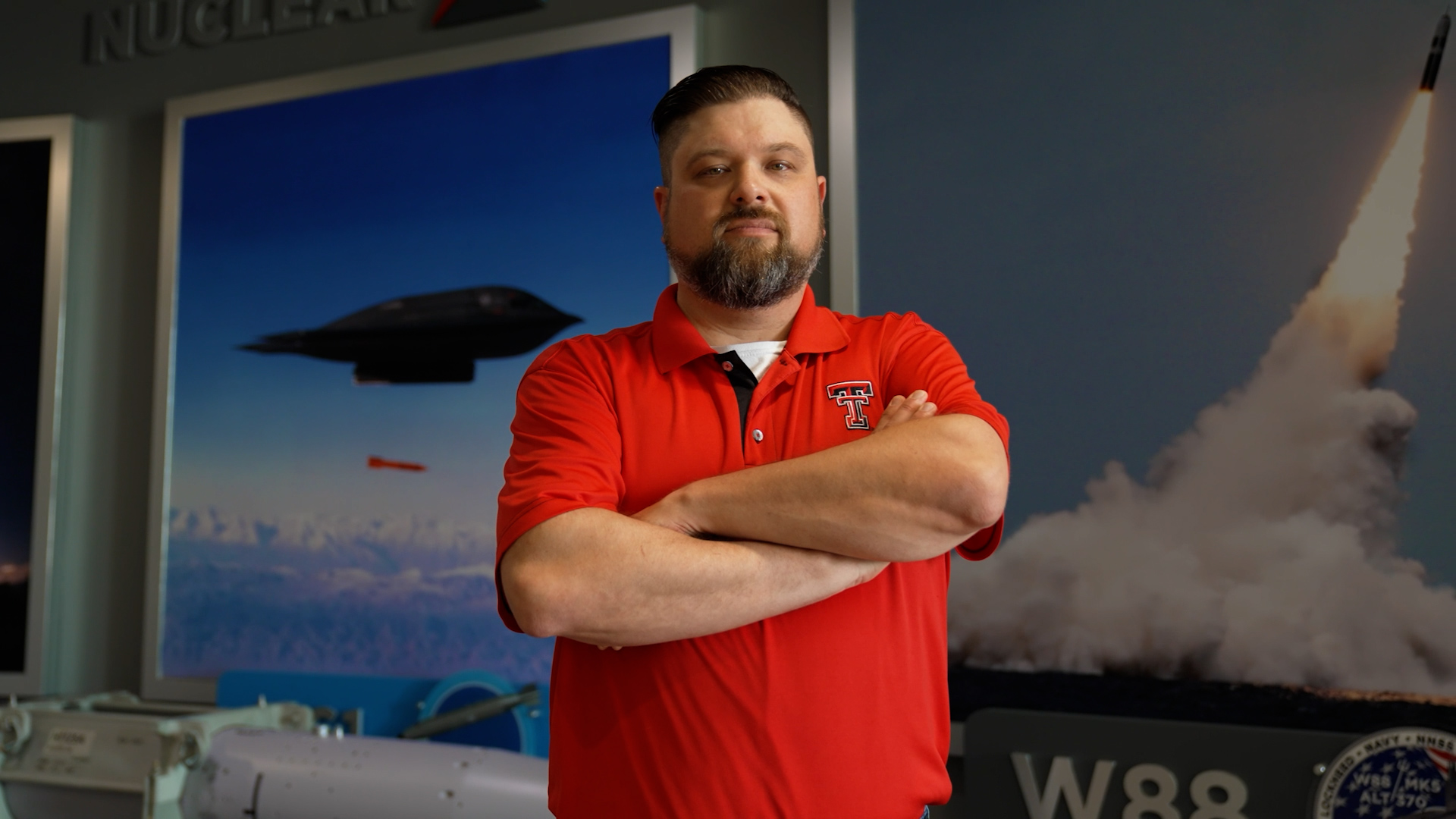
Lights erase the audience from sight. A left hand slides across the neck, fingers pinning string to fretboard. Pick between fingers and thumb, as the right hand gives the instrument voice. Geoff Cormier moves to the mic, wiping sweat from his forehead. His gruff but smooth vocals charge in on the heavy riffs crossing the bridge. The bass punches harder and the rhythm drives deeper. Snare, tom, and cymbals cascade into beautiful chaos. Cormier belts the last lyrics as the band erupts into a face-melting finale.
There wasn’t a profound moment that swayed Cormier to pick up a Fender guitar. Passion for musicianship coats his DNA. On his father’s side, almost all 10 of Cormier’s aunts and uncles play the guitar and sing. His dad was in a band in the 70s. At an early age, Cormier received his first real six string from his grandfather and joined in on family jam sessions, reinforcing his blood-tie to music and sparking an unquenchable fire for performing.
“That camaraderie you get when you’re playing with other musicians is indescribable,” Cormier said. “When I was younger, I would play with my family, then later with my friends in middle school. In high school we started a band called Dead Leg. I’ve been in bands ever since.”
After high school, a deeply patriotic Cormier enlisted in the military. The Boston native packed his bags and headed out to boot camp. He was proud to serve his country, but didn’t want to give up his love for music and performing — so he didn’t. Cormier was an airman by day, and a front man by night.
“When I was in the Air Force, I was in a heavy metal band called Winterlock,” Cormier said. “We put out two extended play recordings and were nominated for a music award. I was in the band almost the entire time I was stationed in Albuquerque. I had a lot of fun and made a lot of really good friends.”
Cormier fulfilled his commitment and left the military, bound for Pantex. His time in New Mexico helped acclimate him to the region, yet upon arriving to the Texas Panhandle, he realized he was alone and without a band. Fortunately, Pantex has a strong community of welcoming people. As for the band? Cormier found fellow rockers in Amarillo through the universal language of music.
“Our first band name was Decades Apart,” Cormier said. “All three of us members were almost 10 years apart from each other, so we thought Decades Apart was pretty fun. Then our original drummer left and the next guy we brought on wasn’t from Texas. None of us were, so we came up with the Texas Transplants. We all transplanted from somewhere else.”
Cormier proudly serves as a Program Manager for Performance Improvement and loves that he can continue serving his country in a different way. His work life and hobby have always had their differences, but there are similarities as well.
“You have to be creative to be able to play and write music,” Cormier said. “Having that creativity really helps me with that aspect of my job, of being able to think outside the box to help people.”
Cormier loves his job and doesn’t plan to leave Pantex anytime soon. His career journey to Bomb City has been a fairly straight road. His musical journey, however, has been fast and furious with a few lane changes, but on that rock n’ roll highway, he has crossed paths with some great musicians.
“Back in high school, I met Dave Matthews from the Dave Matthews Band,” Cormier said. “I was working concessions and cooked him a hot dog before they played at Foxboro Stadium. He even thanked me for it on stage that night and autographed a band photo that reads ‘To Geoff, thanks for the hot dogs!’ I also got to hang out with the band Sevendust after one of their shows because my friend in the Air Force was friends with their drummer. And I met Jerry Cantrell, the guitarist for Alice in Chains, while waiting for a cab after their show. He hung out with us until the car got there and gave me a guitar pick.”
With influence from Pink Floyd –– Cormier’s favorite band –– as well as Green Day and The Beatles, Cormier brings a unique musical perspective and sound to the Texas Transplants. The band covers hard rock songs in their genre, but their niche is playing the hits of Prince, Cash, Dylan, Skynyrd, and others but with a killer hard rock or punk twist, like Brantley Gilbert’s “Bottoms Up” performed as a power ballad. The band also plays original material, offering a unique, homegrown taste that they pepper into their well-blended set list. In every song they play –– cover or original –– they work hard off stage to make sure their performances on stage are rockin’.
“We practice once a week and play at least once a month in the Amarillo area,” Cormier said. “As for set lists, it really depends on what I can do vocally. Singing is not an easy thing, especially hard rock and punk. You sing quietly and then you sing loud and you scream sometimes so I have to think about what songs I can sing so that my voice doesn’t go out. Also, we want to keep the ebb and flow of the concert interesting. If you’re just playing a bunch of fast songs in a row, everybody’s going to get bored, or if you play only slow songs, everybody’s going to leave.”
Like a carefully selected mix tape, a Texas Transplant show never drags or disappoints. Practice, practice, and more practice keep the band primed, coordinated, and electrifying. Currently, they are cutting an album, but until then, live gigs are the only way to hear them. Regardless of venue or medium, Texas Transplants, especially Cormier, plan to rock on.
“I love it,” Cormier said without hesitation. “If I could play every night, I would. It’s a passion. You can book us for a gig, but we also do a lot of charity shows to help give back to the community. A lot of times it’s a family who’s suffered a tragedy or accident and accumulated a lot of medical bills. We love being able to put on shows for them and give all the proceeds from that to help people in need. I love that about us, and I love being in the band. It’s an addiction and I can’t get enough of it.”
Watch his People of Pantex video here.
Pages of Pantex History
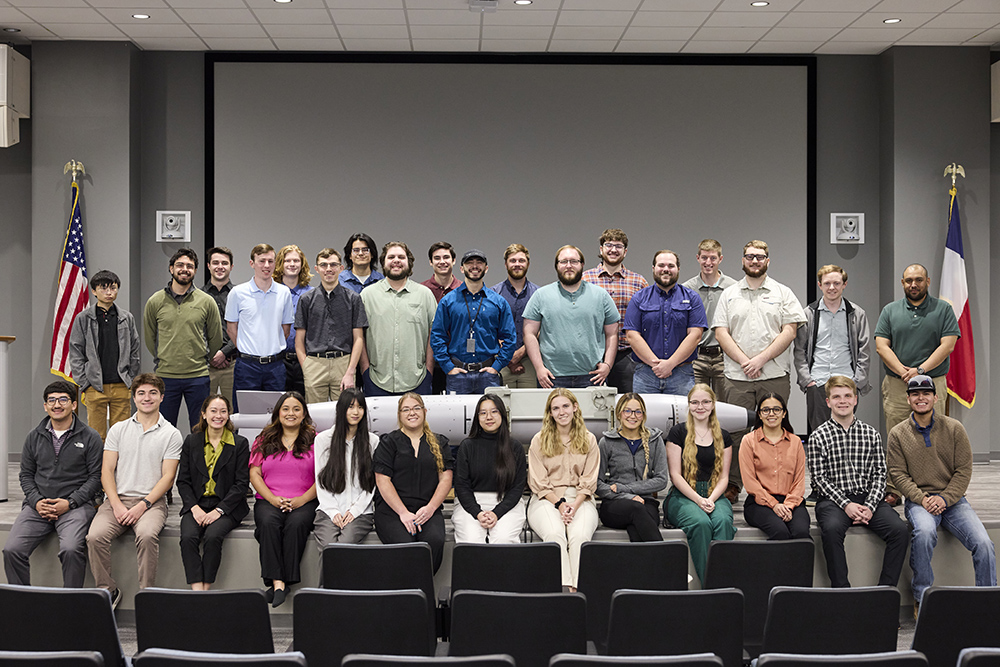
For many years, Pantex has implemented a summer internship program allowing college students and recent college graduates to gain valuable experience. The current internship program has deep roots, connecting all interns to the site’s past and future.
“We’ve had ‘summer employees’ for a long time, but the program didn’t get formally established as a ‘pipeline’ to a permanent job until about 1959,” said Katie Paul, Pantex historian.
In 1974, a new cooperative study program was established that allowed students to work at Pantex during the semester and gain on-the-job experience as well as credit hours. There is still at least one employee on-site today who was a part of the co-op program. Eventually, a revitalized pre-professional training program emerged in the summer of 1991 — the first formal internship program. The current summer internship program is a continuation of that training program. The summer 2025 interns are a class of 35 students from across the United States. Each student was handpicked from hundreds of applicants, and for 10 weeks these students have had the opportunity to be Pantexans.
An internship can be a transformative experience that provides interns with opportunities to learn more about future career paths and make lifelong connections. The first connection interns make at Pantex is with Human Resources Lead Intern Recruiter Sabrina Perez. She and Steve Sellars in Educational Partnerships are with the interns for the entirety of the program, acting as guides and monitoring the progress of their work.
“The work they do really matters and is literally carried on for years to come. It is not just something they check off a to do list … what they are doing literally impacts employees for years to come. It will impact the mission and how we actually preform it. It is a pretty awesome thing,” said Perez.
To document the interns and their work, and to contribute to the history of the intern program, Human Resources and Communications partnered to pilot an internship yearbook project. The project is being made for interns, by interns. Graphic Design Intern Catherine Vo and Public Affairs Intern Jenna Lopez created the first edition this summer.
The yearbook is themed “Mission Impossible” and contains photos from a variety of different trainings and events that interns attended, as well as photos of interns hard at work. Throughout the yearbook, there are quotes from eight different interns and an interview with Perez and Sellars. The yearbook encompasses as many experiences as possible to make sure everyone feels their time at Pantex is reflected in the pages of Pantex history.
The yearbook is filled with details that document the memories made in this internship and the contributions made to the Pantex mission. It is the hope of everyone who set this project in motion that the yearbook becomes a tradition, and that every future intern will be able to take their memories with them in a yearbook of their own. The summer employees of 1959 were the beginning of a proud tradition that we hope to continue and grow with every new class of interns.
To view the yearbook, click here.
Improving human performance one mistake at a time
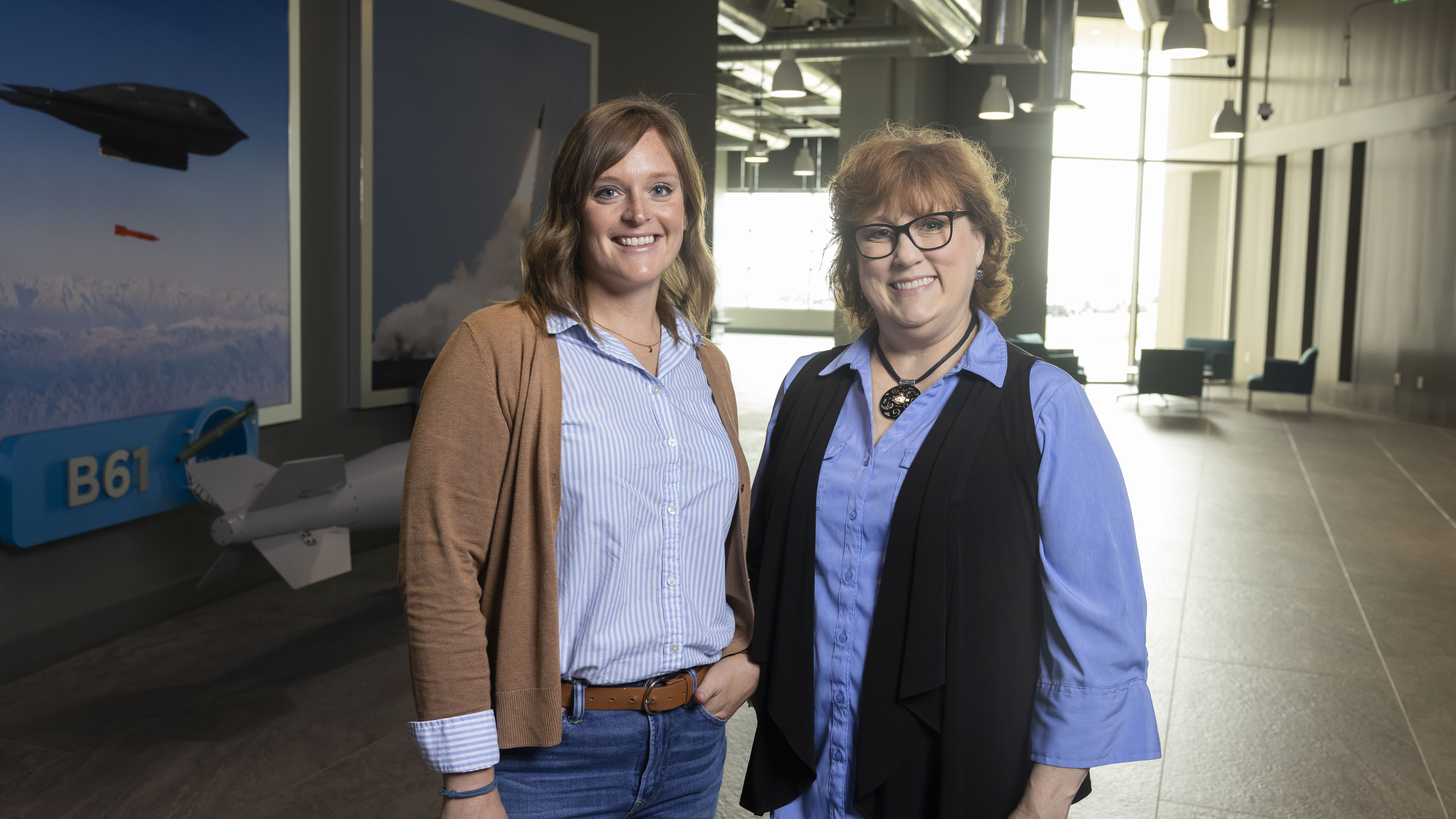
Meredith Long and Lauri Minton represented Pantex at this year’s Community of Human and Organization Learning (CHOLearning) annual conference. Photo by Adam Baker.
What do Coca-Cola, the Mayo Clinic, Tesla, NASA, and Pantex have in common?
All have representatives who have at some point been invited to speak at the Community of Human and Organization Learning (CHOLearning) annual conference. This year, a pair of Pantexans presented a workshop at the session.
Consider this: have you ever had one of those days where one problem or mistake just seemed to waterfall into another and another? Maybe the alarm clock didn’t go off or you spilled your coffee walking out the door. These instances or events that lead to human error at work are called precursors. Precursors are unfavorable conditions that exist before work begins that can lead to workplace blunders.
The Department of Energy (DOE) has identified 85 workplace precursors in the Human Performance Improvement Handbook. The odds are that each of us has experienced at least one of the precursors DOE identified.
“Some examples include excessive communication requirements, delays/idle time, repetitive actions/monotony, nuisance alarms, recent shift change, or the first day back from extended leave,” said Lauri Minton, enforcement coordination screener/reporter.
Minton and Quality Assurance Engineer Meredith Long have collaborated on this topic. The duo created a workshop to identify precursors and overcoming such challenges.
“We’ve been working on it for a couple of years and then we brought the product to a specialized group at Pantex as a testing environment to see if we wanted to take it to a bigger audience,” Long said.
Minton and Long submitted their workshop for consideration to present at the annual CHOLearning conference. They did more than get more eyes, ears, and creative minds on their work — they stood out amid a sea of prospective presenters.
“There were far more abstracts submitted than accepted, and the CHOLearning Board of Directors is very picky about the topics and speakers they choose to accept each year,” Minton stated. “There was great synergy in the room and I think we all walked away with fresh perspectives and ideas.”
The workshop was a success in the eyes of these two Pantexans.
“I feel like I was able to bring the importance of Pantex to the audience and they were able to share with me why human performance is important in their industry,” Long said. “It doesn’t matter what industry you’re in, human behavior is everywhere and touches every single thing.”
The duo credit Pantex leadership for allowing them to showcase their passion at a conference and demonstrate their Pantex citizenship.
“It feels special because they recognize that I am passionate about what I do,” Long said. “Pantex trusts me to represent the company in a specialized field that is important to Pantex and other industries.”
From Pantex Village resident to Pantexan

Brian Fowler, mid-1960s in front of his dad’s truck in Pantex Village. Photo provided by Brian Fowler via Historian Katie Paul’s archives
Nestled on the site of the plant, Pantex Village was more than just a collection of houses. It was a vibrant community that shaped the life of Mission Support Planner Brian Fowler, who grew up in this unique community during the 1960s.
Pantex Village was a community built on plant-site for Pantex employees. Read more about the history of the village here.
Born in 1963, Fowler was the only child of Texas Tech farmer Bill Fowler, who worked on the Pantex property for 48 years. Fowler spent his childhood exploring abandoned buildings, hunting prairie dogs with his father, and catching water dogs (a type of salamander) in local playa lakes.
Fowler's playground was unlike any other. He and his friend would ride motorcycles through old bomb-making facilities, swim in flooded building basements, and explore the remnants of a once-bustling community.
"We'd take inner tubes, and [those flooded basements] were our swimming pool," he remembered. "Sometimes you'd get snakes in there, and you'd just take them out so you could swim."
The village had its own general store, fire department, and church, though these would soon disappear as the community was dismantled by 1968.
He fondly remembered exploring the general store.
"I remember going in and you could hear the floor creak,” he said. “That was just the coolest thing."
Today, Fowler has come full circle, working at Pantex for 12 years and continuing the legacy his father always hoped for.
"My dad was so proud of this place and Texas Tech," he said. "He would mention it every once in a while, 'You need to get your butt out there and go to work.'"
For Fowler, working at Pantex is more than just a job. This role is a connection to family history, a tribute to his father's memory, and the continuation of a legacy.
It keeps going, and going, and going

It’s not déjà vu . . . Pantex will receive another award for sustainable purchasing. For five consecutive years, Pantex has earned the Electronic Product Environmental Assistance Tool award.
EPEAT® is the world’s ecolabel for electronics signifying environmentally preferable products. Environmental Scientist and Sustainable Acquisition subject matter expert Tracy Griffith administers the sustainable acquisition program at Pantex and says this achievement validates our commitment to eco-friendly purchasing.
“If you consider how we operate in an ecological, social, and economic environment, we’re creating long-term value to tax payers,” Griffith said. “Because we operate as federal contractors, our sustainable purchases encourage adoption of similar practices by other entities and help mature the markets for sustainable products.”
Receiving this award showcases Pantex’s commitment to purchasing products that are energy efficient, recycled materials, nontoxic, less toxic, or bio-based.
“EPEAT-registered products are designed for efficiency, longevity, and cost reduction by companies that prioritize responsible practices throughout their supply chain,” Griffith said. “Purchasing EPEAT ecolabel products helps buyers achieve greater results with less.”
Electronic purchasing is just one type of eco-friendly buying done on-site. Pantex also regularly receives the GreenBuy Award, which covers non-electronic products. Buying sustainable products isn’t as easy as clicking “add to cart.” Those making the purchases must attend sustainable acquisition training prior to being able to make purchases of any kind.
“In the class, we go over the background of why this is important, the regulations, and the drivers that surround the requirements for sustainable purchasing,” Griffith said. “We start with the why, then we explain what bio-based products are, what Energy Star certified products are, what EPEAT products are, and we introduce them to all those categories. Then we take purchasers though making the cost savings or potential balance of cost between a recycled material and virgin material.”
After training and when purchasing begins, items are requested through a standard approval process. Griffith can review and determine if the electronics meet EPEAT standards or suggest alternate products. Products fall into an energy-saving performance grading system of EPEAT Gold, Silver, or Bronze, or they are uncategorized.
“Sometimes it’s the one-off product and you have to research and investigate and see where this product will fall — what EPEAT category it lands in,” Griffith said. “If it’s a product that can be recycled, is biodegradable, or made of virgin material, I will go through the requests and review the products.”
In Fiscal Year 2024, Pantex spent $3,430,340 on EPEAT-registered electronics. Acquisitions purchased 587 desktops, 617 notebooks, 1,763 monitors, 93 workstations, and 68 mobile phones all in the Gold category. They also purchased 81 printers, 71 scanners, and 5 televisions in the Silver category, and 1 server in the Bronze category.
“This is important because at Pantex we adhere to what the federal government requires and want to lead by example of making the right choices for the environment,” Griffith said. “I enjoy it. When new products come through, we look for alternatives to meet the criteria that we have in our contract for the sustainability goals we have to meet. I enjoy going in there and looking for different options and working with people in the plant to achieve their goals and ours.”
More than a ball game

Jason Armstrong and Kelly Beierschmitt giving an interview on the field before the game.
Hodgetown lit up with Pantexan pride on June 12 as the Amarillo Sod Poodles, the Double-A affiliate of the Arizona Diamondbacks, faced off against the San Antonio Missions as the feature event of Pantex Night. The state-of-the-art ballpark in downtown Amarillo welcomed 1,925 Pantexans and their families for a memorable evening of baseball.
The purpose of the evening was to provide Pantexans and their families a fun, affordable event that strengthened bonds outside the workplace.
Before the first pitch, Pantex Field Office Manager Jason Armstrong spoke about Pantex’s critical role in national security during an on-field interview.
“Pantex is a cornerstone of our nation's nuclear security mission,” Armstrong said. “Every day, the dedicated workforce of Pantex ensures the safety, security, and effectiveness of the U.S. nuclear stockpile — an essential component of our national defense.”
Pantex President and General Manager Kelly Beierschmitt emphasized how events like STEAM Day at Hodgetown support Pantex’s mission and values. This event offers youth an opportunity to glance into Science, Technology, Engineering, Arts, and Mathematics.
“Ensuring the effectiveness of the nuclear stockpile is a generational duty,” Beierschmitt said. “Getting students interested in careers in STEAM ensures there are future Pantexans who will continue our mission in national security.”
Pantex General Counsel and Chief Compliance Officer Tyler White had the honor of throwing the ceremonial first pitch.
During the game, Mission Assurance Officer Colby Yeary participated in a radio interview. He said, Pantex uses its role as the region’s largest employer to positively impact the community.
“We encourage Pantexans to volunteer and we provide opportunities for them to give back to local communities,” Yeary said. “Pantexans live in and support the community, and we are proud to be Pantex Citizens.”
Pantex also provided tickets to several local nonprofit organizations, including the Maverick Boys and Girls Club of Amarillo, Amarillo Children’s Home, Cal Farley’s Boys Ranch, Another Chance House, Faith City Mission, Family Support Services, and the Downtown Women’s Center, reinforcing Pantex’s commitment to community engagement.
More than just a night at the ballpark, Pantex Night celebrated employees, community partnerships, and the plant’s enduring mission. It truly hit a home run.
If you’re interested in volunteer opportunities or representing Pantex in the community, please reach out to Public Affairs at Public_Affairs@pantex.doe.gov.
Dedication adds up
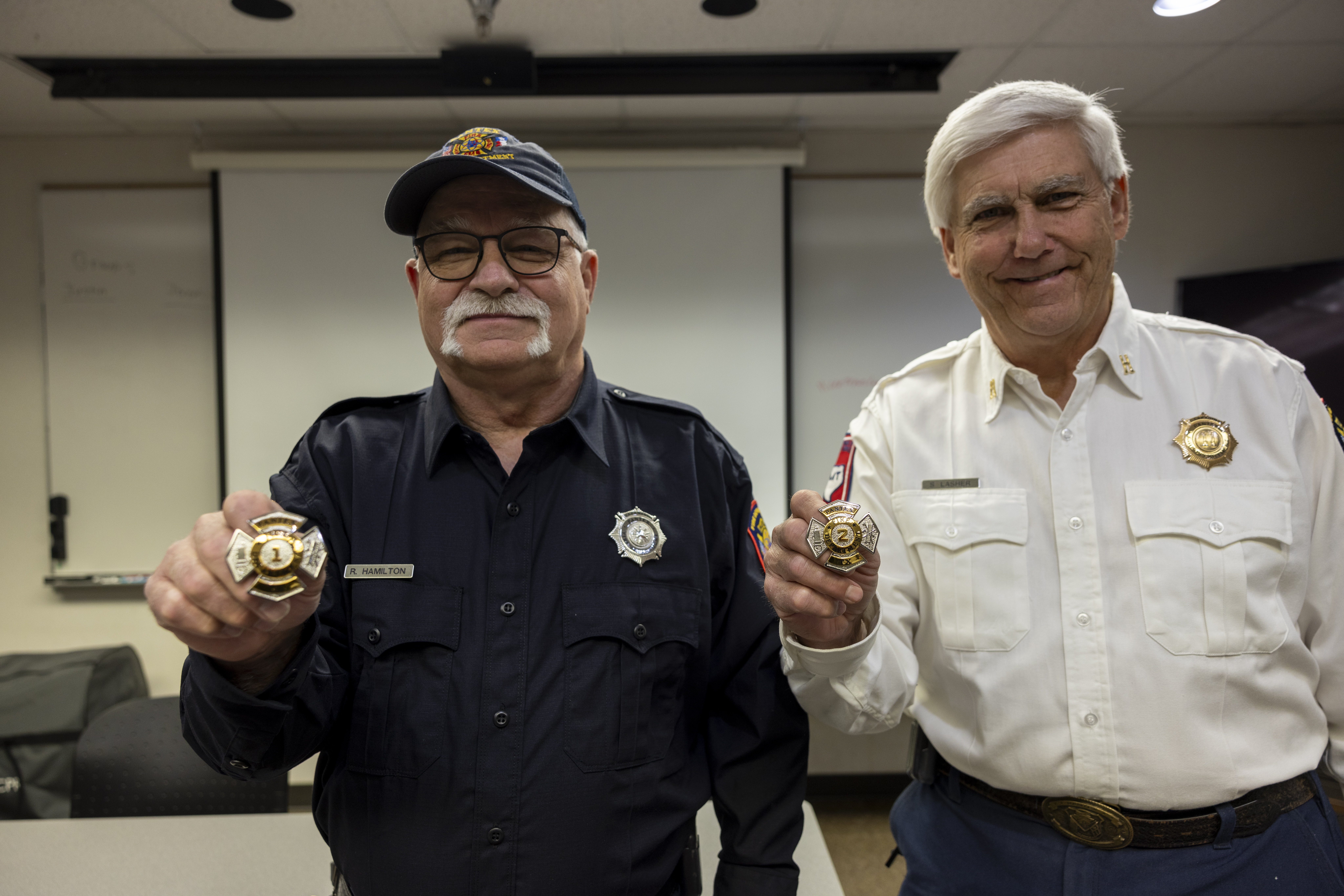
Firefighter and Paramedic Ricky Hamilton and Day Shift Captain Steve Lasher
We all know 2+2= 4, but did you know 1+2 = 87?
…. years that is. Firefighter and Paramedic Ricky Hamilton and Day Shift Captain Steve Lasher have collectively served Pantex and its mission for 87 years. In May, Hamilton and Lasher were pinned with commemorative 1 and 2 badges, respectively, showcasing their longevity and honoring their unwavering dedication.
Hamilton and Lasher began their careers in Emergency Services in the ‘80s. Since then, many political events and technological advances have occurred: the Cold War ended, Operation Desert Storm started and ended, 9/11 occurred, Facebook launched, and Apple debuted iPhones 1-16. Even though there has been a lot of change in the past 44 years, one thing that remained the same is Hamilton and Lasher’s loyalty to Pantex. Both men credit their longevity to an innate personal value of helping others.
“I’ve always enjoyed helping other people in their time of need,” Lasher said. “It’s provided well for my family. You’ll never hear me complain about this place.”
“I want to protect my family as well as yours,” Hamilton said. “It’s a privilege. It’s nice being recognized.”
The badge pinning was done in a small informal ceremony after the morning muster meeting that begins a 24-hour shift. Assistant Chief Bob Napp pinned the 1 badge on Hamilton who then pinned the 2 badge on Lasher.
“People always ask me why I’m still here, because I could retire,” Hamilton said. “I still enjoy the job and can still do it well. We still perform the same strict physical regiments that all responders do.”
“I always tell new firefighters they will go through phases,” Lasher said. “In your career there’s going to be ups and downs. Through the hard times, you’ll eventually appreciate it and be glad you’re here.”
When at the fire department or out on an emergency scene, people can see the 1 and 2 badges and acknowledge the extensive years of enriched experience, sharpened skill, and profound knowledge found in the firefighter ranks. Congratulations to Hamilton and Lasher on their continuing careers and this distinguished recognition!
Uncleared connection: stories of friendship
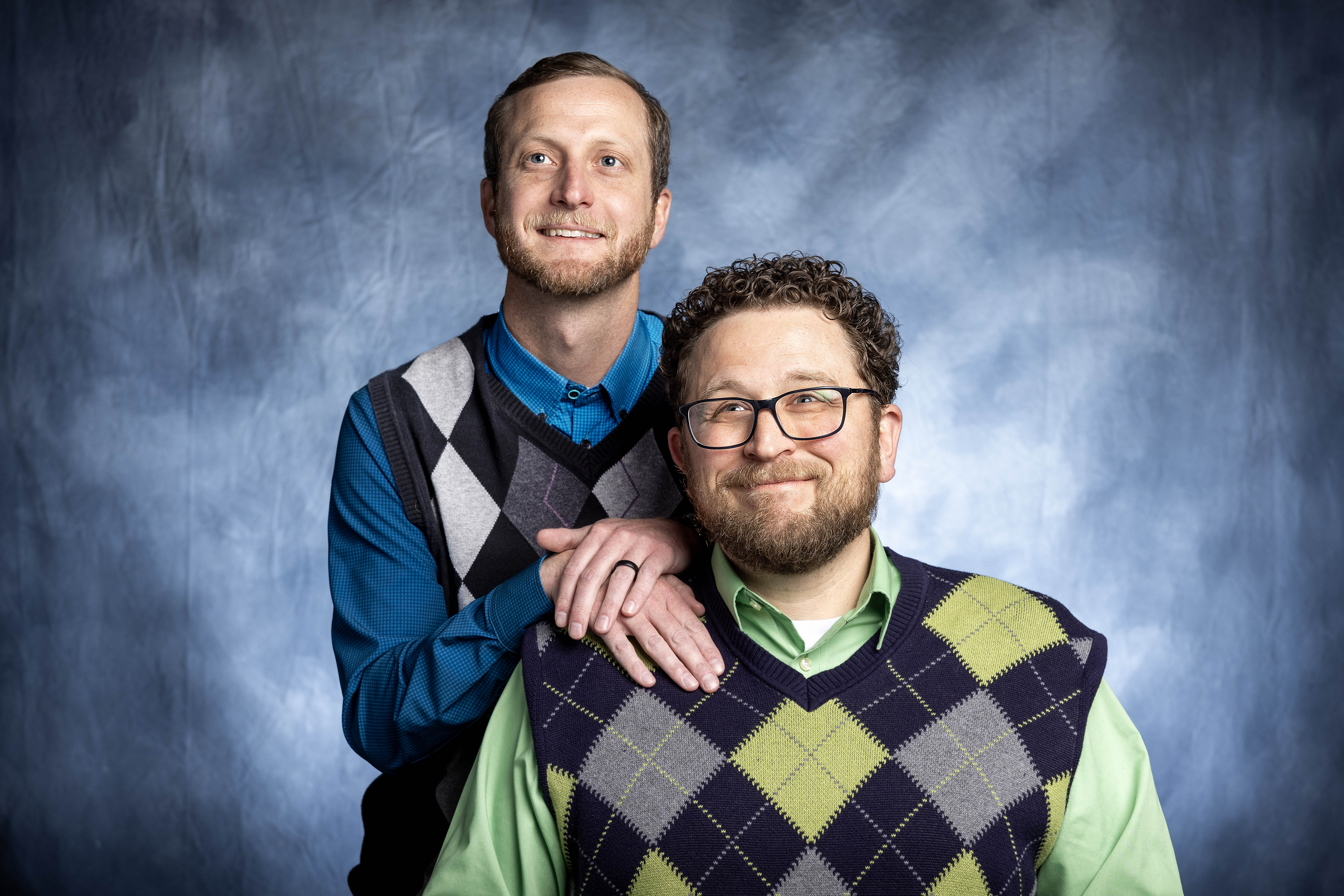
Pantex Field Office Deputy Assistant Manager for Nuclear Safety and Engineering Reid Copelin and Pantex Industrial Hygiene Operations Supervisor Topher Garrison pose.
Nine years, one month, seven days, four hours, and eleven minutes…that’s how long Reid Copelin and Topher Garrison say they have been friends…approximately.
Their friendship started when Reid took the time to introduce himself in the uncleared room when Topher started his job at Pantex. The building they both worked in at the time was called the “lighthouse”.
“Reid was off the first few days I was at the lighthouse,” Topher said. “When he got back from his time off, he introduced himself. We quickly became friends…probably in part because we both are a little mischievous and like making other people laugh.”
Reid is the Pantex Field Office deputy assistant manager for Nuclear Safety and Engineering and Topher is the Pantex Industrial Hygiene Operations supervisor. They work in different roles, but support the same mission. Networking in the uncleared room had a positive impact on both their professional and personal lives.
“It really is crazy the number of people from the uncleared room that I work with almost every day,” Reid said. “These are some of the closest friends that I have, too. It’s great to know people from across the plant. Our mission is so big and there’s so much to learn, so it’s always great to call up a friend that has an answer to your question. In the uncleared room, you really have the time to build these connections that you don’t really get the opportunity to do compared to when you are cleared and start work in your own department.”
Topher agreed saying, “I enjoy the relationships I have built with different people all over the plant. Having those relationships is great when it’s time to come together to get work done. They are even more important for the lasting friendships that have come out of them.”
In the case of Reid and Topher, hours in the uncleared room turned into days outside of work spent hunting, disc golfing, watching The Office together, and even founding an imaginary woodworking company.
“We hang out almost every day,” Reid said. “Our families have also gone on several trips together. We are always doing something together. We work on furniture or home remodeling projects for our friends and families. We jokingly call ourselves T&R Woodworking, and our motto is ‘amateur work at professional prices.’ Our wives even made us some “company” shirts for my birthday one year.”
Putting yourself out there and making connections helps to build knowledge of the site and promotes camaraderie.
“Why not take the opportunity to strike up a conversation and look for similar interests?” Topher said. “It may lead to a fake woodworking company, bathroom remodels, being their child’s godparents, and multiple vacations together!”
Time in the uncleared room created a lasting friendship, all because of the few minutes Reid took to welcome a new member to the Pantex team. Be a good Pantex Citizen. Introduce yourself to other Pantexans, educate them on your role, and continue the legacy of supporting our nation’s nuclear deterrence together. Five minutes could turn into nine years of friendship.
Program paves vets’ path to successful Pantex careers
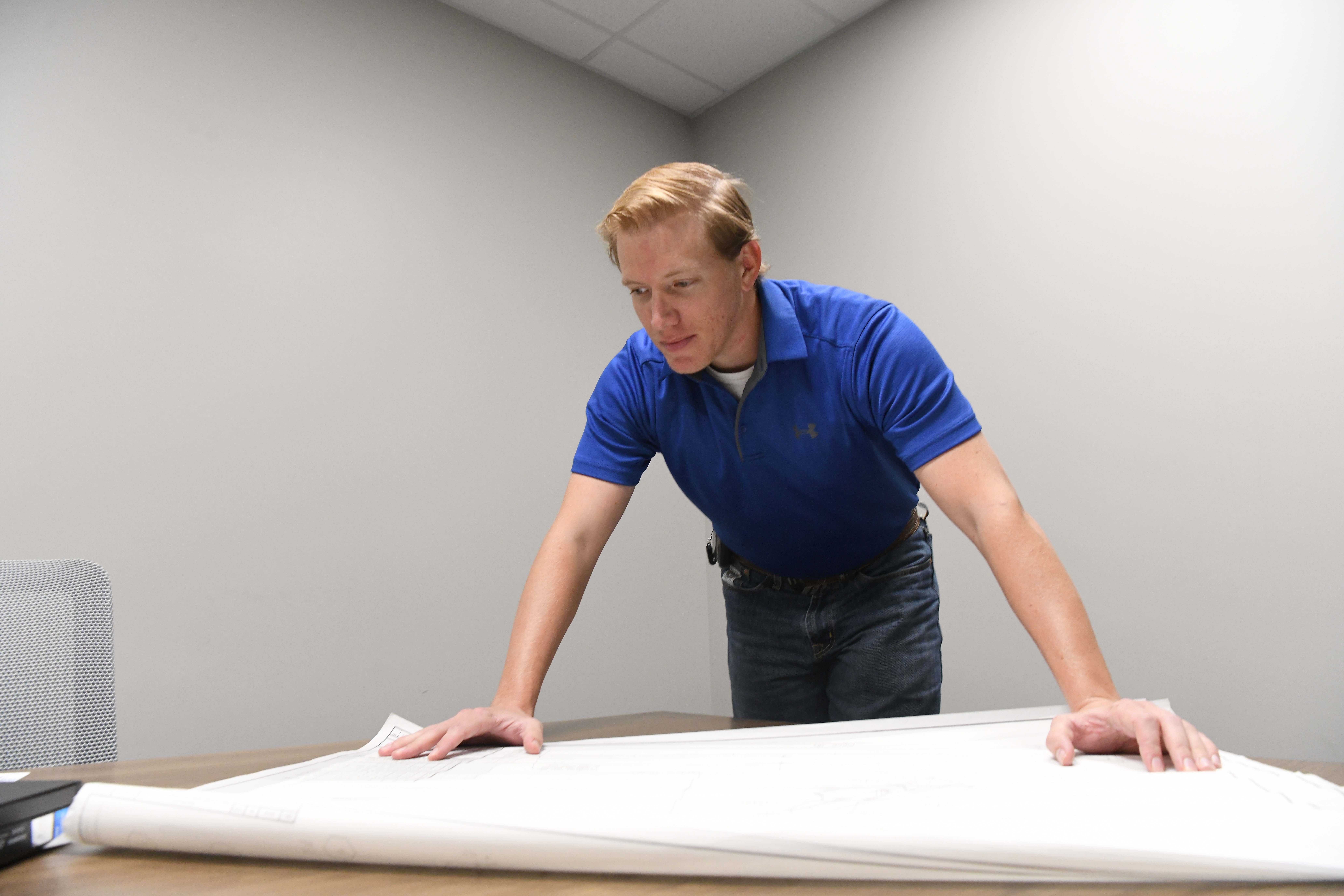
Rody Timmons participated in the Veterans to Engineers Program after a successful Navy career.
When an armed services member completes their duty to the nation, they may find themselves with a heart full of patriotic fervor, a couple of decades’ worth of time to fill, and, all too often, an uncertain direction.
“Coming from active duty was a big change and challenge for me and my family,” recalled Pantex engineer Cecilio Morado.
Morado and his wife, both Air Force veterans, had left the service to be closer to family and to focus on completing their college degrees — while raising their two young children.
“I started here at Pantex after my first semester back in college, and from there I was presented with more challenges as I was trying to juggle family, school, and work.”
Pantex Program Manager Channing Sparks oversees Veterans to Engineers (VTE), a program to guide veterans like Morado into successful careers as Pantex engineers.
“VTE participant, joined the program after a successful Navy career. Timmons said he appreciates the broad exposure
Coming in hot; father and sons working with fire

Wyatt (left) and Cole Gwyn (right) pose with their dad Dennis (middle).
Most dads teach their kids to stay away from fire, but Canyon Fire Chief Dennis Gwyn isn’t most dads. During his more than 30 years as a volunteer and full-time firefighter, fire marshal, and department chief, Dennis faced fires regularly while raising his twin sons Wyatt and Cole.
“My brother and I grew up constantly around the station in Canyon,” Cole said. “In fact, some of the earliest memories I have involve sitting in dispatch during calls and running around the station.”
“Our dad had a job that every kid thought was cool,” Wyatt said. “Now as an adult, I see it is a very noble cause, especially to be a volunteer firefighter like my dad was.”
Firefighters often say the people they work with are family, but it’s literally true for the Gwyns.
“I enjoy being on scene with my dad as a volunteer firefighter,” Cole said. “I will never forget the first fire I worked with him. I arrived on scene to him being on a hose line by himself. I backed him up on the line, and remember the happy look on his face when he turned around and saw it was me.”
Cole backed up his dad on the fire hose, but there must have been something in the water, because Wyatt also chose a career using science and technology to protect people and properties from fires.
Cole works as a Pantex Emergency Services firefighter and paramedic. He responds to emergencies at the plant and in surrounding communities covered in the site’s mutual aid agreement.
Wyatt is a Pantex fire protection engineer responsible for ensuring facilities remain compliant with fire codes. This includes doing yearly walkdowns of facilities, updating the fire hazards analysis, addressing system and facility issues, and ensuring fire suppression and alarm systems will activate in the event of a fire.
Wyatt is in prevention, Cole is in response, and Dennis is a proud dad.
“I am here to make sure through analysis and codes that life, property, and the public are protected in the event of a fire,” Wyatt said. “My dad was my inspiration to get into the realm of fire safety ever since he was a deputy fire marshal for Amarillo.”
“There is not a workday that I wake up and dread going to work,” Cole said. “I enjoy working here at Pantex and volunteering in Canyon. It is great getting to serve with those who watched me grow up, and getting to know the newer members of the department.”
Cole and Wyatt not only followed in their dad’s professional footsteps, but also in their personal lives as caring fathers to their own children. Dennis said he and his wife are thankful for the successful men Wyatt and Cole are, but more so their ability to be loving fathers to their own families. Growing up, Dennis encouraged his sons to put family first and find a career they enjoyed.
“We all hope our children find a career that they enjoy and are successful at,” Dennis said. “With both sons choosing fire services, it does give me a sense of pride that they followed in my footsteps — but we would feel the same no matter what careers they chose.”