


News
I am mission success: Richard Tighe

Consolidated Nuclear Security President and Chief Executive Officer Rich Tighe.
Take 5 minutes and learn about Consolidated Nuclear Security’s Richard Tighe, president and chief executive officer. All views and opinions are the employee’s own and do not necessarily reflect those of CNS.
Consolidated Nuclear Security (CNS) President and Chief Executive Officer Rich Tighe and his younger brother Jim played high school football for a legendary Iowa coach — their father Dick Tighe, whose career included more than 400 wins during 63 uninterrupted seasons.
Teamwork and football were familiar themes in the Tighe (pronounced “tie”) household in Webster City, Iowa. That “Friday night lights” culture of the small Midwestern town helped shape Tighe’s leadership philosophy.
“Everybody plays a part on the team,” he said. “In football, you might have to wait until your senior year to play, but the contributions you make to the team while you wait your turn are important.”
In his first few months as president and CEO, Tighe has been busy meeting National Nuclear Security Administration (NNSA) Production Office and CNS leadership teams; local, state, and national elected officials representing the West Texas and East Tennessee areas; NNSA leadership; and site and laboratory directors from across the Nuclear Security Enterprise.
Tighe is taking advantage of the extensive knowledge of the CNS team.
“There is tremendous knowledge and experience at both sites; by working to be inclusive, I’m able to use this to the best advantage in informing decisions,” he said. “I’m new to CNS, but even the most experienced person at Pantex or Y-12 can’t be an expert in all aspects of our work or the sites. Getting input from other people helps all of us take advantage of the full expertise available.”
Before joining CNS, Tighe served in roles with Bechtel and Lockheed Martin, and he is no stranger to the Nuclear Security Enterprise, having spent more than a decade at the Nevada National Security Site. Tighe was also a postdoctoral fellow in the Nuclear Science Division of Lawrence Berkeley National Laboratory at the University of California.
“Coming back to NNSA is like coming back to my roots,” he said. “It takes me back to my foundation in nuclear physics, which helps me understand the mission of both sites and how it fits into the broader Nuclear Security Enterprise.”
What daily task lets you know you’re helping achieve the CNS mission? How/why does that task let you know you’re working toward the mission?
No two days have been the same, so far. Meeting and talking to employees during tours and all hands meetings helps me to put their work in the context of the bigger picture of our mission.
How does patriotism factor into your life?
Patriotism becomes most meaningful to me when I think of the role the U.S. plays with our allies and adversaries around the world. It’s rewarding to be involved with such an important purpose and mission.
What one thing would your coworkers be surprised to know about you?
When I was a postdoctoral fellow in the Nuclear Science Division of Lawrence Berkeley National Laboratory, I was the lead investigator for the work involved in the discovery of Sb 105 (antimony 105), a nuclear isotope along the proton drip line that has implications for nucleosynthesis. I proposed and planned the experiment, analyzed the data, and wrote the journal article.
What’s your favorite outside of work activity?
When we lived in Maryland, my daughters were involved in high school sports and also played on travel teams. My wife and I enjoyed traveling to their games and tournaments. My daughters and I had a tradition of running in a Turkey Trot every Thanksgiving. While I seldom run in 5Ks or other races these days, I typically run four times each week. I also really enjoy watching college football, particularly watching and attending Notre Dame games.
Betty’s “boop” provides safety, security for Pantex engineer

Pantexan Claire Streeter is open to educating people about Type 1 diabetes and service dogs like her standard poodle, Betty.
Pantex safety analysis engineer Claire Streeter has her own emergency alert system: A white standard poodle named Betty. Betty is a full-time service dog with a vital mission: Keep her person safe.
“Her job is truly just to monitor my blood sugar levels for my diabetes. She’s trained to boop her nose on my leg to get my attention,” said Streeter.
When Betty “boops,” Streeter puts a hand in front of Betty’s nose for a reading. Betty pushes Streeter’s hand up to indicate high blood sugar levels and down for low levels. Without this vital notification, Streeter could pass out or experience long-term damage to soft tissues.
“I have a lot of monitors that I wear, and she’s faster than my monitors,” said Streeter. “Not only is she faster, she’s more accurate. She runs about 90–95% accurate while the pumps and meters run about 70–80% accurate.”
Streeter is open about sharing her disability and talking about Betty’s role in her life. After all, she said, it is hard to conceal a large white standard poodle on campus.
“I want to be open about educating people in the plant both about Type 1 diabetes and service dogs,” Streeter said. “I think there are a lot of misconceptions about service dogs: how to obtain them, what they do, even the cost of obtaining one, and people are also curious about what they do – for example, people are always fascinated that she can tell me what my blood sugar is. She has a much bigger purpose and a higher responsibility – she is a much more highly trained dog than many people expect.”
“I feel it’s a helpful metric for the company to identify places where they could make things more accessible in an able-bodied world. As a company, you think of the obvious, like ramps and elevators, but you wouldn’t necessarily think to have doors set up differently so a dog could go through. It’s important to recognize who’s working for you and why some of those things might be a beneficial change,” she said.
Betty goes everywhere with Streeter: trains, planes, buses, boats, cars, and even bars.
“We went to Chicago for St. Patty’s day, and she was in the bars with me. She came out green, but she went in and she did her job,” Streeter said.
No matter where Betty is— deep in dreams on the floor of Streeter’s work area, or wide awake and keeping a close eye on Streeter’s nighttime panic button in case it needs vigorously booped— Betty’s highest role is making sure Streeter can do anything she wants to do.
“She’s a medical device in the form of a big white fluffy dog with attitude that just happens to be at the end of my arm. I see her as an attachment of my arm. So, a lot of times when I walk into the room, I don’t think people are going to look at me and think I’m disabled,” Streeter said. “I don’t think it defines me or my job. I want people to look at me and think I’m just as capable of doing any job whether I have a dog or not. It was a big step to decide to have such a visible sign that I have a disability, but I’m going to own it.”
I am mission success: Chris Ickles

Meet Chris Ickles, deputy chief information security officer at Pantex, who plays a key role in the security and strategic defense of our network and systems.
All views and opinions are the employee’s and do not necessarily reflect those of CNS.
While cybersecurity is frequently regarded as the act of protecting a network of information and systems from theft or damage, a key element of its definition and study is acknowledging how people factor into its defense and practice.
Many information theft cases are a result of human error due to negligence or lack of cybersecurity awareness. It’s important to recognize the impact we all have in safekeeping our technology.
As a key expert, leader, and direct support to the site, Pantex’s Chris Ickles is integral to the strategic development and operations of CNS's Cybersecurity programs.
By ensuring that our interconnected network of information, systems, and people are protected in the digital landscape, Ickles focuses on CNS's daily cybersecurity defense posture in analyzing risk balanced security measures and forming strategies against cyber threats.
What daily task lets you know you are helping achieve the CNS mission?
Cybersecurity is multifaceted. It has a primary responsibility to protect and defend our systems and our data. This precipitates actions across the entire enterprise that begin with security awareness, training, policies, procedures, requirements, testing, verification, and validation of all systems and users that support our mission.
Are you doing what you envisioned as a young adult? If so, describe how you got here.
My professional background originates in networking. It started while working in public school systems with a passion for technology. As far as doing what I envisioned for myself as a young adult, no. I graduated college with a bachelor’s degree in science and majored in chemistry and biology with a minor in math, but I was hooked on computers by the time I graduated. This quickly became my passion.
What CNS principle drives you to be successful?
My drive comes from the principle of continuous improvement. This mindset involves personal knowledge and skill growth as well as system improvements. We all benefit from a learning environment both at work and at home. Sometimes we teach and sometimes we learn. We need to expect daily opportunities for both.
What work advice would you offer someone who is starting work at Pantex?
Fully comprehend the job they are hired to do (e.g., role, responsibility, work result, impacts of success). Your professional approach to your work is important to our mission and impacts the nation.
What one thing would your coworkers be surprised to know about you?
I taught high school chemistry three years prior to entering IT and networking.
I am Mission Success: DeRema Dalton

Take five minutes and learn about CNS's DeRema Dalton, special tooling planner scheduler at Pantex. All views and opinions are the employee’s own and do not necessarily reflect those of CNS.
Patriotism and the passion to fulfill the mission tasked to Pantex run in DeRema Dalton’s blood — as it has for generations of family before her.
She has worked at the plant for 28 years, the third generation of a family that has sacrificed to support this important mission since Pantex was formed.
“As the country was experiencing the Great Depression and my grandparents’ farm was failing due to drought conditions, my grandpa — Roy Hyatt — moved himself from Wellington, Texas, to Amarillo,” Dalton said. “He came to work at Pantex in 1942.”
His son — Dalton’s father, Charles — joined in 1969 as an assembly operator (now known as a production technician).
“I’m very proud of the services and sacrifices they put into their work at Pantex,” Dalton said. “Grandpa helped build this place, and my dad assembled weapons. What an honor, knowing the wars we were going through during those eras and how my grandpa and dad helped protect this country.”
Dalton’s late husband, Wendel, began working at the plant in 1972. He served most of his career as a firefighter, sacrificing many Christmas Days to ensure the plant’s safety, but also becoming a first-rate cook. (“Those guys in the fire department can cook!” she says.)
Dalton began working in 1994 as a subcontractor clerk and served in several departments before finding a home in the planning department in 2001. She works to ensure that her assigned programs run smoothly, which requires intense coordination with her team.
“My daddy walked these same hallways,” Dalton said. “It makes me feel really proud. We’ve all made our sacrifices for working out here, and I’m not far behind them. It happens, and that’s what we do. We make sure our country is safe and our freedoms are still here.
“I’m very serious when I talk about my patriotism and how proud I am of my family working out here,” she said. “It means everything to me.”
How does patriotism factor into your life?
My uncle served in World War II and my cousin in Vietnam. My patriotism runs deep, and I am very proud of the service they gave our country.
I am very proud of what we (as Pantexans) are doing to make our country safe.
I have buried family and friends—I miss them with all my heart—but one thing I know: What they did in their lifetime meant something. As my kids always said, “they protected us from the bad guys.”
So, here’s a piece of advice: Hug your loved ones (including coworkers) every day and often. What we do at Pantex means something and needs to be recognized as heroic.
What is your favorite aspect about your work environment?
How does that aspect make you know the mission is being met? In the beginning of my career, just the overall feeling of pride was everywhere. You just knew that you were a part of protecting our country and our future.
As an employee, what do you want to be remembered for?
I want people to remember me as hardworking, fun, loving to be around, honest, and truthful.
What work advice would you offer someone who is new?
Listen to the old-timers. We know what we’re talking about.
Never try to sugarcoat the truth. Be straight up. Truth sometimes hurts, but your reputation grows from that, and people know who they can trust.
What’s your top bucket list item and why?
To travel to Israel. I want to walk the streets where Jesus walked and feel that presence in my soul.
Veterans deliver on the mission across CNS

With more than 2,260 veterans employed across both sites, CNS understands and values the skills that previous military experience brings. The CNS mission is often a logical fit for veterans as working at Pantex or Y-12 allows them to continue their service to the nation.
“Veterans are able to transition into the workforce at CNS easily,” explained Emily Graber, CNS director of Human Resources’ Engagement, Inclusion, and Performance department. “They often are hired for not only their technical skills, but also their leadership, teamwork, decision making, problem solving, and loyalty.”
CNS works hard to actively recruit veterans for open positions through a variety of avenues such as in-person and virtual job fairs at military transition offices and bases, as well as tools such as LinkedIn and Indeed. Programs including Veterans to Engineers and the Department of Defense (DoD) SkillBridge internship act as a path to more easily bring in veterans who have retired or are near the end of their military service careers.
CNS has been partnering with the DoD SkillBridge program for almost three 3 years, and has hosted more than 56 veterans during that time. The program allows transitioning service members to spend up to their last six 6 months of service on active duty with CNS. It also gives CNS an opportunity to determine if the participating veterans are a good fit for the organization and allows for an easier transition into a full-time position if the placement is available.
“We are honored to partner with the DoD SkillBridge program to offer an opportunity for transitioning service members to intern with us here at CNS,” said Graber. “Our program has a great reputation for bringing on talented veterans who are able to come in and immediately make a positive impact at CNS based on their experience and prior service to the nation.”
To date, CNS has hired 33 SkillBridge interns into full-time positions, which showcases the value that management sees in the program.
“The Skillbridge program was a huge benefit to my family and to me,” said former SkillBridge intern and current Y-12 communications specialist Matt Pippin. “I was able to intern here at Y-12 and learn how to apply the skills I gained in the Army to the CNS mission. Y-12, in many ways, is similar to working on a military installation so it made the transition from Army life to civilian fairly smooth. Making the transition from military life to civilian is quite difficult so I was happy to see how CNS supports service members and veterans trying to build the next stage of their life.”
CNS also provides support for veterans after they are hired. The Serving our Service Members Affinity Groups at both sites support veteran employees and families during military service, assists with hiring from the veteran community, and provides volunteer and social opportunities with larger East Tennessee and Texas Panhandle veteran groups.
In fiscal year (FY) 2022, CNS successfully hired 288 veterans, which was an increase from the 113 veterans hired in FY 2021. Due to this accomplishment, CNS was recently awarded a gold medallion by the HIRE Vets Medallion Program, which recognizes employers for their efforts to recruit, employ, and retain our nation’s veterans. The Honoring Investments in Recruiting and Employing American Military Veterans (HIRE Vets) Act of 2017 was signed into law in May 2017. The Department of Labor’s Veterans’ Employment and Training Service (VETS) administers the HIRE Vets Medallion Program. This is the third year in a row that CNS has received the gold medallion award for its work in veteran recruiting and retention.
An additional recognition at Y-12 in FY 2022 came when Site Manager Gene Sievers received a Patriot Award from the DoD’s Employer Support of the Guard and Reserve program. The award, while given to single person, reflects employer efforts to support citizen warriors through a wide-range of measures including flexible schedules, time off before and after deployment, caring for families, and granting leaves of absence. More than 100 active guard members and reservists work at Y-12.
It is not the recognition that keeps CNS recruiters actively searching for veterans to fill positions time and time again. With real-life work experience, accountability for their actions, strong work ethic, and good performance under pressure, veterans have a plethora of skills that are invaluable to employers. CNS is proud to employ many of our country’s heroes as we all work side-by-side toward our collective mission.
I am Mission Success: James D. Harris

Take five minutes and learn about CNS's James “J.D.” Harris, production manager at Pantex. All views and opinions are the employee’s own and do not necessarily reflect those of CNS.
The work that James “J.D.” Harris has done in his career has often run parallel to the Pantex mission, but they did not intersect until 7 years ago.
Growing up, the Amarillo native wanted to be a youth minister, but after graduating high school, he joined the U.S. Air Force and served 6 years of active duty as a munitions systems specialist, a choice that forever changed his trajectory.
“That line of work seemed to fit perfectly with the Pantex mission,” he said. “It gave me a different perspective on how I thought about my path in life. I was excited about the things I got to be a part of in the Air Force and I wanted to continue that after separating.” Harris still serves as a member of the Air National Guard.
After earning a degree at Texas State University in San Marcos, Texas, he applied at Pantex.
“Pantex was always in the back of my mind, but as I began to pursue it as my career, I did not believe it would be a reality,” Harris said. “The initial phone call for an interview is one that I will always remember.”
Harris started as a production section manager over the W88 and B61 weapons programs before moving to operations. He was promoted to production manager for the Production Tooling Department before settling in to his current role as production manager for the W88 program.
Why are you mission success?
I’m not sure that I, alone, am “mission success,” but I’ve certainly been a part of several teams that could be considered that. No success that I have ever obtained has been done by my hand alone.
Without the production technicians, I would be nowhere, and without support organizations, I would be nowhere. Where my success happens is when I can engage with both of those groups and bring them together, so that we can all be “mission success.”
What advice would you offer to veterans joining Pantex’s efforts?
Although there are lots of similarities between a life in the military and a life as a Pantex employee, the thing that a veteran shouldn’t expect is that they are one and the same.
Sometimes it was difficult for me, in the beginning, to see this as a civilian job, but that’s what this is. Demands from Pantex’s customer often change. Major projects come to an end, and a new goal is established and executed. In the military, the demand never changes. The goal never really changes.
A veteran just beginning at Pantex should be prepared to experience change.
As an employee, what do you want to be remembered for?
I want to be known as someone who could achieve success while being dedicated to my employees and to the mission. There is balancing act that is needed to ensure the mission of Pantex is met, while also ensuring your employees work in a healthy environment.
If I can be known as someone who was able to achieve that, then I’ll be happy.
What top strength do you bring to your organization?
Communication. I believe that the only way an organization can be successful is by open and honest communication.
I communicate with my team, with my management, and with all support organizations regularly.
What is your top bucket list item?
To live long enough to see the Cowboys win another Super Bowl. I’m running out of time.
Pantex Honored by Girl Scouts of Texas Oklahoma Plains

Pantex Site Manager Colby Yeary accepted the Outstanding Community Partner award on the plant’s behalf at the event held at the Alumni Banquet Hall at West Texas A&M University.
Women belong in science.
It is a commitment held in high regard at Pantex, and that effort was recognized on October 27 by the Girl Scouts of Texas Oklahoma Plains, which honored Pantex as its Outstanding Community Partner of 2022 at its annual Women of Distinction award banquet.
“We are thrilled to honor Pantex as this year’s Outstanding Community Partner,” said Becky Burton, CEO of Girl Scouts of Texas Oklahoma Plains. “As a longtime partner to Girl Scouts of Texas Oklahoma Plains with both employee volunteer opportunities and monetary donations, I can’t think of a more deserving organization to honor at this year’s Women of Distinction dinner. I look forward to continuing our partnership for many years to come as we encourage young women across the Panhandle to grow with courage, confidence, and character.”
Pantex has long been a supporter of Girl Scouts and has been involved in programs to encourage and inspire young women who have an interest in the science, technology, engineering, and mathematics (STEM) fields. In the past, it has operated programs such as the Smart Cookies and S’more Engineering in direct partnership with the Girl Scouts and continues to reach out to middle-school-age girls with educational events like those hosted by Amarillo Women in Science Endeavors.
In addition, individual Pantexans have been very involved with the Girl Scouts program. For example, Stephanie Steelman, a Pantex scientist, former Girl Scout, troop leader, and a parent of a Girl Scout, volunteers regularly for outreach programs that promote youth involvement in STEM fields. In 2020, she received the Girl Scout council’s Women of Distinction Connect Award.
“Pantex has a lot of scientists and engineers that are previous Girl Scouts,” Steelman said. “I think the most important thing that Pantex can do to keep young girls engaged in STEM fields is to support outreach activities with the Girl Scouts. I have been lucky to know a lot of Scout leaders in Amarillo that ask me to help with their STEM badges, and when these young ladies see a woman working in STEM field and having fun in their endeavors, that is one positive ‘touch.’ I read somewhere that it takes 10 positive ‘touches’ to pique someone’s interest in a subject, so Girl Scouts allows us to increase those positive experience numbers.”
Girl Scouts of Texas Oklahoma Plains serves 81 counties, including more than 1,200 girls in the Panhandle. At its annual Women of Distinction banquet, they recognize leaders in business, government, education, and philanthropy, as well as raise money to support their programming efforts in the Amarillo area.
Pantex Site Manager Colby Yeary accepted the Outstanding Community Partner award on the plant’s behalf at the event held at the Alumni Banquet Hall at West Texas A&M University.
“Pantex’s relationship with the Girl Scouts of Texas Oklahoma Plains is an excellent example of our commitment to the youth in our area and our dedication to service and leadership,” Yeary said. “Pantex is a proud supporter of Girl Scouts, and we feel it is important to help our next generation of women realize their fullest potential. We especially want them to know that STEM is a rewarding field, and they can be anything they can dream of, and opportunities to make a difference exist.”

Girl Scouts of Texas Oklahoma Plains honored Pantex as its Outstanding Community Partner of 2022
I am Mission Success: Laurie Godinez

Take five minutes and learn about CNS's Laurie Godinez, a records administrator at Pantex. All views and opinions are the employee’s own and do not necessarily reflect those of CNS.
Laurie Godinez travelled all over the world but has chosen to make Pantex home.
She grew up in a small, coastal California town, and after a couple years of college decided to join the U.S. Army.
“I wasn’t sure what I wanted to do with my life,” Godinez said. “I was a truck driver by trade, but my favorite job in the military was as a squad leader and platoon sergeant, because I had a daily impact on soldiers’ lives.”
While serving, she met and married her husband, Elgin, who is a native of Dumas, Texas, which is about an hour outside of Amarillo. They traveled the world for their duties, being stationed in Texas, Oklahoma, Kansas, Germany, and the Netherlands.
When it was time for them to separate from active duty, Elgin was ready to come home, so they and their three kids moved to Amarillo. Elgin, too, is employed at Pantex.
When Godinez was first hired almost seven years ago, it was as a production technician. While waiting for her clearance, she kept busy helping Human Resources digitize personnel records.
“Once my clearance was granted, I worked in Data Management and decided to apply for a job as a clerk,” she said. “Long story short, I never made it to the line as a PT, but I think I found my calling behind the scenes.”
Godinez works in Data Management as a records administrator, which includes a complex puzzle of receiving, compiling, and transmitting data.
She is easy to spot during the month of October — she is the one dressed in festive Halloween outfits.
“A few years ago, I was trying to decide what to wear for Halloween,” she said. “My son suggested that I just dress up every day in October, since I love costumes so much. I accepted that challenge, and I have been dressing up each day of October since 2018. At first, my family thought it was crazy, but it has brought so many laughs from coworkers and so many smiles from little kids that I may encounter while running errands after work.”
How does patriotism factor into your life? Did your level of patriotism change after working at Pantex or Y-12?
I have spent most of my life in service to our country. When I retired from the Army, I didn’t know how I would continue that service. Working at Pantex and serving a continuing role in defending our nation has only deepened the patriotism that I have always felt.
I have lived in several foreign countries, and like Dorothy said in The Wizard of Oz, “There is no place like home.”
What is your favorite aspect about your work environment? How does that aspect make you know the mission is being met?
My favorite part about our work environment is the teamwork. Everyone brings their own perspective and ideas, and I feel like we all work well together. This sense of teamwork helps us shift our focus when someone has a high workload to make sure that everything gets done on time.
What work advice would you offer someone who is new to Pantex or Y-12?
Learn as much as you can from the people that have been here for a long time; they won’t be here forever.
Don’t be afraid to suggest changes or improvements. Even if they don’t work out, it could lead to process improvements.
Make sure you have everything you need when you leave the house in the morning, because it is a long drive back to town if you forget your badge.
What is your favorite outside-of-work activity and why?
Spending time with my family. We love to have game nights and travel.
I have a grandson who is almost six months old and he is the light of my life. Since this is my first Halloween as a grandma, I decided to include my grandson, and he and I dressed up in Halloween costumes every day for the month of October. He definitely stole the show!
What is your favorite Halloween candy and why?
Milk Duds, because they taste so good with hot, buttery popcorn.
Or the flavored Tootsie Rolls, because the only time I find them is in the big Halloween Tootsie Roll bag of candy.
Be intentional about fire safety at home, work

In the time it takes to read this, your entire home could become engulfed in flames.
“When a fire occurs in your home, it’s too late for plan development,” said Mari-Kaye Monday, Y-12 Fire Department assistant chief of operations.
The contrast in approaches to fire safety when at home versus when out in public is striking. Common-sense awareness, like finding the nearest exit, is one of the first things discussed when boarding any passenger airplane. Walk into a hotel or other commercial building, and the fire-safety signage is prominent and, likely redundant. In school, our children drill orderly evacuation from a fire at an early age.
Yet, our home, the very place we feel the most safe, is often deceptive in its false sense of refuge.
“A wise old fireman, who just happened to be my father, told me once, ‘If you are not prepared, the fire gives the test before teaching the lesson,’” said Assistant Pantex Fire Chief Robert Napp.
According to the U.S. Fire Administration, fires claimed the lives of 112 Texans and 57 Tennesseans in 2021. Additionally, the National Fire Protection Association said about 74% of that year’s 3,315 civilian fire deaths in the United States occurred in the victims’ homes. That’s often because today’s residential construction materials burn differently than the traditional building materials used in the past.
“Due to the increase in the use of synthetics in modern construction materials and furniture, fires burn hotter and faster and with more smoke production than in years past,” Monday said. “The risk of flashover and collapse are significantly increased in today’s fires, giving little time to react.”
With such a small escape window—as little as 2 minutes, some experts say—having an established, well-known, and practiced plan can be the difference between life and death. This year, the focus of Fire Prevention Week™, which will be recognized October 9-15, is to encourage Americans to create a home escape plan and to regularly practice it with the entire family.
“That plan needs to include a meeting place in front of the home,” Napp urged. “Speaking from experience, I would much rather pull up to a burning home and see the family all huddled together on the front sidewalk than to pull up and see only bicycles and tricycles in the front yard.”

Employees reflect on service, success, community as Pantex turns 80
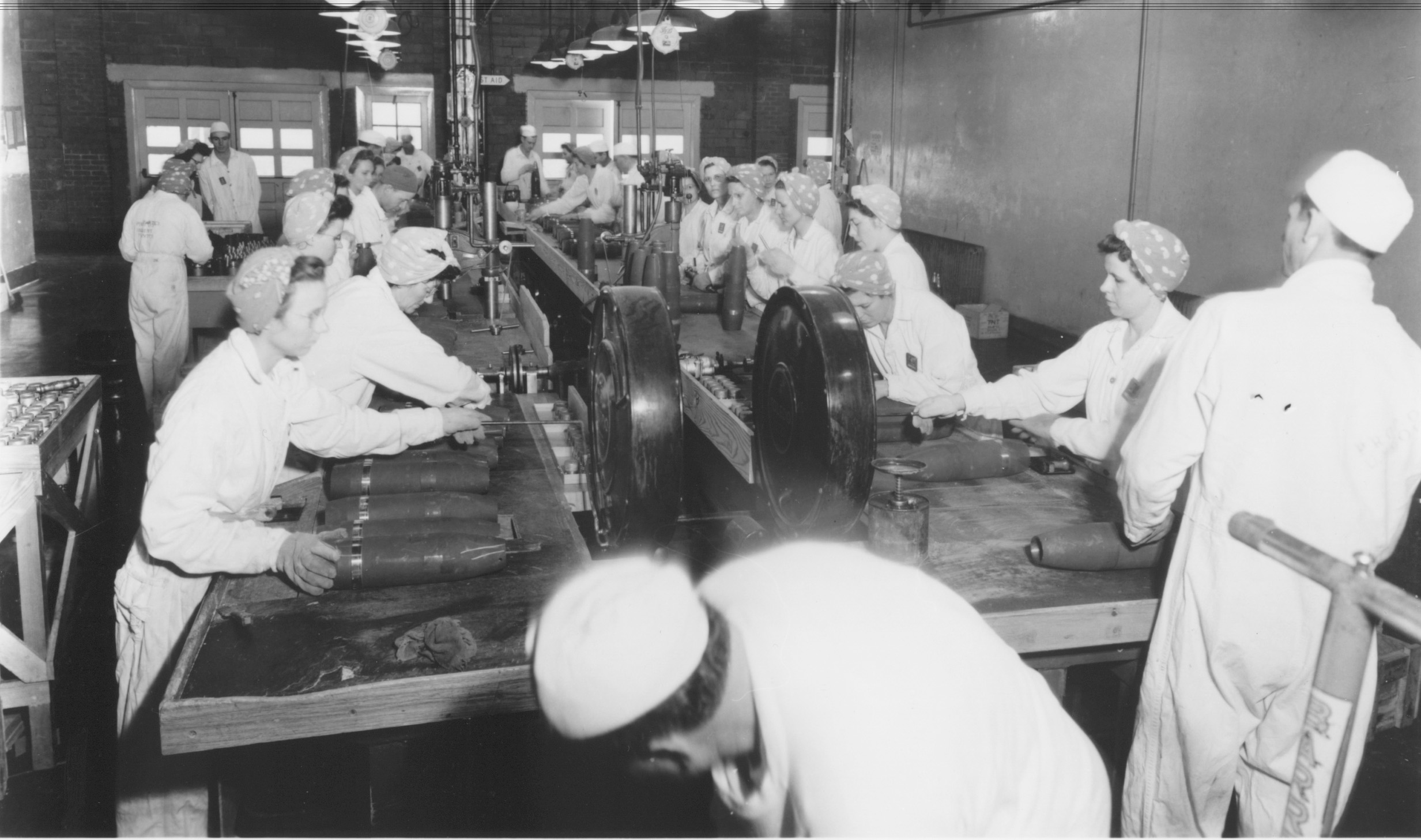
The Pantex Ordnance Plant began production September 17, 1942, and it was one of more than 70 such facilities in the United States. This year marks Pantex’s 80th anniversary.
The year began with the fall of Manilla to Japanese imperial forces, German Gen. Erwin Rommel’s freshly reinforced troops running roughshod across Libya, and the first American forces deploying in Ireland to defend a weakened, war-weary Europe. At home, the need for ordnance to support the war effort was urgent. Bombs and artillery were falling faster than stockpiles could be replenished.
Against this backdrop, the Pantex Ordnance Plant began production September 17, 1942, one of more than 70 such facilities in the United States, and the last of 14 in Texas alone. The remainder of the war was a frenzy of production until, on August 16, 1945 — exactly one day after Japan’s unconditional surrender — the plant closed.
Katie Paul, Pantex historian, explained the Cold War that erupted out of the ashes of World War II persuaded regulators to reopen the plant in 1951 and brought rapid change across the thousands of acres that comprise the site.
“With the re-allocation of resources throughout the Cold War Nuclear Weapons Complex, Pantexans have interacted with people from all over the United States at various sites to. . .serve and protect our nation,” she said.
The burgeoning nuclear era of the 1950s and ’60s brought new facilities and a growing plant staff. Among all the new faces in 1965 was Linell Carter, then a fresh graduate of Palo Duro High School in nearby Amarillo.
“When I came, Pantex was like a big family,” Carter smiled.
Behind the family atmosphere, she explained, was a commitment to help each other out in good times and bad. Concerned about going to full-time work right out of high school, Carter found her new employer ready and willing to facilitate both career and education, paying for her to attend night school. That same familial bond extended to life’s inevitable hard times, too.
“When someone had a tragedy, we’d all jump in and help,” she said. “We did lots of things together on weekends. It was a fantastic job, particularly the unity and being a part of the community out here.”
Galen Boothe, another longtime Pantex employee, echoed Carter’s praise for their colleagues.
“The workforce here is above the average level,” he said.
Where Carter began her career in human resources, Boothe applied his experience with the Army to an assembler operator (now production technician) position. From his perspective, the secretive nature of the work was a driving force behind the strong sense of camaraderie.
“When I hired on in February 1970, the public — including me — had no idea what the mission for Pantex was or what we manufacture,” he said. “The ability to exchange ideas and opinions is welcomed here and contributes to the success of our site.”
Of course, no small part of the deep fellowship and actual mission accomplishment lies with the bargaining-unit employees. According to Tonya Detten of Labor Relations, eight decades of continuous product improvement has brought many changes to Pantex, which in her world means changes to labor contracts.
“Back when the ProForce was added, it would’ve been like a police force contract,” she said, adding that today’s unions are quick to keep up with the unique purpose of Pantex. “[Today’s contract] is very specific to what they guard . . . It has evolved. As the world changed, we had to change with it.”
And, change the world has.
“Pantex is constantly analyzing how things are done and striving to find methods to accomplish tasks in a more efficient and safer way,” Boothe said.
That pattern of accomplish-analyze-improve creates an environment of constant growth and improvement.
Paul speculated the rapid rate of change, largely owing to the technology necessary for the job, would be a marvel to the workers who first occupied the Pantex site during WWII.
“From a historical perspective, one of the most notable changes has been the embrace of technology,” she said. “For many years, we were working with systems that became antiquated so quickly due to the rapid rate of technological advancement in the work that Pantex completed. Technology related to our mission is still advancing at a fast rate, but we are much better at keeping up and improving systems in the present day.”
That is only logical; improving systems is at the core of the Pantex mission. Since 1975, the site has been the nation’s primary assembly/disassembly, refit, and modification facility for its nuclear weapons stockpile. And, like any community, Pantex is constantly growing and changing.
“During the ’80s, they ramped up things for sure,” Detten said. “We’re at hiring levels we haven’t seen in decades.”
That increased staffing contributes to more than increased capacity and efficiency. It gives a new generation of Pantexans the sense of accomplishment and patriotic pride that kept Carter here much of her adult life.
“I love Pantex. I love what we do, what we stand for. I love that we can contribute something and protect America.”
See photos of Pantex throughout the years in this Pantex 80th Anniversary video.