



News
Pantex Honors Veterans
Armed Forces Day commemorated at Pantex
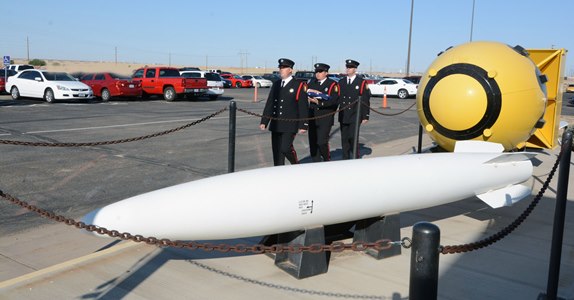
The Pantex Plant honored veterans Wednesday at its annual ceremony to commemorate Armed Forces Day. Members of the Pantex Fire Department Honor Guard raised the American flag as attendees recited the Pledge of Allegiance and sang the national anthem. Pantex has been holding an Armed Forces Day ceremony for more than 15 years to honor those who served.
Pantex has a long history of supporting military personnel and currently employs 782 military veterans amongst its workforce of approximately 3,100 people.

Pantexans Help Hungry Kids
Donations delivered to Snack Pak 4 Kids
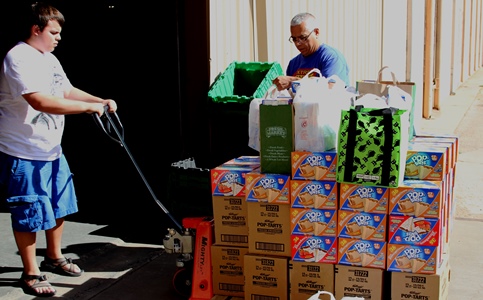
For the past two weeks, a group of volunteers at Pantex has been collecting donations for the Snack Pak 4 Kids program, gathering an impressive amount of food for needy children.
Pantexans donated more than $1,000 to the effort, as well as a variety of food items, which were placed in barrels located throughout the plant.
Snack Pak 4 Kids is an Amarillo-based charity started in 2010 to provide backpacks with snacks in them for children to take home for the weekend. The program is designed to provide food to hungry children when they are away from school and unable to access a reliable source of sustenance. The program serves over 4,000 students in 24 school districts in the Texas Panhandle.
The volunteers this week delivered 5,000 Pop Tarts, 82 jars of peanut butter, as well as other snacks and money donated by Pantexans.
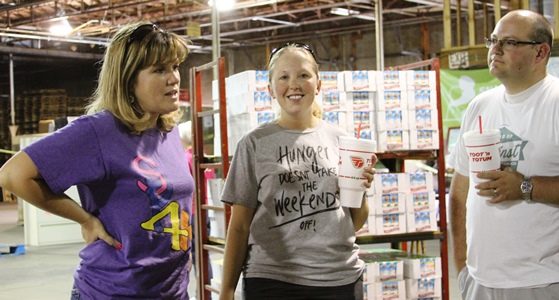
The effort was led by Pantexans Josh and Tracy Cunningham, Rick and Lisa Jones and Sherry Philyaw.
Admiral Haney Visits Pantex
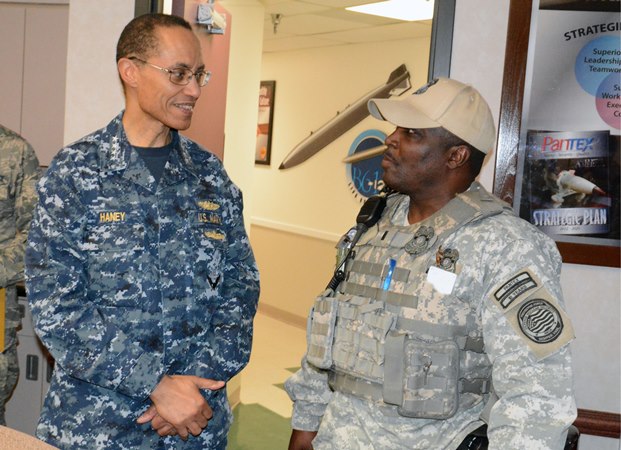
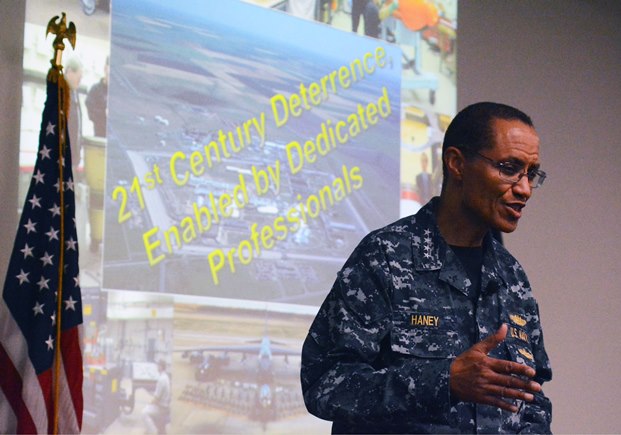
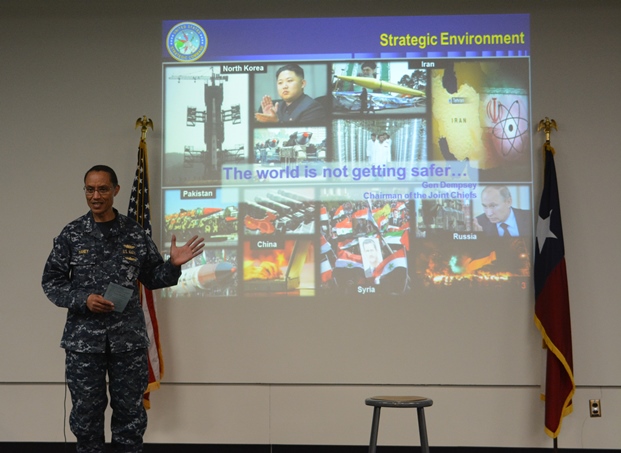
Admiral Cecil Haney, Commander, USSTRATCOM, visited Pantex Tuesday to tour various facilities and conduct an all-hands meeting with Pantex workers. Haney thanked Pantexans for the work they perform to help maintain a credible nuclear deterrent, thus ensuring the safety of the United States.
Haney briefed Pantexans about the responsibilities and capabilities of USSTRATCOM and discussed how the work done at Pantex factors into that mission. Haney said as the number of weapons in the U.S. stockpile decreases, the work done at Pantex to ensure the safety and reliability of each nuclear weapon becomes even more important.
Haney told Pantexans that although they do not wear a military uniform, the work they do to protect America is as crucial as the work done by those who do.
Secretary Makes an Impression
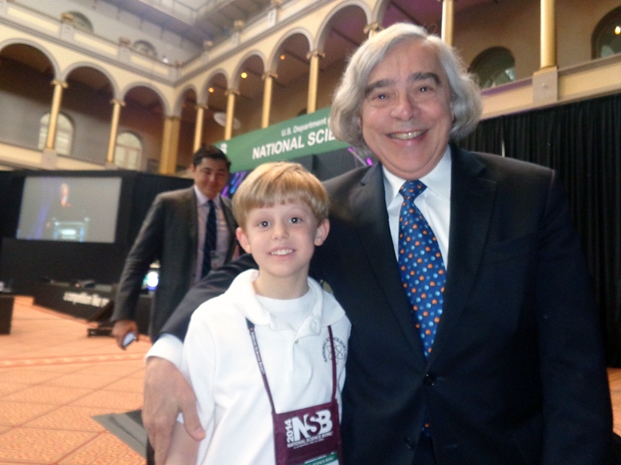
When B&W Pantex Science Bowl Coordinator Debra Halliday decided to take her 9-year-old grandson with her to the national Science Bowl competition in Washington DC last month, she thought he would have a memorable trip, but she didn’t know just how memorable it would be.
Halliday said her grandson, Griffin Koehn, was with her during the awards ceremony when Secretary of Energy Ernest Moniz was congratulating the winners and presenting trophies. As Moniz exited the stage, he stopped for a moment to talk with Griffin and posed for a photo that will no doubt become a cherished memento.
“Secretary Moniz was so gracious,” Halliday said. “He shook hands with Griffin, and Griffin said to him ‘When I grow up, I want to be a scientist just like you.”
Halliday said her grandson enjoyed being a runner during the competition, as well as visiting some of the historic sites in Washington. But getting to meet the secretary of energy was the best part of the entire trip.
Pantex to Become Wind Energy Research Center
NNSA NEWS
U.S. Department of Energy
National Nuclear Security Administration
Production Office News Release
AMARILLO, Texas -- Officials from the National Nuclear Security Administration Production Office (NPO) and Texas Tech University (TTU) signed an agreement today that could pave the way for the Pantex Plant to become a leading force in the drive to increase use of renewable wind energy.
The memorandum of understanding (MOU) was signed today in Lubbock by NNSA Production Office Manager Steven Erhart and TTU Chancellor Kent Hance and University President M. Duane Nellis. The MOU enables both parties to analyze the feasibility of creating a national research center at Pantex that would combine the resources of DOE/NNSA, Pantex and Tech’s National Wind Institute (NWI) to “create a world-class wind energy research center.”
“Pantex has clearly signaled its commitment to lead the way toward a more sustainable energy future for the federal government and the country as a whole,” said NPO Manager Steve Erhart. “The vision laid out in this MOU will build on that commitment and pay huge dividends for decades to come with our longstanding partner Texas Tech University.”
Pantex and Tech have a long historical connection. The property of the original Pantex Ordnance Plant was leased to the university for $1 after the plant closed following the conclusion of World War II. The federal government reacquired some of the land in 1951 to open the Pantex Plant. TTU now owns approximately 6,000 of the Plant’s 18,000 acres, which is farmed for research purposes and used as a security buffer for Pantex.
The core of the agreement signed Thursday is the new Pantex Renewable Energy Project (PREP), a five-turbine, 11.5 megawatt wind farm that is being built on federal land east of the main Pantex Plant. The project is expected to be completed this summer and will provide about 60 percent of the plant’s annual electrical energy needs. Through the MOU, TTU and NWI will receive access to information about PREP and the plant’s energy usage, including operational and output data, which will be used to study ways to make renewable wind energy more reliable and efficient.
“As the site of the largest federally owned wind farm, Pantex is well positioned to be a leader in the federal government’s emphasis for increased use of renewable wind energy,” Erhart said. “Given the historical connection between Tech and Pantex, it makes perfect sense to join our resources together to help secure the energy future for our country and our planet.”
The MOU describes a desire by the signatories to develop a TTU wind energy center that will be built on Tech’s portion of the Pantex land. The center would have access to much of the rest of the open land on the Pantex site to develop a utility-scale wind energy system to support the nation’s long-term energy goals by conducting wind research, contributing to local workforce development and developing wind energy technologies that help resolve the key scientific challenges facing the industry.
The mission of the NNSA Production Office is to ensure the safe, secure and cost-effective operation of the Pantex Plant, Amarillo, Texas, and the Y-12 National Security Complex, Oak Ridge, Tennessee.
Follow NNSA News on Facebook, Twitter, YouTube, and Flickr.
Established by Congress in 2000, NNSA is a semi-autonomous agency within the U.S. Department of Energy responsible for enhancing national security through the military application of nuclear science in the nation’s national security enterprise. NNSA maintains and enhances the safety, security, reliability, and performance of the U.S. nuclear weapons stockpile without nuclear testing; reduces the global danger from weapons of mass destruction; provides the U.S. Navy with safe and effective nuclear propulsion; and responds to nuclear and radiological emergencies in the U.S. and abroad. Visit http://www.nnsa.energy.gov/ for more information.
Photos available upon request.
CONTACT
Brenda Finley
NNSA Production Office Public Affairs
Office (806) 477-3120
Steven Wyatt
NNSA Production Office Public Affairs
(865) 576-9918
Area Team Races Ahead in Washington
Panhandle Junior High takes second at National Science Bowl Car Race
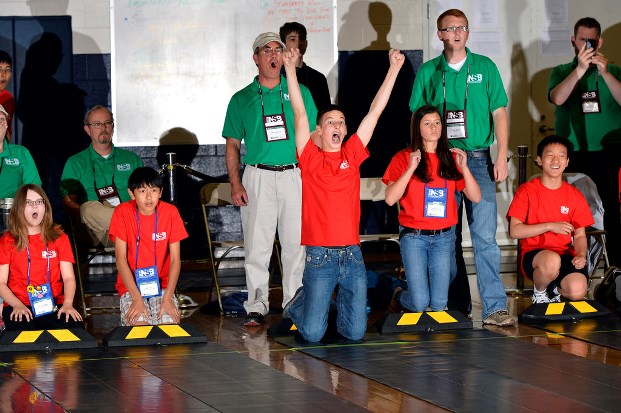
A team of five competitors from Panhandle Junior High School capped off an eventful visit last week to the nation’s capital with a second place finish in the electric car race competition at the National Science Bowl.
Coach Kevin Meyer said the team competed hard, but was barely edged out at the finish line of the final race.
“Our team was very proud of that finish, only 15/100 of a second difference from first place,” Meyer said. “We had a great time and will treasure the experience forever.”
The academic portion of the Science Bowl is supplemented each year for middle school students with a battery powered car race that gives competitors the chance to apply their knowledge to designing a car to compete on a 20-meter track.
The Panhandle team won the right to represent the area at the national competition by besting 40 other teams in the Pantex Middle School Science Bowl competition in February. They were joined on the trip by a team from Lubbock High School, which won the high school competition.
The Department of Energy sponsors the Science Bowl competition each year to give students across the country a chance to compete in a contest of science and math knowledge. More than 50 regional competitions are conducted, with the winners having the chance to represent their area in Washington.
Debra Halliday, Science Bowl coordinator, traveled with the team as a sponsor and said the students relished the chance to demonstrate their knowledge of science and math, and to visit some of the iconic locations in Washington.
“It was such a pleasure to see this team do so well this year. They worked hard for a long time to receive this recognition,” Halliday said.
The members of the team are: Bradlee Brandvik, Arianna Hann, Samuel Koone, Noah Ford and Grace Kuehler.
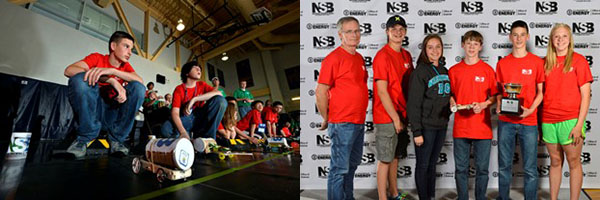
B&W Pantex Hosts Annual Electric Car Race Saturday
Area middle schoolers work to build renewable energy vehicles
The next great innovator in modern automotive design might just be getting their start this weekend at the B&W Pantex Electric Battery Car Race.
Aspiring auto engineers from middle schools across the Panhandle will gather at Caprock High School to put their skills to the test in a 20-meter race to see whose design is the fastest and most stylish.
The car race, which is part of the National Science Bowl, will pit 24 teams of car builders against each other in a competition to build the fastest battery powered car. The event challenges students to use scientific knowledge, creative thinking, experimentation and teamwork to design and build a car powered by renewable energy.
Each year, the U.S. Department of Energy (DOE) sponsors the car races, with different types of propulsion chosen for the cars. In prior years, the cars were powered by solar power or Hydrogen fuel cells. This year, DOE chose electric battery cars. Teams were given kits a month ago to assemble into the fastest, most stylish car they can create.
“This is an exciting way for these students to get hands-on experience applying the knowledge they learn in school,” said race coordinator Debra Halliday. “It’s a fun way for us to encourage a new generation of inventors and engineers.”
The races start at 9:30 a.m. Saturday at Caprock High School. Each race will feature four cars running down a 20-meter track, as well as a competition for car design and most attractive car.
CONTACT
Greg Cunningham
Public Affairs
Office (806) 477-5140
Pager (806) 345-1560
College Pre-Hires Visit Pantex
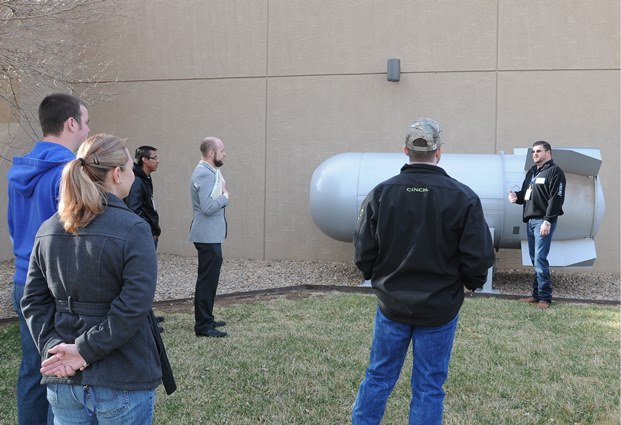
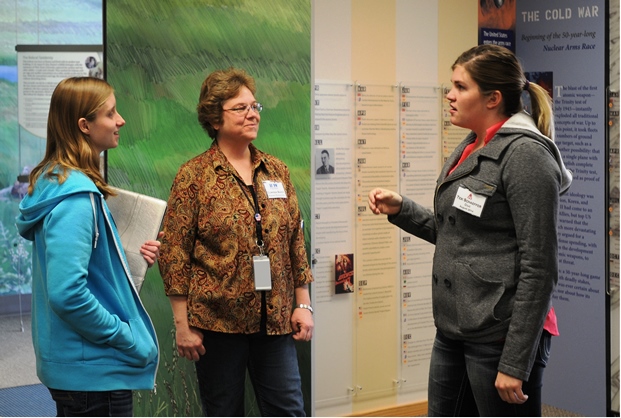
Engineering has always been an in-demand skill at Pantex, and for six years, the Pantex College Pre-hire program has worked well to help meet the need. But the growing demand for employees in other hard-to-fill jobs has meant the program is branching out in a new direction.
Shane Rogers, who has managed the pre-hire program since it started in 2007, just returned from a month-long tour of seven colleges in Texas and New Mexico. In addition to engineers, Rogers was looking for scientists and IT professionals who had important knowledge they could bring to the plant.
“We have had so much success finding and hiring engineers with the pre-hire program that other divisions started to approach us to see if we could help out,” Rogers said. “We’re hopeful that we’ll be just as successful expanding into these new areas.”
This is the first year Rogers looked for computer science (CS) and computer information systems (CIS) majors, in addition to the traditional engineering, math and science majors. The number of high-paying jobs in the IT marketplace makes it extremely difficult to find and recruit people with that skill set.
The pre-hire program reaches out to juniors and seniors who will agree to come to work at Pantex, in exchange for reimbursement of tuition and fees for up to two years. A group of students are interviewed at the schools, then selected candidates are invited to come to Pantex for a second interview and a chance to see some of the work done at the plant. The first semester of the program in 2007, Rogers made offers to six students. This semester, he hopes to make 26 offers.
Recruiters visit a variety of schools proximate to Pantex, including West Texas A&M, Oklahoma State, Texas Tech, University of Texas at El Paso, New Mexico State, New Mexico Institute of Mining and Technology and University of New Mexico. Students from as far away as Tennessee and Maryland have been invited for onsite visits following phone interviews.
“The idea is to essentially create a pipeline for students to come to Pantex from schools in our area,” Rogers said. “It benefits them by helping to defray some of the cost of tuition, and it certainly benefits Pantex by recruiting and retaining talented employees.”
Pantexans Donate Cookware to Charity
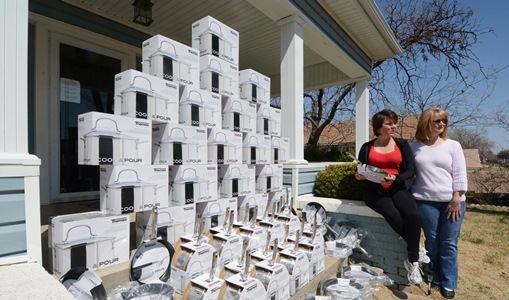
Cooking dinner will be a lot easier for about 20 needy families in Amarillo thanks to the generosity of Pantexans, who used a grocery store promotion to secure more than $6,000 of cookware for a local charity.
More than 70 pots and pans were donated to local charities by Pantexans Scott and Lauri Minton, who had been collecting stickers donated by their coworkers. The stickers represent nearly $100,000 in groceries purchased from United Grocery Stores, an area chain that has been giving stickers redeemable for cookware since October.
“I think this really represents the Pantex spirit. As Pantexans, we are always looking for ways to have a positive impact on our communities,” said Lauri Minton.
Lauri Minton said she and her husband started collecting the stickers when they realized they did not need new pots and pans, but that there were people in Amarillo who did. The Mintons spread the word around the plant, and were quickly overwhelmed with the positive response.
As the promotion entered the final days, word spread through social media, and the pace of giving picked up even more.
The pots and pans – over 21 complete sets – were dropped off at Martha’s Home Friday, an Amarillo shelter that provides a place to live for homeless women with children while guiding them toward a lifestyle of self-sufficiency. Several pots and pans were also donated to the Pantex Christmas Project, which has been providing Christmas gifts to needy families for more than 50 years.

Plant Tradition: Lunchtime card game ongoing for 40 years
Though some of the faces have changed, there’s one thing that hasn’t. If it’s lunchtime at Pantex, there’s a game of Spades taking place. What started as a way to pass the time in the cafeteria during lunch is a ritual for Andy Marshall, Dale Moon, Jimmy Myers and Kevin Brown, whose job it is to bring the cards.
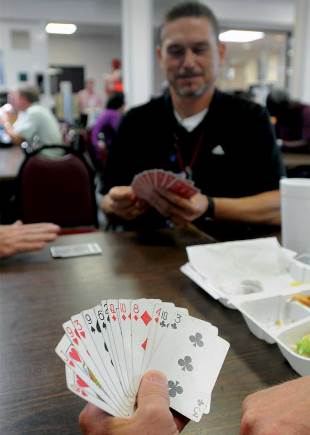 “It’s fun. I see it as a break in the action of the job. Kinda like recess in elementary school,” said Myers, a technical advisor and 33-year Pantex veteran. Eight hands are played each day with scores recorded in a log book. Why Spades? “It’s easy to play and eat at the same time,” said Myers. “Not much strategy involved.”
Two alternate players, Kenny Steward and Mike Brinson, fill in when needed. On call are Barry Hill, Pablo Reyes, Adam Myers and Ron Wilcox.
“People play until they retire, leave or are unable to play,” explained Myers. “We then usually let the first alternate in the game replace the starter.” At times, players leave Pantex to work elsewhere and then return to the Plant, as is the case for Steward and Brinson. “They are waiting for their chance to be the starting pitcher, rather than a bullpen ace,” said Myers.
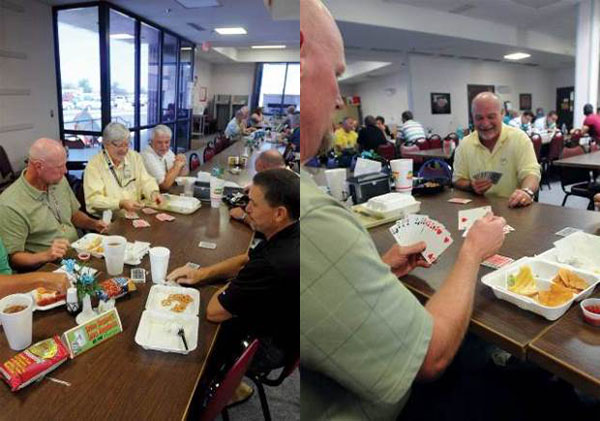
There’s not much Kevin Brown, program manager and 18-year Pantex veteran, doesn’t like about the lunchtime card game. “The camaraderie and competition, with a little trash talking, allows us a break from the hectic day, even though for just a short period of time,” he said. “It can be a stress reliever.”
Special rules keep the 40-year-old game interesting. One is that no matter how far behind you are, you can win in the last hand. But serious business it isn’t. “We usually remember everyone’s most ignorant play and then keep reminding them about it later,” said Myers.
Among Myers’ favorite memories is the time then-General Manager Denny Ruddy approached the group to ask what they were playing. “We all thought, well, I guess this game has come to an end. But, he was truly interested and began making fun of how Steward was playing his hands.”