



News
Pantex accepting 2026 Investment Grant proposals
AMARILLO, TX– PanTexas Deterrence, LLC, (PXD) the management and operating contractor of the Pantex Plant and the Amarillo Area Foundation (AAF) are now accepting proposals from nonprofit and charitable institutions throughout the 26 northernmost counties in the Texas Panhandle.
Application opens Monday, April 6, and closes at noon May 1, 2026. Grant amounts will range from $2,500 to $10,000 and the submissions will be reviewed by the Advisory Committee for the Pantex Community Investment Fund, a component fund of the Amarillo Area Foundation.
Organizations who fit the eligibility requirements and whose work is in line with the priorities are encouraged to apply. Only one application per organization will be accepted and prior recipients with an open Pantex grant are not eligible.
The priorities for funding are:
- Basic Needs (Food, Clothing, and Shelter)
- Children, Youth, and Family
- Community Development
- Education
- Health and Wellness
Priority will be given to proposals from organizations located and operating in one of the 12 contiguous counties surrounding the Pantex Plant with preference given to projects that serve multiple priority counties. These counties are Armstrong, Carson, Deaf Smith, Donley, Gray, Hall, Hutchison, Moore, Oldham, Potter, Randall, and Swisher.
For more information go to https://www.amarilloareafoundation.org/pantex/.
Applications are available online on the Amarillo Area Foundation’s Spectrum Portal. To register or log in, go to https://aaf.spectrumportal.net/.
If you have any additional questions, please contact Raul Rodarte-Suto at 806.376.4521 or raul@aaf-hf.org.
PanTeXas Deterrence, LLC (PXD) is the management and operating contractor for the National Nuclear Security Administration’s Pantex Plant located in Carson County near Amarillo, Texas. Pantex maintains the safety, security, and effectiveness of the nation’s nuclear weapons stockpile. PXD is a joint venture led by a BWX Technologies, Inc. (BWXT) subsidiary – it also includes Fluor; SOC, A Day & Zimmermann Company; and The Texas A&M University System.
For more information on Pantex, visit www.pantex.energy.gov. Follow Pantex on Facebook, X, YouTube, Instagram, or LinkedIn.
CONTACT
Darla Fish
Communications
Office (806) 573.0484
Dr. Bob Wester visits Pantex as inaugural President’s Colloquium speaker
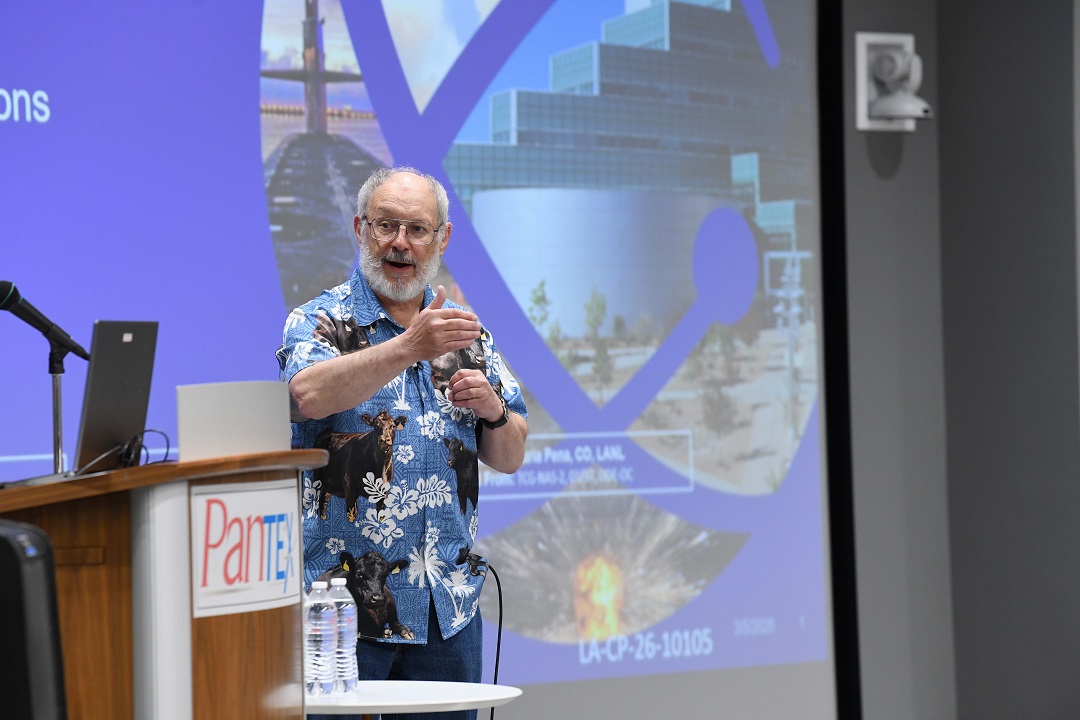
Dr. Bob Webster speaking to Pantexans at the first President’s Colloquium. Photo by Michael Schumacher.
According to Merriam-Webster, the word colloquium is defined as an academic meeting in which specialists deliver an address on a topic and then answer questions from the audience.
The idea of having these colloquiums is to enable experts from the Nuclear Security Enterprise (NSE) and key stakeholders to share important information and insight with Pantexans,” said Kelly Beierschmitt, Pantex president and general manager.
Earlier this month, the first President's Colloquium was held at Pantex with Dr. Bob Webster from Los Alamos National Laboratory (LANL) as the distinguished speaker. Webster is the Deputy Laboratory Director for Weapons at LANL and has three decades of experience in the weapons industry.
“The President’s colloquium is an important forum to engage directly with the workforce, share perspectives, and reinforce how each site contributes to the broader mission,” said Webster.
Webster, wearing a Hawaiian shirt that featured cows, welcomed the full auditorium of Pantexans. He introduced his topic by highlighting his shirt and detailing how it is a historical nod to a time at LANL when Hawaiian shirts and jeans were the traditional Friday look. Webster stressed the importance of understanding the history of the mission to continue to move forward.
Both Beierschmitt and Webster spoke on the importance of the laboratories and sites in the NSE communicating and working together to benefit the mission of maintaining the nation’s nuclear stockpile.
“No one site executes the mission alone,” Webster said. “Our work is deeply interconnected, and understanding each other’s challenges, capabilities, and priorities makes us more effective as a whole.”
The classified briefing focused on Webster’s experience and different projects he’s worked on while also highlighting how Pantexans contribute to his work.
“It was enlightening and refreshing to hear the perspective of another site,” said Scott Beckett, with Pantex’s IT Service Management division.
Another Pantexan, who is new to the site, also enjoyed the discussion.
I found the topics discussed very engaging and informative,” Hannah Felker, Pantex program specialist said. “Attending events like this are valuable because they help expand our understanding of the work we do in support of our mission.”
Webster closed his discussion focusing on how important the mission is in today’s time. “When we take the time to engage across sites, we build trust, improve coordination, and ultimately strengthen the safety, security, and credibility of the mission we all support.”
For Storage Optimization Team, it’s all about the fit
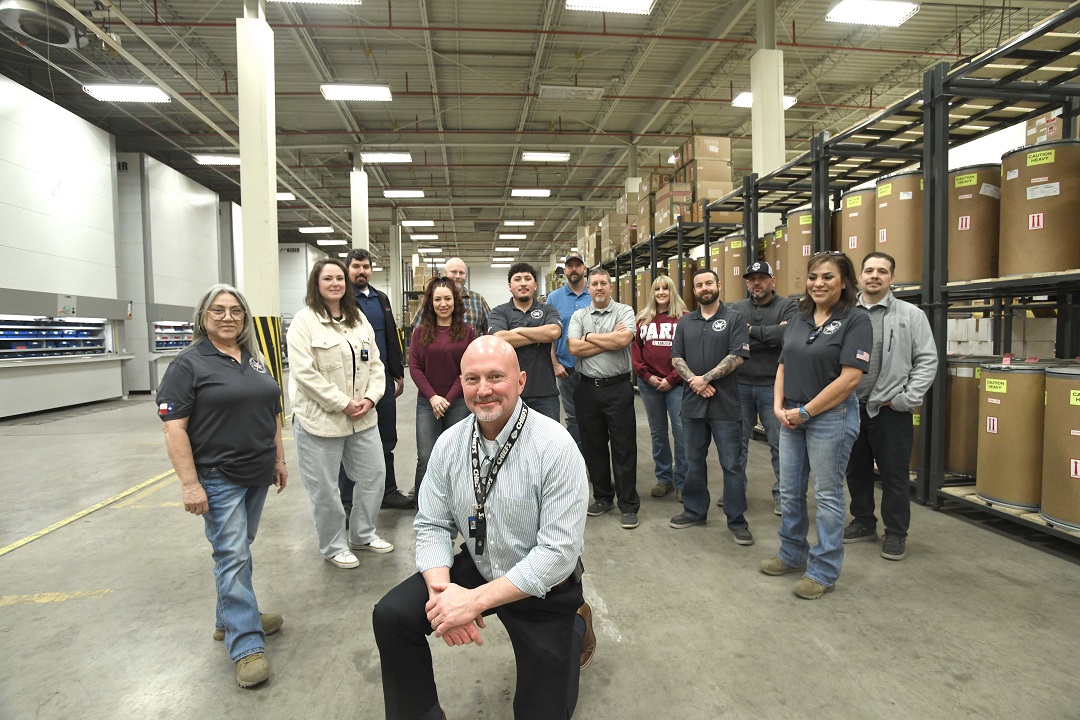
Members of the Storage Optimization stand in one of their recently reorganized facilities, providing much-needed space for current and upcoming projects. Photo by Michael Schumacher.
Frenzied panic ensues as various cube-shaped blocks descend from some ethereal plane with no rhyme or reason. As the misshapen objects fall one by one faster and faster, stacks piling higher and higher, the player must identify how to move, orient, and ultimately sacrifice space with the hope that new space will be freed.
For most people, they know this as the game Tetris. For Production Stores Managers Robert Spence, Sam Russell, and their team, it’s just another day at the office.
In charge of all receiving, staging, storing, and delivering weapon components to line operations for assembly into nuclear weapons, Spence and Russell have found themselves at the center or, in keeping with the metaphor, the ceiling of their storage capacity for the past several years.
“There was simply not enough space to meet current and future needs,” Spence said. “Not only insufficient space by square footage but also by the type of space needed for the hazards involved and inability to get rid of material no longer needed. In some instances, surplus and/or obsolete inventory was being retained beyond program needs.”
Pantex is scheduled to begin work on several more projects over the next few years, and there will be need for even more storage space in the near future to prepare. With such limited space and time to work with, accepting defeat and the proverbial “game over” were simply not options.
“Along with Program Management, an optimization project was initiated to look at capacity and all the challenges, to ensure future space would be available,” Spence said. “Schedules and metrics were established to set priorities and monitor progress.”
With the team working together to evaluate needs and formulate a plan, they took steps to acquire materials and better utilize the currently provided storage space to meet the required standards of production and scheduling.
“By reducing the overall amount of inventory onsite, focusing tactically on certain types of material, and optimizing the current space, we are able to take all the new incoming material to meet mission needs well into the future,” Spence said.
The new space will continue to provide Pantex with sufficient storage capability for the foreseeable future.
Another part of the plan was to increase the already available storage space to prevent the potential for a similar situation to present itself in the future.
“Strategically, we have worked hard to look at what our future needs are versus the space we currently occupy and project the needs out at least five to ten years,” Spence said. “As we continue work to reduce, optimize, and right-size the storage space, we should be in great shape moving forward. This will include the addition of two new facilities.”
Much like a game of Tetris, when the walls seem to be closing in and fewer and fewer useful pieces make themselves available, the panic and frustration can begin to grow. In these cases, there really is only one thing to be done.
“As with most organizations, there are many challenges – all different and unique,” Spence said. “The first step was to identify the problem/need, then work with the groups that could help us move toward the end goals with the support of management. To date, it has worked out very well and should continue to be a bright spot for Pantex.”
What’s Life Without a Little Risk
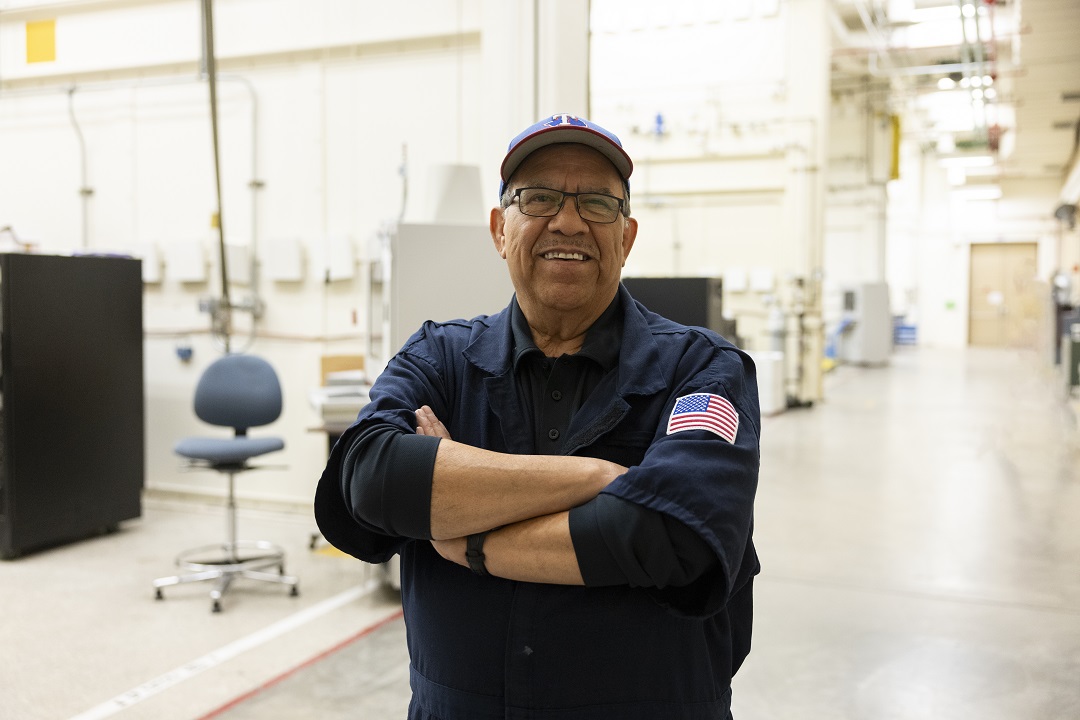
Pete Lopez doesn’t mince words.
“I knew what I was signing up for. It’s a risk-reward job. Of course there are risks involved, but there is so much reward knowing what we contribute to and what that means.”
Lopez has gained and employed a wealth of knowledge and experience in his 54 years serving the Pantex mission. He carries himself well, tells a story like an old friend, and has an infectious smile that reminds you nothing is ever as bad as it seems. Maybe that’s because Lopez himself truly knows that nothing really is ever as bad as it seems.
“I grew up in a little town called Munday, Texas. I was number 9 out of 10 kids. I got a scholarship to North Texas State for drama out of high school, but we were very poor so it just didn’t feel like a real option.”
Perhaps it was this moment where Lopez first learned the delicate balance between risk and reward.
The risk:
“I had a friend who had gotten drafted to fight over in Vietnam. I knew I was going to get drafted too, so instead of college I just went and signed up. It was good for me, though. It made me grow up fast.”
The reward:
“I used to think we had it really bad being so poor when I was growing up, but … when I got to Vietnam and saw people eating scraps wherever they could find them, it started to change my mind. I met a kid down there who was about my size. I wrote my mom and told her to send me all of my clothes to give to him. It was just a different world.”
After Vietnam, Lopez found himself at a crossroads. The year was 1972, and at 22 years old the young man who had to grow up much faster than most found himself on the road that led to Pantex.
“I was in a conversation with somebody and they asked me ‘have you ever thought about going to work out at that bomb plant?’ I said, ‘bomb plant? What’re you talking about?’ I’d never heard of any bomb plant.”
A short time later, Lopez found himself at the old bomb plant, just not where you would expect.
“I started out in the kitchen,” he remembered as he cracks a smile that quickly gives way to a chuckle. “Eventually they put in a new grill and I was the hamburger cooker.”
While he enjoyed this role, the calling to something greater presented itself. There again he met his old friends, Risk and Reward.
The risk:
“I bid out and became what was then called an assembly operator. (We call them PTs now.) This was back in the ‘70s. The Cold War was still going on, and we knew it was an important job. We knew what we were building and how important it was. It was a different world back then. It’s serious now, but it really felt serious then.”
The reward:
“I enjoyed what we were doing. I couldn’t wait to get to work every day. I still enjoy, it to this day. The standard was to take every day very seriously. I remember saying ‘we got boys on the other side of that water, and if we have to use these things, the ones with my name on them, those better work. I took pride in my work. That was important to me.”
Over a half-century later, Lopez is now settling into the twilight of his career. His life lessons don’t stop once he leaves the site. At home, having raised two sons, and watching as his three grandchildren will soon face the crossroads he did decades ago, he does his best to teach them the value of each day.
Currently, Lopez serves as a quality assurance technician in Satellite Operations where he relishes the role of passing on his immense knowledge and experience to the ones who will follow.
“I do my best to train all of the new people the way they need to be trained. You can’t overemphasize the importance of the job we do. You gotta make sure you do it right. You gotta take pride in your work.”
When all is said and done, Lopez can look back on his life knowing that each time he weighed the risk, and the reward, the risk was never as significant as the infinite growth that would come his way.
The reward:
“When I started out, I was just so blessed and put with really good people, people who did everything the right way. Everybody supported you; you could reach out to anyone for guidance. That’s what I try to do for those new ones that come to me.”
If Lopez has proven anything, whether it be to himself or those who get to know him. It’s that the only real risk in life is never taking a risk at all.
Paws on patrol
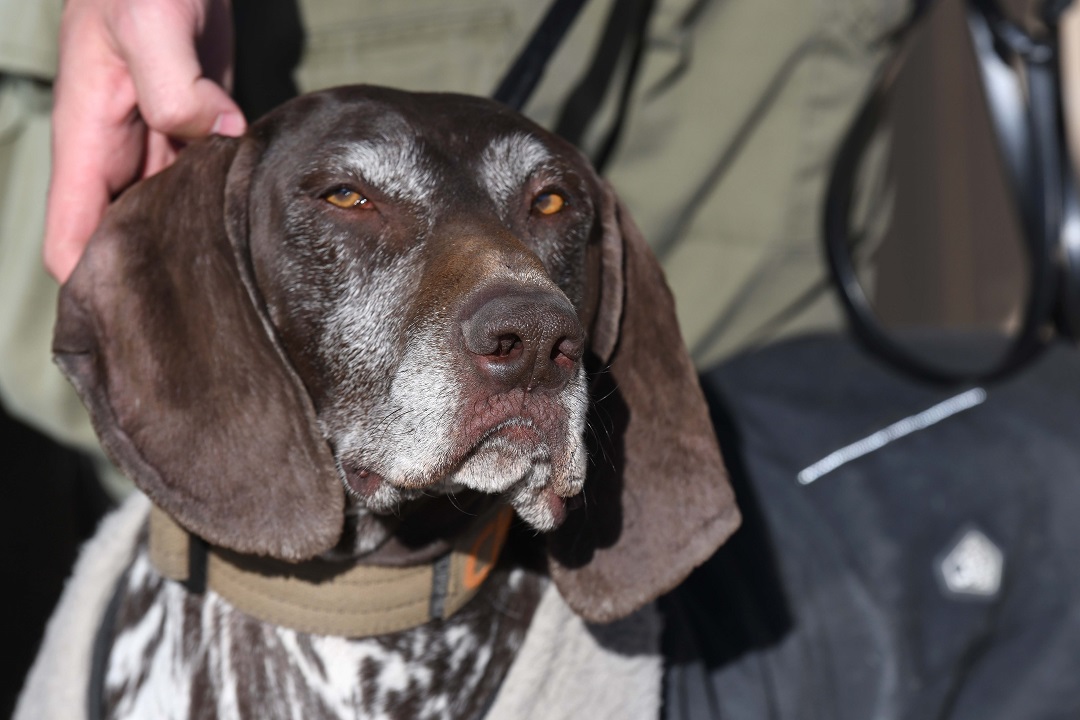
Pantex is home to a large, well-trained team of security police officers, otherwise known as the ProForce. But there are five members of this dedicated team that stick out from the rest. They don’t swipe badges or carry radios, but they do love a good treat. With noses trained sharper than any sensor and loyalty that can’t be taught, these team members are a powerful reminder that sometimes the best security comes with a fur coat and a wagging tail. Enter the good boys and girls of Pantex: Chief, Hazel, Alo, Stryker, and Hunter.
Canine units offer unique capabilities that greatly augment human efforts in various missions. Their senses are significantly more sensitive than those of people, enabling them to detect subtle scents associated with a variety of substances, even in challenging conditions or when items are concealed. Much like people, the dogs all have their strengths and bring different skills to the table.
“Some dogs might struggle with low hides, deep hides, or high hides,” K-9 Handler Wesley Wood said. “It’s very important that we spend time getting to know them so we can encourage their strengths.”
Their specialized sensory input allows for rapid and precise detection that is unattainable through human observation or technological means alone. They possess super agility, endurance, and a natural ability to navigate complex terrains, making them incredibly valuable to rescue operations, tracking, and perimeter security.
“The dogs are an incredible asset to Pantex and our protection strategy,” K-9 Operation Manager Captain Bobby Ovalle said. “They work in tandem with our current protective posture and make for excellent partners to our security police officers.”
These officers exhibit a great sense of pride in their work and every handler is quick to say how much their dogs “love their job.”
“Hunter loves to work. He loves doing a good job and you can always tell that he walks like he owns the place when he finds an odor or does a good job,” K-9 Handler Cali Bernard said.
But just like people, the dogs like to decompress. They love a variety of activities like hiking, swimming, going to Home Depot or Lowe’s, and, in Chief’s case, napping on the couch.
Canine units are a powerful reminder of the benefits of collaboration. Their presence provides a psychological deterrent and their behavioral traits allow for them to contribute to mission success in ways that complement and enhance our physical security requirements. When it comes to protecting the site, they really have a nose for it.
Drones taking Pantex into the future in more ways than one
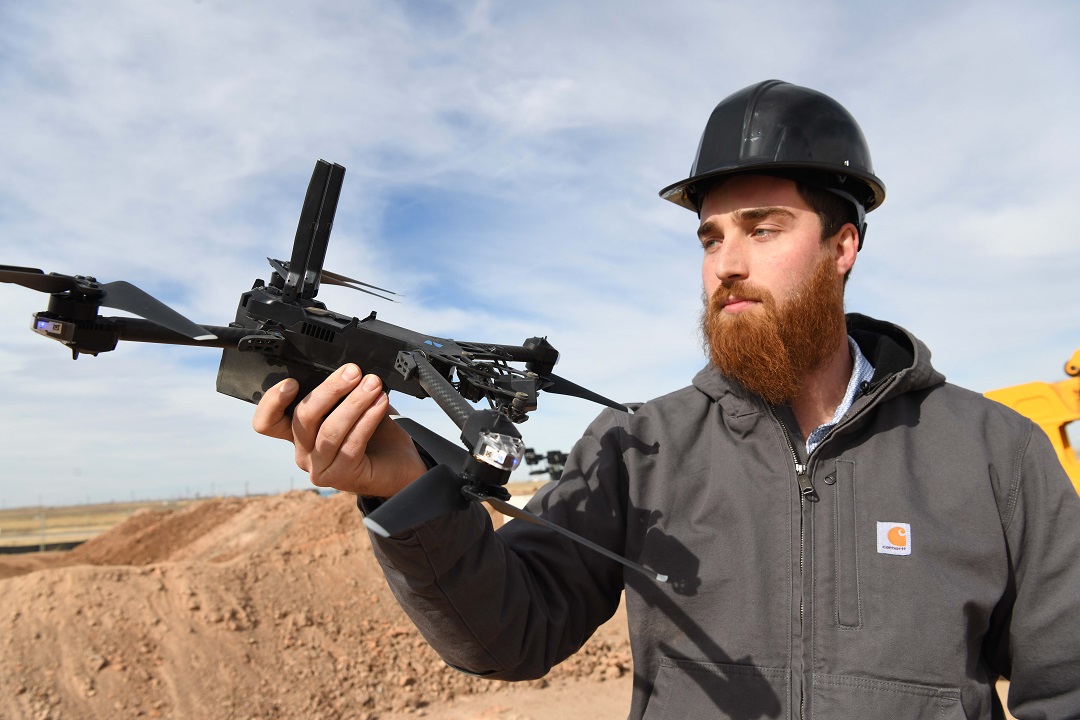
As Pantex continues to develop its drone aviation program, the site’s fleet is being employed in new, exciting ways.
“With our current drones, we are doing 3D modeling,” explained Infrastructure and Projects Director Ryan George. “The first is of the water tower, with a goal of providing Projects Engineering a complete 3D model. There’s a project to improve the ladder and access. Using the drones to complete that model means people don’t have to climb up there — it’s a safety issue.”
George makes a crucial point about the drones’ safety benefit, yet that alone isn’t the driving force behind them.
“Drone inspections started out as a Plant-Directed Research and Development project I proposed,” said Reliability Programs Performance Analyst Tony Burks. “We have a lot of aging infrastructure and they’re starting to get damaged — cracks and so forth. It’s getting hard to track all that damage.”
So, how do the drones compile data on aging infrastructure?
“We use the drones’ 3D rendering software,” Burks said. “Using AI, it will go take all the images, and we put that into a software … that lets us calculate distances to within centimeters. Over time, we can look and see if there’s any damage, discolorations, or rust that’s formed and is starting to grow.”
The longer-term idea, as Burks described it, is to create three-dimensional models of Pantex buildings. The use of these models varies from helping Infrastructure to Safeguards and Security and beyond.
“If you do a 3D model of facilities once a year, basically, you can provide indications of settling or structural issues,” George said.
The more use cases that crop up for drones, the more varied, too, is the hardware employed. After all, not all drones operate in the skies above.
“Our domestic water tanks — any of your freshwater tanks — have a five-year inspection environment,” George said. “So, we either have to put a human being in dive gear or we have to drain the tank completely; do the inspection, the cleanup, and refill the tank; or, if we have an inspection drone, we can just put it in the tank.”
It seems when it comes to drones, the sky isn’t the limit — the imagination is.
Women in Weapons: The Female Leaders of Pantex Operations
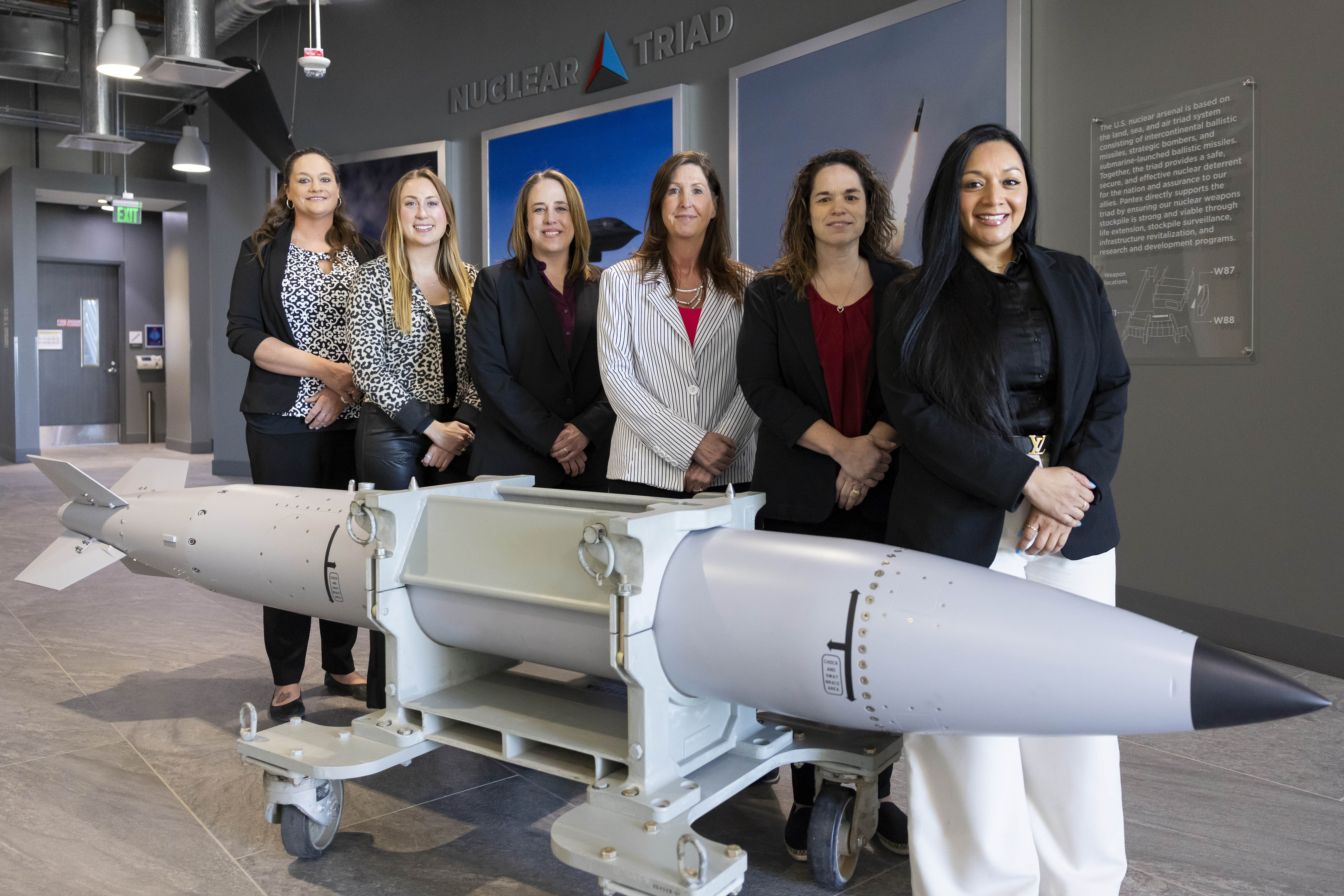
The six women of Pantex Operations. From L to R: Whitney Conner, Jordan Payton, Adriene Marcos Ott, Daphne Gann, Juanita Jones, and Crystal Ybarra
At Pantex, we build bombs.
We build them safely, we build them efficiently, we build them with quality. From the minds behind designing efforts, the analysis required for testing, and the hands that put them together, national security is our mission.
When it comes to efficiency, Pantex’s Production Section Managers (PSMs) work diligently to make sure that work remains on schedule, that their respective teams know what the plan is, and what is expected of them.
In this unique industry that has been made up mostly of men from various mechanical and technical backgrounds, Operations PSMs Whitney Conner, Daphne Gann, Juanita Jones, Adriene Marcos Ott, Jordan Payton, and Crystal Ybarra make up the growing female production leadership at the plant.
From being a former a schoolteacher, auto mechanic, x-ray technician, or body shop technician, their various career paths led them to the operations world of Pantex where their work and accomplishments presented them with an opportunity to lead.
Women in operations leadership are rare, but these six have set the example that by having the interest, obtaining the skills, and exemplifying leadership in their daily work, they don’t have to be.
So, what do these six leaders have to say about women in leadership, their work experiences, and their best advice for those who aspire to serve in leadership?
Why is it so important to have women in leadership?
Whitney Conner: It’s easy to box yourself in on what jobs you can and cannot do. Seeing women out there every day working in leadership roles is a way to show other women that these jobs are out there and available.
Daphne Gann: It provides different perspectives, viewpoints, and experiences along with more robust discussions that lead to better decision making.
Juanita Jones: I think it introduces a diverse perspective. It allows us to serve as role models for those who have the traits to lead, but may not feel that they can. It’s important for us to step into these roles.
Adriene Marcos Ott: It is critical because diverse lived experiences lead to more balanced and effective decision making. Different perspectives are especially valuable when navigating complex or sensitive situations.
Jordan Payton: I think it provides representation for other females. We can bring in more conversations from a different perspective which benefits the entire group.
Crystal Ybarra: I feel like female leaders can bring different perspectives and experiences, whether it be in life or on the job. We bring different problem-solving skills to the workplace which can introduce different approaches to any particular scenario.
What is the best advice you received as you prepared for leadership?
Crystal Ybarra: Ask the question. In a position such as a PSM, one encounters so many new situations. The courage to ask the question is imperative for growth and effective decision making.
How did the Pantex culture prepare, and motivate you to take the step into a leadership role?
Whitney Conner: It’s amazing for people who want to find new opportunities. There’s always an opportunity to move around within the Pantex workforce. I’d seen the supervisor job post and knew from speaking with other leaders throughout the south end that I was ready to take on that role.
What advice would you offer other female employees who aspire to serve in positions of leadership?
Daphne Gann: Don’t be intimidated. You can do what you put your mind to. As long as you lead by example you will succeed.
Did you ever see yourself in a leadership role? Or did it first become an opportunity while at Pantex?
Juanita Jones: I never aspired to be a PSM. It took encouragement and recognition from another female leader before I noticed the leadership qualities in myself.
How have your experiences working within your departments prepared you to lead?
Adriene Marcos Ott: Having started as a technician in the SNM (Special Nuclear Material) department, I bridge the gap between management strategy and technician execution. This allows me to spot potential operational issues before they occur because I understand the technical realities my team faces every day.
What was a challenge of moving into a leadership role?
Jordan Payton: I think for me, it’s that I wasn’t a tech before. I didn’t feel adequate not having the knowledge of day-to-day operations like others. Having trustworthy peers remind me of my potential gave me the courage to apply for it.
Whether through challenge, opportunity, or walking the border of their comfort zone, these six leaders prove that their hard work and determination are an inspiration to all and their stories a roadmap to what we are capable of.
Pantex Proud: Kennedy Venneman
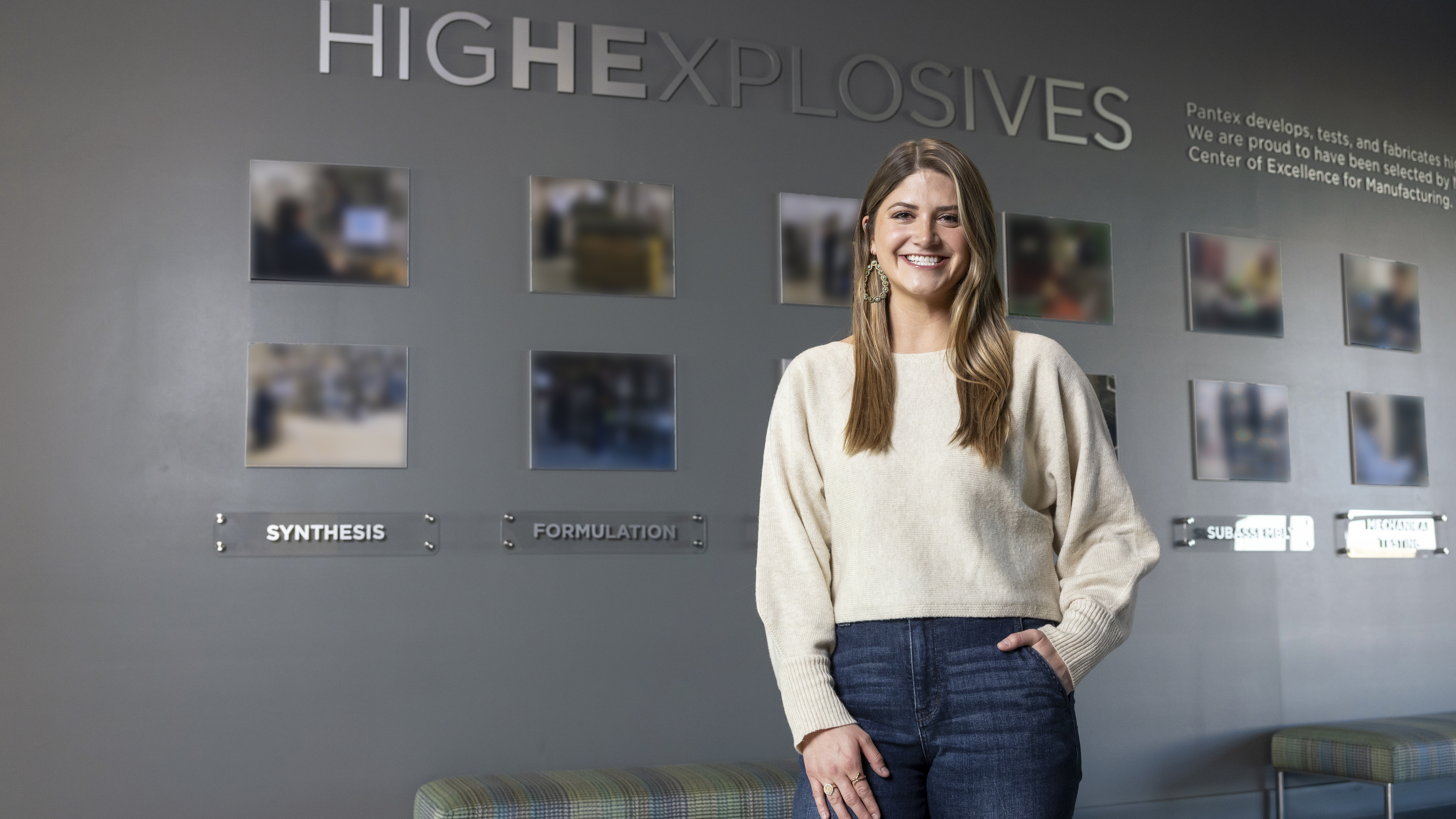
Safety Analyst Kennedy Venneman enjoys working alongside people committed to going the extra mile for Pantex’s mission and the safety of others.
“The work that we do at the plant is truly unmatched,” said Safety Analyst Kennedy Venneman. “We have incredible scientists, engineers, and technicians who have established the benchmark for excellence in our field. It's an honor to be part of it.”
In many ways, the newness of Pantex hasn’t worn off for Venneman, four years into her career. As she considered the work community, the site’s unique mission and camaraderie filled her with warmth and pride.
“Pantex often feels like its own world,” she said, “and I take great pride in being a part of that world. It is incredible to think that there are thousands of us, in the tiny Texas Panhandle, who show up physically and mentally every day — on the hard days, on the weekends, and even on the holidays — to support something bigger than ourselves. These are my people.”
In choosing Pantex as her people, Venneman departed from four generations of farming and ranching.
“Although I took a different career path, it has greatly shaped who I am today,” she said. “My parents are my biggest inspirations. They have always invested in me and whatever I set my mind to.”
That commitment to support and encouragement is an important facet of Venneman’s life and something she sees embodied in Pantex culture.
“I really enjoy getting to work alongside some of my favorite people,” she said. “It’s more than just colleagues; it’s a supportive community where we help each other reach our goals. These relationships make every day more fulfilling.”
Venneman values being more than colleagues with fellow Pantexans. The importance of both mission and safety reinforce to her the importance of working alongside people she can count on to always be at their best.
“Our group benefits from a diverse range of skill sets,” Venneman said. “Teamwork is integral to our group, as it allows us to collectively leverage our knowledge and different experiences to address new questions and emerging issues.
“Pride in your work reflects a personal commitment to excellence, and it is essential to keep this high standard and mindset alive.”
What is your top bucket list item, and why?
My top item right now would probably be custom-building a barndominium. Growing up, my mom and I would always watch home-renovation shows, and I’d love the opportunity to customize something of my own from the ground up.
What advice would you give to a new employee?
Use your uncleared or training period to your advantage by making as many connections as you can. Don’t limit yourself to just your immediate team; network across various departments.
What has been your proudest moment at Pantex to date?
While not a personal achievement, the Pantex Wildfire Relief fundraiser in spring 2024 stands out as a ‘Pantex Proud’ moment for me. Having grown up in the Texas Panhandle, it’s incredibly rewarding to support our local communities whenever possible.
Pantex Proud: Summer Kelly
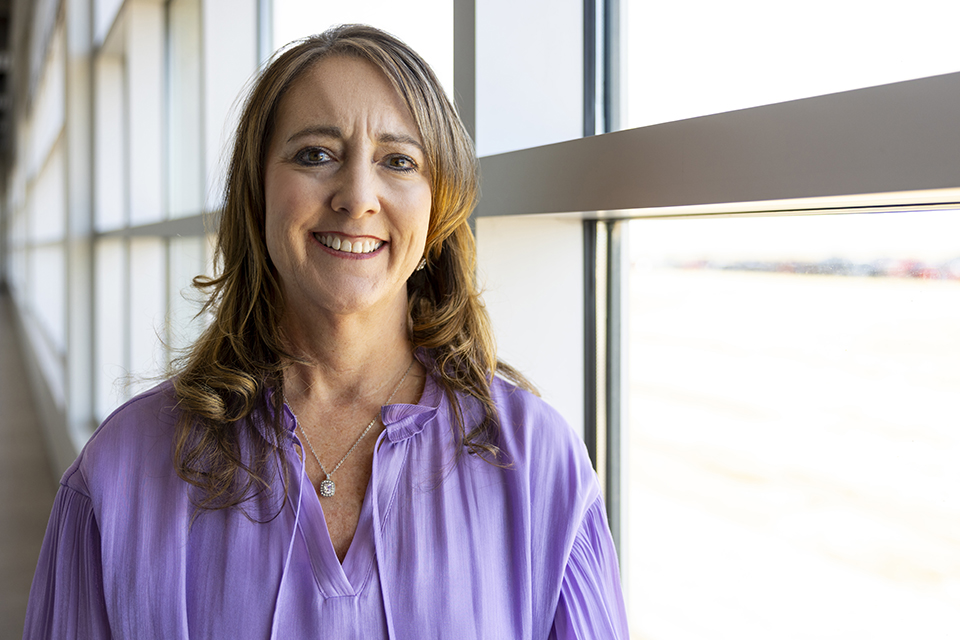
When Occupational Nursing Specialist Summer Kelly joined the Pantex team in October, she brought with her over two decades of healthcare experience and a deep commitment to service.
In the aftermath of 9/11, while communities grappled with loss and trauma, Kelly served by working at the Oklahoma Blood Institute. The healthcare community’s work during this time exemplified the true meaning of mission delivery and answering the call to serve without hesitation.
“I witnessed the raw emotion of society and the vast amount of people who lined up wanting to donate blood no matter how long the donation lines were.”
Nearly two decades later, she served as an emergency room and intensive care nurse during the COVID-19 pandemic, giving vital support to her patients. As healthcare systems strained and the world faced unprecedented challenges, the healthcare teams were tasked with remaining calm and continuing to deliver care under extraordinary conditions.
“During that time, hospital personnel became the only family patients had due to the circumstances.”
Kelly’s dedication extends beyond her professional duties to community engagement. Her family has resided in White Deer for 20 years, during which she has also been involved with emergency medical services and employed by White Deer Independent School District.
Having worked on the front lines during two of the most defining public health crises of our time, she answered the call to serve with courage, compassion, and unwavering dedication. Kelly’s dedication is evident in her journey to Pantex; she applied 36 times before securing her current role in the medical department. She values the camaraderie within her team and considers her acceptance into the department her proudest professional moment.
Why is Pantex’s mission important to you?
The Pantex mission is important to me because of the long history it has in regards to national security.
Why is teamwork important?
Being able to work as a team and collaborate betters a company as a whole and makes for an improved working environment. As a medical professional, being able to work as a team and delegate tasks results in the best outcome for the patient.
Do you volunteer or remain actively engaged in the community? How so?
I have been a part of the White Deer City Council since 2017. I was very honored to be voted into the council at the election in May. I take pride in being tasked with community concerns and helping address situations in the best interest of the people the committee represents.
What advice would you give to a new employee?
The advice I would give to an applicant or a new hire employee is be persistent, don’t give up, and accept any critiques and criticism as part of the stepping stones for your job and self-improvement.
Pantex Proud: Allie Bridenbaugh
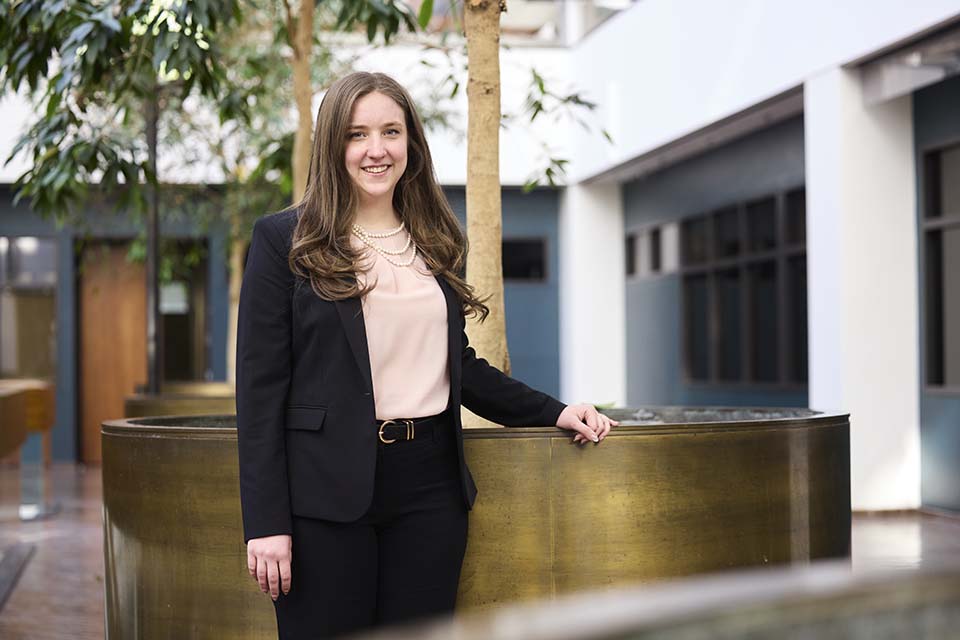
Thousands of dedicated Pantex citizens like Allie Bridenbaugh work every day to support the Pantex mission. Take three minutes to learn about who she is, what she does, and why she is proud to be a Pantexan.
What is the number of current Pantex employees? What is my organization’s attrition rate? How many Pantexans have master’s degrees? These are not questions on an episode of Pantex-themed Jeopardy. These are the questions that make up Allie Bridenbaugh’s day-to-day. As a Human Resources data analyst, she’s a professional metric-maker and spreadsheet wizard providing HR analytics and tools for organizations across the plant.
Providing answers to these seemingly simple questions is actually quite complicated, but Bridenbaugh enjoys the challenge.
“The everyday work here allows for a lot of knowledge to be gained,” she said. “It can be challenging at times, but overall, it is one of my favorite things about working at Pantex. When it comes to the work I do, I want people to trust that the information I give is accurate and complete.“
Bridenbaugh started out in Project Controls, where she gained her passion for data. That led her to pursue further education in information systems and business analytics, ultimately landing her the job in HR where she has worked for the past two years.
“I found that I really enjoyed visualizing data and understanding the underlying structure of the data to find innovative new solutions,” Bridenbaugh said. “My proudest moments happen when I realized I have gained mastery over something that had at one point felt hopeless. At Pantex, this has happened more times than I can count.”
While Bridenbaugh says “pride” isn’t something she strives for, she is proud to be a Pantexan because of the caliber of people at the site, citing both their goodness and resilience.
“When I say I am a Pantexan I am also saying I care, I work hard, and I am capable,” she said.
Why is it important we hold ourselves accountable in our daily tasks?
Accountability is really important to me. It helps establish trust with those around me, and it keeps me vigilant about the quality of my work. Knowing that my work is a reflection of me is a huge motivator.
Why is being open to learn from others critical for mission success?
You don’t know what you don’t know, and that is especially true at Pantex. Everyone I have met here has had something to teach me, so I try to be a sponge when others talk.
What’s your favorite outside-of-work activity?
I used to take classes at a local gym called Flying Fitness where I participate in the aerial arts, but when I do it there is not much aerial or art involved. It is still very fun, though!