



News
I am mission success: Ryan Warren
Take 5 minutes and learn more about CNS’s Ryan Warren, Metal Trades Council Culture Advocate. All views and opinions are the employee’s own and do not necessarily reflect those of CNS,/abbr>.
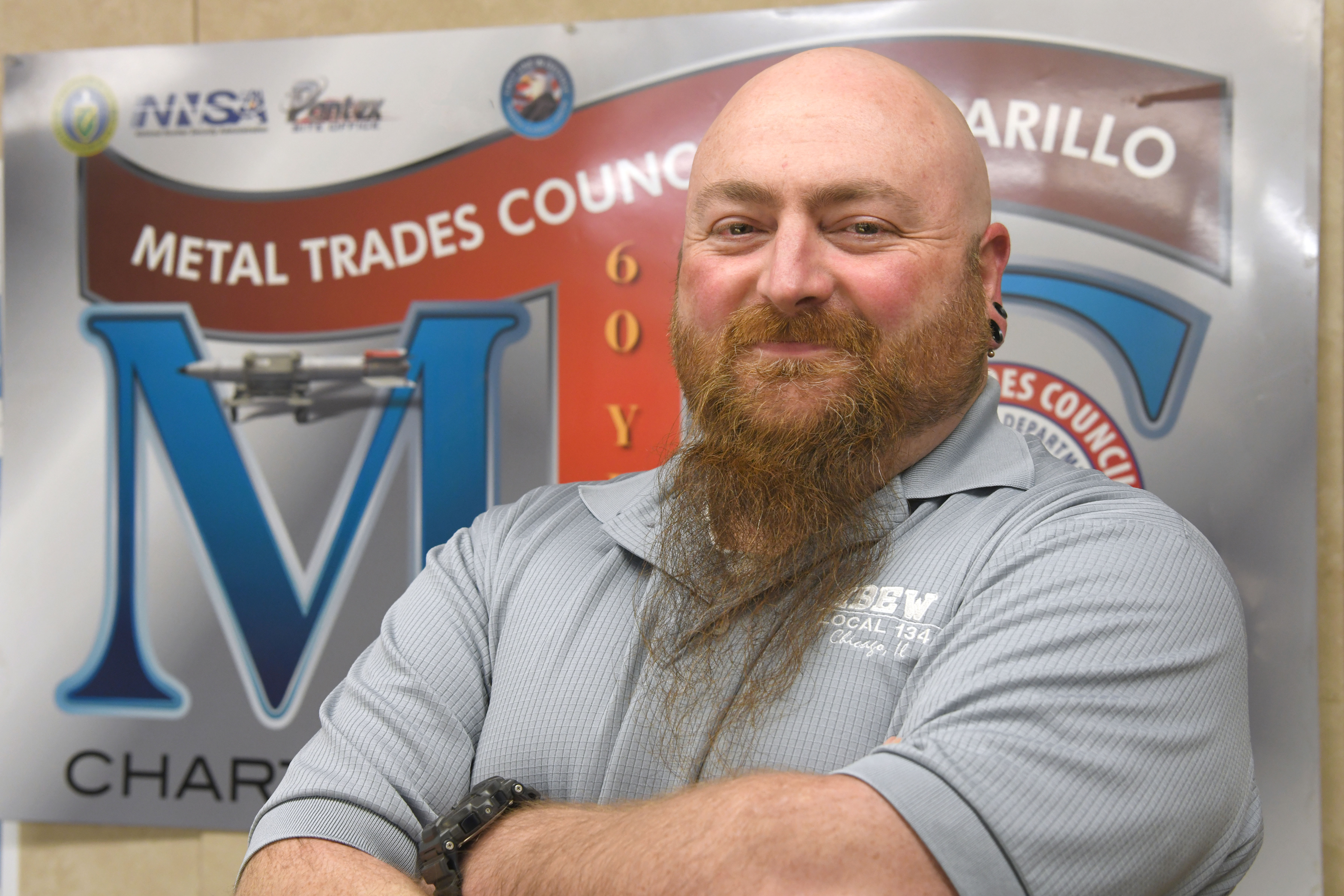
Ryan Warren worked as an electrician at Pantex for six and a half years until recently being named the new Metal Trades Council (MTC) Culture Advocate. During his time at Pantex, he has also served as MTC Shop Steward and Recording Secretary and on the International Brotherhood of Electrical Workers (IBEW) Local Union 602.
Some of his duties now include reporting significant events and trends identified within the plant to both MTC officers and senior management.
“I want to foster open, honest, and helpful communication in all directions between management, union, and otherwise across organizational boundaries, and more,” Warren said.
Another part of his job is to develop ideas to implement improvements; train new employees on Pantex Safety Culture; and manage, promote, and advocate for positive change in the workplace.
“Some of my goals are to recognize problems and contribute to developing solutions and to promote a respectful, safety conscious, and ever-improving work environment,” he said.
Warren said that while he loved his work as an electrician, he’s excited for his first real desk job in 15 years and to be able to help in this new capacity.
“I’ve always promoted brotherhood through solidarity and teamwork,” he said. “I left a good job for a better one, and I want to help keep it that way, for myself and others.”
Why are you mission success?
I am mission success because I work to build trust by honoring my commitments, not making promises I can’t keep, and staying consistent. As a tradesman, the only thing I have to sell is my integrity. I always strive to do the right thing, regardless of who’s watching. Although I have faltered many times along the way, I do my best to keep these values regardless of the job I’m assigned. Respect is built on guiding, learning, teaching, and leading by example.
Are you doing what you envisioned as a young adult?
Apparently, being a rock star isn’t as easy as Bachman Turner Overdrive would have one believe. Fishing is way easier. I was working as a telemarketer selling ketchup popsicles when a buddy of mine told me he got a job as an electrician. He said he got to bend pipe, spit and cuss, pull wire, and dig ditches all day. That sounded better than what I was doing, so I applied at the IBEW Local Union 602, got in the apprenticeship program, joined the union, and four years later became a journeyman. It was the best career move I have ever made for myself and my family. I jumped on the Pantex train a few years after that.
As an employee, what do you want to be remembered for?
I hope to be remembered as level-headed, disciplined and thoughtful; unafraid to speak my mind, yet open-minded. I want everyone to know that I care about the well-being of all of my coworkers, union and all.
What’s your top bucket list item and why?
I hope to one day see the Parthenon in Greece and the Colosseum in Rome. I want to visit Yokosuka, Japan, where my mom was born, and San Diego, where she was raised. I also want to take my boys to see the Christian heavy-metal band Impending Doom. All equally important to me.
What’s your favorite outside-of-work activity and why?
I’ve been married to my wife for 18 years and have two boys. My favorite thing in the world is doing anything with my lovely family: playing kickball, music, movies, cooking, board games, church, reading comics, wrestling on the trampoline, eating Asian cuisine, watching grass grow, getting beat at Plants vs Zombies; I love it all. Although lock-down and quarantine have been tough for everyone, I’ve been remarkably blessed by the most amazing family, and I cherish all the time we’ve gotten to spend together over the last year. They are my entire world.
Amanda Clark finds construction field rewarding

To celebrate Women in Construction week, we are highlighting Amanda Clark who oversees projects for the National Nuclear Security Administration Office of Enterprise Project Management (NA-APM-20) at Pantex.
Clark is currently the Federal Project Director for High Explosive Science and Engineering (HESE) Facility and for the High Explosive Synthesis, Formulation & Production (HESFP) Facility, and also manages the Material Staging Facility project for NNSA. She holds a Bachelor of Science degree in Business Management and has been working in project and construction management since 1998.
“I started as a document control clerk and junior construction inspector for an Architectural/Engineering firm, discovered how challenging and rewarding the work was, and quickly progressed to senior inspector and then project manager,” she said.
She first came to Pantex in 2004 as a self-employed subcontractor through the U.S. Army Corps of Engineers to support NNSA on Facilities & Infrastructure Recapitalization Program (FIRP) project execution. She has been a federal employee since 2009.
When asked what the most fulfilling part of her career is, Clark compared it to parenthood, which is a journey of joy, heartache, and pride that many can relate to.
“Getting to help my teams achieve their career goals and watching their professional growth has to be the closest thing to the journey of parenthood that I’ve ever experienced in my career in project management,” she said. “Of course, helping to build structures that will still be around and operating long after I have retired is also pretty cool!”
She went on to say that all the things she has helped to build in NNSA contribute in such a direct and meaningful way to national security missions is just a bonus.
“It is a pretty incredible feeling to say, ’I knew him or her when….’ as my team members progress on in their careers, or to be able to point to a building and tell my kids ’I helped build that.’ Nothing like it in the world,” she said.
Amanda’s mother, a registered nurse, is the person who has inspired her most.
“My mother is one of the sweetest, kindest, and most giving people I’ve ever known,” she said. “But she also always stands up for what she believes and defends her position tenaciously. I grew up hearing her talk to my dad about balancing speaking up to doctors without seeming to challenge their authority in order to ensure her patients’ voices were heard; while I’m sure she didn’t think I was listening, it definitely taught me some important lessons about the art of negotiation.”
She says her mom showed her the value of speaking up in a respectful way, and inspired her to encourage her teams to always contribute by proving she will listen to their advice and address their concerns.
“My mom is also the epitome of ’tough but fair’ and I’ve always tried to emulate that quality, either as a supervisor or as a project manager,” she said.
She said it is important to encourage and educate young women about job fulfillment from skilled trades because we spend more hours at work than pursuing any other single activity, so it should really be rewarding and enjoyable, and something you look forward to.
“Not everyone was built to work in the confines of an office, but I think there has been a reluctance by women to jump into fieldwork due to some weird perception that you have to choose between femininity and following your heart to do hands-on work,” she said.
Clarks said she’s always been what you might consider a bit of a tomboy, but has never viewed her job as limiting.
“I’m just as comfortable dressing up to go to the opera as I am putting on work boots and a hard hat to kick the dirt and talk to work crews so I can understand any challenges and help our buildings/projects go more smoothly and be more efficient,” she said. “I would love it if every young woman could experience that, such that all the perceived barriers would just disappear for future generations.”
Her advice for other women who may be interested in pursuing a career in construction is that it is a rewarding field, and there are no longer the same barriers that existed when she first started working on projects 20 years ago.
“No person in this country should feel that this field isn’t open to them,” she said. “If you are fulfilled by working with your hands, building things, being part of a working team, and finding creative ways to solve problems, then working on a project site as a tradesperson or in engineering or project management can be very rewarding. If you do what you love, work becomes a joy.”
Clark is always excited to see other women on the jobsite, as she’s still outnumbered by her male counterparts.
“Girls today seem so much braver and bolder to me than I felt growing up, but I know it can still be a little daunting to go into a position or trade where you know you have to ‘prove’ yourself,” she said. “I think it is important to recognize that men entering the skilled trades experience the same learning curve, so women should not let fear deter them. It does get easier, and I’m now at the point where the quickest way to get me to jump a hurdle is to tell me why I can’t!”
Pantex Community Investment Fund benefits local foster children
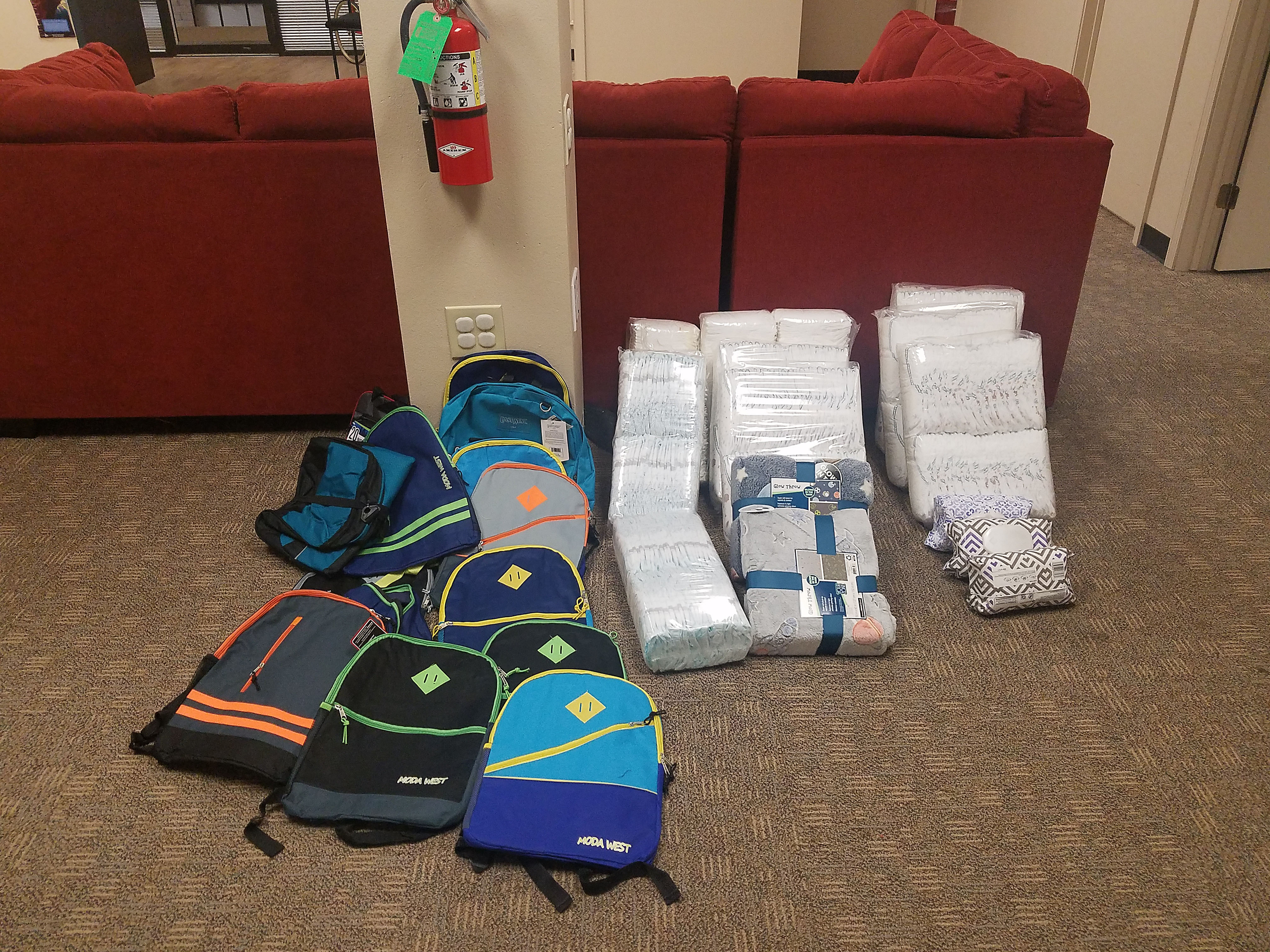

Amarillo Foster In Texas received a backpack and school supplies from the Pantex grant.
Three siblings between the ages of four and seven were living in a trailer with no running water. The oldest sibling served as the primary caretaker for his two younger siblings. After joining a stable home through foster care, they are able to recover from the trauma and thrive.
Through the $7,500 grant given to Upbring from the Pantex Community Investment Fund, these siblings, and other children served by Amarillo Foster In Texas, received backpacks and school supplies to help them gain confidence and succeed.
Upbring is a leading Texas-based, faith-inspired nonprofit organization working to break the cycle of child abuse by empowering children, families, and communities. They work to benefit families with life-changing programs—including foster care, adoption, education, children’s centers, and community services.
“Pantex’s support of children in foster care and their families is making an impact when our community needs it the most,” said Mary Kathrine Matalon, with Upbring. “The gift from Pantex has made an impact in Amarillo that will be felt for generations to come,” Matalon said. “We thank them for joining with Upbring to create a world where every child is loved, protected, and cherished.”
In addition to backpack and school supplies, foster families received swaddling blankets, baby bed sheets, and other necessities so they could provide a loving home for infants and toddlers in foster care, and two kinship families received funding to cover home inspection costs and a gap in subsidized day care.
A member of the Pantex Community Investment Fund Employee Advisory Committee, Brian Jones, is grateful for the partnerships that allow Pantex to impact the lives of those in the Panhandle.
“As a former foster parent myself, I know how important community support is. This grant, and the joy that it provides, has impacts on our community for years to come,” he said.
Amarillo Foster In Texas hosted a Back to School party where foster families enjoyed two hours of bowling, pizza, and soft drinks. The event closed with the distribution of school supplies and backpacks.
Pantex’s grant will also be used to make dreams come true this Christmas by fulfilling the wishes of foster children. A celebration for foster families will also be held if it is safe to do so.
Consolidated Nuclear Security established the Pantex Community Investment Fund and has been helping local organizations since its inception in 2016. The Pantex Fund is a partnership with the Amarillo Area Foundation, which assists in the distribution of funds. In 2020, 16 nonprofits in the Texas Panhandle received grants equaling over $121,000 from the fund during a virtual ceremony.
From the beginning, Pantex created an employee advisory committee to determine distribution of the grants that target charities and non‑profit organizations that offer assistance with basic needs, children, youth, families, community development, education, financial literacy, as well as health and wellness.
Amarillo Foster In Texas received a backpack and school supplies from the Pantex grant."

Amarillo Foster In Texas hosted a Back to School party where foster families enjoyed two hours of bowling, pizza, and soft drinks."
Presenting STEM opportunities to young women students
Introduce a Girl to Engineering event with guest speakers and students
AMARILLO, Texas – According to Pew Researchers, Science, Technology, Engineering and Math (STEM) graduates earn approximately 24% more than their counterparts in non-STEM fields. Overall, among adults with a STEM college major, women are more likely than men to work in a STEM occupation (56% vs. 49%) such as nursing or pharmacy, but 38% of women and 53% of men with a college major in computers or computer science are employed in a computer occupation. And women with a college degree in engineering are less likely than men who majored in these fields to be working in an engineering job (24% vs. 30%).
For the last few years, Pantex has backed the Introduce a Girl to Engineering (IGTE) project, in an effort to increase the number of young women entering the STEM field. Often times, these successful candidates become part of the Pantex family as we are continually searching for talented professionals to join us in our on-going mission of securing the nation.
We are excited about STEM efforts and young women at Region 16, AISD, West Texas A&M, and Texas Tech Universities. These educational institutes are also dedicated to present STEM opportunities and unveil the potential these careers hold for students. Pantex, managed by Consolidated Nuclear Security, and these organizations have joined forces with their efforts and are presenting new and vital information with this IGTE conference today.
Due to COVID-19 and social distancing restrictions, we are not able to host our annual event with dozens of students seeing STEM demonstrations and meeting with Pantex employees to discuss their potential futures.
Consolidated Nuclear Security, LLC operates the Pantex Plant, located in Amarillo, Texas, and the Y-12 National Security Complex, located in Oak Ridge, Tennessee, under a single contract for the U.S. National Nuclear Security Administration. CNS member companies include Bechtel National, Inc.; Leidos, Inc.; ATK Launch Systems, Inc.; and SOC LLC. Pantex and Y-12 are key facilities in the U.S. Nuclear Security Enterprise, and CNS performs its work with a focus on performance excellence and the imperatives of safety, security, zero defects and delivery as promised.
For more information on each site, visit www.pantex.energy.gov or www.y12.doe.gov. Follow Pantex on Facebook, X or LinkedIn. Follow Y-12 on Facebook, X, and LinkedIn.
CONTACT
Steve Myers
Communications
Office (806) 573.0490
Stephen.Myers@pantex.doe.gov
Safety employs ingenuity to help protect Pantex personnel

The Pantex Plastics Shop designed and produced modular plastic shields to deploy across the site.
In their continued effort to find solutions to ensure employee safety during the pandemic, Pantex Safety and Industrial Hygiene sought out cooperation across the site to employ new plastic shielding at various locations on site.
“We recognized that breakrooms and lunchrooms presented a challenge when employees are eating and drinking as the masks have to be removed,” said Shane Feagan of Pantex S&IH. “While organizations have worked throughout the pandemic to stagger breaks and lunches with socially distanced tables and chairs, the plastic barriers are an added physical layer of protection.”
After identifying the need, S&IH reached out to the onsite Plastics Shop to help with the design of modular Lexan shield that could be configured in multiples or standalone units to fit each area’s need. Procurement also stepped up to quickly procure the needed Lexan. The Plastics Shop used the water jet system to increase production to 40 shields per day. To date, over 160 sheets of Lexan were ordered to meet demand. The shop is currently sending them to organizations all across the site.
“I am extremely proud of how the Plastics Shop helped us recognize this challenge and continue to work tirelessly to fulfill the orders to ensure their coworkers are safe,” Feagan said. “By making these on site, we not only saved significant costs versus ordering the shields, but we are able to quickly manufacture them and put them in use.”
The shielding has been deployed to many organizations already, including Weapons Training, Medical, Counterintelligence, Security, and Quality. More orders will be shipped out to all of the south end breakrooms and both cafeterias. There are currently over 400 requests for shielding being worked.
“It is our hope that the shielding keeps employees safe so that we can fulfill our important mission and send them home safe to their families each day,” Feagan said. “These are challenging times, but I am grateful that employees continue to do everything we can to ensure we are able to continue to work safely. It reinforces that Pantex employees are truly the best and I am extremely thankful that I get to be a part of the Pantex family.”
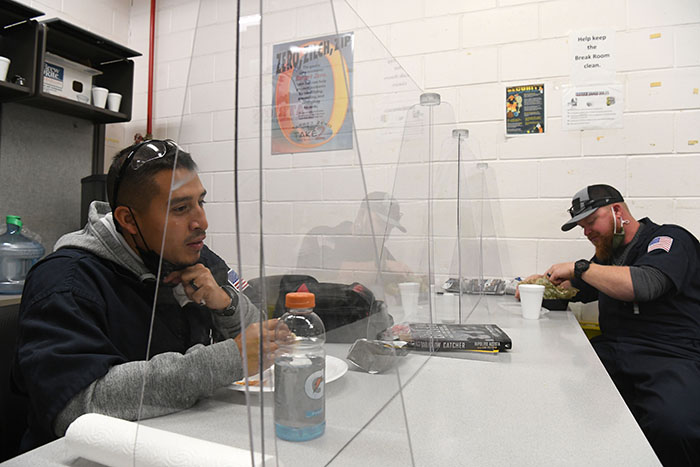
Lexan plastic shields have been added to breakrooms for added protection when eating without a face covering.
I am mission success: Colby Yeary

Colby Yeary, acting manager of Mission Engineering
When Colby Yeary, acting manager of Mission Engineering, joined the Nuclear Security Enterprise as a process engineer 15 years ago, he envisioned a set of experiences to further his career development.
“I was very fortunate, in that my first role as a process engineer, provided me a solid foundation for how the NSE, a set of unique sites, comes together to support common goals and missions,” he said. “This business has its own lexicon, and understanding the language takes time and assistance from those who are fluent. The role, training curriculum, and my mentors helped me immensely.”
His goal was to learn as much about engineering, program management, and operations at Pantex to give him the well-rounded background necessary to offer value to the NSE in a leadership role.
As his experience grew and the NNSA’s contract included combining Pantex and Y-12, he took an enterprise position where he found Pantex and Y-12, while very diverse in their purposes, both have exceptional people and capabilities.
“It’s fascinating how similar the people at these two sites and states we reside in are,” he said. “Genuine, hardworking, intelligent, and patriotic people.”
Through his experiences with CNS, Yeary has always maintained that mentoring is key to success.
“Most, if not all of us, can reflect on our past and think of individuals who made positive impacts in our lives and careers. Many of these individuals are considered mentors. Think of the times when:
- You would have done something incorrectly, had it not been for ’Jane‘ explaining how to do it.
- You were in a stressful situation, and ’Joe’ reached out to lend you a hand and describe how he had experienced something similar.
- You learned how to do something more efficiently, sought out career advice…..the list goes on.
“For me, I clearly recall the names, faces, and conversations with the people who have helped me when I needed it – I am forever grateful to them. Similarly, I have always made it an area of personal focus to help others who can benefit from my advice and encouragement. We’re teammates helping each other.”
Why are you mission success?
I am mission success not for who I am or what I have become, but for what I provide for others and the nation. I have found it interesting that as time passes, our ambition and perspective on life can change. It’s a humbling experience.
What daily task (specific meeting, report, etc.) lets you know you’re helping achieve the CNS mission? How/why does that task let you know you’re working toward the mission?
There are many gauges that provide these indications. If I were to pick one, it would be a weekly meeting Mission Engineering conducts internally referred to as the WAR (weekly activity report). Each week, the Mission Engineering leadership team reviews progress we are making toward our Business Operating Plans and our specific Business Area Plan for the organization; we make adjustments along the way to ensure we are optimizing our value. A tremendous amount of content is covered in an hour’s time, and when I reflect on the steps we take toward our goals and objectives each and every week, it’s a great indication of progress being made.
What is your favorite aspect about your work environment? How does that aspect make you know the mission is being met?
One of my favorite aspects of my work environment is learning from others and helping others learn. The old adage, “iron sharpens iron” comes to mind. From my perspective, if we can all help each other raise our individual games, then our collective game to fulfill the mission is raised as a result. It’s a snowball effect, and that’s part of why I advocate so strongly for mentorship.
What work advice would you offer someone who is new to Pantex or Y-12?
First, this is a complicated business, and these two sites are no exception. The number of requirements, processes, systems, and interfaces can be daunting at first glance. My advice is to establish a support system of mentors, in some cases with the help of your supervisor making the connections.
A common misconception is that you only need a single mentor. However, there are role-specific mentors that help you do your current job, but also mentors that can help you make the important decisions that will shape the next opportunity and those to come. When the opportunity arises, pay it forward by helping others with your experiences. Work hard, be patient, do what’s right for the nation, and the personal satisfaction will not disappoint.
What one thing would your coworkers be surprised to know about you?
Although I have worked in and traveled to many places, I am from the Amarillo area (a small town not far from Pantex called Borger). While growing up I had heard the term “Pantex” and knew roughly where it was located, but I had no idea what Pantex did until I was out of college and working in Houston.
Months of planning and drills involved to administer COVID-19 vaccine
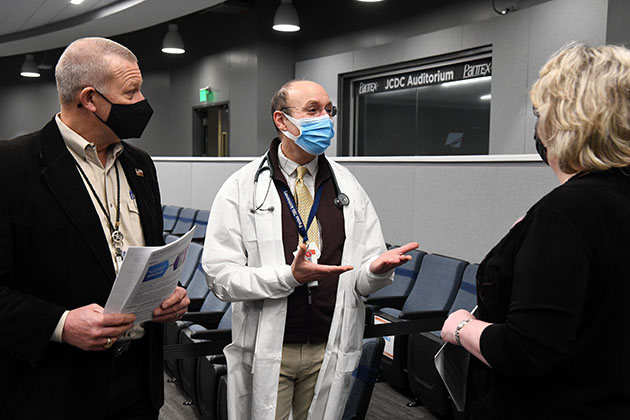
Dr. Paston (center) talks to Geoff Beausoleil, manager of the NNSA Production Office, and Michelle Reichert, CNS president and chief executive officer, at the vaccination clinic.
After more than two months of seeking approval, planning, and preparation, Pantex began administering COVID‑19 vaccines on site February 2 to high‑risk employees; based on the feedback received, it has been an overwhelming success.
Dr. Michael Paston, Pantex occupational medical director said, “it was beautiful.”
“We worked with Emergency Management to develop a plan, then we drilled the plan last week,” said Don Morris, senior manager of Pantex Occupational Health Services. “We walked through the process several times to make sure the flow would work well, and we made a couple of adjustments.”
Preparation
This type of emergency response vaccine distribution was more than a year in the making. In 2019, Pantex began collaborating with Amarillo Public Health to develop a point of distribution plan for national medical emergencies.
“In response to the COVID‑19 pandemic, that POD plan was evaluated for use to deliver vaccines and a vaccine plan attachment was developed,” said Daniel Gleaves, manager of Pantex Emergency Management.
In order better prepare and to see a vaccine setup first hand, OHS and EM staff met with Amarillo Public Health in January 2021 and walked through the city’s vaccine setup.
“We walked through their process and got some good takeaways from them. They shared their lessons learned with us,&38221; Morris said. “We made some adjustments, because we couldn’t use some of their suggestions based on the line of work we do.”
The staff conducted several drills to ensure the process ran smoothly.
“It went like clockwork, and we didn’t have to change anything,” Morris said.
“Leading up to today, the team used this year’s flu shot distribution to test the plan, conducted a tabletop drill, and held two separate dry runs in addition to just-in-time training for the staff to prepare for the POD,” Gleaves said.
In November 2020, Pantex began the process to obtain approval from the Texas Department of State Health Services to be able to receive and administer the COVID‑19 vaccine.
“Dr. Paston was our primary contact. He gathered information the state needed and submitted the forms to be reviewed by the state before they would certify us to be a vaccine provider,” Gleaves said.
The effort to receive the state’s approval was supported by many CNS groups, including Supply Chain Management; Information Solutions and Services; Management Assessment; OHS; Environmental Services; Environment, Safety, and Health; and Safeguards and Security. The NNSA Production Office also supported CNS’s efforts to obtain approval.
Distribution
The vaccine administration began February 2 in the John C. Drummond Center Auditorium with a steady crowd of Pantexans receiving their first doses all day.
“We administered 243 on the first day, and it went swimmingly,” Paston said.
“Our plan was to thaw out 240 doses the first day, then adjust for the following days,” Morris said. “We ended up having a few extra doses, so we got people down to the auditorium to receive those so we didn’t have to store any,” Morris said.
“The first day’s turnout was in line with what we expected,” Gleaves said. “We realized that we can deliver many more vaccines than previously estimated. We had estimated that approximately 30 individuals can be vaccinated every hour, but based on the first day’s performance, it is now estimated we can deliver approximately 60 vaccines per hour.”
The initial order will provide more than 1,100 doses of the vaccine. “Either later this week or early next week, we expect to finish administering all we have and will reorder,” Morris said. “We’ll try to submit the reorder form before we run out.”
Dr. Paston also mentioned that they’ll be reordering the booster doses next week as well, so those will be available for employees to start receiving on February 23.
When asked how quickly the entire plant site, beyond those who are considered high risk, will have access to the vaccine, Paston said he sees that happening soon.
“We are going to go pretty quick because our workers fall into first responders, critical workers, etc.,” he said. “We follow the state of Texas’ rules and when Texas opens up the next phases, we will follow those phases as well.”
Pantexan shares experience with COVID-19 vaccine
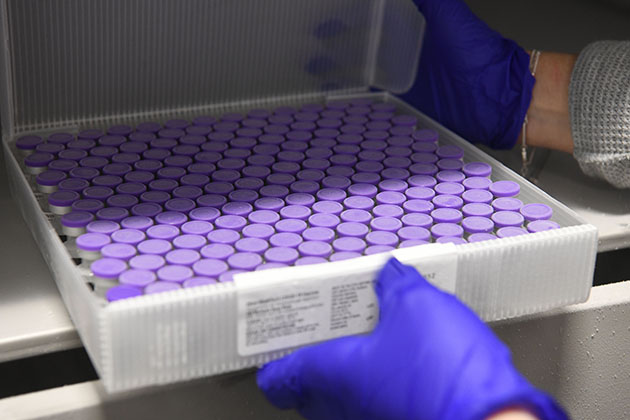
On February 2, staff of Pantex’s Occupational Health Services began vaccinating high‑risk employees with the Pfizer COVID‑19 vaccine.
Tessa Pendergraft, Pantex wellness coordinator, received her vaccine last Tuesday and, because of an anxiety of needles, she was nervous going into it.
“They did a great job — I hardly felt it! This is a big deal to me because I get very anxious due to my illnesses as a young child,” she said. “I did have some soreness in my arm, which was to be expected, and a mild to moderate headache later in the day, which could’ve also been attributed to not having my coffee. Both of my symptoms improved or resolved in less than 24 hours.”
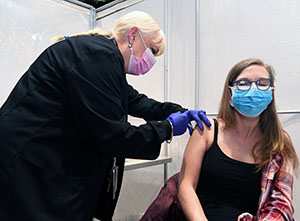
Tessa Pendergraft, Pantex wellness coordinator (right),
shares her anxiety of needles, as the medical provider
reassures her prior to receiving her COVID 19 vaccine.
Pendergraft also said the setup and flow worked well.
“I know that a lot of people were involved in the planning of this clinic, so I’d like to thank them for making this possible and for keeping us safe during the process.”
Pendergraft said that because of her background in science, she seeks out the research behind recommendations and additional information from credible sources to make the most educated decision she can.
“The evidence was strong enough for me to have confidence in receiving the vaccine,” she said. “I don’t fear for my safety nor that this will have any impact on my ability to bear children in the future. If you have questions or concerns, ask your primary care physician and they can help you make the best choice for you.”
COVID-19 vaccines at Pantex help take stress off community
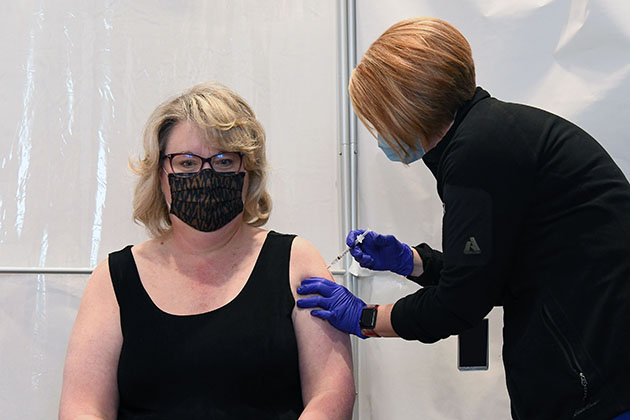
Michelle Reichert, CNS president and chief executive officer, receives her COVID‑19 vaccination from a Pantex medical provider
Michelle Reichert, CNS president and CEO, and Geoff Beausoleil, manager of the NNSA Production Office, received their vaccines on February 3.
“It went so smoothly today,” Reichert said. “We got our shot, and it didn’t hurt. The team was very well prepared.”
“It was wonderful,” Beausoleil added. “OHS and EM did an excellent job with planning and coordinating the practice, so as soon as a patient would come through [the door], it worked like clockwork.”
Reichert said that the flow went extremely well and that was in large part because the team practiced.
“This team laid it out, they walked it down, and they drilled it together so when the vaccine arrived, we were ready,” she said.
Reichert said this was an opportunity to take some of the burden off the local community.
“We applied to the state to be a POD, and given the unique work that we do and as well as the size of our workforce, it takes some of the burden off of the local community to give the vaccines,” she said. “It was a real opportunity for us to work with the State of Texas and local health providers to get us set up.”
She said having the team and staff to make it happen, and after receiving the needed equipment, we were ready to go.
“Pantex employees are always important to our national security mission and being identified as essential workers made sense, nationally and for our support of our military,” Reichert said. “So, since the beginning of this pandemic, we have found ways to keep each other safe throughout, which we have successfully done, and kept the mission going.”
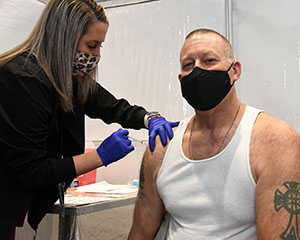
Geoff Beausoleil,
NNSA Production Office manager
Beausoleil said that we are proving the controls put into place over the last 11 or so months work.
“The actions that we’ve taken to adapt and deliver, we’ll continue to refine those and be more efficient with what we do,” he said. “We’ll be more protective of our workforce, more protective of our community, and be an example for our community and our workforce for how to do it right.”
Beausoleil expressed his gratitude for those involved in getting the approvals and making this process work.
“I have a huge amount of appreciation and admiration for Drs. Sayre and Paston and their staff in OHS for taking on this challenge and performing better than anybody expected and then some,” he said. “I can’t express my appreciation any more. They were fantastic. They were given the full support of Michelle Reichert, Bill Tindal, Todd Ailes, and Gene Sievers, and they had our full support and we are fully online with what they’re doing for us. It is just heartwarming.”
NNSA Release: Success and Safety in STEM: Meet TK Benoit
Takeira “TK” Benoit, spent her childhood in Baton Rouge, Louisiana finding out how things worked by her father’s side. For as long as she can remember, she loved math, science, and trying to understand the world around her. Now, she is a nuclear safety engineer with NNSA who helps to ensure the safe design, construction, and operation of both nuclear and non-nuclear facilities. This week she is speaking at the Black History Month celebration at West Texas A&M.
TK credits her parents’ commitment and sacrifice to education, her experience at Southern University and A&M College, a Historically Black College (HBCU), and the innumerous concealed contributions of the trailblazers who came before her, for playing a role in her success as a Black female engineer.
Read full press release on the NNSA website.