



News
Pantex Proud: Karla Rich

Thousands of dedicated Pantex citizens like Karla Rich work every day to support the Pantex mission. Take three minutes to learn about who she is, what she does, and why she is proud to be a Pantexan.
Mission success at Pantex “takes a village” according to Pantexan Karla Rich. She is proud to be part of the plant’s community for the past 21 years and takes pride in the work she contributes in the Special Tooling Program.
Rich’s duties include a multitude of special tooling tasks from scheduling work; maintaining inventory, inspection, and repairs; disposing of obsolete products; managing the needs for line operations; and coordinating delivery and movement of special tools. She attributes her success to the personnel that work with her on a daily basis.
“The pride of the people who work at Pantex is one thing you can always count on,” Rich said. “Pride in not only the way we provide the best quality product to the customer but how we support one another and the community.”
Overcoming challenges and obstacles head-on gives Rich a great sense of accomplishment. Providing direct support to line operations is how Rich feels she contributes to the mission.
“It takes strategic thinking and problem-solving to provide all of the special tooling used by Weapons Operations,” she said. “As long as they have the tooling they need, when they need it, the line is working to meet the mission.”
What advice do you offer someone who has made a mistake in his or her job? How should they be accountable for that issue?
Everyone makes mistakes and owning those mistakes is what makes you grow, not only as a person, but in your role at Pantex. Although it may be painful, owning a mistake may help you learn new skills, such as problem-solving or communication. I would encourage everyone to communicate mistakes with their management so they can solve those mistakes together.
What has surprised you the most since joining Pantex?
The growth. The mission has grown exponentially since I started 21 years ago and thus so has the workforce.
Who in your life has inspired you the most and why?
My dad—he worked for over 30 years with a disability and it never stopped him. He worked for the railroad in a dangerous position, but he never asked for special treatment. The culture back then led him to believe that his disability would force his retirement, so he found ways to overcome his disability. He was a pillar of strength for our family and passed on an exceptional work ethic to my siblings and me.
What is one thing your coworkers would be surprised to know about you?
Prior to Pantex I worked for a small family-owned business and I not only did financial analysis but I did in-person repo work.
Pantex Proud: Heston Hollar
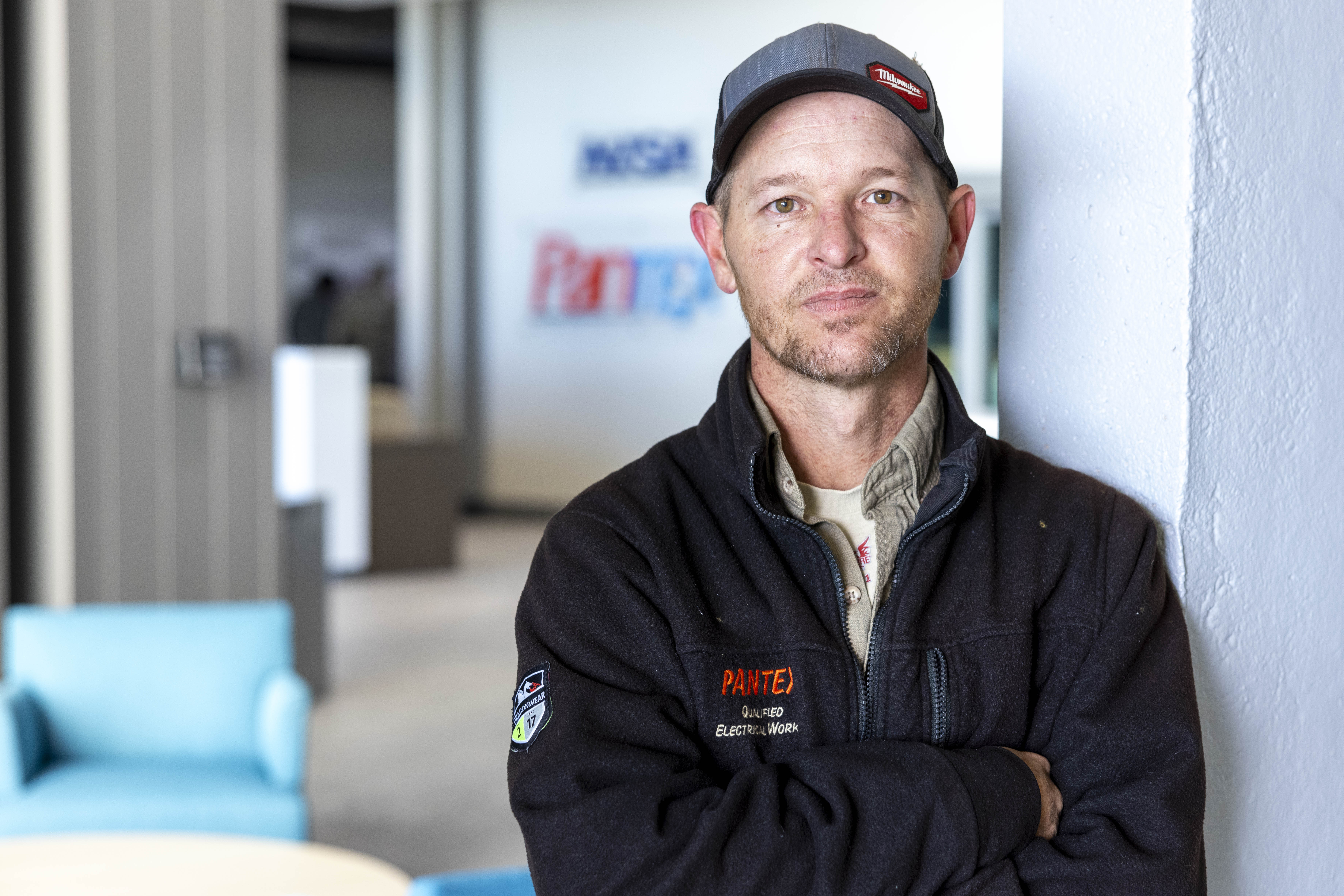
Thousands of dedicated Pantex citizens like Heston Hollar work every day to support the Pantex mission. Take three minutes to learn about who he is, what he does, and why he is proud to be a Pantexan.
Some Pantexans have worked at our plant for a time, left for a variety of reasons, and found their way back. Heston Hollar is a prime example. He started at Pantex in 2015 and left for a short period before returning in 2019. And while people have a variety of explanations for why they chose to leave and come back, Hollar returned to Pantex for one main reason: safety.
“What stands out to me about Pantex is the safety culture. At regular jobs you are sometimes asked to do things that aren’t the safest. Out here, safety is the number one priority and there has never been an instance where I have been asked to do something that would bring me harm. It’s a relief for myself and my wife and kids.”
Though Hollar has been in his current position since 2019, he started at Pantex in production. He also worked for Lawler Wood in the JCDC for a time.
“Pantex is the land of opportunity. If you don’t like where you are at, you can learn something new by changing roles.”
Hollar believes he has found a home for himself on his current team. And though the work he does is different from what he has experienced off-site, he believes every role at Pantex is important.
What work advice would you offer someone who is new to Pantex?
Working here is a big adjustment for anyone. This job is going to be a lot different than anyone you’ve had before. Try to find your place out here. It may not be the first place you land, but there are a lot of moving parts at the plant and I believe there is a fit for everyone somewhere within it.
What daily task lets you know you’re helping achieve the mission we have at Pantex? How/why does that task let you know you’re working toward the mission?
My daily tasks mostly deal with correctives or modifications, so we get involved if a facility has something wrong with it. Once something breaks or needs to be fixed, my partner and I run out to the job. We get to see something get fixed. It’s higher priority and we get to see the physical impact in the operations from what we do.
What advice do you offer someone who has made a mistake in his or her job? How should they be accountable for that issue?
Own the outcome. I messed up a job early on in my career at Pantex. Understanding that I messed up, I found that I had a lot to learn about how the department worked and it encouraged me to learn the rules that drove our department and were there to put myself and co-workers in the best situation to succeed on future projects.
Why must we understand the requirements, procedures, etc. tied to our jobs?
Knowing and following the rules and procedures keeps everyone on the same page, keeps our records complete, and ensures we are safely making a quality product. Our requirements are rigorous, as they should be considering the importance of our mission.
Robot dog makes helping people a piece of cake
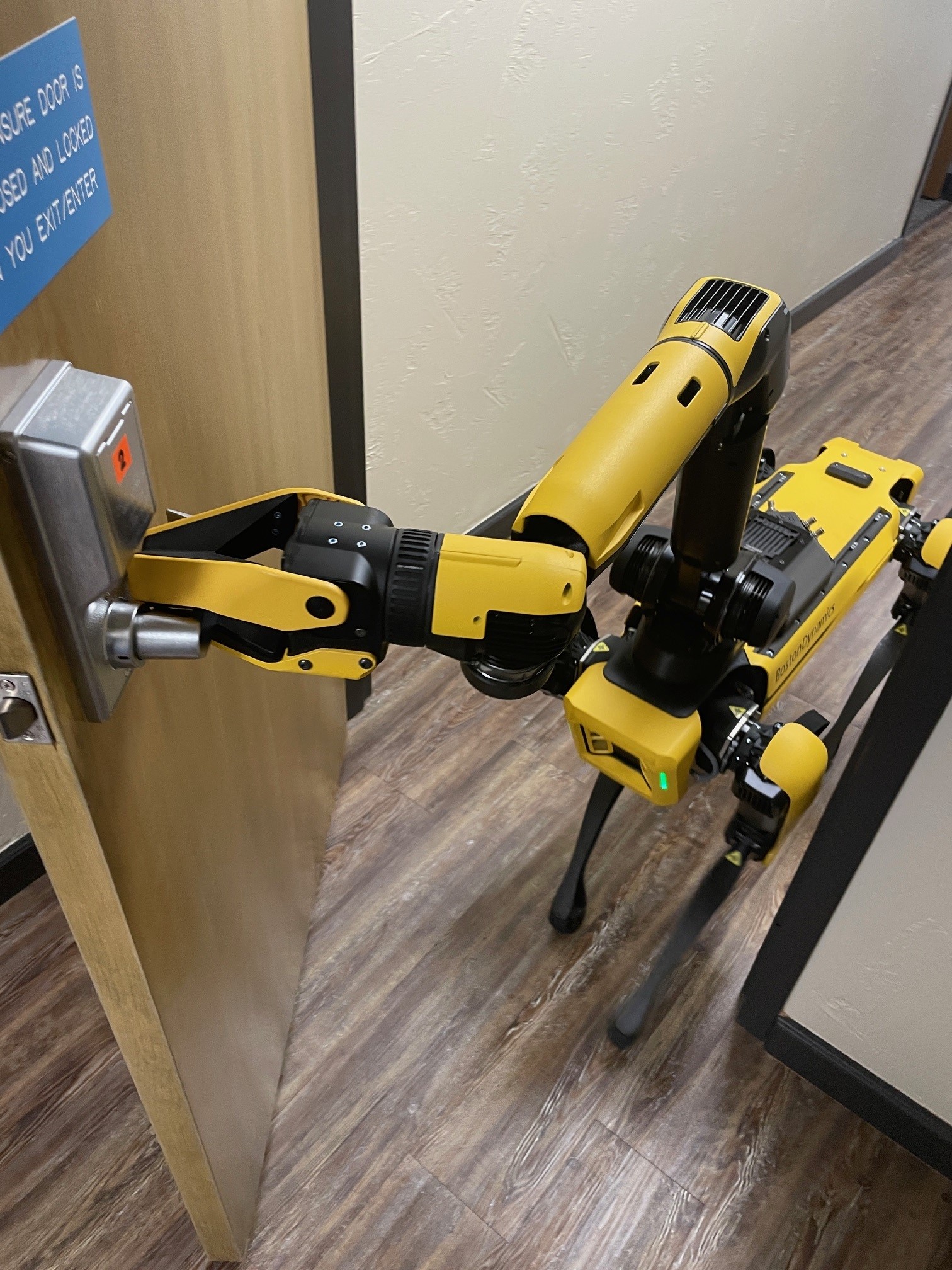
Unlike your family pet, Pantex Emergency Management robotic dog, Cupcake, can do more than just sit or shake; she can autonomously open and walk through doors.
Training a dog is not as easy as pushing a button—unless your pup is a robot dog.
Sit, fetch, and roll over are all common tricks for four-legged companions, but for Pantex’s agile robot dog, Cupcake, tricks are more technical.
“She can open and go through doors,” Emergency Preparedness Specialist William Easley-McPherson said. “We tell her on the controller what type of handle it has and she is programmed to open a variety of doors autonomously. She can provide a live-view with her multiple cameras and laser detection which gives us situational awareness for any kind of incident.”
Just like a normal dog, Cupcake needs to be fed and rest from time to time. Instead of kibble, she relies on electricity to keep her going and has a special kennel where she energizes.
“She can go, sit down, and basically go to sleep and it charges her battery,” Easley-McPherson said. “When she knows she’s low on battery she automatically heads to her kennel to recharge.”
Cupcake was purchased from Boston Dynamics in 2023 as part of a Plant Directed Research and Development grant funded by the Department of Energy. Her original name was Spot, but she was lovingly renamed Cupcake by a team member's daughter. Easley-McPherson is one of her handlers and says part of the mission will be to go where it is dangerous for humans to go.
“The first and foremost priority is human safety and the ability to expand situational awareness,” Easley-McPherson said. “Not only for radiation, but let’s say we have a building collapse for some unknown reason and we needed to know if it is safe to go in there or if we have people who need to be rescued.”
Easley-McPherson said in situations like this he could put Cupcake into crawl mode and produce a live feed of building support beams and see if any areas need reinforced before people go in for rescue efforts.
“She’s very stable,” Easley-McPherson said. “She also has the ability to handle electrical things that would possibly be unsafe for people, like high voltage. Her arm can manipulate breakers; she can flip one. Whereas a person would have to suit up and get into protective gear, she can go in and do it straight away.”
Easley-McPherson noted that future package upgrades could allow Cupcake to take measurements of radiation. The main goal, he said, is keeping the human operator as safe as possible.
“If there ever is a situation where we want to know if it’s safe to approach, Cupcake is the one we could send in first to obtain real-time measurements.”
Cupcake has generated interest in the community from local schools, colleges, robotics clubs, and emergency services partners covered under our mutual-aid agreement.
“Robots are going to become such a unique part of our future and our children’s future,” Easley-McPherson said. “They’re going to be doing more of the repetitive or unsafe tasks to keep people safe. When we take Cupcake to the West Plains High School Robotics club—they’re already studying and building their own robots. They’re able to see a professional commercial robot and its capabilities and what can be done in the future.”
Cupcake strengthens social engagement through live demonstrations, such as the 2024 Introduce a Girl to Engineering event. Participants were split on response to the robot.
“Almost straight down the line we have two reactions,” Easley-McPherson said. “One set—they love it and they think it’s the coolest thing. They want to interact, they want to learn more about how it works, and they want to see the display. The second are a little creeped out by it that this thing can do things autonomously. They’ll say ‘what do you mean you can point it at a door and tell it to open it?’”
Despite the polar-opposite reaction, Easley-McPherson says many of the participants wanted to take a selfie with Cupcake to commemorate seeing a working robot in action. He wants to take Cupcake to more of the area schools to build on community outreach and show people what is possible with technology.
“It all goes back to protecting people,” Easley-McPherson said. “We can teach the next generation about robotics and how it can be useful in life whether that be practical, fun, or for emergency situations.”
Pantex buys green, earns gold

Pantex earned the GreenBuy Gold Award from the U.S. Department of Energy for sustainable purchasing in Fiscal Year 2024.
Pantex is turning green into gold. In January, Pantex earned the GreenBuy Gold Award from the U.S. Department of Energy for sustainable purchasing in Fiscal Year 2024. This is the second time Pantex has been recognized at the gold level, which demonstrates exceptional achievements in sustainable acquisition, and the fifth year Pantex has earned a GreenBuy award at any level.
“It is extremely gratifying that Pantex is receiving this award for a second time, further demonstrating our continued commitment to becoming a leader in environmental stewardship,” said Harry Gulley, Environment, Safety, and Health director. “We’re striving to maintain this momentum and always seeking to improve our sustainability efforts.”
The award recognizes excellence in “green purchasing” that extends beyond minimum compliance. Pantex earned this honor by purchasing twelve priority products in six categories. Products included materials in construction, custodial, electronics, operations, grounds/landscaping, and more.
“The easiest switches have been in the custodial category where Pantex has been buying preferred products such as toilet paper, hand soap, and paper towels for years,” said Alicia Barley, Environmental Compliance manager.
Barley also mentioned seeing great success in the electronics category with purchasing Electronic Product Environmental Assessment Tool (EPEAT)-certified equipment such as computers and mobile phones which has led to receiving EPEAT purchasers award for four-years running.
“Earning the GreenBuy award becomes progressively more challenging over time because you can only repeat three products a year, so each year we have to plan ahead and evaluate what is being bought and research possible substitute products,” Barley said. “But we have a great system for approvals of purchase requisitions in place that has really been what has given us the cutting edge to succeed.”
Barley said the biggest challenge for Pantex is finding good substitutes for products that might not meet the needs of the type of work that we do and that a lack of information on manufacturers’ websites sometimes make it difficult to verify if the product meets all requirements. Despite the challenges, Barley feels like the effort is worth it for the benefits to the site and the environment.
“It comes back to leading by example and doing what we can to make a difference and help the plant become more sustainable and reduce its environmental impact while achieving the mission,” said Barley. “Everyone that purchases products at the plant plays a huge part in the success of the sustainable acquisition program. By giving preference to products that are energy and water efficient, alternative fuel/fuel-efficient vehicles, non-ozone depleting substances, or made from biobased or recycled content; these small and easy switches have big impacts in the long run for the environment!”
The award will be presented at the 2025 Energy Exchange in August. Pantex is on its way to achieving the Prime Award which is reserved for those that achieve three or more gold-level awards.
High Explosive Science and Engineering Facility continues to make leaps and bounds

An aerial view of the High Explosives Science and Engineering Complex.
Construction continues at Pantex on the High Explosives Science and Engineering (HESE) Facility, with multiple milestones achieved during the fall and winter seasons.
The HESE main works (HESE MWs) project buzz continued through the end of 2024. The HESE team completed two more internal project milestones: completion of structural concrete and reinforcing steel and application of permanent power to the Technology Development and Deployment Laboratory (TD/DL). The first was met on September 11, 2024, when subcontractors for the HESE Hensel Phelps (HP) began an overnight placement of approximately 700 cubic yards of concrete that ended in the early hours of the following day.
“Successfully completing the final concrete placement on the High Explosives (HE) Lab caps off a yearlong effort to build a tremendous structure,” said HP Project Manager Cody Edwards. “Doing this without any incidents is a testament to the skilled craftsmanship and care deployed by the men and women who worked tirelessly to achieve such a milestone. Hensel Phelps is proud to be a part of these accomplishments.”
The following week, HP placed the front face of the HESE ’s earth-covered high explosives bunker to complete all structural concrete and steel on the project.
“With the three different buildings compete with ‘dry-in’, the project is able to transition focus to interior construction activities,” Rory Hayden, PXD HESE Project Manager said. “Permanent power and climate control will allow interior finishes to begin. The buildings are beginning to take their final form.”
The project was able to apply permanent power to the TD/DL in late September. The application of permanent power is a highly scrutinized activity that requires a team effort to accomplish smoothly.
“Achieving permanent power is both a logistical achievement as well as a momentum indicator on a project that requires all stakeholders involved to work seamlessly together,” Edwards said. “PXD and Hensel Phelps overcame several obstacles in order to achieve this without any undue influences on the plant, which will allow the project to transition into critical buildout and commissioning phases.”
The first quarter of 2025 will bring major advancements across all of HESE MWs, including HP’s completion of site utilities. The TD/DL will have air conditioning, and with that, the beginning of interior finishes. The HE Lab will be done with exterior work and interior work continuing full steam ahead with power to the building early this year.
Overall, the HESE project is 88% complete with construction on track to be finished on schedule by the end of August 2025.
I am Mission Success: Paige Miller

Take 5 minutes to learn about Paige Miller, material engineer. This article details Miller’s role at Pantex and reinforces the diverse workplace culture Pantex offers. All views and opinions are the employee’s own and do not necessarily reflect those of Pantex or PanTeXas Deterrence.
Ensuring the production line at Pantex has the materials needed in a safe and timely manner is integral to the success of providing the nuclear deterrent to the United States. What happens if a material has supply chain issues or a design flaw? It’s Paige Miller’s role as a Weapon Material Program (WMP) material engineer and site lead for at-risk materials to identify issues with items that touch a weapon.
“As site lead for at-risk materials, I lead a team at Pantex that collaborates with all Nuclear Security Enterprise sites to proactively identify materials at risk due to supply chain disruptions, geopolitical factors, legislative changes, and design issues,” Miller said. “We then assess potential impacts of risks on-site and facilitate mitigation strategies to ensure operational continuity.”
During the three years Miller has spent in the WMP, the academic and professional growth she has experienced has been a surprise to her.
“I completed my master’s in systems engineering with the support of my management team, and was encouraged to take the lead with at-risk materials when my passion for the work was vocalized,” Miller stated. “I have been provided with a sense of community at work and made lifelong friends, which is not something I expected.”
Miller described the community outreach aspect at Pantex being a favorite part of the job, and has chosen to give back to the community through Introduce a Girl to Engineering and Texas Alliance for Minorities in Engineering. The pride in the mission and support of the community is something that stands out to Miller.
“I have been told by others that have traveled to multiple other sites that their experience at Pantex is different due to the mission pride being seen and felt everywhere.”
Miller will soon be taking on a new role in the Environmental Compliance department.
“I hope to continue to support at-risk materials in the environmental regulatory arena in my new position,” Miller said. “I will also continue to advocate for WMP wherever I go and live their motto of ‘better every day.’”
Why are you mission success?
I am mission success because I work every day to ensure our mission is met with materials needed for production and future development.
Are you doing what you envisioned as a young adult? If so, describe how you got here.
I would say I am doing what I set out to do when I started my academic career, which is to solve problems in support of protecting people—which is what the mission is, my vision was just a little different. My undergraduate degree is in environmental engineering; I initially wanted to work in water resources or energy management, so water/waste water treatment or renewable energy. With my new role in environmental sustainability, I will be able to accomplish that.
What top strength do you bring to your organization and why?
I think a strength I bring is leadership through my determination to following through on a project or task even when new, unanticipated challenges show up. Also, interpersonal leadership though mentorship and guidance to the organization for newer members is a strength I possess.
Who in your life has inspired you the most and why?
I’m inspired everyday by all the women I have had or have the opportunity to work with in all the phases of my academic and professional career. They inspire me to have big dreams and keep moving forward.
How have your problem-solving skills grown as you’ve developed as an employee?
I have had a tremendous amount of growth in my problem-solving skills through tackling specific material issues and working on equipment implementation projects within WMP. Completing my master’s introduced a new perspective as well to tacking problems from a holistic view point. Taking on the at-risk materials lead position drove me to develop skills in collaborative efforts.
What advice would you offer a newer employee about the importance of solving problems and asking questions?
Never be afraid to ask questions. Also don’t focus on proving yourself, but improving. Sometimes when we are fresh in a new role, we feel like we have to prove our value or intelligence. Honestly after working with so many people and helping mentor almost a handful, asking questions makes you interested and engaged in the work.
Fire department raises thousands for local cancer center

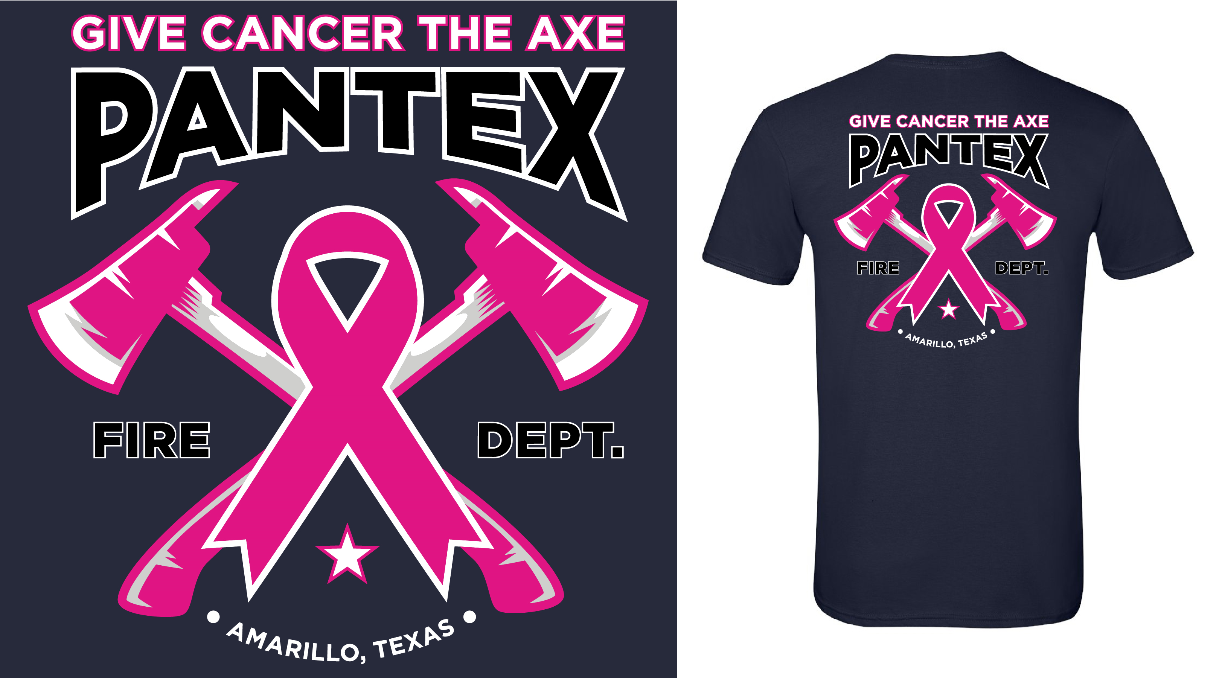
The fire department donated money raised from the “give cancer the axe” T-shirt fundraiser to 24 Hours in the Canyon Cancer Survivorship Center on December 11.
A little more than a week—that’s how long it took for the Pantex Fire Department to sell the 500 shirts that raised thousands of dollars during Breast Cancer Awareness month.
The department donated the $5,820 it raised from the “give cancer the axe” shirt sale to 24 Hours in the Canyon Cancer Survivorship Center, whose mission is to provide resources that meet and address the unique needs of cancer survivors.
Fire Captain Thomas Pahl, who organized the fundraiser, said it is second nature for first responders to want to give back to people in their surrounding areas.
“Serving the community is an integral component to the profession,” Pahl said. “The survivorship center’s mission closely aligns with the fire department’s mission of caring for people. While our efforts may not fund a cure, it’s reassuring to know this can help provide those dealing with cancer additional options as they navigate a difficult journey.”
The survivorship center provides programs and services free for any adult survivor during and after the completion of treatment. The free services range from personal training, nutrition, art classes, group exercise, book clubs, and mind-body practices like mentoring or yoga. The center also has an application process for assisting cancer patients who are financially stressed while undergoing treatments. There may even be a time when a Pantexan or their family member may benefit from the center’s services.
“Pantex is one of the largest employers in our region, and has employed personnel from all areas of the Texas Panhandle,” Pahl said. “I see giving back to the community as a lifelong commitment that is a form of compassion in action. If it makes a difference for even one person, it’s worth the extra time and effort.”
This fundraiser is just one of the many ways the fire department gives back. They participate in food drives, cookoffs, and other community-building events throughout the year. Community involvement is a cornerstone of the Emergency Services mission.
“For most first responders, our interaction with the public tends to happen on their worst day—whether it’s a medical emergency, traffic incident, house fire, or other situation,” Pahl said. “During those times, responders set up to help no matter the weather conditions, time of day, or occasion, and we do our part to alleviate the situation.”
Pahl said he believes they can improve the image of responders by presenting themselves in the public during non-emergent times and lending a helping hand—which is exactly what the department did during the T-shirt fundraiser.
“If you spend any time at all here, you quickly learn of the contagious Panhandle spirit that easily stirs the willingness to care and support one another,” Pahl said. “That, along with the nature of our profession, caring for people and supporting our communities, comes pretty naturally.”
That support continued with the recent High Plains Food Bank ‘Together We Can’ food drive. The fire department cooked burgers and hotdogs at the ribbon cutting to kick off the event.
Firefighters find new skills in scavenger hunt training
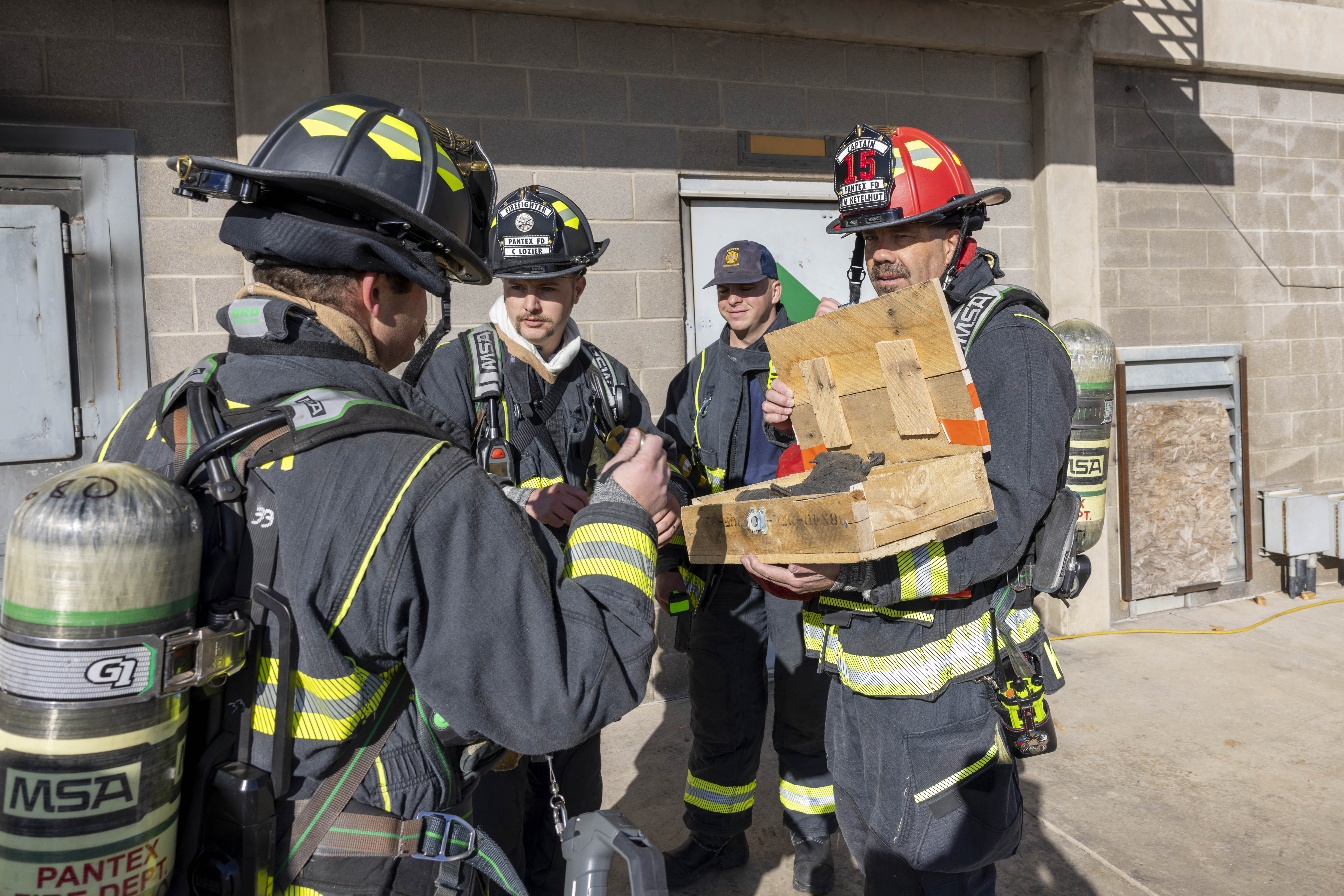
Captain Matt Ketelhut shows his crew a box found during scavenger hunt training at Amarillo College East in December.
I am always hungry. I must always be fed. The finger I touch will soon turn red. What am I?
Riddles are a part of life, maybe not in the “answer this to pass” way, but in the way that every day presents problems that need solved or situations where choices must be made—especially if you work in emergency services.
That is why when Pantex Fire Department Captain Jeremy Lyman saw scavenger hunt-style training online, he knew it would benefit his firefighters. Most first responders quickly know the answer to the riddle above is fire, but some riddles may be a little harder to solve. Scavenger hunt training combines potential real-life situations with critical thinking puzzles to complete a mission.
Training began with small groups in November at Amarillo College East and will continue through early 2025. The scavenger hunt involves nine different calls, including a variety of situations such as extrication exercises, potential fire scenes, and rope rescue. Training intentionally includes less-than-ideal conditions to simulate what could happen at a real scene.
“In a scenario where someone is locked out, firefighters have to defeat the lock without damaging the door, using different equipment to get the lock off and manipulate the deadbolt to get the door open,” Lyman said. “Once they get in there, there’s a box with a clue in it—something about rope rescue, but the building has no light, so whatever they bring in with them is what they have to work with.”
Lyman says training like this builds teamwork, enhances communication, and expands critical thinking skills. Small groups of four firefighters, enough to make up an engine company or a crew, work together to respond to incidents, create solutions, and stay true to the mission of preserving life and property. Resourcefulness and thinking outside of the box is critical for participants.
“It’s important because being a firefighter you don’t have to be good at one or two things; you have to be good at a multitude of things,” Lyman said. “You have to train in all of those areas in case the need arises for that one day. You need to be prepared for anything that will happen. This training covers a wide variety of emergencies firefighters could respond to. Most of these scenarios could happen out here at Pantex or our responding area with our mutual aid partners.”
Once a call is complete, trainers simulate going back into service so participants are ready for the next challenge, then they are dispatched to a new location.
“They have to change the channels on the truck radio and the portable radios, looking at maps and different resources to navigate the various addresses involved,” Lyman said. “It builds and improves on teamwork, problem solving, effective communication, and working under sub-optimal conditions.”
Firefighters are required to achieve at least 30 hours of continuing education credits per year, including classroom, online, and hands-on training like this.
“It’s something different, a more firsthand experience than sitting in a classroom,” Lyman said. “All firefighters will complete this and receive three hours of credit.”
Lyman said the training is multipurpose. It fulfills hands-on training time but also allows for a deeper understanding of how to use specialty equipment and tools that are not used every day.
“Some of the newer firefighters that come on haven’t done a lot of work with small equipment or other unique tools,” Captain Lyman said. “We work with chainsaws and thermal-imaging cameras on this. Those with more experience are educating them.”
Lyman has worked as a Pantex firefighter for the past 25 years. He said it is inspiring to see the new firefighters and more senior firefighters all come together to solve the riddles during the scavenger hunt and learn new skills.
“They go through the scenario; it’s not rushing through it—it’s slow and methodical,” Lyman said. “We can stop and answer questions. The veteran members of the department show the newer ones how to do things. It’s cool standing back and watching it, going through your scenario; they in turn help the new people, get everyone on the same page.”
Pantex cuts ribbon on Advanced Fabrication Facility
80-year-old buildings replaced with modern facility
AMARILLO, Texas – Pantex's modernization efforts continue as antiquated structures are removed and new buildings are erected as replacement facilities. Two years ago, Pantex broke ground on the Advanced Fabrication Facility (AFF), replacing structures built nearly 80 years ago.
For more than 58 years, Pantex has manufactured high–explosive (HE) charges for every weapon in the nation's nuclear stockpile. The AFF, with an approximate cost of $21 million, has a footprint of 20,000 square feet and will provide a more efficient and cleaner workspace for development and testing operations.
“The AFF will enable Pantex to support Weapon Modernization Program production, which directly impacts deliverables to our Department of Defense customer and global security for the nation,” said Jason Armstrong, Pantex Field Office Manager. “Completion of this facility is another example of our commitment to our mission and to our designation as the National Nuclear Security Administration High Explosives Center of Excellence for manufacturing.”
Pantex HE production is wide–ranging; providing cradle–to–grave HE manufacturing for all weapons programs. The AFF replaces an inadequate legacy facility with an annual maintenance cost exceeding $470,000. It also allows for consolidation of operations from three World War II–era buildings, allowing for improvements in operations and efficiency.
Senior Director of Explosives Technology Operations Monty Cates is proud of the unique HE work performed at Pantex. “The AFF is a testament to the talent, dedication, and hard work of the people who worked on it, such as the contractor and subcontractor partners, Construction Projects, Engineering, Production Projects, the Advanced Fabrication team, and many others,” said Cates. “This facility houses some of the most technically advanced subtractive and additive manufacturing machines available, which will positively impact Pantex's ability to support the Global Security Mission now and in the future.”
Other near–term construction projects supporting the HE mission include the High Explosives Science and Engineering Facility and the High Explosives Synthesis, Formulation, and Production Facility.
###
PanTeXas Deterrence, LLC (PXD) is the management and operating contractor for the National Nuclear Security Administration's Pantex Plant located in Carson County near Amarillo, Texas. Pantex maintains the safety, security, and effectiveness of the nation's nuclear weapons stockpile. PXD is a joint venture led by a BWX Technologies, Inc. (BWXT) subsidiary – it also includes Fluor; SOC, A Day & Zimmermann Company; and The Texas A&M University System.
CONTACT
Steve Myers
Communications
Office (806) 573.0490
Cell (806) 236.2826
Stephen.Myers@pantex.doe.gov
Pantex announces last production unit of B61-12 weapon complete
B61-12 modification is completed ahead of schedule
AMARILLO, Texas– The National Nuclear Security Administration (NNSA) and PanTeXas Deterrence LLC, (PXD) Manager and Operator (M&O) of the Pantex Plant, announce completion of the last production unit of the B61–12 modification.
The B61 nuclear weapon has been in service since 1968, with numerous performance modifications. For more than a decade, thousands of workers across the nation's Nuclear Security Enterprise (NSE) have focused on the B61's life extension program (LEP), updating or replacing weapons components, extending its service life by at least 2 decades.
“Completing the B61–12 is the result of extensive collaboration across the nuclear security enterprise and represents a major technical achievement,” said Teresa Robbins, Assistant Principal Deputy Administrator for Operations at the National Nuclear Security Administration. “For over 40 years, Pantex has been the nation's primary nuclear weapon assembly, disassembly, and life–extension center – the work you do here is critical to our nation's security and your performance reflects positively on the entire enterprise.”
“It's complicated to execute our mission, and that entire team has to operate to near perfection, in order to achieve this kind of milestone,” according to Kelly Beierschmitt, PXD President and General Manager.
The ending of the current version of the B61 weapon marks one of the biggest modifications ever attempted within the NSE.
“So, this is a very large program,” said Todd Welchlen, Senior Project Manager for NNSA NA–125.1. “We have Pantex, Sandia National Laboratories, Los Alamos, Savannah River, and Kansas City. We've also integrated Boeing and we've got the Department of Defense represented as well.”
“I think it's really been a good collaboration between all the organizations, all the sites in the country, have contributed in some way to making sure we have this modification that helps deliver something that the military needs,” said Joseph Papp, PXD Senior Director of Production Engineering.
“I am very proud of the teamwork and want to personally thank the entire NNSA for making this happen. Teamwork was essential in completing this very important milestone. The challenges were communicated early, and this dedicated team worked to resolve them with urgency, “ said Jason Armstrong, Pantex Field Office Manager.
Realizing a final completion of a record for any weapons system's modification is a major milestone and it represents another successful chapter in the history of the B61–12.
“The significance of this accomplishment is great when you zoom out and think about the role the B61–12 plays in our overall nuclear deterrent, not only for our nation, but for our allies, as well as the globe,” said Colby Yeary, PXD Mission Assurance Officer. “The analogy of having a puzzle and all the puzzle pieces fitting together comes to mind...and without the B61–12, we would have an incomplete puzzle.”
That sentiment was echoed by Beierschmitt. “The world's not gotten safer, it's gotten more challenging with geopolitics, and every time we make a delivery, every time we do something on schedule, it signals to the entire world that this deterrent is strong.”
PanTeXas Deterrence, LLC (PXD) is the management and operating contractor for the National Nuclear Security Administration’s Pantex Plant located in Carson County near Amarillo, Texas. Pantex maintains the safety, security, and effectiveness of the nation’s nuclear weapons stockpile. PXD is a joint venture led by a BWX Technologies, Inc. (BWXT) subsidiary – it also includes Fluor; SOC, A Day & Zimmermann Company; and The Texas A&M University System.
For more information on each site, visit www.pantex.energy.gov or www.y12.doe.gov. Follow Pantex on Facebook, X or LinkedIn. Follow Y-12 on Facebook, X, and LinkedIn.
CONTACT
Steve Myers
Communications
Office (806) 573.0490
Cell (806) 236.2826
Stephen.Myers@pantex.doe.gov