
Pantex Blog
Be prepared for severe weather
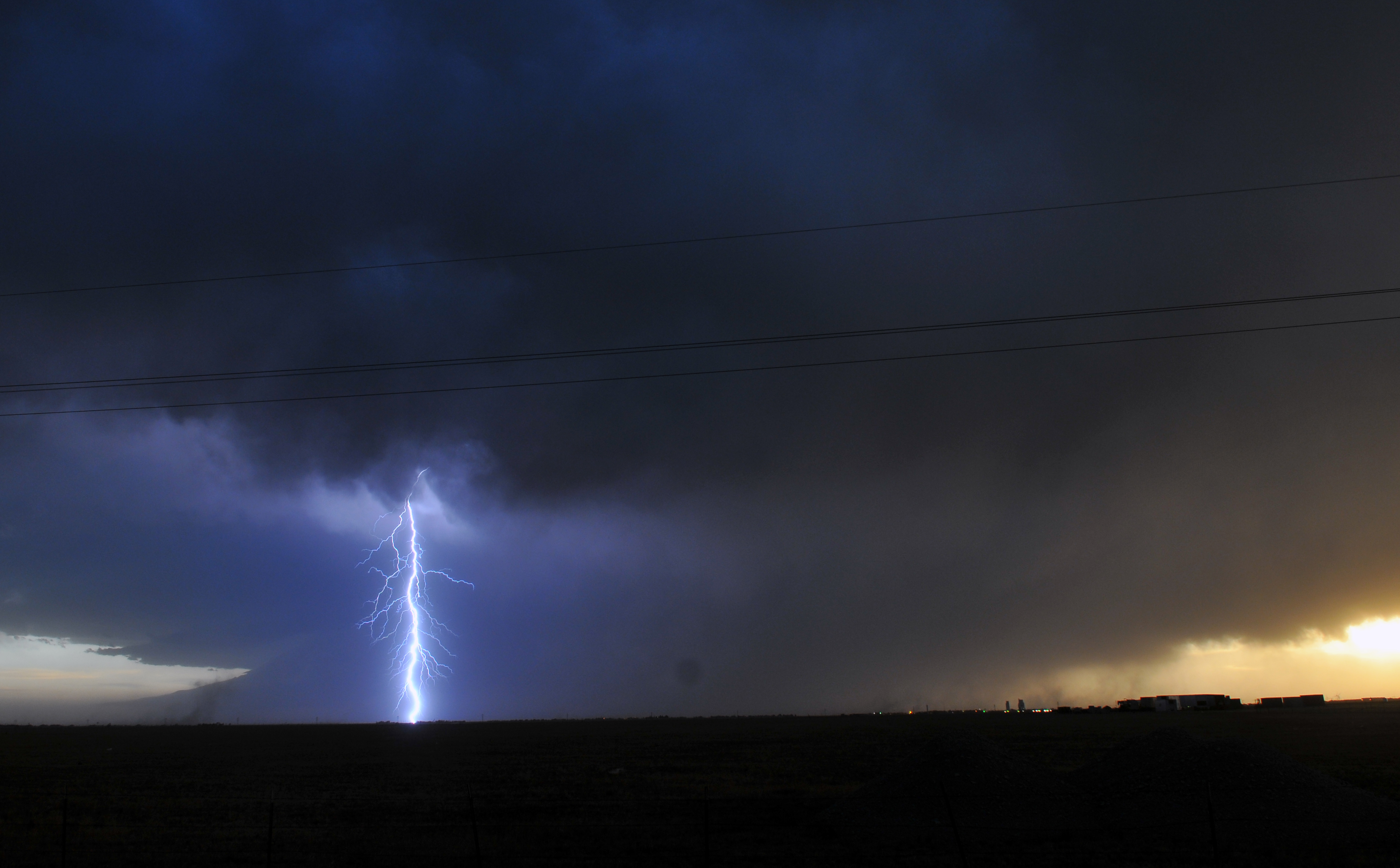
Severe weather season is unpredictable, scary, and can be dangerous if you are not prepared. Whether on‑site or off, it is important to know what to do if severe weather hits. Here are a few ways to prepare and keep yourself and your family safe:
- Make sure at least one family member knows first aid and CPR.
- Download the FEMA app for resources and safety tips.
- Have a family plan in place; all members of the family should review and practice the plan.
- Have family members’ and other important phone numbers written down or memorized.
- Assemble an emergency supply kit and keep at least three days of food and water at home.
- Store important documents in a fire‑proof safe or safety deposit box.
- Know how to shut off utilities including natural gas and water.
To be more informed about local weather, the Pantex StrikeNet© app offers meteorological information such as wind speed, wind direction, temperature, relative humidity, dew point, barometric pressure, rainfall, rainfall rate, and even lightning data. Download the app on your phone through the Apple Store and Google Play.
Pantex Proud: Steven Kemp

Thousands of dedicated Pantex citizens like Steven Kemp work every day to support the Pantex mission. Take three minutes to learn about who he is, what he does, and why he is proud to be a Pantexan.
When Construction Manager Steven Kemp started framing houses at 15, he knew he wanted to be involved in construction for the rest of his life…and he hasn’t done anything else since.
“You get to step back every day and see how you’ve progressed and you get to see what you are building and giving to the owner. Some jobs you have to wait until the end to see what you have done. I have always known this is what I was going to do, but I didn’t know it would take me as far as it has.”
Prior to joining Pantex in 2019, Kemp was a commercial construction superintendent who was a part of building schools, hospitals, and other industrial structures. Here, he is part of the line-item projects group and works primarily on the High Explosives Science and Engineering Facility. He oversees the contract scope, schedule, and budget, and ensures that the contractor delivers what is agreed upon and the owner gets what they paid for. Building relationships is key to a successful project.
“Someone told me early on to really work on relationships with other departments and to make contacts. On huge line-item projects, you need something every day. You may have to interrupt someone who doesn’t have time, and if you have a good relationship with them, they will probably make time.”
Those inter-departmental relationships not only help Steven with day-to-day issues but also keep work going at Pantex. Without that camaraderie, the work stops.
“We have some pretty tight requirements on-site and we continuously have to communicate with the project engineers and the architecture firm who designed the building. We will pull together the whole team and we will go through and figure out what we can do to move that task forward while the paperwork is being processed to save time. Because I have access to all these people, we can come to an agreement to get the job done quicker and safer.”
Everyone offers value to our tasks. Why must we be open to learning and hearing from others?
I don’t believe that there is any room on projects to be closed minded. There are people with a lot of experience and diversity in backgrounds. I have over 25 years of experience, and I’ve learned a lot from so many people out here.
What advice do you offer someone who has made a mistake in his or her job? How should they be accountable for that issue?
You’re not working if you’re not messing up. There is a reason that you learn more from valleys than hilltops. If you just started and everything came together, you wouldn’t learn much. You own that mistake, store it in your mind, and make sure it never happens again.
How has teamwork allowed you to grow as an employee?
I have received accolades during my time at Pantex, but none of them are possible without my construction management and project management team. I don’t think any of us can perform any of these tasks without each other. We all bring different strengths to the projects, and without each other we would not be successful. There are a lot of minds put together to work on these unique facilities.
Who in your life has inspired you the most and why?
My dad has always been the person who inspired me most. He was everything you needed him to be when you needed it. I watched him get up every day and go to work. As kids we didn’t have a lot, but he worked all the time, with a daily job and then side jobs. He was always my biggest fan, too. Without question, he just always seemed to know what I needed.
Pantex Proud: Susan DeBault

Thousands of dedicated Pantex citizens like Susan DeBault work every day to support the Pantex mission. Take three minutes to learn about who she is, what she does, and why she is proud to be a Pantexan.
Construction Project Manager Susan DeBault considers her role to be like that of an orchestra conductor.
“We make sure all the instruments are in tune and that all members are playing from the right sheet of music,” said DeBault. “Within the Facility and Equipment Upgrades and Disposition portfolio, I am responsible for all phases of the project, overall performance, ensuring objectives, schedules, and budgets are met.”
DeBault followed her dad around the world during his career in the U.S. Air Force and grew up primarily on Air Force bases. Her belief in the mission started in 1985.
“I think the most impactful assignment we had as a family was in Berlin, Germany, while it was still under communist control. Seeing people living without freedom made a big impact on me. Working here has given me a greater appreciation of the work we do and the importance of the mission.”
With a degree in Business Management, DeBault has worked in marketing, facility management, and most recently as a project manager for the Texas A&M University system. A little over four years ago, she started in Project Management and because of Pantex was able to make a journey back to Germany.
“Several members of an Integrated Project Team I was on traveled to Poland for a factory acceptance test and landed in Berlin. To see the wall, the barbed wire, the guards all gone—it was incredible.”
DeBault says her favorite part of the job is that every day is different, and there are continual challenges and opportunities to solve problems. She also really likes working with the people in the plant who are going to use the facilities and seeing how their needs are going to be met.
“I learn from every project I work on. That helps you grow, because if you run into a challenge on one project, you take that information with you to the rest of your projects. You apply those lessons learned over and over.”
As the number of new projects on-site continues to increase, more Pantexans will benefit from the expertise and diligence that DeBault brings to the plate.
Why are you proud to be a part of your specific team at Pantex?
We help provide modern facilities that support our mission and production goals. I work with a really distinguished group of people who are very talented. I am always impressed by the caliber of people we have here.
How has teamwork allowed you to grow as an employee?
We have such a talented group of project managers with diverse backgrounds and areas of expertise. Being part of my specific portfolio, other project managers have stepped in to help me when I have faced difficult project challenges and have proposed possible solutions. I highly value the guidance and input that they have given me. When someone is out, another project manager is there to keep their projects going. We have an incredible backup system. I have never experienced this level of teamwork before.
What advice has a team member given you that has helped you in your career at Pantex?
Marlin Connor is the mentor for the Project Management group. He told me early on to actively listen to learn, and that has been so valuable for me. When you start, it feels important to show what you know, but it’s different at Pantex. You have to be humble, ready to listen, and open to learning new processes.
What has surprised you the most since joining Pantex?
How quickly things change within the organization. It’s constantly evolving and improving. Not just with people, but with projects changing to improve efficiency and execution.
What’s your top bucket list item and why?
I love to travel with my husband. My twins just graduated college a year ago, so I think we are finally going to be able make that happen. My dream trip is to travel to Italy—and it’s tentatively in the plans for the next couple of years. When we lived in Europe, we didn’t get to make it to the places I wanted to see in Italy, so I’m excited to go there.
What role does communication play in your job?
Communication is critical to the success of any project. The stakeholders are diverse, and it is vital that you are getting the right input from the right people. You can’t make decisions or operate in a silo here. Communication is the top skill that determines if a project will be successful and is the most important thing we do in my opinion.
The Nuclear Family: The Lesters

The Lesters: Clockwise from back left are Amy and Kurt Lester with their children Darby and Jake.
When Facility Representative Kurt Lester started at Pantex a little over five years ago, he was excited to be surrounded by people who have similar interests as him. In his words, “a bunch of nerds.” Then a couple of years later, Kurt started seeing more familiar—or rather familial—faces around the plant.
In 2022, his daughter, Darby, started as an intern, and was officially hired on in 2023 as a Mechanical Design Engineer after a year in the Career One engineering program. Then his son, Jake, started in 2022—first in Quality before moving to his current position in Safety Analysis Engineering in late 2024. Finally, his wife, Amy, left her 21-year career in elementary education to try her hand at something new at Pantex, and now works as an Issues Management Specialist for Production Operations.
Mom, daughter, and son all credit their dad with helping guide them to their positions. He searched and matched each member of his family with jobs he thought they would be good at. Over time, each family member got the call to join their new family—the Pantex family.
“I’ve known I wanted to be an engineer since I was twelve,” Darby said, “so I figured Pantex was the most logical place to work. Now, it’s weird waking up and getting ready at my house with my parents, then going to work with my parents, then eating dinner with my parents. It’s a lot sometimes, but it’s a blessing.”
Both siblings, who started within a few months of each other, will be getting married within a month of each other in 2025. They work two cubicles apart from each other and feel very proud for each other that they have secured great jobs so early in their careers.
“We work at one of the premiere places in the panhandle, and the fact that all four of us get to work out here? It’s amazing. We are very lucky,” Jake added. “We get to save some money, too, because we drive to work together sometimes.”
With the whole family at Pantex, “Lester Lunches” and group chats named “The Funky Bunch” soon commenced. They really love to “pop in” on each other when they can and love that they can share the common language that comes with working at such a unique place all together. When friends see one of the Lesters out and about, they will ask where the rest of the family is.
“When other people see my kids, they always tell me what great ‘young adults’ they are, and I am a very proud mom,” Amy said. “Of course, when they hear I’m married to Kurt, they always joke—but then tell me what a good man he is and that he is great at what he does.”
A very important member of the Lester family whose presence is felt at the Pantex Plant is Kurt’s late father, Tom. People find out that a member of the family has a connection to Granddad Tom and the stories start to flow.
“It is a really special feeling to know that we are continuing the legacy of my granddad,” Jake said. “There is a lot of pride in knowing now that three generation of Lesters have served the country and the world through the mission of Pantex. We lost him at such a young age and don’t have a lot of memories of him…so when people come up and tell a story about him, I am happy that he did such a good job and that people knew him. I think he would be proud of Darby and I for making it out here.”
When considering the fact that they all work together, Kurt is glad his family is able to carry on a tradition his dad started.
“I think people within the Pantex community enjoy seeing families or familial relationships at Pantex since Pantex is a tight knit community by default of what we do out here. As parents, there is a joy knowing that your children are in successful careers and in an industry where there is a lot of growth for them to achieve. I am thankful for that.”
Working with your mom can be Bliss

Vicky Bails and her mom, Alma, have both used their talents to make Pantex great.
It’s important to see people who look like us and who we can identify with both to mentor and to help us grow in the workplace. Compliance, Assessments, and Analysis Lead Assessor Vicky Bails took that quite literally, as her mentor and hero at Pantex was her mom, Alma Bliss.
Bliss worked at Pantex from the late 1970s until she retired in 1994. She spent most of her career in Purchasing, which is now named Procurement. She told Bails stories of old, like rattlesnakes in Building 16-12 and the van pool she took from their home near Lake Tanglewood to Pantex, which was exactly 29.5 miles from her front door to the parking lot. When reflecting on her mom’s retirement, Bails recalls how sad she was to be leaving.
“It was really hard for her to leave and walk away from her team and the work that they did. She always told me it was a family out here, and I got to see that. I got to go on site many times to eat lunch with my mom. I got to go to her department Christmas parties. They really lived like a family. I was part of the Pantex family before I could even remember.”
As Bails prepared to start a family of her own, her mother encouraged her to apply at Pantex. She knew it was a good way to provide for a family and knew Pantex treated families well. Not long after starting her position in Information Technology in 1992, Bails met her husband Tony, who worked in her brother’s department. Two of Bails’ brothers have also worked at Pantex.
“It has been continual blessings. I got a bachelor’s degree for less than $500 because of the educational assistance. Additionally, we had a really sick child when he was first born, and our supervisors were very kind and understanding through the whole process.”
Though mom and daughter were in different organizations for the two-and-a-half years they worked together, there were lessons learned that translated across departments.
“My mom told me to let my work prove my worth. Because my dad died and left her with four children, she had to work. She had to be a very hard and dedicated person. I think I took after her in that respect.”
Since Bails has worked at Pantex, she has worked in Information Technology, Operations, Safeguards and Security, Engineering, and now Quality. No matter where she works, people love to tell stories of her late mother.
“She made people toe the line, and if they didn’t, she would let them know. I’ve heard countless stories about people who still revere her. Even when she was not the one in charge of the department, people say she ran that place.”
As an organization filled with people who take great pride in our history, it is easy to forget that generations of Pantexans have come through the gates. Though there are many lineages that span three generations of men at Pantex, there are far fewer women whose mothers or grandmothers worked at Pantex despite the majority of the workforce being women at Pantex during World War II. Generations of women being raised by Pantexans now are the future. As of today, Pantex is the proud employer of more than 1,000 women who play a critical role to further the success of the Pantex mission.