



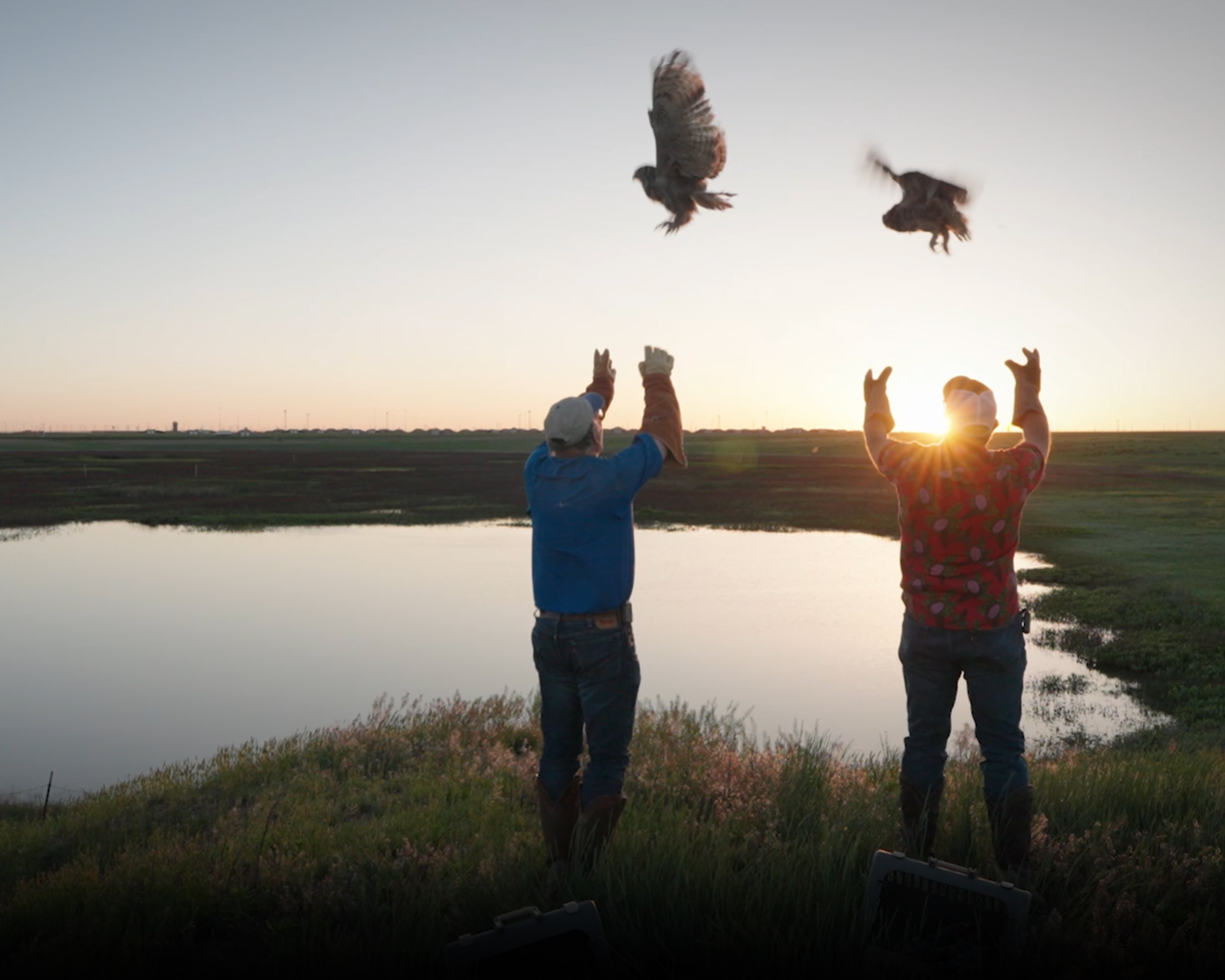
Monty Schoenhals and Kevin Baird release Owlbert and his rehab partner at Pantex
Wildlife across the Texas Panhandle varies greatly. Different species from the tiniest insect, horned reptiles, tiger-striped amphibians, flights of birds, and a wide range of mammals all call this region, including Pantex, home.
Although the Pantex mission ensuring the effectiveness of the U.S. nuclear stockpile takes place on about 2,000 acres in rural Carson County, the actual footprint of the site covers more than 16,000 acres. Along with hundreds of buildings and thousands of workers, there are open fields, neighboring farms, area ranches...and it’s a natural haven for wildlife.
“We see all sorts of animals out here. Everything you'd expect to see out in a short-grass prairie, rolling high-plains setting,” according to Pantex Wildlife Biologist Kevin Baird.
“I feel like we have really improved the habitat out here at the plant. That's some of my favorite part of the whole thing is habitat improvement,” said Monty Schoenhals, Pantex agronomist.
At times, these animals may be injured, abandoned, or come in contact with humans and need assistance. Anytime help is needed, Pantex personnel and an Amarillo rehabilitation facility join forces to ensure that all is being done help preserve our local wildlife.
“We try to monitor the health of the local wildlife populations, and when we do run across a sick or injured wildlife or orphaned animal we'll work with our local rehabbers here in the Panhandle,” Baird explained.
Baird and Schoenhals recently worked a pair of animal rescues. The first was a bull snake named Gerty that was uncovered by workers when it was very cold. They collected Gerty to make sure it was not injured. The second rescue came after receiving a call about an abandoned great horned owl fledgling that was potentially hours from death.
“I made the decision that I'm going to see if I can capture him. He was extremely emaciated, probably a day or two from death,” Baird said. “We decided to call him Owlbert.”
Pantex has partnered with the Wild West Wildlife Rehabilitation Center in northwest Amarillo, a nonprofit that takes in hundreds of animals each month. Founded by Stephanie Brady about a decade ago, it’s a licensed rehab center serving the entire Panhandle and parts of New Mexico.
”Our relationship with Pantex has really grown over the last year, especially working with Kevin and Monty,” said Wild West Wildlife Rehabilitation Founder and Executive Director Stephanie Brady. “It's been a great collaboration and helping injured and orphaned wildlife and, situations where, you know, there's construction going on and they need to move an animal, but they want to bring it back.”
Along with taking in or gathering up injured wildlife across the region, the rehab center also houses an education center for events and to introduce visitors to animals that cannot be released back into the wild. Last year during the historically worst wildfires in Texas’ history, they received a lone porcupine they named Cinder that’s become a social media sensation.
Every little bit of publicity helps any nonprofit, especially one helping out thousands of animals each year, including the recent Pantex rescues, Gerty and Owlbert.
“The bull snake was pulled from a confined space for a construction project and was very, very cold,” Stephanie explained. “She was barely moving. Once she warmed up, she let us know that she was not happy that we had her, but she's eating great. The great horned owl was a young one, too young to be on its own. We had another owl that came in and actually they have formed a bond. So, we will release those two together back out at Pantex.”
Pantex’s wildlife team is proud of their work and the relationship they’ve forged with the rehab team.
“I think it really shows the public that we actually do have a commitment to maintaining our natural resources and to maintaining our wildlife,” according to Baird.
Schoenhals agreed completely. “I feel like I'm very blessed to be a part of being able to increase and improve the habitat here at the plant for wildlife.”
Both Gerty and Owlbert, along with Owlbert’s new companion and some transplanted prairie dogs that will occupy an abandoned prairie dog town, were released at the Pantex site after a few weeks at Wild West Wildlife Rehabilitation center.
These won’t be the last of Pantex’s animals that need assistance as the environmental stewards at Pantex continue to team up with local wildlife rehabilitation efforts. Plans are now in the works to release abandoned bobcats in the near future. Simply wild.