



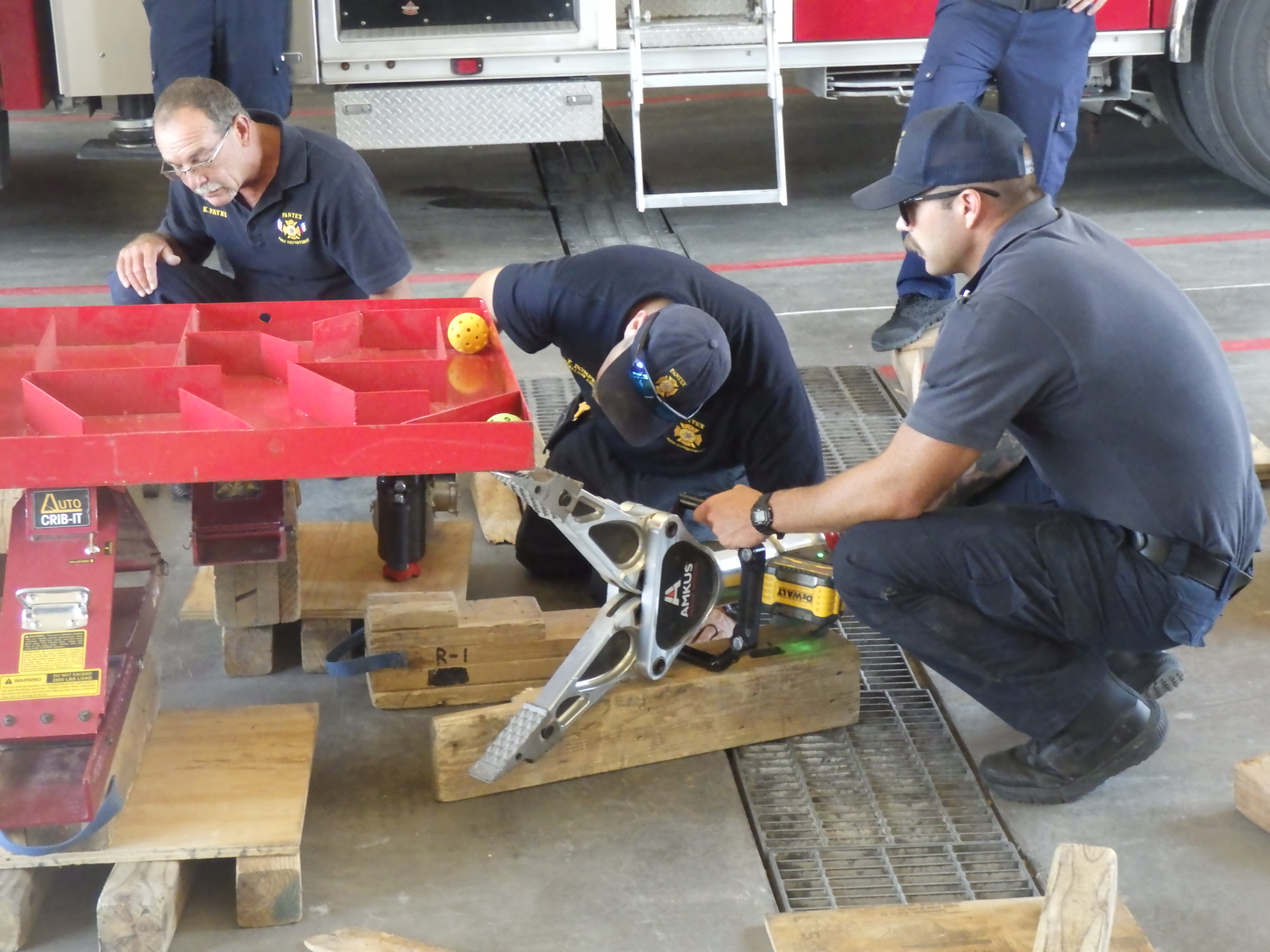
Firefighters recently completed training using a large maze to solve complex challenges and reinforce problem-solving skills.
The task seems simple — to complete the training, firefighters must maneuver a ball through a maze without touching the ball. It’s like a life-sized game of labyrinth, but instead of knobs that move the board, the first responders manipulate a large table using various emergency response tools. Throughout the exercise, the height of the maze is adjusted and firefighters “crib” the table, or stabilize it, at the new height. Cribbing uses wooden or plastic blocks to create a solid support structure and is commonly used during rescue operations.
“This training better prepares members when it comes to lifting thousand-pound vehicles while ensuring safe operations,” Captain Joshua Brown said. “It reinforces the need to crib as you lift and sparks creativity in problem-solving. It’s more than just a maze, it is interactive training designed to reinforce and build upon essential firefighting principles in a practical and engaging manner.”
Groups of firefighters navigate complex paths in the maze to continuously improve on lifting techniques, stabilization skills, and the use of diverse tools. Firefighters communicate and coordinate with multiple team members to accomplish the mission.
“A core principle of this training approach is that learning is most effective when it is enjoyable and engaging,” Brown said. “The maze, with its challenging scenarios and timed competition, transforms routine drills into enjoyable experiences. This element of ‘fun’ in training is not merely a byproduct; it is intentional. When individuals are invested and find enjoyment from their training, retention of knowledge and skill development are significantly enhanced.”
The maze training encourages critical thinking and creative problem-solving among peers. Each team adopted a different approach and used various tools to complete the exercise. Some teams spent over an hour completing the maze due to trial and error, but with each passing minute, skills were sharpened, equipment proficiency gained, and obstacles overcome. The timed element of the training added a sense of urgency to adjust and persevere.
“This training underscores the value of recognizing and adapting effective training methodologies within the Pantex Fire Department,” Brown said. “PXFD exemplifies a culture where imagination is embraced and tailored to accomplish a specific need that directly addresses training objectives.”
Life isn’t a game, but the skills learned from this puzzle could save lives. Interactive, hands-on training like this fosters proactive skill building and encourages enhanced safety and effectiveness during emergency response.