Pantex Blog
Pantex Emergency Management joins NISC
Pantex Emergency Management was recently granted membership in the National Information Sharing Consortium, an independent consortium of civic, federal, and private leaders in public safety, emergency preparedness and response, and information sharing technologies.
NISC was launched in 2012 to improve the state of public safety and emergency management information sharing and interoperability. The organization achieves this goal by sharing, connecting, innovating, and leading. With its NISC membership, Pantex Emergency Management has new access to tools, templates, and lessons learned that will provide value to the site’s emergency response operations.
Pantex honors North Amarillo Auto Parts
Consolidated Nuclear Security, LLC honored North Amarillo Auto Parts as Small Business of the Year at this year’s Amarillo Small Business Awards. The ceremony was a collaborative effort among CNS, West Texas A&M University, the City of Amarillo, and the WTAMU Small Business Development Center to recognize small businesses in the Texas Panhandle area.
With a fleet that includes fire trucks and specialized security vehicles, many of Pantex’s requests fall outside normal auto parts requests. Paul Bently, Pantex crafts supervisor, said "Matt (Newkirk) at North Amarillo Auto Parts spends countless hours on the phone and on the internet searching for hard-to-find parts that we need every day in the shop."
CNS has set a goal to award 60 percent of contracts to small businesses. “CNS would not be able to achieve its mission without the support of small businesses; they truly are the heart of our economy,” said Ryan Johnston, the CNS Small Business Program Manager.
Watch this video about North Amarillo Auto Parts and its relationship with Pantex.
If the problem persists contact your website administrator. Please check logs for further debugging.
Secretary Perry visits Pantex
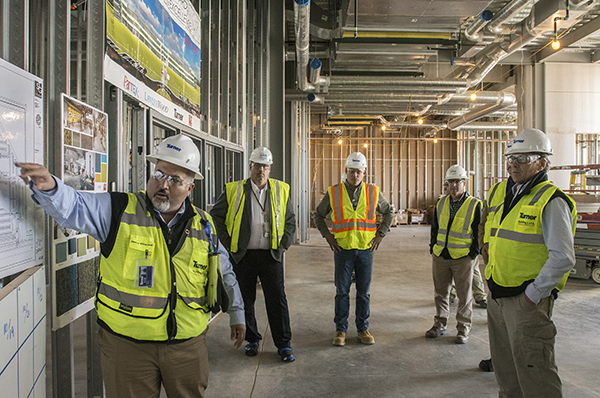 Secretary of Energy Rick Perry tours the Administrative Support Complex construction site during his first visit to the Pantex Plant.
Secretary of Energy Rick Perry recently made his first visit to the Pantex Plant to observe operations and tour new facilities. He toured the Administrative Support Complex construction site, bays and cells used for weapon assembly and disassembly activities, and a weapon and component staging area. Secretary Perry also viewed the new Confined Large Optical Scintillator Screen and Imaging System (known as CoLOSSIS II) and a live-fire demonstration of the Common Remotely Operated Weapons System. The visit provided Consolidated Nuclear Security, LLC an excellent opportunity to showcase Pantex’s important role in America’s security and the site’s ongoing infrastructure revitalization efforts.
Pantexan’s dissertation named best of the year
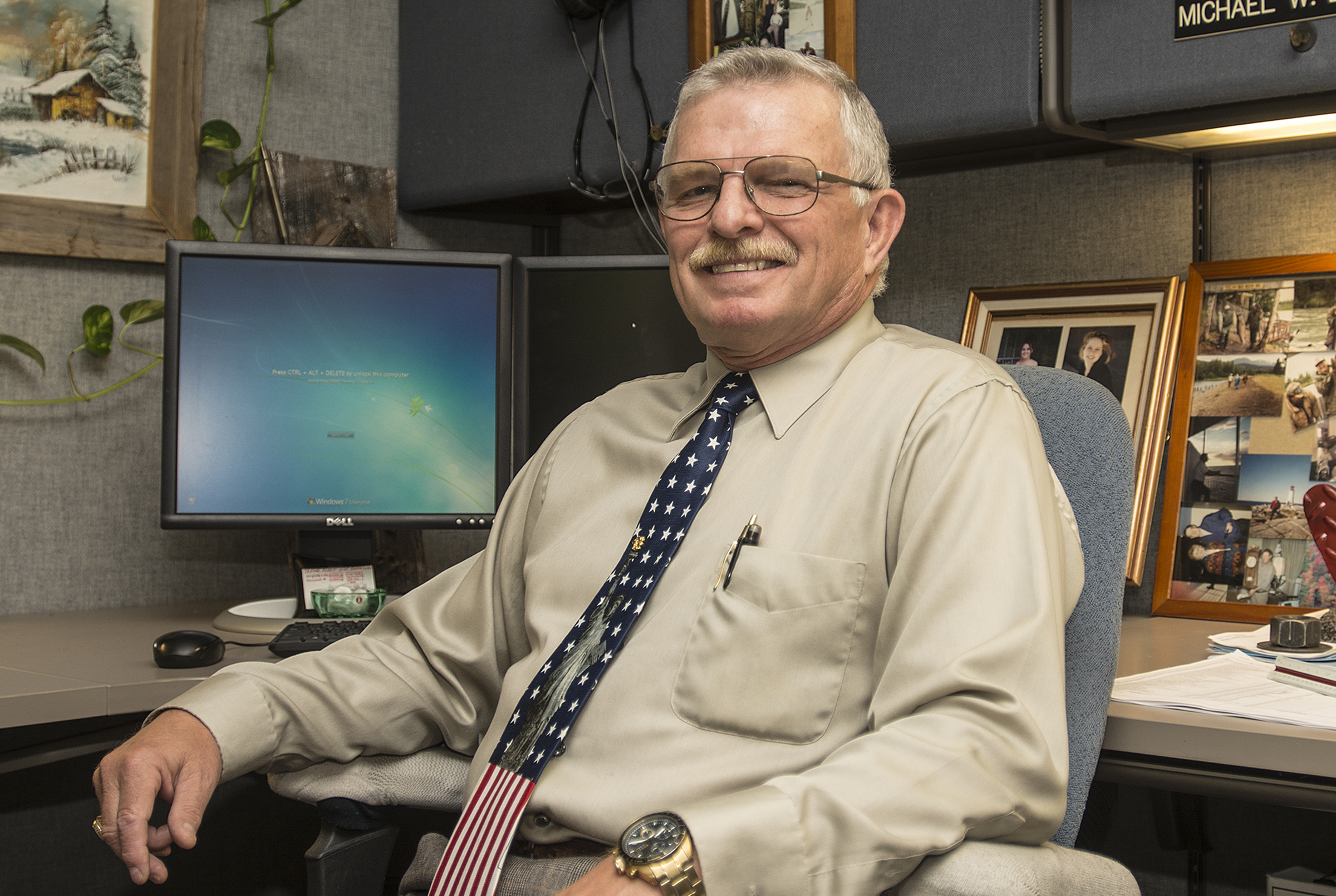
Pantex’s Mike Bromley of Projects Management recently received the 2017 American Society for Engineering Management Best Dissertation award at the organization’s International Annual Conference in Huntsville, Alabama.
The engineering and management professionals in the ASEM remarked that Bromley’s dissertation integrated analytical and managerial concerns with quality design and data collection, resulting in conclusions with application to many organizations.
The analysis of his dissertation, Economic Analysis Model for High Reliability Organizations, required significant input related to plant operations, facilities, personnel, costs, events, incidents, and accidents. Bromley said he appreciated the helpful input from many Pantex subject matter experts on meteorology, asbestos, cost estimating, safety analysis, process engineering, and high explosives. He also added that a non-employee could never have collected the required data, and it was a challenge to keep everything unclassified.
Pantex and Y-12 employees receive NA-50 Awards
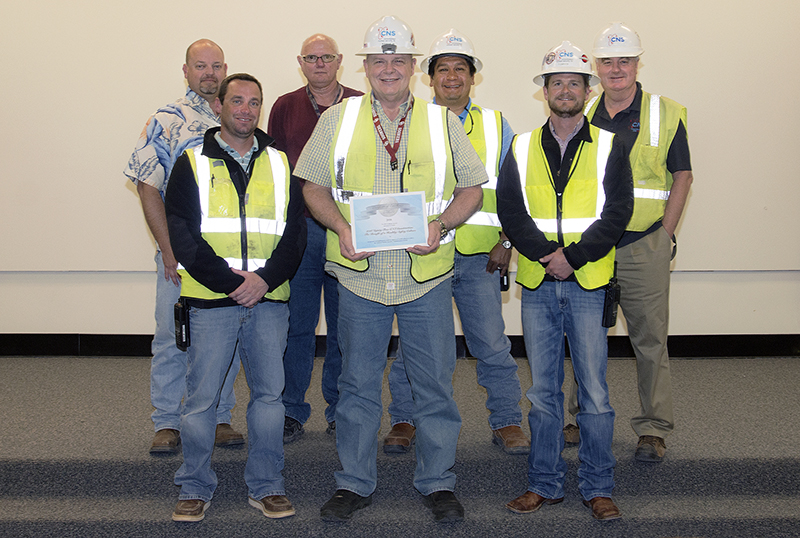
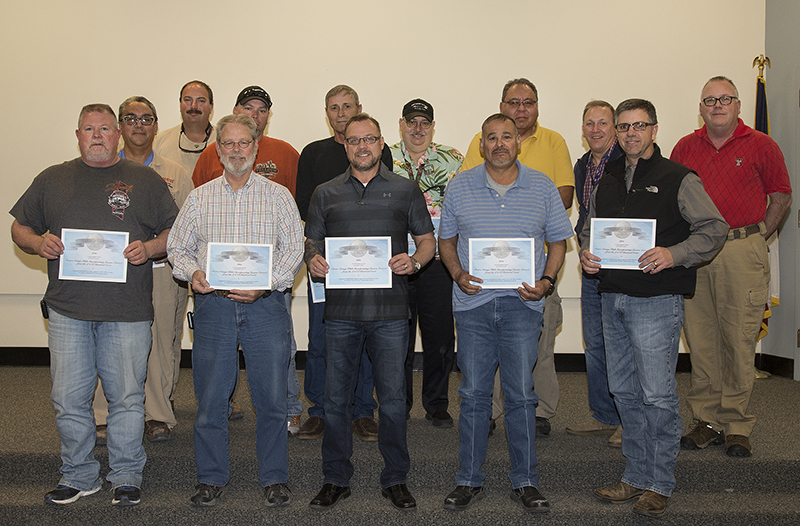
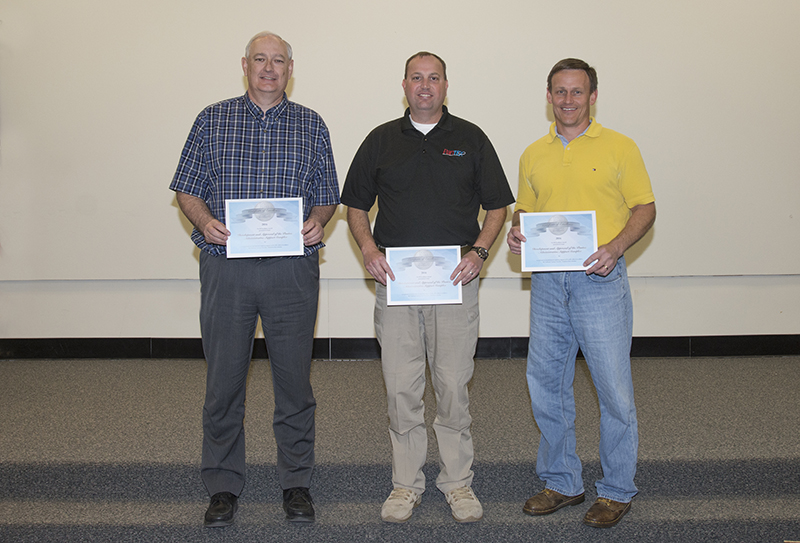
The newly designated NA-50 Excellence Awards recently were presented at Pantex by NNSA Associate Administrator for Safety, Infrastructure, and Operations James McConnell and at Y-12 by NNSA Administrator Lt. Gen. Frank Klotz (Ret.). The award recognizes teams and individuals for outstanding accomplishments involving innovation, effectiveness, teamwork, overcoming adversity, and enabling future success.
CNS President and CEO Morgan Smith commended the honorees by saying, “The work we do is unique. We play a key role in the defense of the nation and the stability of the world. We face the challenge of meeting this important mission while working in facilities that are well past their intended life. Your work has helped tackle infrastructure issues that, if left unaddressed, could have exposed a risk to employees, the mission, or the environment.”
At Pantex and Y-12, the CNS Construction team was recognized for its operations with zero recordable injuries in fiscal year 2016, and the Development and Approval team for the Administrative Support Complex (Kirk McCutcheon at Pantex, Tom Smith at Y-12) was recognized for its work to develop the foundation and business case, as well as the extensive approval process.
One other Pantex award included the Outage Process Execution team, being recognized for the high-voltage distribution system outages conducted safely in support of the NNSA mission at Pantex.
Other Y-12 awards recognized: the team replacing some 700 fire suppression system sprinkler heads in Building 9204-2, the team that reroofed three Manhattan Project–era buildings as part of the Excess Facilities Disposition Program Roof Asset Management Program Risk Reduction project, the team that repaired the concrete beam in Building 9204-2, and the team that pursued multiple direct- and indirect-funded projects to reduce risks posed by excess facilities.